



Brazil has taken a major step toward protecting one of the most ecologically important stretches of the South Atlantic, with the creation of a vast new marine park along its southern coastline.

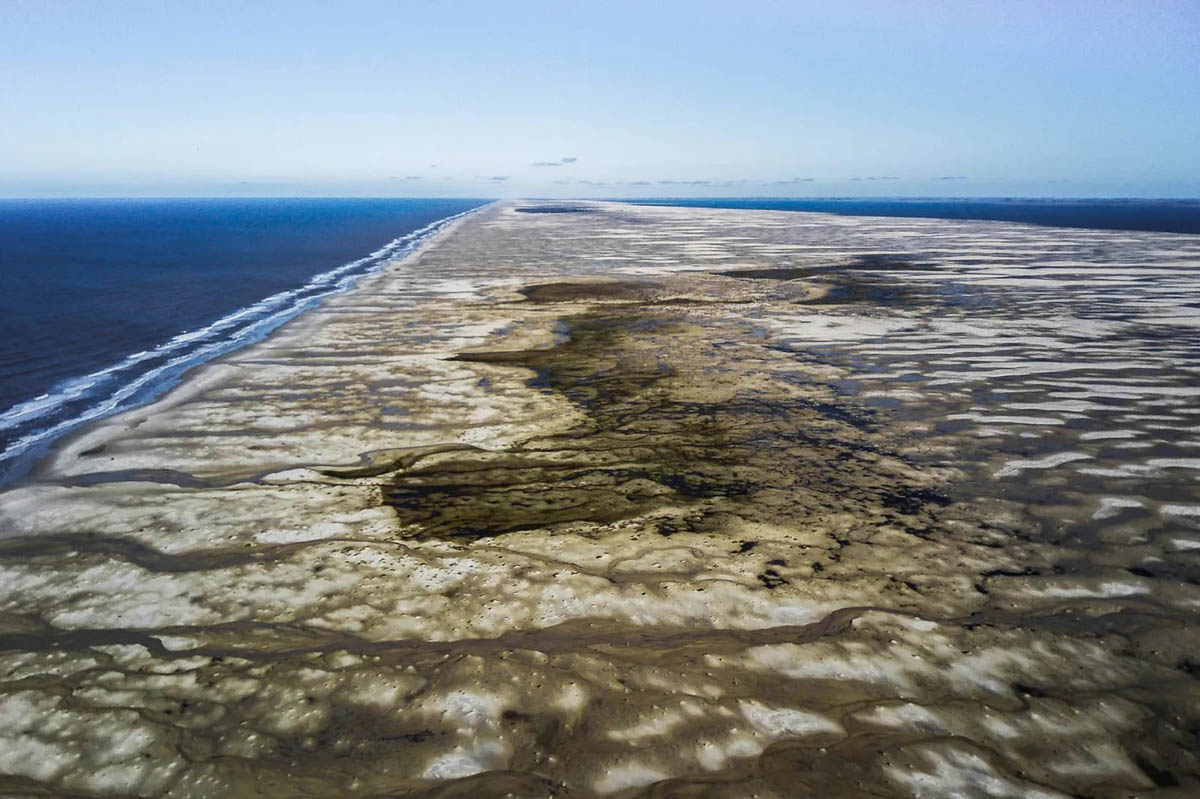
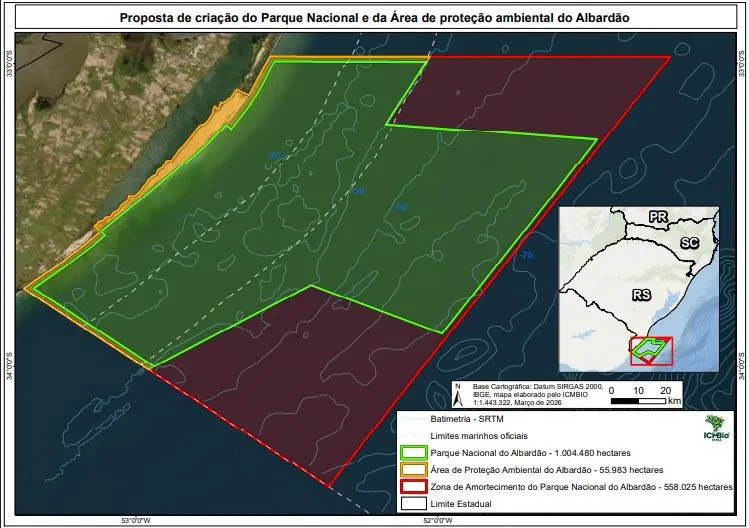
The newly designated Albardão National Marine Park spans more than a million hectares of ocean and coastal ecosystems near Brazil’s border with Uruguay. Marine conservationist José Truda Palazzo Jr., a long-time advocate for marine protection and friend of The Scuba News, recently highlighted the significance of the decision in an analysis published on his Substack.
For divers and ocean conservationists alike, the announcement signals something bigger than just another marine protected area. It represents a growing global push to safeguard critical ocean habitats before industrial pressures reach them.

A wild stretch of ocean few divers have seen
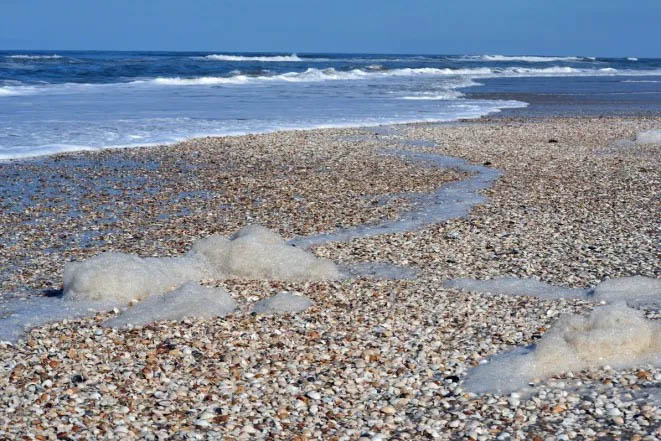
The Albardão region sits at the southern tip of Brazil, where the continent’s longest uninterrupted sandy beach meets the open South Atlantic. These temperate waters are shaped by the convergence of powerful currents and nutrient-rich upwellings, creating conditions that support an unusually diverse marine ecosystem.
Although relatively unexplored by recreational divers compared with Brazil’s more famous destinations, the region is known to host migrating whales, seabirds, sharks, and large schools of pelagic fish. Vast sandbanks and coastal lagoons also act as nursery grounds for numerous marine species.
Marine scientists have long regarded this part of the coast as ecologically significant, similar to how Abrolhos Marine National Park further north protects Brazil’s largest coral reef system and one of the richest biodiversity hotspots in the South Atlantic. Research into the Abrolhos region has shown the area supports more than a thousand marine species and provides critical breeding grounds for humpback whales and sea turtles.
While Albardão’s ecosystems differ from coral reef environments, they are no less important. Temperate coastal systems often support enormous biomass and play a vital role in maintaining fisheries and regional biodiversity.
Protection before exploitation
The decision to create the park is significant because it protects an area that has increasingly drawn attention from fishing fleets and offshore development interests.
By establishing the Albardão National Marine Park now, Brazil effectively places large sections of the region under strict conservation rules before large-scale industrial activity can take hold.
This approach mirrors a growing global trend. Governments and conservation groups are racing to meet international targets aimed at protecting at least 30 percent of the world’s oceans by 2030, a goal often referred to as 30×30 in global conservation policy.
Marine parks and fully protected no-take zones are widely considered among the most effective tools for safeguarding biodiversity and rebuilding depleted fish populations.
For coastal communities and the wider ocean economy, protected areas can also bring long-term benefits through sustainable tourism and ecosystem resilience.
Why divers should be watching this story
For most divers, Albardão will remain a remote and largely unexplored frontier for now. But history shows that the creation of large marine protected areas often lays the foundation for future marine tourism.
Many of the world’s most famous dive destinations, from the reefs protected within Australia’s Great Barrier Reef Marine Park to the extraordinary biodiversity safeguarded by the Galápagos Marine Reserve, owe their long-term health and global appeal to early conservation measures.
Brazil already has several well-known dive regions, including the volcanic islands of Fernando de Noronha and the reefs of Abrolhos. The addition of another large marine park expands the country’s portfolio of protected waters and highlights its growing role in South Atlantic conservation.
Whether Albardão eventually becomes a diving destination or remains primarily a scientific sanctuary, its creation sends a clear signal: the South Atlantic still holds vast marine ecosystems worth protecting before they disappear.
For divers who care about the future of the ocean, that is a story worth paying attention to.
Comments