
The death of a commercial diver involved in salvaging a passenger ferry that sank off Guyana has raised questions about the circumstances of his final dive, the emergency response and the handling of the subsequent investigation.
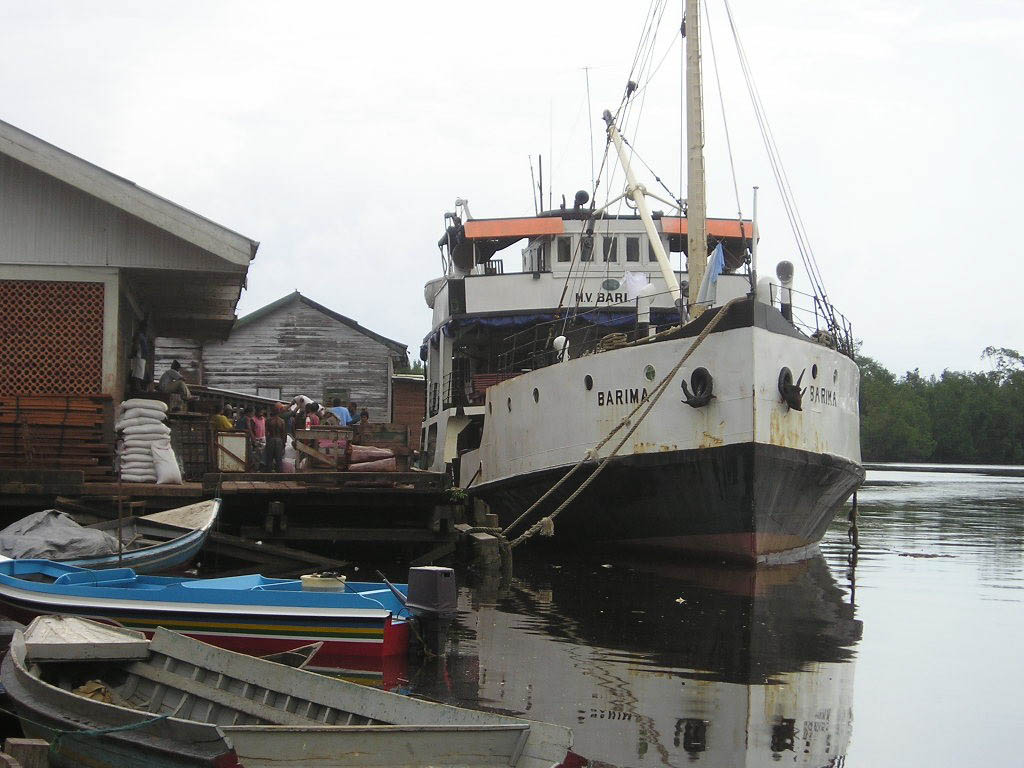
Luis Martinez, a 66-year-old Venezuelan national, died following a diving incident on 28 October 2026 during operations connected with the recovery of the MV Barima, which sank in July with a devastating loss of life.
The Guyana Police Force confirmed the incident on 1 November, four days after Martinez failed to return to the surface during an underwater operation approximately 10 nautical miles off Anna Regina, on Guyana’s Essequibo Coast.
Although the salvage contractor has attributed his death to an apparent heart attack, an independently verified medical cause of death has not been publicly established in the information reviewed.
Questions have also emerged about the involvement of Guyana’s maritime authorities and whether a separate investigation into the commercial diving operation has been initiated.
What Happened During the Fatal Dive?
According to the Guyana Police Force statement published on 1 November, Martinez departed Kingston Wharf in Georgetown at approximately 5:14 pm on 28 October, travelling with several other crew members to an operation intended to refloat a submerged vessel.
The incident occurred at approximately 6:30 pm.
Police reported that Martinez entered the water to carry out diving work but failed to resurface after approximately 20 minutes.
Concerned crew members subsequently recovered him using a rope attached to his body.
He was motionless when brought out of the water.
Martinez was transported to the Transport and Harbours Department Wharf at Stabroek in Georgetown, where emergency medical assistance was requested.
He was pronounced dead by a doctor at approximately 2:30 am on 29 October.
Police reported no visible signs of violence on the exposed parts of his body and said a post-mortem examination was required.
An investigation into the incident was subsequently announced.
Contractor Attributes Death to Apparent Heart Attack
The salvage operation was being carried out by BK International, which had been awarded the contract to recover the sunken MV Barima.
The company identified Martinez as a contracted, licensed diver working through the Venezuelan firm Salvamentos del Caribe C.A.
In a statement issued following the incident, BK International said information from a doctor aboard the salvage operation suggested that Martinez had pre-existing medical conditions and had apparently suffered a heart attack.
The company maintained that the salvage operation was being conducted in accordance with strict safety procedures and said arrangements were being made to assist Martinez’s family with the repatriation of his remains to Venezuela.
However, the contractor’s account should be distinguished from an independently established medical finding.
The available reports do not establish whether a heart attack occurred before, during or after the underwater emergency, and no confirmed post-mortem conclusion could be independently verified at the time of publication.
Questions Raised About Maritime Oversight
The incident has prompted further scrutiny of the arrangements surrounding the salvage operation, with new questions raised on 4 November about the response of Guyana’s Maritime Administration Department, known as MARAD, and whether the department had begun its own examination of the fatality.
The reporting also indicated that senior maritime officials may not have become aware of the incident until several days after it occurred.
Those accounts have not established whether MARAD was formally notified earlier through another channel.
Separately, questions have been raised about the decision to transport Martinez to Georgetown following his recovery rather than obtain medical assistance closer to the dive site.
The available police statement establishes the sequence of his recovery, transport and eventual pronouncement of death, but does not provide sufficient detail to determine whether alternative emergency arrangements were available or would have affected the outcome.
A full investigation would need to establish the diving procedures, equipment configuration, communications, medical support and emergency arrangements in place when the incident occurred.
There is currently insufficient verified information to conclude that any particular operational failure caused or contributed to Martinez’s death.
The MV Barima Ferry Disaster
The fatal diving incident occurred during efforts to recover the MV Barima, a passenger and cargo ferry that sank off Guyana’s Essequibo Coast on 18 July 2026.
The ferry disaster resulted in the loss of more than 100 lives and prompted an extensive search, rescue and recovery operation involving Guyanese authorities and international assistance.
In September, the Guyanese government formally established a Commission of Inquiry to investigate the sinking.
Its terms of reference include examining the vessel’s condition, operational decisions, regulatory compliance, emergency response and potential failures contributing to the original disaster.
The inquiry was also tasked with recommending measures to strengthen maritime safety and prevent similar tragedies.
The official terms of reference for the MV Barima Commission of Inquiry establish the scope of that investigation.
It is important to distinguish the inquiry into the ferry sinking from the separate police investigation into Martinez’s death. The existence of the former does not establish that the latter has been independently examined by maritime safety regulators.
Commercial Diving Safety Under Scrutiny
Unlike recreational scuba diving, commercial salvage diving can involve complex underwater tasks, restricted visibility, specialist equipment, surface communications and potentially hazardous working conditions.
The risks associated with any particular operation depend on the environment, equipment, working procedures and nature of the task.
For this reason, determining the circumstances of a fatal commercial diving incident requires more than identifying a possible medical event.
Investigators may need to establish the type of diving system used, the diver’s depth and working conditions, the availability of surface support, the emergency recovery procedure and the medical arrangements in place.
At present, the publicly available information does not establish Martinez’s working depth, breathing-gas arrangement, precise underwater task or the circumstances that prevented him from returning to the surface.
Those details are essential before any meaningful assessment of the incident’s causes can be made.
Investigation Remains an Important Next Step
The death of Luis Martinez has added another tragedy to the recovery operation following one of Guyana’s most serious maritime disasters.
Police have confirmed that an investigation was opened, while the contractor has offered an explanation involving an apparent medical emergency.
What remains unclear is whether the final medical findings have been formally released, whether maritime regulators are conducting a separate investigation and what conclusions, if any, have been reached about the emergency response.
For the wider diving industry, the incident illustrates why commercial diving fatalities require transparent, evidence-based examination.
Until the relevant findings are published, the cause of Martinez’s death and the factors that may have contributed to it should remain matters for investigation rather than speculation.

