

India’s coastline holds countless surprises for those willing to look beneath the surface. From colourful coral communities to the quiet movements of marine life, some of the country’s most memorable underwater experiences can happen far from its best-known diving destinations.
For me, one of those surprises came in Palk Bay, off Rameswaram in Tamil Nadu, where an unexpected change of plans led to my first encounter with a wild shark.
What began as a disappointing cancellation of a scuba dive became an experience that changed how I think about exploring the ocean.
Between Two Countries
Rameswaram sits on Pamban Island, off the southeastern coast of Tamil Nadu, surrounded by waters associated with Palk Bay and the Gulf of Mannar.
The region occupies a distinctive place in India’s cultural and natural heritage. Nearby, the chain of shoals known as Ram Setu, or Adam’s Bridge, stretches towards Sri Lanka.
In the Hindu epic Ramayana, the crossing is associated with Lord Rama’s journey to Lanka to rescue Sita. Today, Rameswaram remains an important pilgrimage destination, attracting visitors to the Ramanathaswamy Temple and the sacred waters of Agni Theertham.
Yet beyond the temples and religious traditions lies another remarkable world.
The shallow coastal waters support seagrass habitats, coral communities and a variety of marine life. Although the wider region faces environmental pressures, it remains an intriguing destination for anyone interested in India’s underwater biodiversity.
An Unexpected Change of Plans
I travelled to Palk Bay in August 2026, eager to experience the region through scuba diving and snorkelling.
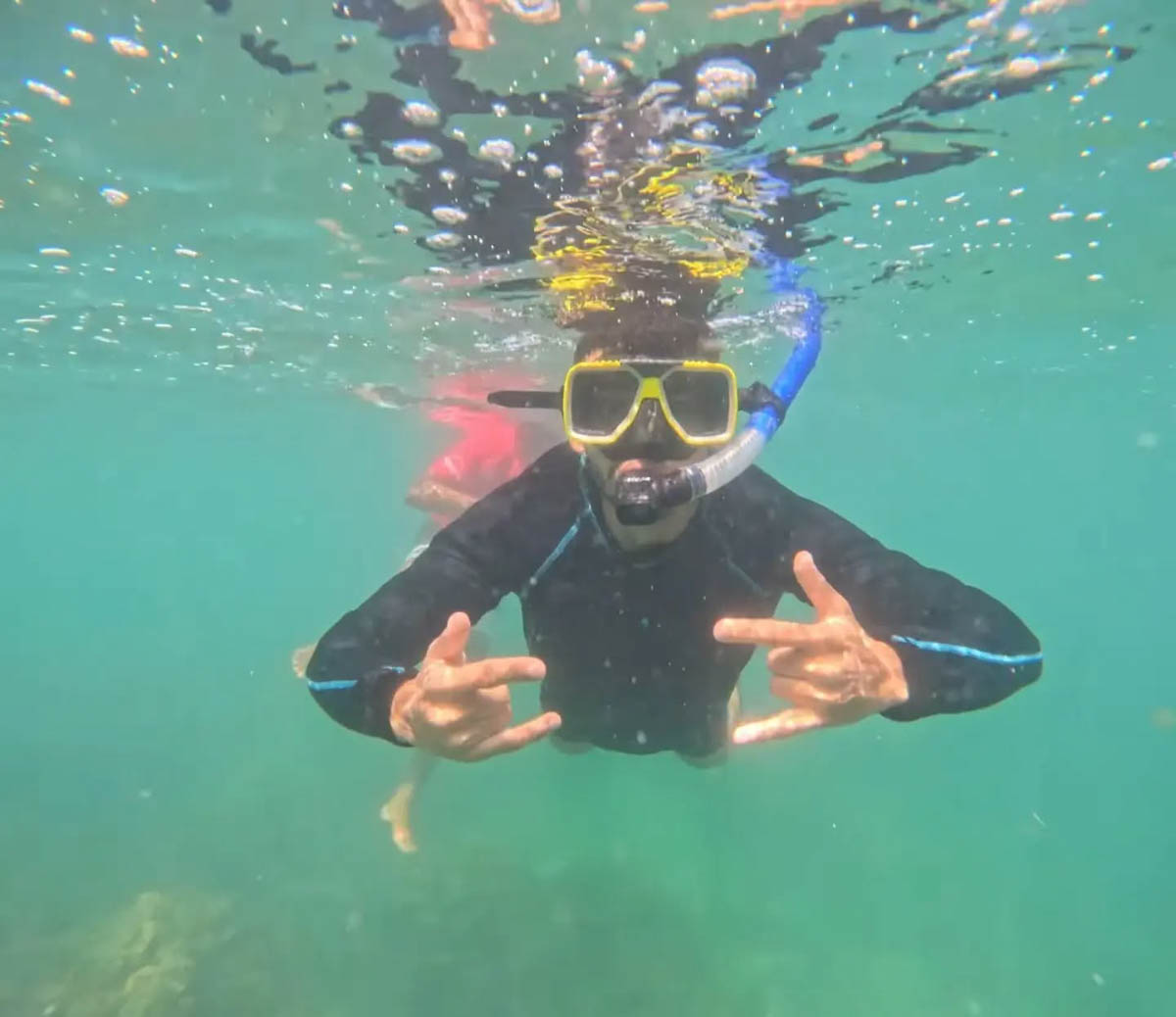
One afternoon, our planned scuba dive had to be cancelled because the boat was unavailable. Instead, we were offered the opportunity to go snorkelling.
Initially, I was disappointed. I had travelled a considerable distance hoping to explore the underwater world on scuba, and snorkelling felt like a compromise.
But once I entered the water, my disappointment quickly disappeared.
Without a tank, regulator and the additional equipment associated with scuba diving, I found myself moving through the water with a surprising sense of freedom.
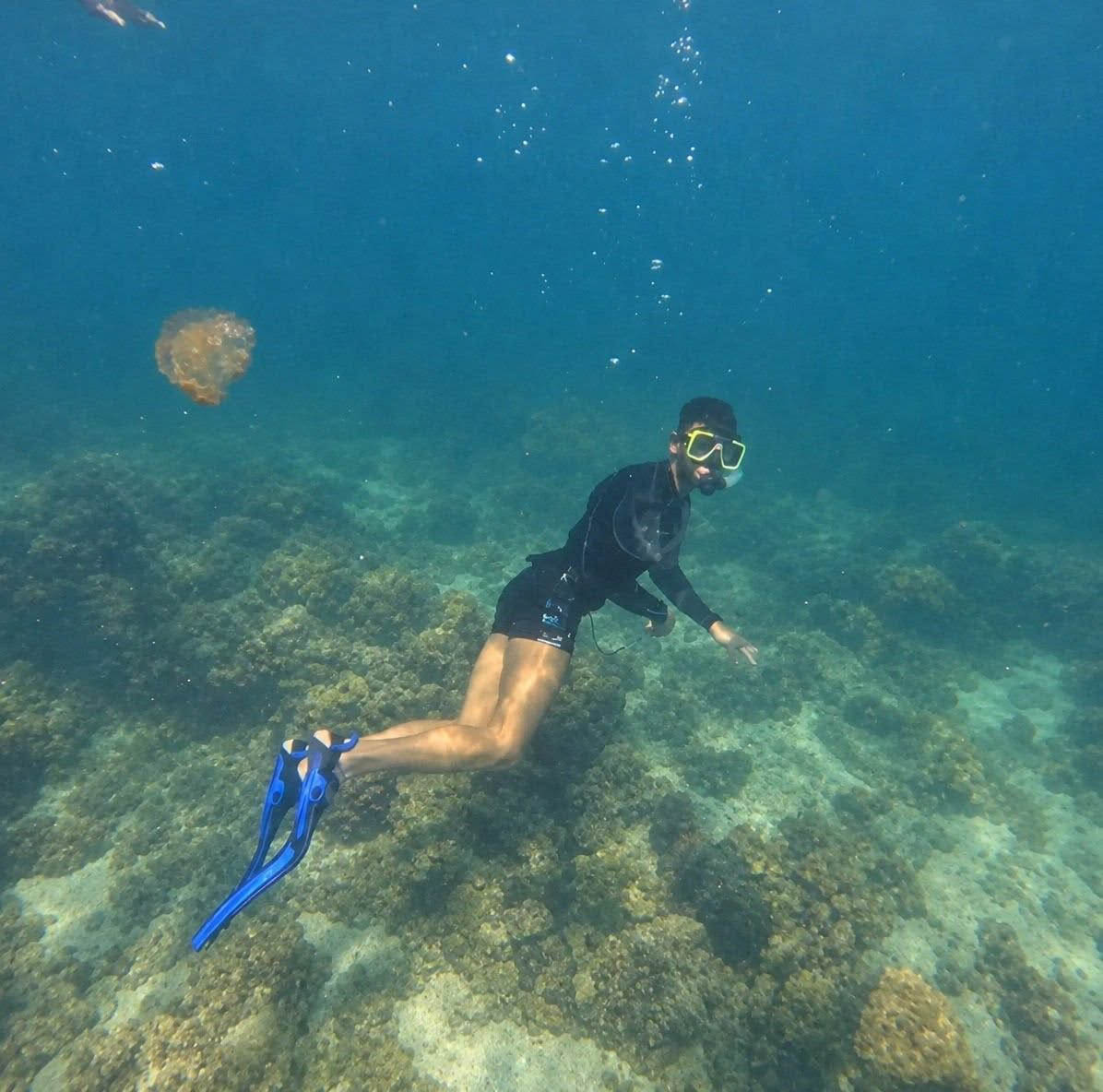
I began diving beneath the surface to take a closer look at the seabed and coral formations.
This technique, known as duck diving, allows snorkellers to descend beneath the surface using their body’s momentum.
I enjoyed the experience so much that, after returning home, I enrolled in a freediving programme.
It was an unexpected outcome from a day that had started with a cancelled dive.
A Small Shark on the Seabed
Less than ten minutes into our snorkelling session, something caught my attention.
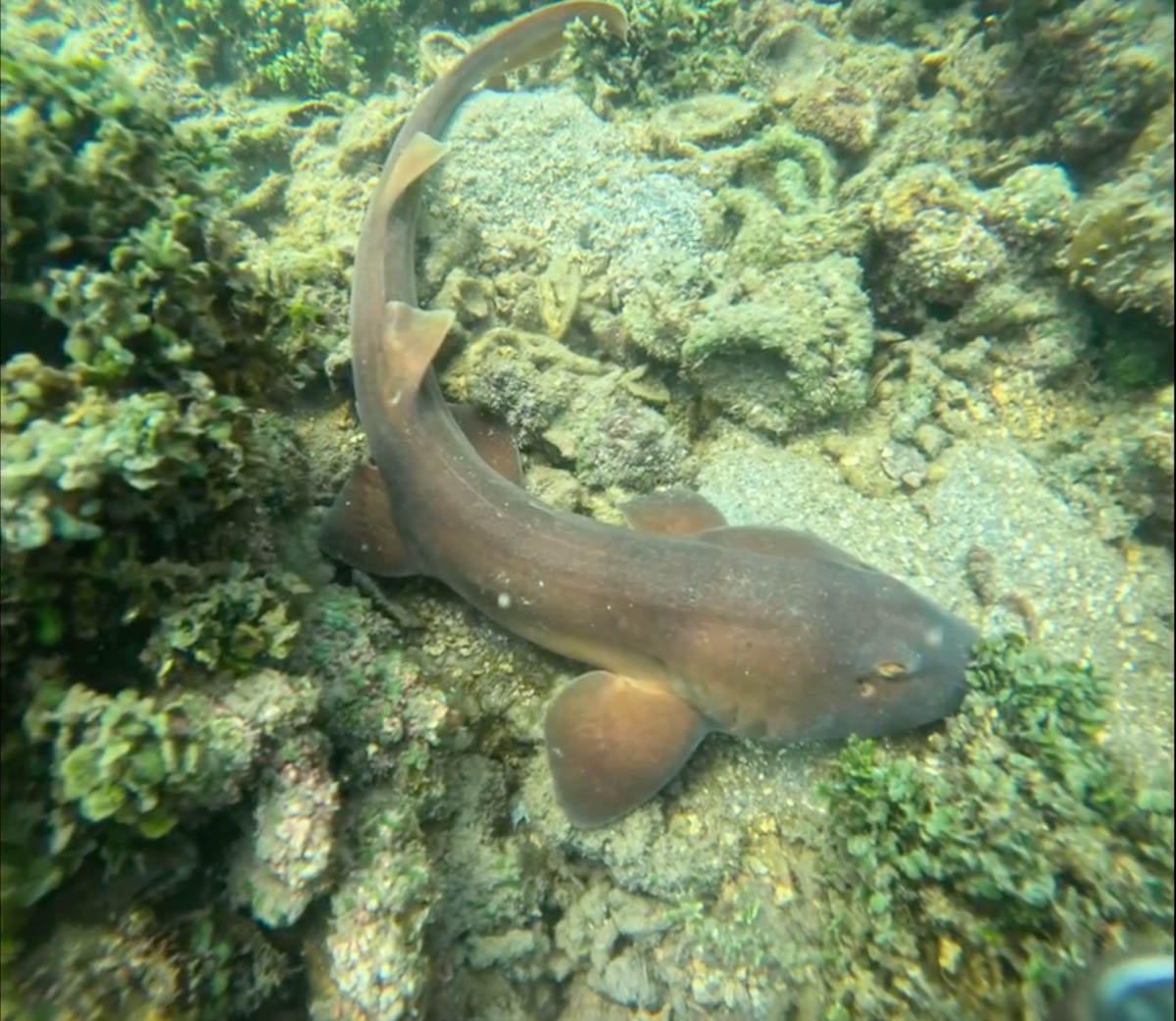
Resting on the seabed was a small shark, roughly the length of my palm.
I had never encountered a shark in the wild before, and discovering one so unexpectedly was extraordinary.
My dive guide identified the animal as a bamboo shark, a group of relatively small, bottom-dwelling sharks that includes species known for spending much of their time close to the seabed.
The precise species of the shark I encountered has not yet been independently confirmed.
Whatever its identity, the encounter was unforgettable.
There was something remarkable about seeing a shark resting quietly in its natural surroundings, particularly when I had entered the water expecting little more than an enjoyable snorkelling excursion.
Seeing the Ocean Differently
Back on the boat, we discussed how fortunate we had been to encounter the animal.
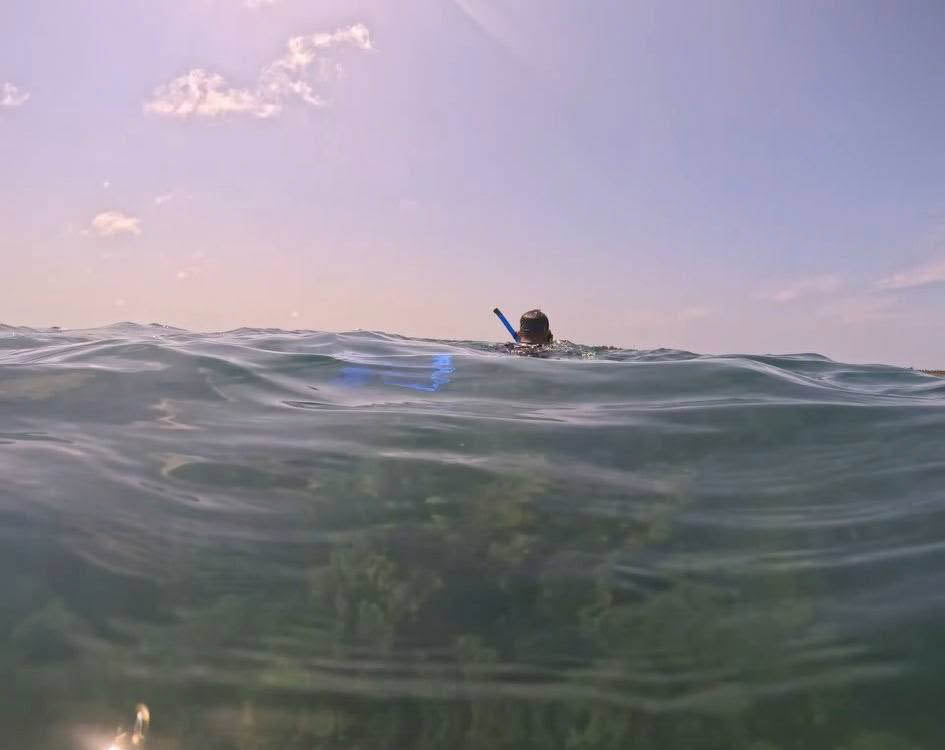
One possibility we considered was whether snorkelling had allowed us to approach the area differently from scuba diving.
Scuba equipment changes the way we move underwater. Open-circuit regulators produce bubbles, while tanks and other equipment affect our movement through the water.
Snorkelling offers a different experience, particularly when observing shallow habitats.
That does not necessarily mean snorkellers are more likely to encounter sharks or other marine animals. Wildlife encounters depend on numerous factors, including habitat, visibility, animal behaviour and chance.
But the experience reminded me that different ways of exploring the ocean can reveal different things.
Scuba diving allows us to remain underwater for extended periods. Snorkelling offers simplicity and freedom at the surface, while freediving provides another opportunity to experience the underwater environment.
Each has something valuable to offer.
The Value of an Open Mind
Two things made my visit to Palk Bay particularly memorable.
The first was encountering a wild shark for the very first time.
The second was discovering that the encounter happened during an activity I had initially considered a disappointing alternative to scuba diving.
Had our original plans gone ahead, the afternoon might have unfolded very differently.
Instead, I discovered a new enthusiasm for snorkelling and duck diving, and eventually found myself pursuing freediving.
The experience also reminded me how much remains to be discovered in India’s coastal waters.
We often approach a dive trip with particular expectations: a destination we want to explore, a species we hope to see, or a type of experience we imagine having.
Yet some of the most memorable moments happen when those expectations change.
For me, Palk Bay offered exactly that lesson.
Sometimes, the greatest underwater discoveries are the ones we never planned to make.
