



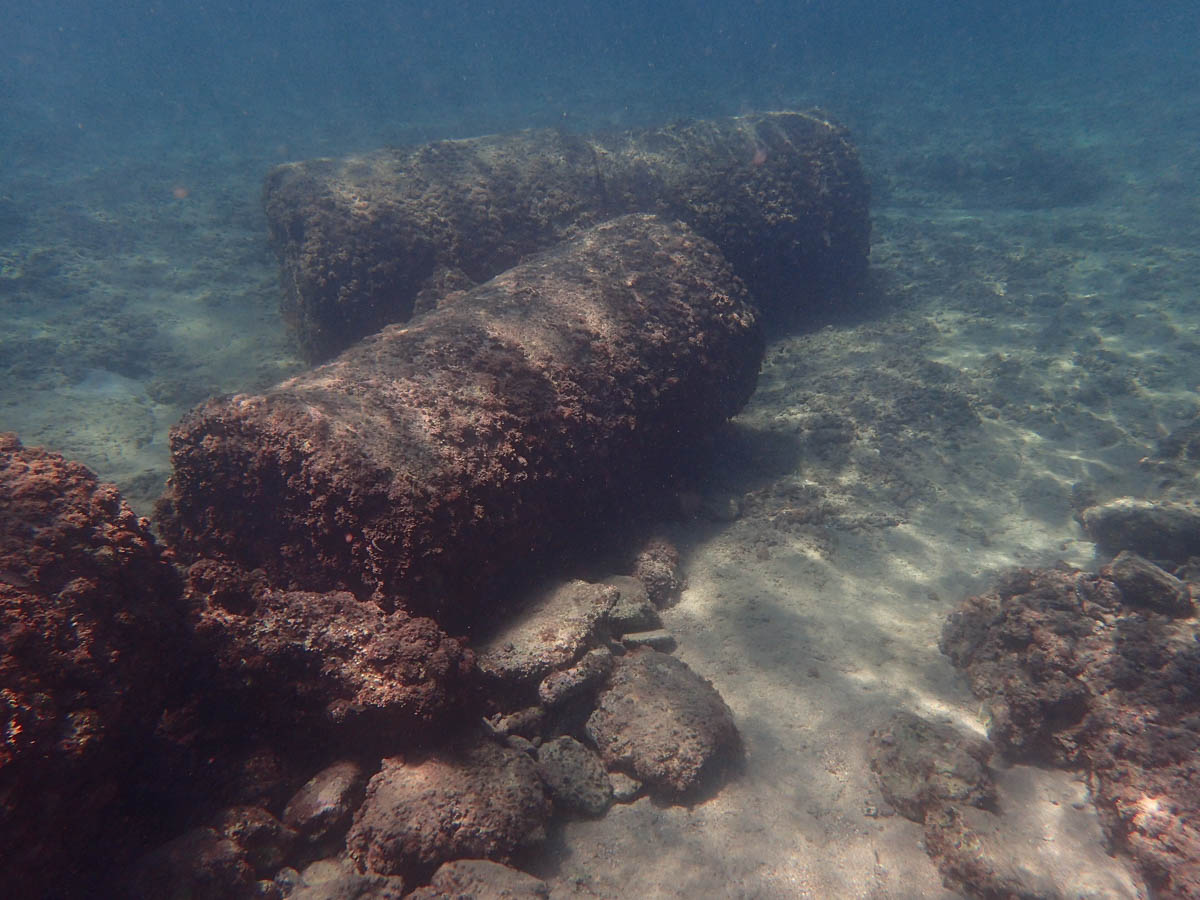
Divers are beginning to return to the ancient underwater ruins off Tyre in southern Lebanon, offering an early sign of recovery for a diving destination where thousands of years of Mediterranean history lie beneath the surface.
Underwater archaeological sites around the historic coastal city include submerged stone walls, harbour structures, ancient passageways and the remains of a road, forming part of a much larger archaeological landscape stretching from the Phoenician period through Greek and Roman occupation.
Diving activity around Tyre was severely disrupted during the recent conflict between Israel and Hezbollah. Now, following the ceasefire, local operators say divers are gradually returning to the water.
Yousef al-Jundi, manager of the Lebanon Diving Center, told the Associated Press that the season remains well below previous levels, but interest in visiting the submerged archaeological sites is increasing.
For Lebanon’s diving community, that return could prove important not only for individual operators but also for efforts to rebuild Tyre’s wider tourism economy.
Thousands of Years Beneath the Mediterranean
Tyre was one of the great maritime cities of the ancient Phoenician world, developing extensive trading networks across the Mediterranean before later becoming an important Greek and Roman centre.
Its surviving archaeological sites were inscribed on the UNESCO World Heritage List in 1984, while significant elements of the ancient settlement now lie beneath the Mediterranean.
For divers, that creates an unusual intersection between recreational diving and archaeology. Ancient structures can be encountered underwater close to the modern city, offering a glimpse of Tyre’s long relationship with the sea.
Recent dives have found the submerged remains apparently spared the damage suffered by some archaeological structures ashore.
That distinction has become increasingly important.
Tyre’s Heritage Under Pressure
Concerns about Tyre’s archaeological heritage intensified during the conflict.
ICOMOS reported in June that strikes had directly damaged areas associated with the World Heritage property, including the entrance precinct, administration buildings and archaeological warehouses. The organisation said a comprehensive assessment would be required to determine the full extent of damage.
The UNESCO World Heritage Committee subsequently placed Tyre on the List of World Heritage in Danger in July 2026.
UNESCO has also launched an emergency programme supporting damage and risk assessment, documentation and urgent safeguarding work at the site. The Heritage Emergency Fund project for Tyre is scheduled across 2026 and 2027.
While the underwater archaeology appears to have escaped significant conflict damage, its long-term protection presents a different challenge.
Ali Badawi of Lebanon’s Directorate General of Antiquities told AP that the submerged sites are not currently as well protected as authorities would like, with occasional encroachment remaining a concern.
Surveys, research and potential new legal protections are being considered.
Could Tyre Become an Underwater Archaeological Park?
Perhaps the most interesting development for divers is the possibility of expanding organised access to the underwater heritage.
Lebanese authorities are considering further investment in underwater tourism, including the potential creation of underwater archaeological parks.
Done carefully, such projects could serve two purposes: opening Tyre’s submerged history to more divers while creating a framework for protecting sensitive archaeological remains.
Underwater archaeological parks already provide this balance at a number of Mediterranean destinations, combining controlled visitor access with conservation, research and interpretation.
For Tyre, the concept could also become part of rebuilding the city’s tourism economy.
The immediate recovery remains fragile. Visitor numbers have not returned to their previous levels and the World Heritage property itself remains officially classified as being in danger.
But divers returning to Tyre represent something more tangible than plans for a future tourism revival.
They are already back in the water.
And beneath them remains an extraordinary archaeological landscape connecting modern Lebanon with one of the Mediterranean’s great maritime civilisations.

