



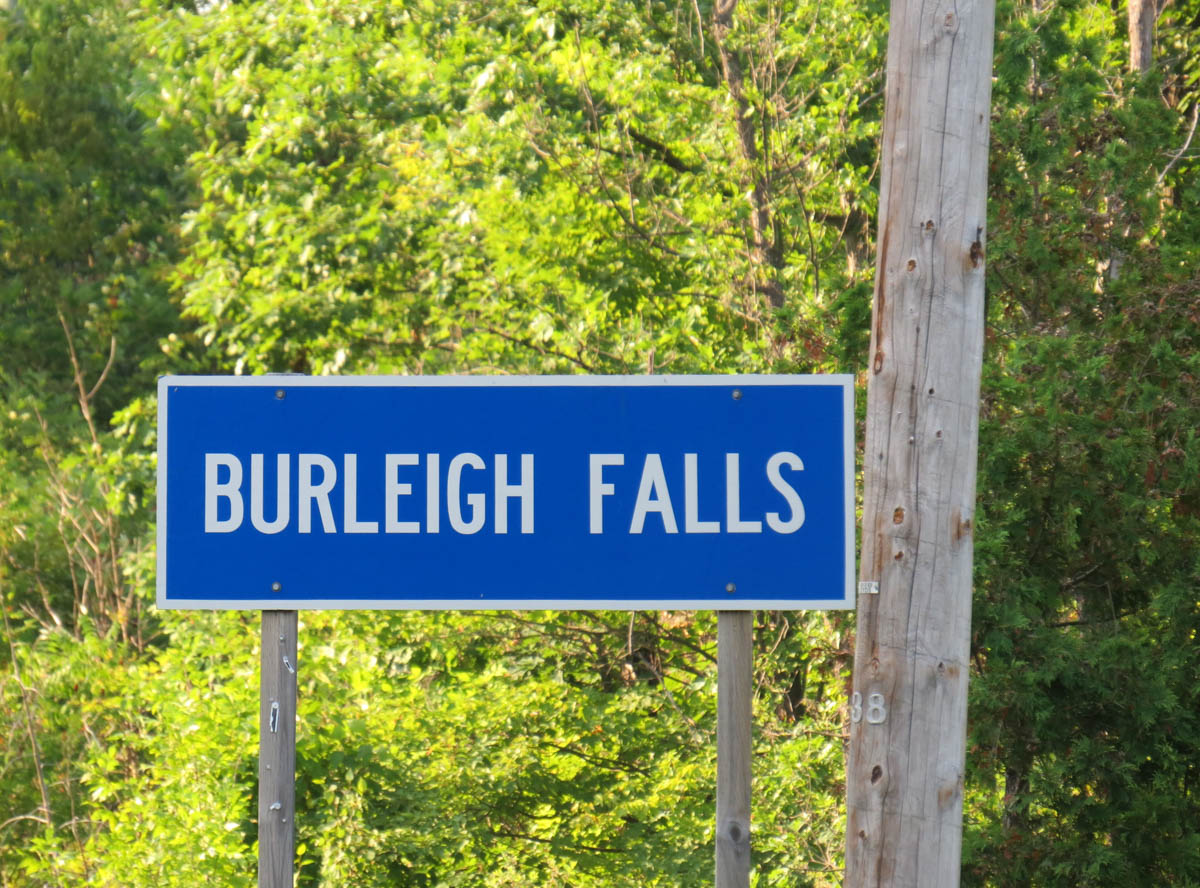

A long-established scuba diving access point at Burleigh Falls in Ontario has been blocked by concrete barriers and no-trespassing signs, leaving local divers facing uncertainty over the future of a site used for training and recreational diving.
The change came to wider attention earlier this month when Global News reported that residents and scuba divers were questioning the installation of barriers at a familiar water-access point.
The report said a local scuba school had lost access to a location it had used for decades, with questions remaining over why access had been restricted.
Burleigh Falls, north of Peterborough, has long been known within Ontario’s diving community as a shore-diving location. The site is not considered a simple entry-level recreational dive, with current, darker water and changing conditions forming part of the environment.
Local operator Dive Kawartha describes Burleigh Falls as an advanced shore-diving site, with dives typically reaching depths of around 30 to 70 feet depending on the route and side of the falls being explored.
An Established Training Site
The impact potentially extends beyond recreational divers.
Peterborough-based Adventure Divers lists Burleigh Falls among the locations used for its open-water evaluation dives.
Its published training information describes students meeting at the conservation area off Old Burleigh Road at the lower end of the falls to complete two shore dives.
That makes the access issue particularly significant locally. Burleigh Falls has not simply been an occasional entry point for visiting divers, but part of the area’s established diver-training infrastructure.
The Scuba News approached Adventure Divers for further comment on the situation but had not received a response at the time of publication.
Parks Canada Rules Out Its Involvement
One question surrounding the restrictions has been whether the access changes were connected to Parks Canada, which operates the nearby Trent-Severn Waterway and Lock 28 at Burleigh Falls.
The Scuba News contacted Parks Canada seeking clarification.
Karen Feeley of Parks Canada confirmed to The Scuba News that the area affected by the barriers and signage is not under Parks Canada jurisdiction and does not fall within the agency’s responsibility.
That distinction is important.
Parks Canada’s Lock 28 facility at Burleigh Falls forms part of the Trent-Severn Waterway National Historic Site, but the presence of Parks Canada infrastructure nearby does not mean the disputed dive-access area itself is controlled by the federal agency.
The identity of the authority or landowner responsible for the current barriers and signage remains unclear.
Access at Burleigh Falls Has Been Complicated Before
Questions surrounding public access to Burleigh Falls are not entirely new.
In July 2020, the Ontario Ministry of Natural Resources and Forestry closed Crown land adjacent to the falls following complaints concerning overcrowding, littering, parking and other visitor behaviour.
Contemporary reporting by kawarthaNOW documented that closure, which was enforced by the ministry and Peterborough County OPP.
Importantly, mapping examined at the time showed a mixture of Crown and privately owned land around the falls, while ownership of some areas, including land beside the rapids along Old Burleigh Road, was not identified by the Crown Land Use Policy Atlas.
That complicated land picture makes it particularly important not to assume that the latest barriers represent either a Parks Canada decision or a blanket prohibition on diving at Burleigh Falls.
What Happens Next?
For divers, the immediate practical issue is straightforward: a shore entry that has been routinely used is currently obstructed and marked with no-trespassing signage.
Divers should respect the barriers and posted restrictions rather than attempting to enter through the affected land while questions surrounding access remain unresolved.
The larger issue is what happens next.
Burleigh Falls has an established history within the Ontario diving community, including use for diver education. Losing a recognised shore access point can therefore have consequences extending beyond individual recreational dives.
For now, Parks Canada has removed one major area of uncertainty by confirming that it is not responsible for the affected site.
The Scuba News will continue trying to establish which authority or landowner controls the restricted access point, why the barriers were installed, and whether there is any prospect of organised scuba access returning to the site.
This story will be updated if further information becomes available.
Comments