


Affiliate Disclosure: Some content on The Scuba News may include affiliate links. Find out how this supports our work.
Few pieces of scuba equipment have a greater impact on your comfort, confidence and enjoyment underwater than your buoyancy control device (BCD).
A good BCD does far more than simply hold your cylinder. It affects your trim, buoyancy, breathing effort, equipment configuration and even how tired you feel after a dive.
Whether you’re buying your very first BCD or replacing one that’s seen hundreds of dives, choosing the right model isn’t about buying the most expensive option—it’s about finding the one that best matches the type of diving you actually do.
Here’s everything you need to know before investing.
What Does a BCD Actually Do?
A buoyancy control device has several important jobs:
- Holds your scuba cylinder securely
- Allows you to add or release air to maintain neutral buoyancy
- Keeps you comfortably afloat on the surface
- Provides attachment points for accessories
- Often incorporates integrated weight systems
Modern BCDs are designed to improve comfort and underwater positioning, but different designs excel in different environments.
The Three Main Types of BCD
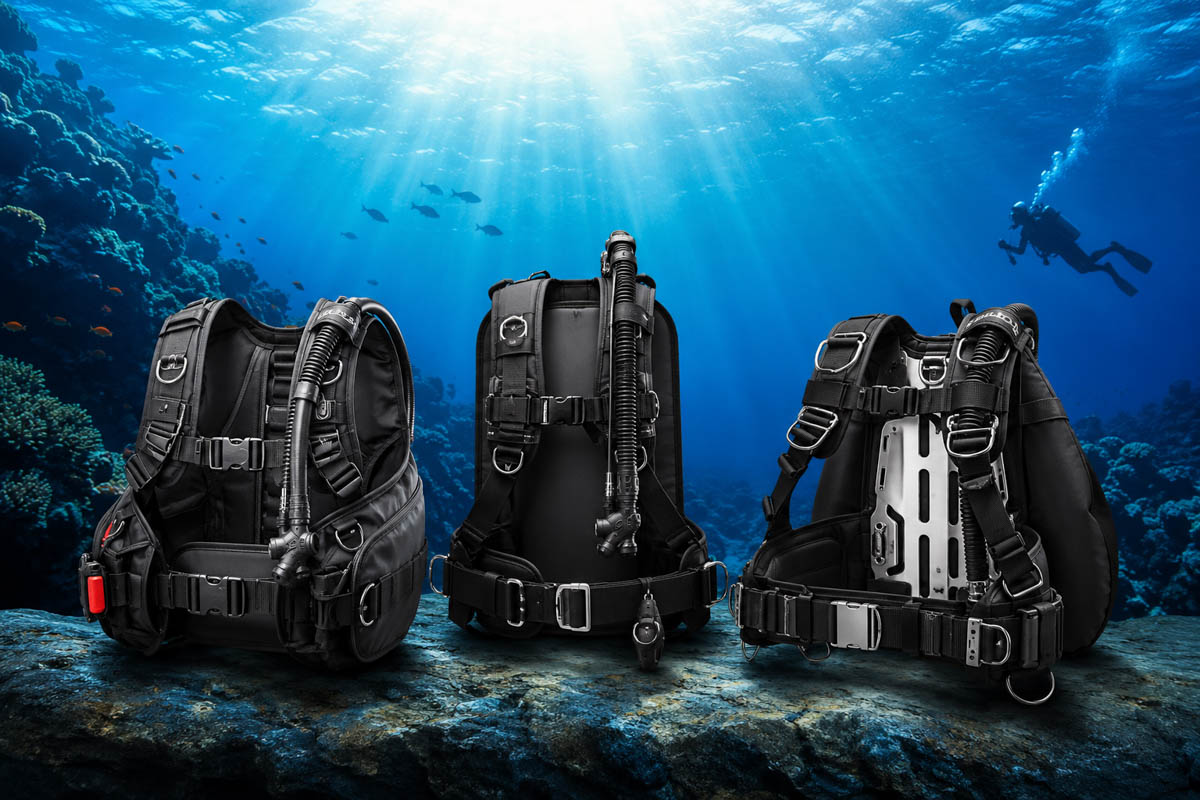
Jacket BCD
The classic recreational design.
The air bladder wraps around your sides and back, creating a familiar “vest” shape that most divers first experience during certification.
Best for
- New divers
- Holiday divers
- Dive training
- Rental replacements
- General recreational diving
Advantages
- Extremely stable on the surface
- Very intuitive to use
- Comfortable for beginners
- Plenty of pockets
- Usually includes integrated weights
Considerations
When fully inflated, some divers feel the bladder squeezes the torso slightly. They also tend to encourage a more upright position underwater compared with other designs.
Back-Inflate BCD
Instead of wrapping around the diver, the buoyancy cell sits almost entirely behind your back.
This creates a cleaner, more streamlined profile underwater.
Best for
- Intermediate divers
- Frequent travellers
- Photographers
- Divers looking to improve trim
Advantages
- Better horizontal swimming position
- Less restriction around the chest
- Reduced drag
- Generally lighter for travel
Considerations
Some new divers notice they need a little practice getting comfortable on the surface because the lift comes primarily from behind. Once adjusted, many divers appreciate the improved freedom of movement.
Backplate and Wing Systems
Often simply called “BP/W”.
Rather than being a single unit, these are modular systems consisting of:
- Backplate
- Harness
- Separate wing
- Optional accessories
They’re popular with technical divers because components can be upgraded individually.
Best for
- Technical divers
- Wreck divers
- Cave divers
- Experienced recreational divers
- Divers wanting one system for many environments
Advantages
- Highly modular
- Excellent trim
- Extremely durable
- Easy to customise
- Can grow with your diving
Considerations
There is a slightly steeper learning curve, and they generally include fewer comfort features than traditional jacket BCDs.
How Should Your BCD Fit?
Even the highest-rated BCD becomes frustrating if it doesn’t fit properly.
When trying one on:
- Wear the exposure suit you normally dive in
- Tighten shoulder and waist straps fully
- Ensure the tank sits comfortably
- Inflate the BCD completely
- Check it doesn’t ride up excessively
- Confirm you can easily reach dump valves and inflator
A properly fitted BCD should feel secure without restricting breathing or shoulder movement.
Integrated Weights or Weight Belt?
Many modern BCDs now include integrated weight pockets.
Advantages
- Improved comfort
- Cleaner profile
- Less equipment around the waist
- Easier entry and exit
Regardless of the system you choose, make sure you’re familiar with the emergency release mechanism before every dive.
How Much Lift Do You Need?
Lift capacity is often misunderstood.
More lift isn’t automatically better.
The correct amount depends on:
- Your body size
- Wetsuit or drysuit
- Cylinder material
- Amount of additional equipment
- Type of diving
Most recreational divers simply need enough lift to comfortably support themselves and their equipment on the surface. Oversized lift isn’t necessary for typical holiday diving.
Features Worth Paying For
Some extras genuinely improve day-to-day diving.
Consider looking for:
Multiple D-rings
Useful for attaching:
- SMBs
- Torches
- Cameras
- Reels
- Slates
Trim Weight Pockets
Help fine-tune body position underwater.
Adjustable Chest and Waist Straps
Especially helpful if you dive in both tropical and cold-water exposure suits.
Quality Dump Valves
Easy-to-operate dump valves make buoyancy adjustments smoother and more predictable.
Durable Materials
Frequent divers should prioritise abrasion-resistant fabrics and reinforced stitching over cosmetic features.
Travel Divers Have Different Priorities
If most of your diving involves flying overseas, weight matters.
Travel-specific BCDs often feature:
- Lightweight construction
- Compact folding design
- Reduced bulk
- Quick-drying materials
They may sacrifice some storage pockets but can save valuable luggage weight.
When Is It Time to Upgrade?
Many divers begin with a simple jacket BCD before eventually moving to back-inflate or wing systems.
Common reasons include:
- Improving underwater trim
- Travelling more frequently
- Starting technical training
- Carrying underwater camera systems
- Wanting more customisation
There’s no rule saying every diver should eventually move to a wing system. Plenty of highly experienced recreational divers continue using jacket-style BCDs because they suit their diving perfectly. Community discussions consistently reinforce that the “best” BCD is the one that fits your diving style rather than following trends.
Before You Buy
Ask yourself:
- Where will I dive most often?
- Warm water or cold water?
- Will I travel regularly?
- Do I plan to move into technical diving?
- Do I want a modular system?
- Can I comfortably lift and carry it?
Buying based on your actual diving—not the diving you might one day do—is usually the smartest investment.
Final Thoughts
Your BCD is one of the few pieces of equipment you’ll use on every dive. Choosing one that fits properly, matches your diving style and provides room to grow will improve comfort, buoyancy control and confidence underwater for years to come.
Don’t rush the decision. If possible, try different styles during demo days or while travelling before committing to a purchase. A few test dives can tell you more than hours of reading specifications.
