




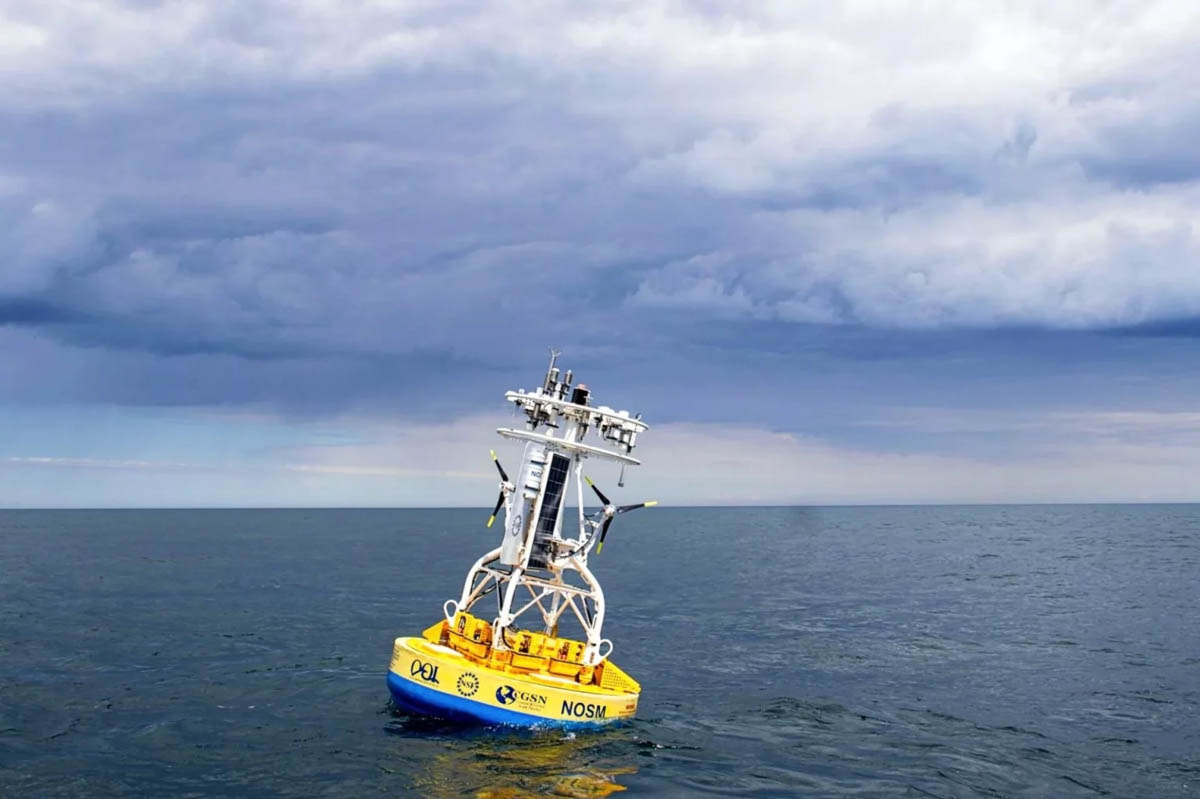

One of the world’s largest and most sophisticated ocean observation systems is being scaled back, prompting concern among marine scientists who warn that the loss of long-term ocean data could have consequences far beyond the research community.

The U.S. National Science Foundation (NSF) has begun a process it describes as a “descoping” of the Ocean Observatories Initiative (OOI), a network of more than 900 instruments deployed across the Atlantic and Pacific Oceans. The system has been continuously collecting real-time data on ocean temperatures, currents, marine ecosystems, ocean chemistry and climate-related changes since becoming fully operational in 2016.
According to announcements published by the Ocean Observatories Initiative itself, the NSF plans to remove in-water infrastructure from several major observing arrays, including sites off the coasts of Oregon, Washington, North Carolina, Alaska and the Irminger Sea between Greenland and Iceland. Recovery operations are already underway in some regions and are expected to continue over the next 15 months.

The decision has attracted significant attention across the scientific community because the OOI was originally designed as a long-term observing programme capable of delivering decades of continuous ocean measurements. Researchers have used the data to study marine heatwaves, ocean acidification, fisheries variability, climate change, harmful algal blooms and major ocean circulation systems.
The monitoring network forms part of a wider international effort to understand how the oceans influence weather, climate and marine ecosystems. Scientists interviewed by multiple media outlets have argued that long-running datasets become increasingly valuable over time because they allow researchers to identify trends that may take years or decades to emerge.
The NSF has rejected suggestions that the programme is being entirely cancelled, stating that the move aligns with broader efforts to prioritise emerging scientific opportunities and manage research infrastructure throughout its lifecycle. However, the agency has not provided detailed information about what monitoring capability will remain once the recovery process is complete.
The Ocean Observatories Initiative itself has confirmed that as infrastructure is recovered from each observing array, the associated real-time data streams and observing capabilities at those locations will end. The organisation says all previously collected data will remain available to researchers and the public.
For ocean scientists, one of the biggest concerns is the interruption of continuous records that have now reached the ten-year mark. Long-term observations are widely regarded as essential for understanding changes in ocean circulation, marine ecosystems and the impacts of a warming climate. Several researchers have warned that rebuilding a similar system in the future could prove difficult if specialised expertise and infrastructure are lost during the shutdown process.
The move comes amid broader debates about federal science funding in the United States. Reports from Associated Press, Scientific American and other outlets indicate that proposed budget reductions would cut funding for the Ocean Observatories Initiative by roughly 80%, effectively forcing the decommissioning of much of the network.
While the decision is primarily a science and policy issue, the data generated by the OOI have contributed to research relevant to marine conservation, fisheries management, ocean forecasting and the understanding of environmental changes affecting coastal and offshore ecosystems worldwide. For divers, ocean advocates and marine researchers, the future of one of the planet’s most ambitious ocean-observation programmes remains uncertain as recovery operations begin.
Comments