


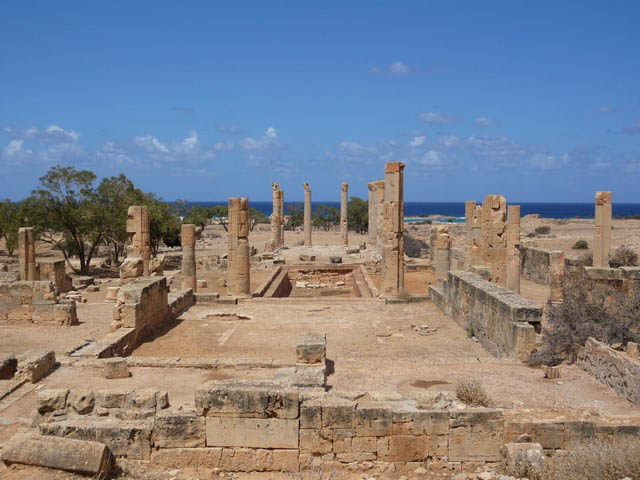
Archaeologists working along Libya’s Mediterranean coastline say they have identified a remarkable cluster of ancient shipwrecks near the ruins of the ancient port city of Ptolemais.
Researchers believe the area may represent an underwater ship graveyard that could reveal new insights into ancient trade routes across the Mediterranean.
The discovery was first highlighted in a report from archaeology publication Arkeonews, which cited findings from archaeologists surveying the seabed near the historic harbour.
According to the report, multiple wreck sites have been identified close to the ancient port, suggesting repeated ship losses in the area over many centuries.
A Strategic Ancient Harbour
The ruins of Ptolemais in Cyrenaica lie along Libya’s eastern Mediterranean coast and once formed part of the Pentapolis, a network of influential Greek and Roman cities.
Founded during the Hellenistic period, the city later became a major maritime hub linking North Africa with trading routes across the Mediterranean.
Ships travelling between Greece, Egypt and the Levant would have passed through these waters carrying cargo ranging from ceramics and metals to grain and olive oil.
Storms, navigational hazards and heavy maritime traffic likely contributed to numerous shipwrecks around the harbour.
A Window Into Mediterranean Maritime History
Underwater archaeology in Libya remains relatively limited compared with other parts of the Mediterranean, partly due to decades of political instability and restricted access to coastal research areas.
However, the coastline of Cyrenaica is widely believed to contain significant maritime heritage.
Researchers involved in the project are working as part of the Polish Archaeological Mission, which has been studying ancient sites in the region for many years.
Their work forms part of a broader effort to document underwater cultural heritage along Libya’s coast and protect it from looting or environmental damage.
What Divers Might Discover in the Future
If the wreck cluster is mapped and studied in greater detail, it could become one of the most significant underwater archaeological zones along the North African Mediterranean coast.
Future research could reveal ancient cargo vessels, harbour infrastructure, anchors and amphora cargo fields scattered across the seabed.
Each discovery adds another piece to the story of how ancient maritime trade connected Africa, Europe and the Near East thousands of years ago.
For now, archaeologists believe they have only begun to uncover what lies beneath the waters off Ptolemais.

