



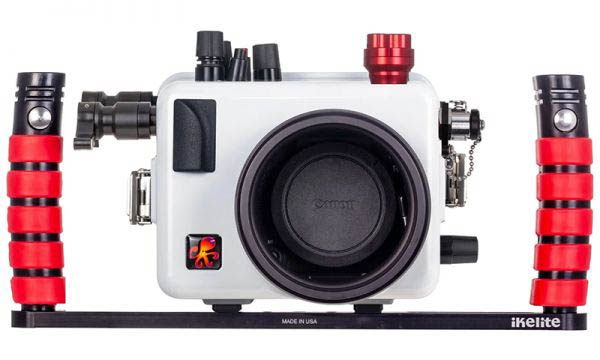

Underwater imaging manufacturer Ikelite has unveiled a fiber-optic version of its housing for the Canon EOS R8, giving photographers a more streamlined path to automatic flash exposure underwater.
According to a report in Dive Photo Guide, the updated model replaces the earlier electrical bulkhead configuration with a preinstalled fiber-optic TTL transmitter, signalling a clear shift toward optical strobe connectivity.
Built for Control Beneath the Surface
The integrated transmitter communicates directly with compatible fiber-optic strobes, enabling automatic TTL exposure while still allowing photographers to fine-tune flash compensation through the camera body.
The housing is constructed from Ikelite’s corrosion-resistant ABS-PC blend and is factory pressure tested to depths of 200 feet, or 60 metres, positioning it squarely within the operational range expected by advanced recreational and many technical photographers.
A vacuum leak detection system is included as standard, adding an additional layer of security before entering the water. Dual tray mounts with ergonomic handles are also supplied to improve stability when shooting in challenging conditions such as current or surge.
Supporting Both New and Existing Lighting Systems
While the move toward fiber optics reflects broader industry momentum, Ikelite has ensured that photographers with existing equipment are not left behind. Legacy DS strobes remain compatible through the RC2 Fiber Optic Receiver, allowing gradual system upgrades rather than forcing immediate reinvestment.
This flexibility is increasingly important as underwater imaging setups become more modular, with many photographers preferring to evolve their rigs over time rather than replace them outright.
Part of a Wider Strategic Direction
The release aligns with a broader transition across the underwater imaging sector, where fiber-optic triggering is gaining traction thanks to simplified maintenance, fewer failure points, and easier travel logistics compared with traditional electrical sync cords.
For traveling photographers in particular, reducing reliance on bulkheads and cables can translate into faster setup times and fewer potential issues on remote dive expeditions.
What It Means for Underwater Photographers
For Canon EOS R8 users, the updated housing delivers a combination of reliability, automation, and adaptability. Automatic TTL exposure helps shorten the learning curve for newer shooters while still offering the control experienced photographers expect.
Just as importantly, the announcement reinforces Ikelite’s ongoing commitment to refining existing platforms rather than abandoning them, a move likely to resonate with photographers who prioritise long-term system support when investing in underwater equipment.
As fiber-optic technology continues to mature, releases like this suggest the future of underwater lighting may be increasingly cable-free.
Comments