



Playa del Carmen sits in a uniquely “stacked” diving location: within easy reach you have Caribbean reefs, world-famous drift diving in Cozumel, and an inland labyrinth of crystal-clear cenotes and cave systems unlike anything else on Earth. Few places offer this much variety without complicated logistics—meaning you can build an entire dive holiday here (or use it as a base) and never repeat the same style of diving twice.
As Santiago Hermosa, cofounder of Jaguar Divers a Scuba Shop in Playa del Carmen, puts it: “Scuba diving here is amazing, cenotes, cozumel, bull sharks, turtles, caves, you name it, we have it”
Below are the top ten reasons divers keep ranking Playa del Carmen among the world’s most compelling scuba destinations.
1) Cenote diving: crystal-clear freshwater and surreal light
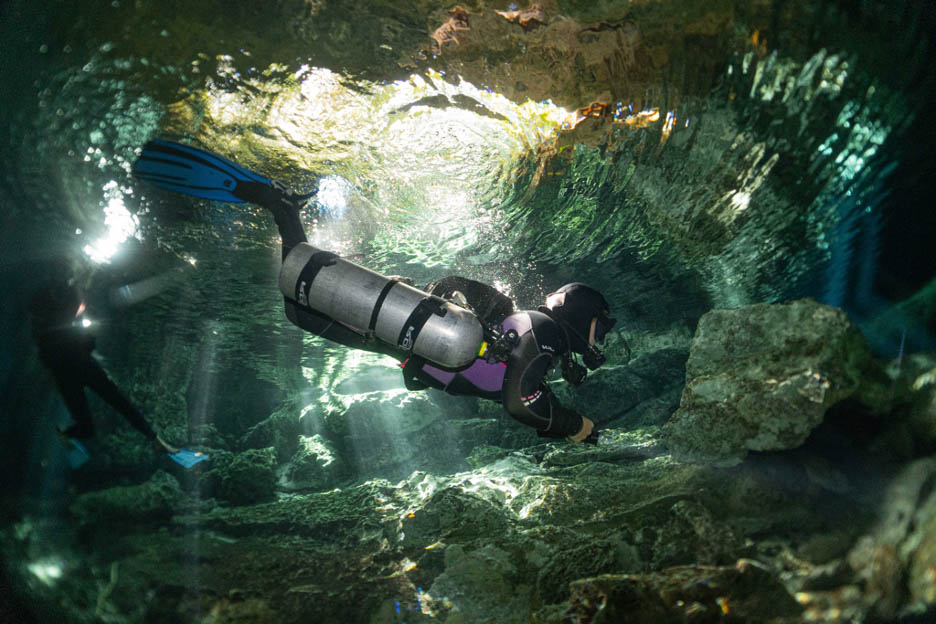
Cenotes are the signature experience of the Riviera Maya: freshwater caverns with extraordinary visibility, dramatic beams of sunlight, limestone formations, and that unmistakable “cathedral” feeling. This is not typical reef diving—buoyancy control, trim, and calm finning matter more, and the reward is a sense of floating through geology and light. Many cenotes also feature a halocline (a shimmering interface where freshwater meets saltwater), creating a visual effect that feels almost cinematic. For divers who want something genuinely different, cenotes are often the highlight of the entire trip.
2) Cozumel Marine Park: world-class drift diving a short ferry ride away
Playa del Carmen is the most convenient mainland base for diving Cozumel—one of the Caribbean’s iconic reef destinations. Cozumel’s protected marine park delivers what many divers travel across the world to find: wall dives, healthy coral structures, big sponges, turtles, and consistent drift conditions that make you feel like you’re flying. The best part is practical: you can stay in Playa and still access Cozumel’s top sites efficiently, combining “island-level” reefs with mainland variety in the same week.

3) Bull shark season: one of the region’s most thrilling winter encounters
Playa del Carmen is internationally known for seasonal bull shark encounters, typically during the winter months (often roughly November through February). These dives are a controlled, rules-driven experience with strict protocols—done properly, they are about calm observation and respect, not adrenaline-driven chaos. For many experienced divers, this is a bucket-list wildlife moment: large, powerful animals in blue water, in a predictable seasonal window, within minutes of town.
4) Whale shark season: a summer mega-fauna day trip from your dive base
In summer, the region shifts gears: whale sharks arrive in waters off the northern coast (commonly accessed via Isla Mujeres/Holbox-area departures). While whale shark encounters are generally snorkeling (not scuba), they pair perfectly with a Playa-based dive trip: you can do cenotes and reefs on some days and dedicate one day to swimming alongside the largest fish in the sea. It’s a rare destination advantage—big-animal seasonality that complements, rather than replaces, your diving.
5) Sailfish season: high-speed action in the Caribbean (seasonal)
For wildlife-focused travelers, sailfish encounters add another dimension. In winter (often peaking around January to March), sailfish hunt bait balls in the Caribbean north of the area, and seasonal trips can put you in the water to witness that speed and precision up close (typically via snorkeling encounters). The key benefit from Playa del Carmen is access: you can plan a week that includes reef diving, cenotes, and a dedicated pelagic wildlife day without changing hotels or reorganizing your whole itinerary.
6) A “living museum” underground: cave systems with fossils and ancient remains
Beyond recreational cavern routes, the wider cave systems of Quintana Roo have extraordinary scientific and cultural significance. Some submerged passages have yielded Pleistocene animal fossils and ancient human remains, evidence of landscapes that were once dry during lower sea levels. This is not “tourism content”—it’s heritage. The most important point for divers is mindset: these environments demand humility, conservation awareness, and strict adherence to access rules. Done responsibly, it’s a powerful reminder that diving here isn’t only about marine life—it’s also about time, geology, and human history.
7) Wreck diving + eagle ray sightings: structure, life, and seasonal magic
If you like wrecks, the area delivers. Cozumel’s famous wreck (commonly referred to as the C-53) offers a classic artificial-reef profile with plenty of structure and marine life, and nearby sites in the region add even more variety. But the highlight of wreck diving is the C56 Juan Escutia off Puerto Morelos (25 minutes drive from Playa). A huge reef of almost 60 meters in length tha twas sunk in the year 2000. Combine that with winter eagle ray activity—up to 20 mature eagle rays aggregate there during the winter months—and you have a compelling “wide-angle” reason to dive here: big animals gliding past reefs and wrecks, often in squadron-like formations, creating some of the most elegant encounters you’ll ever photograph.
8) Local reefs for easy, confidence-building dives (and great training)
Not every day needs to be advanced, deep, or highly technical. One of Playa del Carmen’s strengths is having accessible local reefs that work beautifully for newer divers, refreshers, photographers who want shallow bottom time, and anyone who simply wants relaxed Caribbean diving. These sites can also be ideal for courses and skill development—buoyancy work, navigation, SMB practice—without sacrificing the fun of turtles, rays, and reef fish. That mix is valuable: the destination supports both “vacation divers” and progression-minded divers.
9) Blackwater dives off Cozumel: the pelagic “outer space” experience
For advanced divers who want something truly unusual, blackwater diving off Cozumel is a standout. This is open-ocean night diving over deep water, using lights to attract pelagic larval and deep-sea creatures during their nightly vertical migration. The experience is equal parts adrenaline and wonder—tiny translucent animals, strange silhouettes, and bioluminescent oddities you simply won’t see on a reef. It’s specialized, conditions-dependent, and not for everyone—which is exactly why it’s such a powerful reason Playa del Carmen (via Cozumel access) ranks so highly.
10) A rare “do-it-all” hub: maximum variety with minimum friction
Many top dive destinations are incredible at one thing—reefs, wrecks, caves, or big animals. Playa del Carmen is exceptional because it’s a hub for all of it. You can plan a single trip that includes cenotes, reefs, walls, wrecks, seasonal sharks, and pelagic wildlife experiences—without long transfers or complex travel days. Add strong tourism infrastructure, easy access from major airports, and a deep bench of professional dive operations, and you get what every diver wants: more bottom time, more variety, and fewer logistical compromises.
Comments