


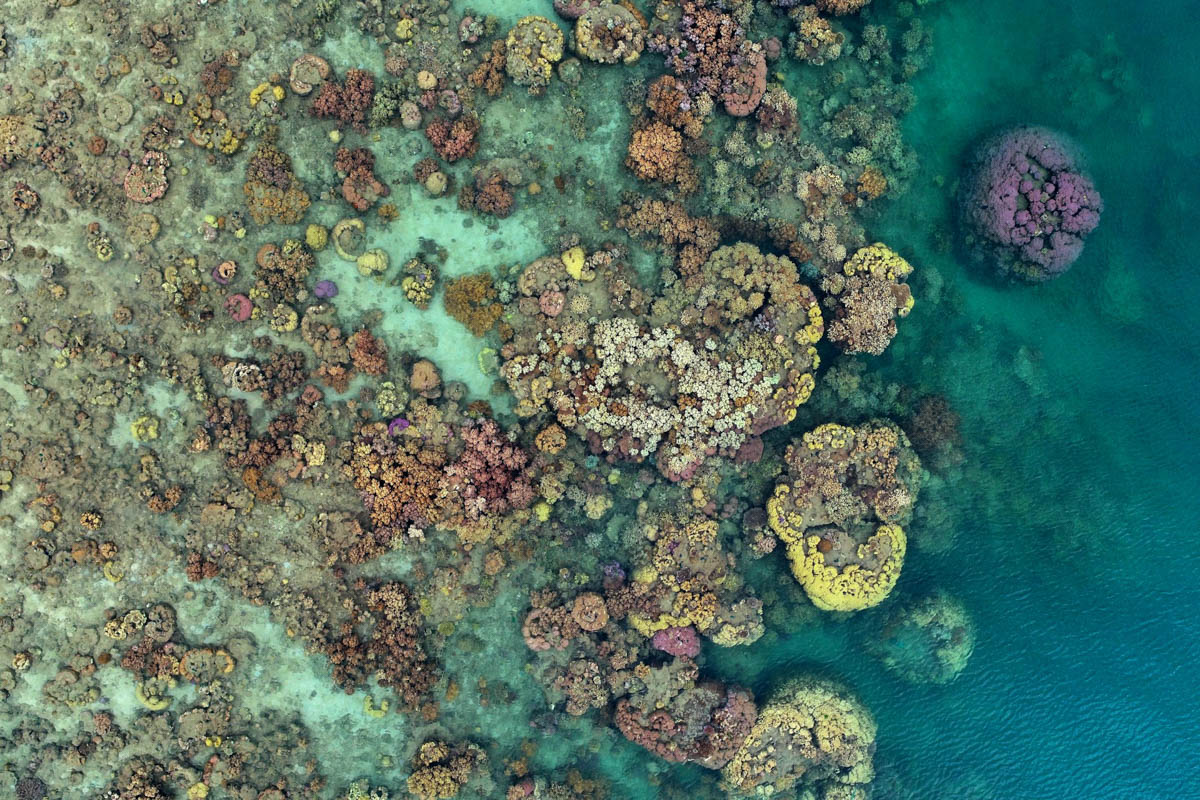

There are few underwater sights more mesmerising than coral spawning. For a handful of nights each year, reefs lift into a gentle snowfall of life as billions of pink and white gamete bundles rise from the coral surface and drift into the currents. The event looks otherworldly. It also determines the future of entire ecosystems. Research from the Australian Institute of Marine Science confirms that mass spawning is the main engine of genetic exchange and long term reef resilience. For divers it is an unforgettable spectacle. For scientists it is a narrow biological window to understand, protect and rebuild coral populations.
What actually happens during coral spawning
Most reef building species are broadcast spawners. After months of gamete development, corals release buoyant bundles of eggs and sperm that float upward until the bundles split and fertilisation begins. A detailed explanation from NOAA describes how the embryos form free swimming planula larvae that drift for days or weeks before settling and becoming new polyps. The entire process relies on precise timing. Fertilisation only happens when countless colonies spawn together.
How millions of corals synchronise the event
The synchrony behind coral spawning has fascinated scientists for decades. Studies from the ARC Centre of Excellence for Coral Reef Studies show that temperature, day length, lunar cycles and local tides act together to prime colonies. Rising temperatures set the season. Day length refines the month. The full moon aligns the night. When conditions line up, entire reefs release their gametes within minutes of each other. This synchronisation maximises fertilisation success and produces the large larval slicks needed to repopulate damaged areas.
When and where it happens
The Great Barrier Reef remains the most famous coral spawning location. The Great Barrier Reef Marine Park Authority reports that the biggest mass events usually occur a few nights after the full moon in late October or November. Other regions follow different patterns. Research published in Frontiers in Marine Science notes that the Red Sea often spawns in spring. The Maldives and parts of the central Pacific may experience two spawning periods each year depending on water temperature anomalies and lunar timing. Local variation is significant. Shallow, warm reefs may spawn earlier than deeper or cooler sites. For divers planning a trip, local marine institutes and established operators often track seasonal cues to predict the best nights.
How divers can witness coral spawning responsibly
Spawning usually happens after sunset and may continue for several nights. Operators who specialise in these dives often rely on historic data and real time temperature monitoring to predict the window. The Coral Restoration Consortium recommends using low intensity lights, avoiding physical contact and maintaining excellent buoyancy during spawning events. Strong beams or heavy finning can disrupt gamete clouds and reduce fertilisation. Photographers should practice low impact techniques and avoid blocking water flow around colonies.
Why coral spawning matters to science and conservation
Beyond being visually stunning, spawning is vital to reef survival. Genetic mixing improves resilience to heat stress and disease. Scientists now collect small volumes of spawn to rear larvae for restoration. Research from the Smithsonian Marine Station explains how coral IVF, larval rearing and assisted gene flow are helping rebuild reefs affected by bleaching. These projects cultivate larvae in controlled conditions then seed damaged areas with thousands of juvenile corals. Early trials have shown encouraging survival rates when combined with local protections.
The future: predicting and inducing spawning in the lab
One of the most promising advances in coral science is the ability to induce spawning in controlled environments. The Horniman Museum and Gardens Coral Lab has pioneered methods that replicate natural light and temperature cycles, allowing corals to spawn on schedule in aquaria. This breakthrough means researchers can produce larvae year round to test heat tolerance, symbiont compatibility and restoration methods. Predictive modelling, driven by ongoing temperature records and lunar data, is also helping managers anticipate spawning windows with greater accuracy.
Threats to coral spawning
Spawning success depends on healthy adult colonies, clear water and predictable environmental cues. Mass bleaching, coastal pollution, rising sea temperatures and ocean acidification all reduce the viability of gametes and larvae. The UNESCO Marine World Heritage Programme warns that climate change may shift spawning timing or reduce the number of reproducing colonies. Even well timed spawning events can fail if larvae encounter polluted water, high sediment loads or degraded settlement surfaces.
Signs of hope
Despite global pressures, restoration projects that use spawn derived larvae have produced promising results. Field trials documented by The Nature Conservancy show increased densities of juvenile corals on test reefs when larval reseeding is combined with protected spawning windows. Selective breeding of corals with heat tolerant symbionts is also showing potential. While these interventions are not substitutes for emissions reduction, they offer powerful tools for supporting natural recovery.
What coral spawning teaches us
To watch coral spawn is to understand just how alive and dynamic reefs really are. The event is delicate, magnificent and essential. For divers it is a rare opportunity to witness renewal. For scientists it is a chance to safeguard that renewal for future generations. The more we understand and protect spawning, the better the future of coral reefs will be.
