


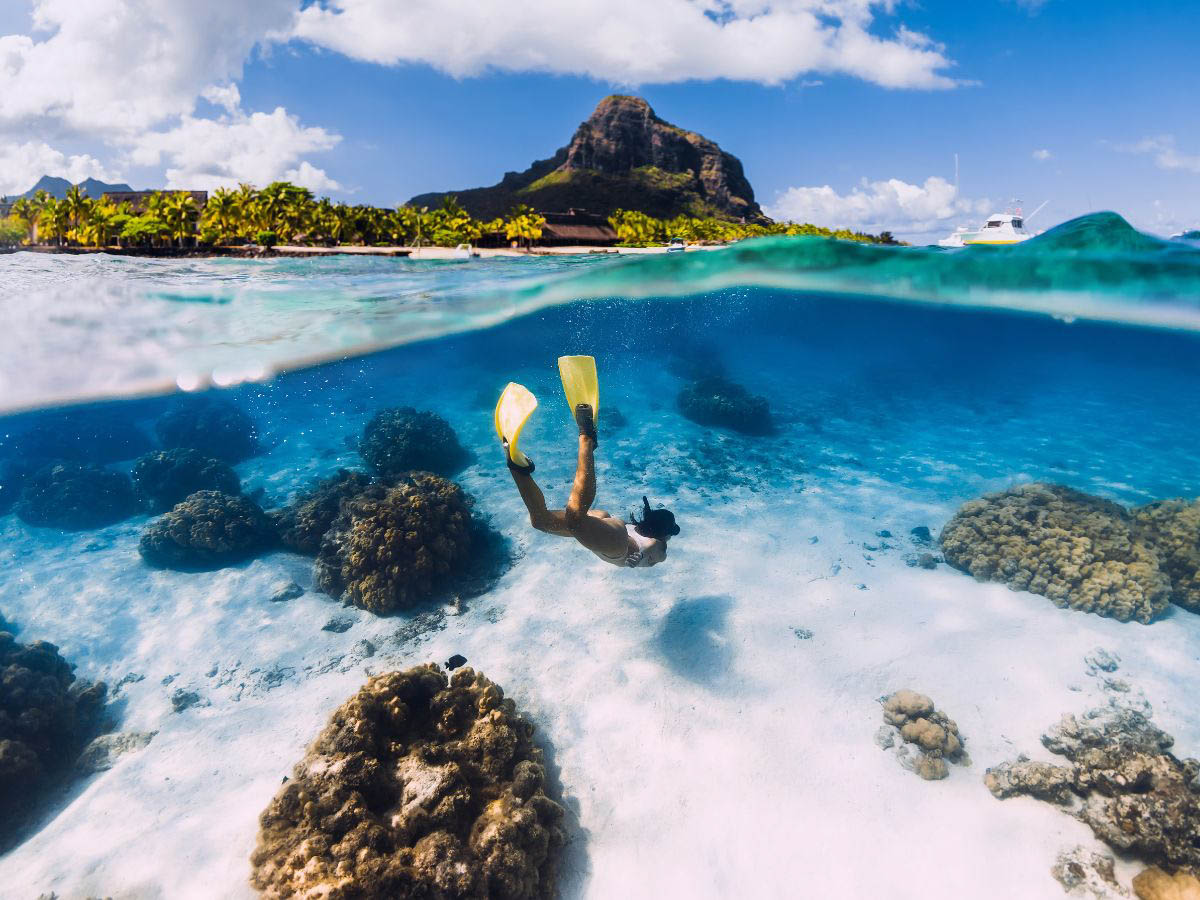

Healthy coral reefs are more than vibrant underwater ecosystems, they are the foundation of countless recreational experiences enjoyed by divers, snorkellers, swimmers and ocean enthusiasts. A new study suggests that losing those reefs could come with an enormous economic price.
Researchers from the University of Hawaiʻi at Mānoa estimate that climate-driven coral reef decline could reduce the recreational value of Hawaiʻi’s reefs by between US$1.8 billion and US$3 billion by the end of the century, depending on future greenhouse gas emissions and reef health.
Published in the peer-reviewed journal Ecological Economics, the research is among the first to combine projected coral reef changes with models of how local residents use and value those reefs for recreation.
More Than Tourism
While Hawaiʻi’s reefs are famous among visitors, the study focused exclusively on recreational use by Hawaiʻi residents. Activities such as scuba diving, snorkelling, swimming and other ocean-based recreation were used to estimate the social and economic value people derive from healthy reefs.
Importantly, the figures do not include tourism spending, commercial fishing, shoreline protection, biodiversity, or the cultural significance of coral reefs. As a result, the researchers describe their estimates as conservative, suggesting the true economic value of healthy reefs is likely substantially higher.
Climate Change Drives Future Losses
Using ecological models, the research examined how coral cover could change under different climate scenarios throughout the 21st century.
Under higher greenhouse gas emissions, coral decline is projected to become widespread across the Hawaiian Islands, leading to significant reductions in recreational opportunities. Lower-emission scenarios showed healthier reefs persisting in some regions, reducing—but not eliminating—the projected losses.
The study also found that some communities could be disproportionately affected, particularly those with fewer alternative recreational opportunities and strong connections to nearby coastal environments.
Why Divers Should Care
For divers, coral reefs represent far more than beautiful scenery. Healthy reefs support extraordinary marine biodiversity, attract iconic species, and create the underwater landscapes that make destinations like Hawaiʻi among the world’s premier diving locations.
As reef degradation continues globally, researchers are increasingly attempting to quantify not only the ecological consequences but also the social and economic value of protecting these ecosystems.
While previous studies have often focused on tourism revenue or fisheries, this research highlights something equally important: the everyday recreational experiences enjoyed by local communities also carry significant economic value.
A Global Message
Although the study focuses on Hawaiʻi, its findings resonate far beyond the Pacific.
Coral reefs worldwide are experiencing increasing pressure from rising ocean temperatures, marine heatwaves, ocean acidification, pollution and coastal development. From the Caribbean to Southeast Asia, Australia and parts of the Red Sea, scientists continue to document coral bleaching events that threaten both marine biodiversity and the livelihoods of communities that depend on healthy oceans.
For the diving community, the message is clear: investing in coral reef conservation is not simply about protecting wildlife, it is also about preserving the recreational experiences, local economies and coastal communities that rely on thriving marine ecosystems.
As researchers continue to place economic values on natural ecosystems, studies like this reinforce what divers have long understood: healthy coral reefs are among the world’s most valuable natural assets.
