



By Christoforos Psyllides, PADI Master Scuba Diver
Diving has become an important part of my life, allowing me to combine my passion for underwater exploration with my interests in history and marine archaeology. Although I am neither a historian nor an archaeologist, I have always been fascinated by the stories that lie beneath the surface.
Like most divers, I have a favourite dive site. Mine lies just off the coast of Pissouri Bay, on the southern coast of Cyprus, approximately 30 kilometres west of Limassol.
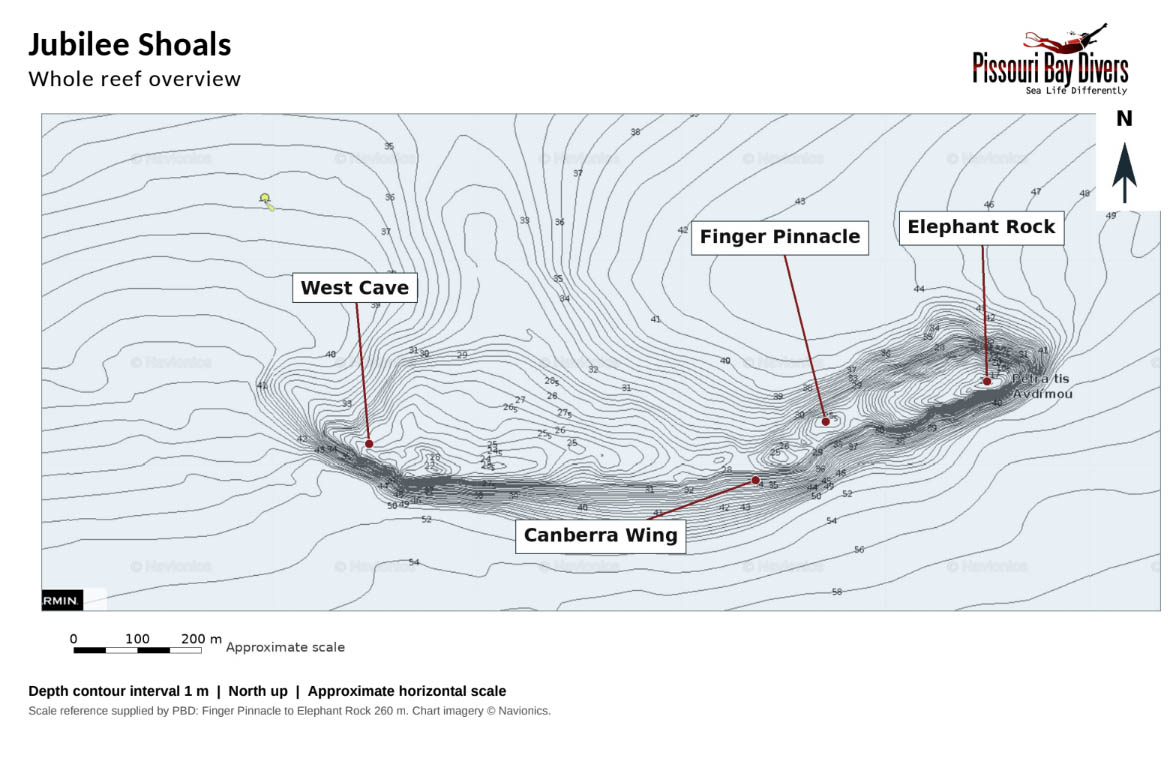
Jubilee Shoals is one of the island’s most spectacular diving locations. Stretching approximately 1.3 kilometres, this natural reef system features dramatic walls, pinnacles, caves, arches and swim-throughs, descending from depths of around 15 metres to beyond 60 metres.
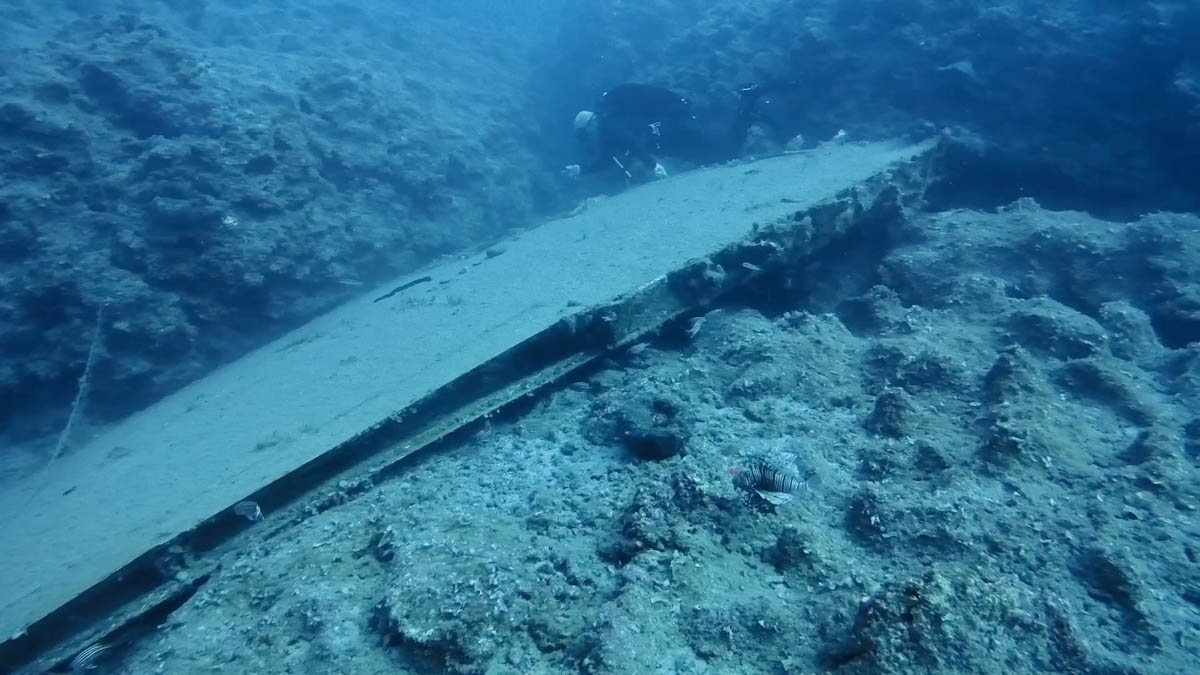
Among these natural features lies something rather unexpected: a large aircraft wing, wedged between rocks at approximately 37 metres.
Known locally as the Canberra Wing, its precise identity has remained uncertain for decades. Conflicting dates, incomplete historical records and more than one possible aircraft loss have made identifying the wreckage considerably more complicated than I initially anticipated.
The Dive Site and the Canberra Wing
Accessed by boat from Pissouri Bay, Jubilee Shoals offers an impressive variety of marine life, including green and loggerhead turtles, amberjack, groupers, moray eels and occasional rays.
The Canberra Wing lies approximately 130 metres west of Finger Pinnacle. The plateau above it is at around 30 metres, while the wing itself rests against the reef wall at between 35 and 37 metres.
The structure is a substantial piece of aluminium, consistent with a component of a military jet aircraft of the period.
The site is included in PADI’s guide to diving Pissouri Bay, but published descriptions of the wreck have offered several different dates for the aircraft’s loss, including 1952, 1954 and 1957.
These inconsistencies provided the starting point for my investigation.
The First Candidate: Canberra WK114
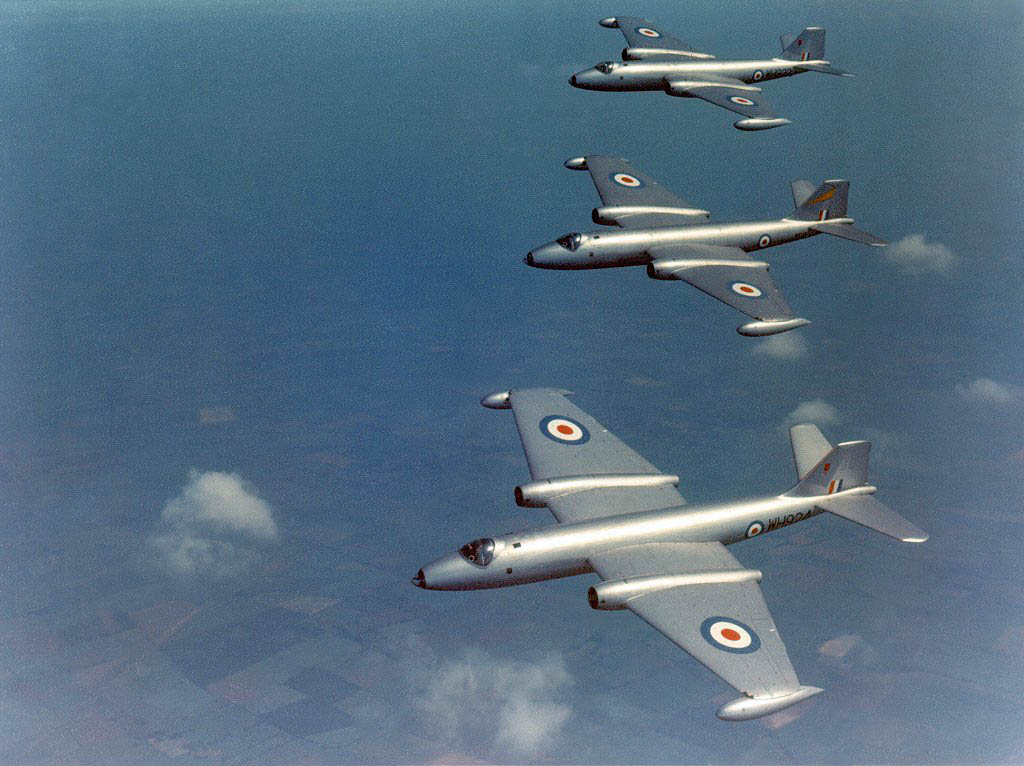
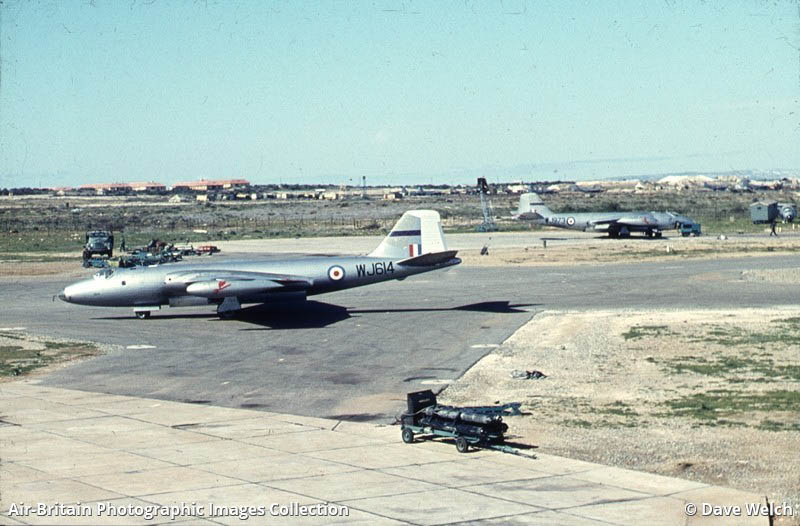
Historical aircraft-loss records identify an English Electric Canberra B.2, serial number WK114, belonging to No. 32 Squadron of the Royal Air Force, as having been lost on 8 July 1957.
According to records compiled by the Aviation Safety Network and the UK Serials Resource Centre, the aircraft crashed into the Mediterranean shortly after taking off from RAF Akrotiri in fog.
All four occupants lost their lives.
Although poor visibility was reported at the time, the precise technical cause of the accident has not been established in the historical material examined during this investigation.
The casualty records identify the four airmen as:
- Flight Lieutenant William Charles Ford, aged 35.
- Flying Officer Robin Louis Parsons, aged 25.
- Leading Aircraftman Donald Sidney Thickbroom, aged 20.
- Flying Officer Hugh Ivor Whittle, aged 24.
These details come from secondary RAF casualty records. Further research into individual service records and original accident documentation is required.
The reported location of the aircraft’s loss off southern Cyprus makes WK114 a plausible candidate for the wreckage at Jubilee Shoals. However, geographical proximity alone cannot establish a positive identification.
Taking the Investigation Underwater
I first dived the Canberra Wing in August 2025.
Having already developed a particular interest in Jubilee Shoals because of its marine life and underwater topography, discovering that the reef also contained aircraft wreckage made the location even more fascinating to me.
I subsequently met with Steve and Dana of Pissouri Bay Divers to discuss the site and the possibility of further investigating the aircraft.
The team at Pissouri Bay Divers has undertaken considerable work supporting marine conservation and scientific research in the Jubilee Shoals area, something I hope to explore in a separate article.
Steve had also been conducting his own research into the aircraft.
Approximately three years earlier, Steve and Paul, a divemaster working with the dive centre, had located additional debris believed to be associated with the aircraft’s fuselage.
The precise location of this debris is not publicly available.
With the assistance of Pissouri Bay Divers, I arranged two dives with a specific objective: to search for visible serial numbers, manufacturer markings or other evidence that might help establish the identity of the aircraft.
The First Dive: Possible Fuselage Debris
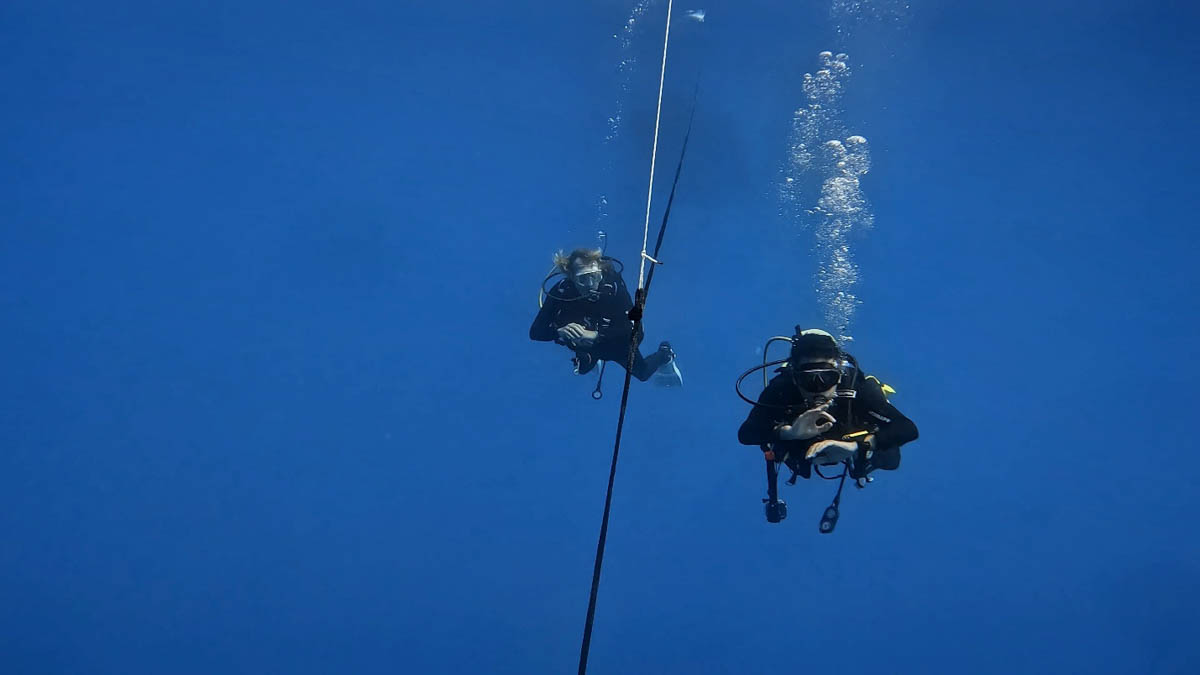
On 11 June 2026, we set out from Pissouri Bay to examine the first area of wreckage.
Following a briefing from Steve, Paul led the descent to the debris, which was located on a sandy seabed at approximately 37.6 metres.
The material appeared consistent with part of an aircraft’s metal structure, although we could not determine precisely which section of the aircraft it had come from.
One particularly striking observation was the number of lionfish that had made the wreckage their home.
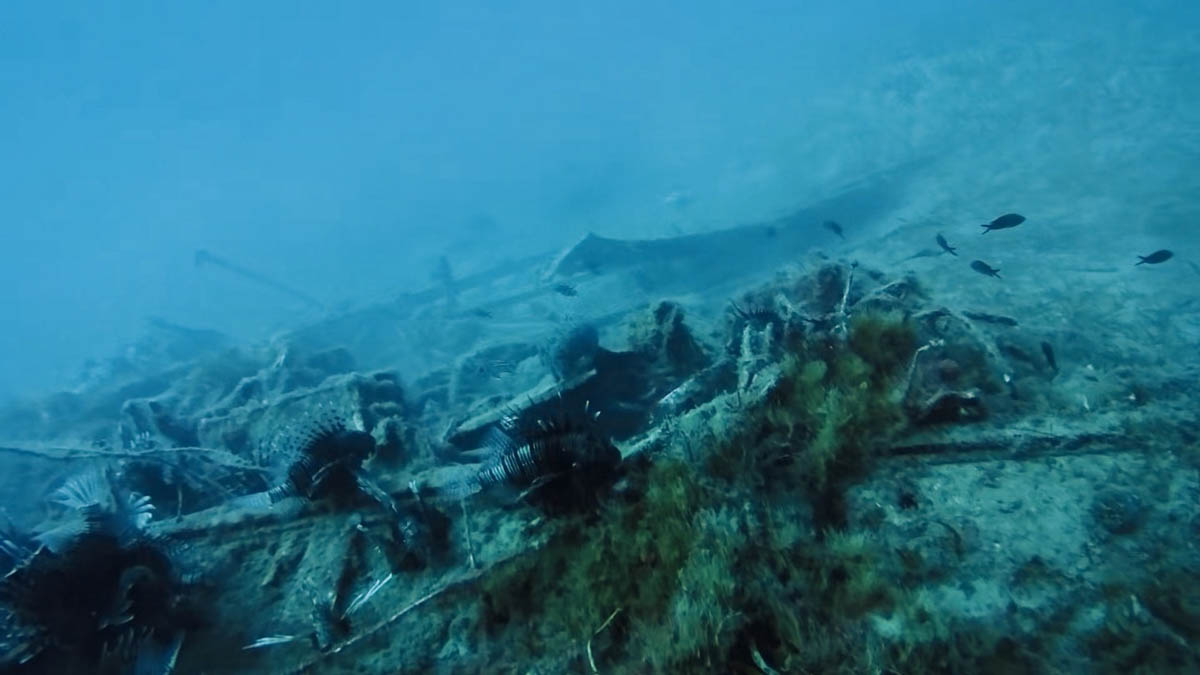
We expanded our search around the debris, hoping to locate more distinctive aircraft components or identifying markings.
Several smaller pieces of debris were observed nearby, but nothing was found that allowed us to positively identify the aircraft.
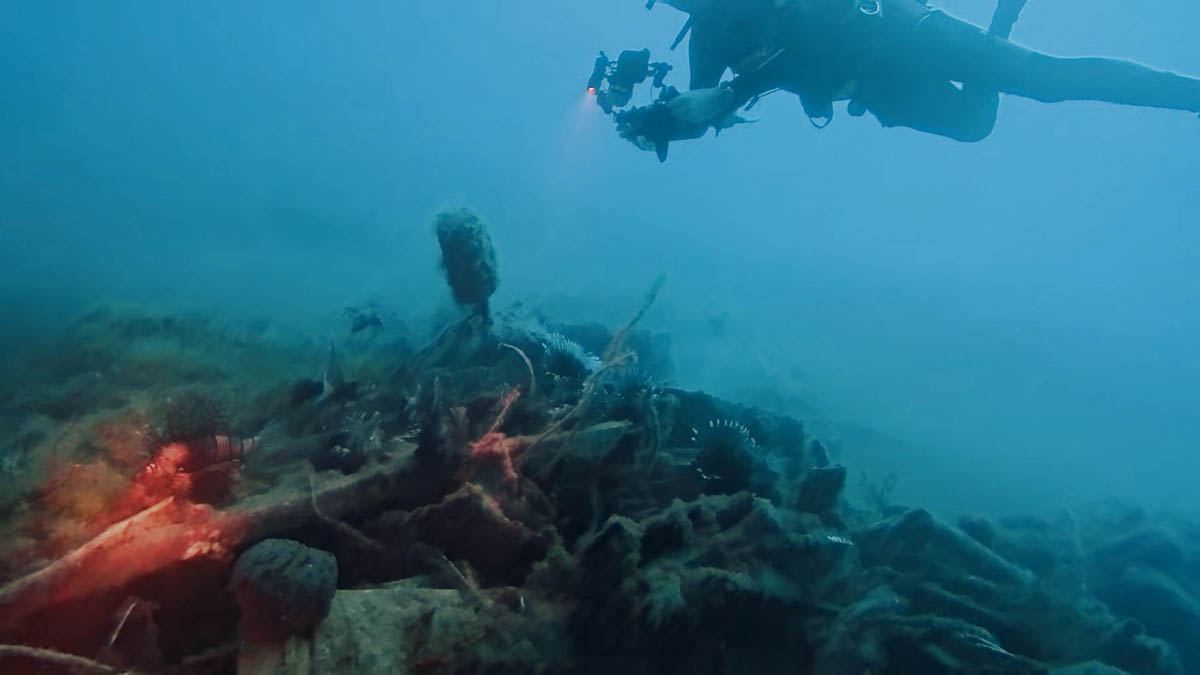
My dive lasted 28 minutes, reaching a maximum depth of 37.6 metres, with a recorded bottom temperature of 23°C.
The limitations of recreational diving at these depths became particularly apparent. Searching a wide area for relatively small objects requires considerable time, and the available bottom time necessarily restricted the extent of our investigation.
The Second Dive: The Canberra Wing
Our second dive took us to the better-known Canberra Wing.
The wing lies across uneven rocky terrain, with sections of its structure resting against the surrounding reef.
Much of the visible metal skin remains continuous, although its pale appearance may be the result of sediment, marine deposits and deterioration of its original finish.
During the dive, Paul carefully examined the structure for markings or other clues that might assist in identifying the aircraft.
Unfortunately, we were unable to locate any definitive identification marks.
My second dive lasted 26 minutes, reaching a maximum depth of 35.5 metres, again with a recorded bottom temperature of 23°C.
The footage recorded during these dives provides a closer look at both the wing and the additional debris.
Watch: Exploring the Canberra Aircraft Wreckage at Jubilee Shoals
The two areas of wreckage are separated by approximately 1,100 metres. Whether they originated from the same aircraft remains to be established.
One possibility discussed during our investigation was that heavier aircraft components may have descended relatively close to the point of impact, while lighter sections travelled further before coming to rest on the seabed.
This remains a hypothesis rather than a confirmed explanation.
A New Lead: Canberra WK116
After sharing information on social media about the forthcoming investigation, an unexpected new lead emerged.
James Soos, a UK-based technical diver and owner of Dive in Jimmy, contacted Pissouri Bay Divers with information concerning another Canberra aircraft lost off Cyprus.
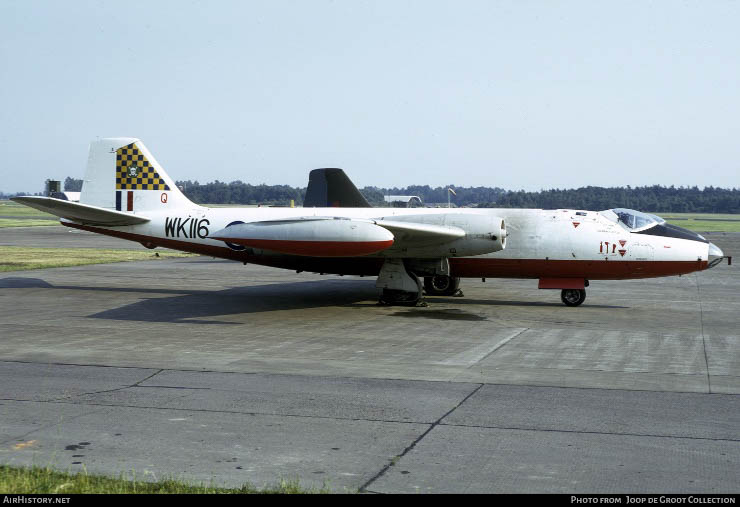
This aircraft, also an English Electric Canberra B.2, carried the serial number WK116 and belonged to No. 100 Squadron.
The aircraft was lost on 25 February 1982 during a deployment to RAF Akrotiri.
The No. 100 Squadron Association’s historical account of its second Canberra era records the loss of the aircraft at sea and the survival of both crew members.
The loss is also documented in the UK aircraft serial number register.
James explained that divers who had previously located the Canberra Wing believed it could have belonged to the aircraft lost in 1982.
Although this recollection cannot independently establish the identity of the wreckage, it introduced an important alternative to the 1957 aircraft.
What the Ministry of Defence Report Reveals
Further research led me to a Ministry of Defence accident report dated 8 July 1983, concerning the loss of Canberra WK116.
The report attributes the loss to the mishandling of the aircraft, resulting in both engines flaming out and subsequent attempts to restart them being unsuccessful.
Of particular interest to this investigation is the report’s reference to the recovery of several pieces of wreckage.
It states that major components of the aircraft remained unrecovered at a depth of approximately 280 feet, or 85 metres.
This is considerably deeper than either the wing or the additional debris examined during our dives at Jubilee Shoals.
The difference in depth does not necessarily eliminate WK116 as a candidate, since aircraft components could have become separated. However, it demonstrates why additional evidence is essential before drawing conclusions.
Although squadron accounts indicate that both crew members survived the 1982 incident, an entry in the accident report relating to casualties also requires further clarification.
Two Aircraft, One Unresolved Mystery
The investigation has now established two credible historical candidates.
Canberra B.2 WK114
Lost on 8 July 1957 while operating with No. 32 Squadron from RAF Akrotiri. All four occupants were killed.
Canberra B.2 WK116
Lost on 25 February 1982 while operating with No. 100 Squadron during a deployment to RAF Akrotiri. Historical squadron accounts indicate that both crew members survived.
Neither aircraft has been conclusively connected to the wing at Jubilee Shoals.
For me personally, the distinction is important.
Exploring a wreck where lives were lost carries a different emotional significance from exploring one where the occupants survived.
During our dives, when the 1957 aircraft was the principal candidate, I found myself reflecting on the four airmen who had lost their lives.
The emergence of the 1982 aircraft as another possibility brought a degree of relief, but the historical evidence must ultimately determine the answer.
Where the Investigation Goes Next
Further underwater investigations could help establish whether additional aircraft components remain in the area between the wing and the possible fuselage debris.
Given the depths involved and the scale of the search area, appropriately planned technical diving expeditions may offer greater opportunities for detailed documentation.
However, the answer may also lie within historical archives.
The RAF Museum, The National Archives and the Commonwealth War Graves Commission represent important potential sources of additional information.
Relevant archive references identified during the research include AIR 27/2748, covering the No. 32 Squadron Operations Record Book, and AIR 28/1318, covering RAF Akrotiri station operations.
Original accident reports, precise impact locations, wreckage recovery records and historical photographs could all contribute to resolving the mystery.
Identifiable manufacturer markings or serial numbers recorded on the wreckage itself would also provide particularly valuable evidence.
I would welcome information from former RAF personnel, aviation historians, local divers and anyone with firsthand knowledge of either aircraft loss.
Any further underwater documentation should be undertaken without disturbing or removing wreckage, particularly given the possibility that the site is associated with a fatal military aircraft accident.
An Investigation That Continues
The Canberra Wing at Jubilee Shoals remains an intriguing piece of Cyprus’s underwater history.
What began as an attempt to resolve conflicting dates associated with a familiar dive site has developed into an investigation involving two military aircraft lost approximately 25 years apart.
For now, neither WK114 nor WK116 can be identified conclusively as the aircraft represented by the wreckage at Jubilee Shoals.
The mystery remains open, and I hope that further research, historical records and underwater observations will eventually provide the answer.
The Team Behind the Dives
The investigation was made possible with the assistance of Pissouri Bay Divers and its experienced local diving team.
Steve Theakston
Steve first qualified as a scuba diver in the UK in 1996. During his 22-year career in the British Army, he was posted to Cyprus in 2004, where he continued his diving education and developed an extensive knowledge of the island’s underwater environment.
He became a PADI Instructor in 2016 and, following his retirement from military service, took ownership of Pissouri Bay Divers in March 2018.
A PADI Master Scuba Diver Trainer, Steve has developed a particular expertise in Jubilee Shoals, combining his knowledge of the reef with an interest in its marine life, conservation and underwater history.
His previous research into the Canberra aircraft and his logistical support were instrumental in making this investigation possible.
Paul
Paul’s diving journey began in Cyprus in 1983. After returning to the island following his retirement, he resumed diving with Pissouri Bay Divers, eventually progressing to become a qualified Divemaster.
With a particular passion for marine life and wreck diving, Paul has developed considerable familiarity with Cyprus’s underwater attractions, including the famous Zenobia wreck.
Having previously participated in the discovery of additional aircraft debris near Jubilee Shoals, Paul played an important role in our underwater investigation and the search for identifying evidence.
Further information about Steve, Paul and their colleagues can be found on the Pissouri Bay Divers team page.
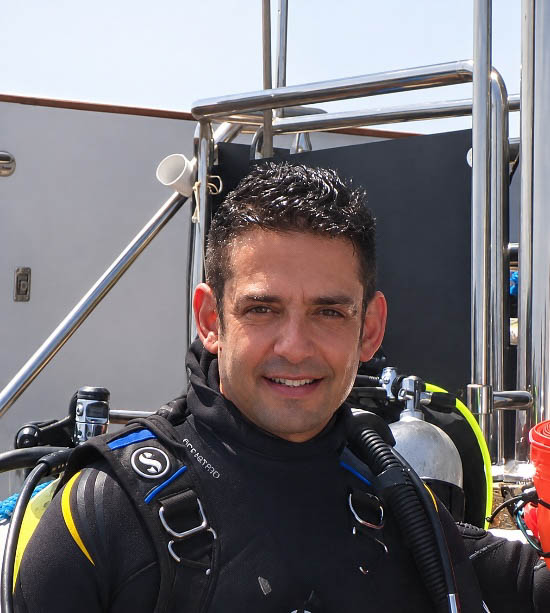
About the Author
Christoforos Psyllides (Christopher C. Psyllides) is a recreational scuba diver and PADI Master Scuba Diver with a particular interest in history, underwater exploration and maritime heritage.
This article reflects his personal diving experiences and research rather than a formal archaeological or aircraft accident investigation.
Related Reading: The Karpaz Wreck: Uncovering the Story of MV Città di Alessandria.
Acknowledgements
Special thanks to Pissouri Bay Divers and its team for organising the dives, providing logistical support and joining me in the search for answers.
Thanks also to James Soos for sharing information that opened a new avenue of investigation, and to Lee of The Scuba News for his encouragement and for bringing this article to publication.
I also acknowledge the historical aviation records, archives and other sources consulted throughout the investigation.