
By Christoforos Psyllides, PADI Master Scuba Diver
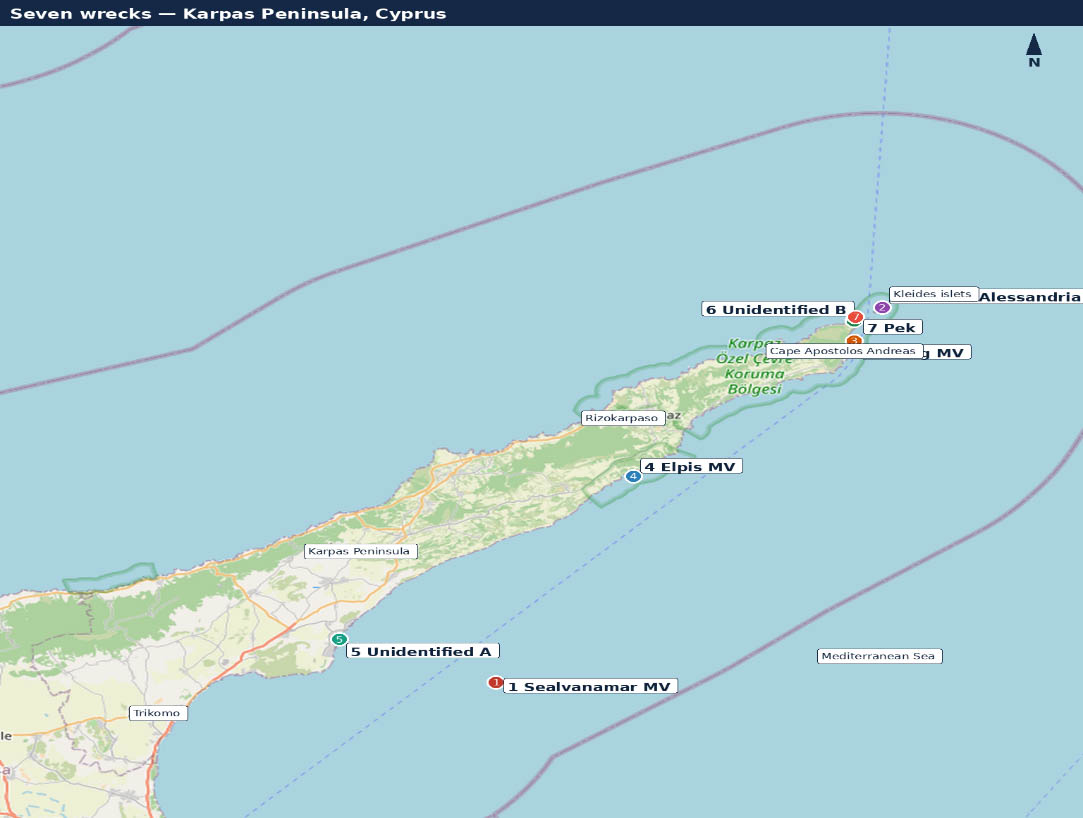
At the northeastern tip of Cyprus, close to Cape Apostolos Andreas, a broken cargo ship rests in surprisingly shallow water. Its remains lie scattered across rock and white sand, surrounded by marine life and exposed to the conditions that have made this coastline dangerous to shipping for centuries.
For many divers, the wreck is simply another fascinating underwater destination. For me, it became a mystery that I wanted to understand.
I first dived the site in October 2025 and returned in June 2026. On both occasions, I was struck by the size of the wreck, the extent of the damage and how little information appeared to be readily available about its history.
What ship was this? When had it sunk? And why had such a substantial vessel ended up broken apart so close to the shore?
Those questions started a personal investigation that eventually led to historical shipping records, maritime archaeology research and a photograph of the vessel before its final voyage.
A Shipwreck at the End of Cyprus
Cape Apostolos Andreas marks the northeastern extremity of the Karpaz Peninsula, where rocky coastline and offshore islets meet waters that have been used by ships travelling across the eastern Mediterranean for thousands of years.
Its maritime significance has been recognised by archaeologists for decades.
During 1969 and 1970, an Oxford University research team conducted underwater archaeological surveys around Cape Andreas. The work, led by maritime archaeologist Jeremy Green, documented ancient wreck material, pottery sites and a remarkable collection of anchors.
The Western Australian Museum’s record of the Cape Andreas survey describes an area rich in evidence of historic maritime activity.
While those investigations primarily concerned ancient material, they demonstrate how long this stretch of coastline has presented challenges to passing vessels.
The modern wreck I wanted to investigate was much younger, but its location seemed entirely consistent with that history.
Putting a Name to the Wreck
My initial research produced more questions than answers.
The breakthrough came through my friend and fellow diver, Çiğdem Çağlar, who pointed me towards the name MV Città di Alessandria.
Sometimes a name is all that is needed to open the door to a much larger story.
Shipping records I subsequently examined identified a cargo vessel of that name which had been lost near Cape Andreas in February 1972.
The vessel had previously operated as Christiane Schulte before being renamed Città di Alessandria. Records associated with the ship identify the later vessel with a Liberian registration and Wolf Shipping Co. Ltd.
A report placed its grounding at Cape Andreas on 5 February 1972 and recorded the rescue of seven crew members by an RAF helicopter.
The precise date differs between some historical references, with 5 and 6 February both appearing in the material I examined.
The reported position, the dimensions of the ship and the surviving wreckage supported the identification of the dive site as MV Città di Alessandria.
What interested me next was the condition in which the ship had survived.
Why Was So Much of the Ship Broken Apart?
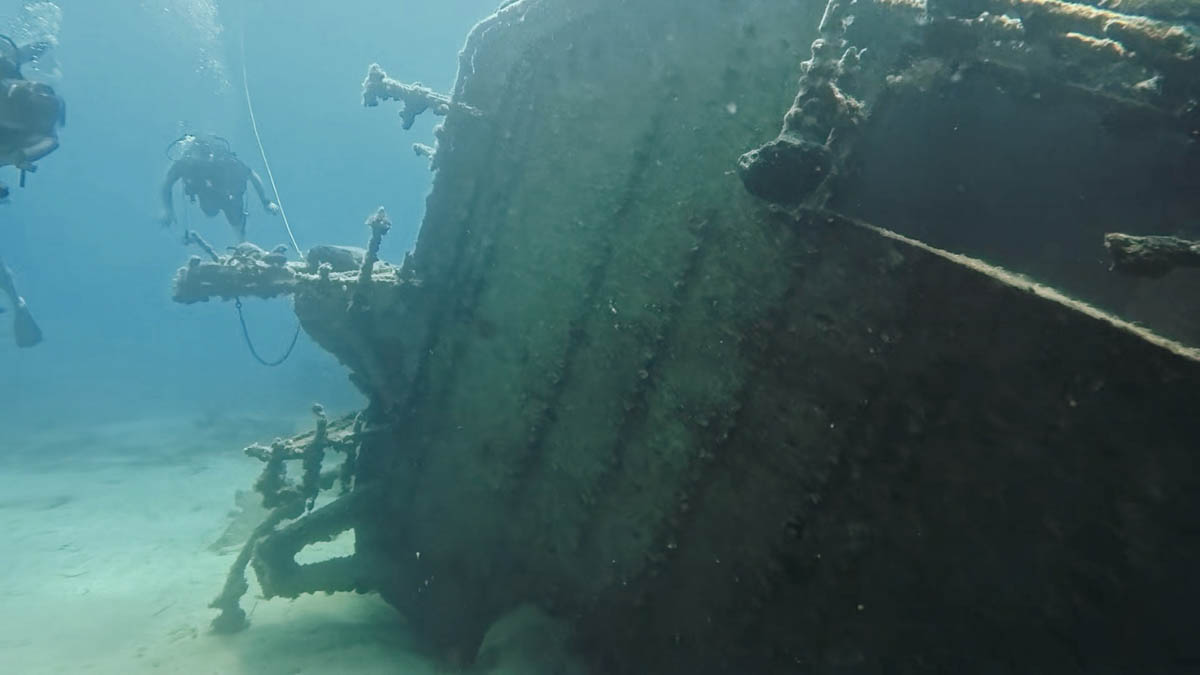
The first impression underwater is unforgettable.
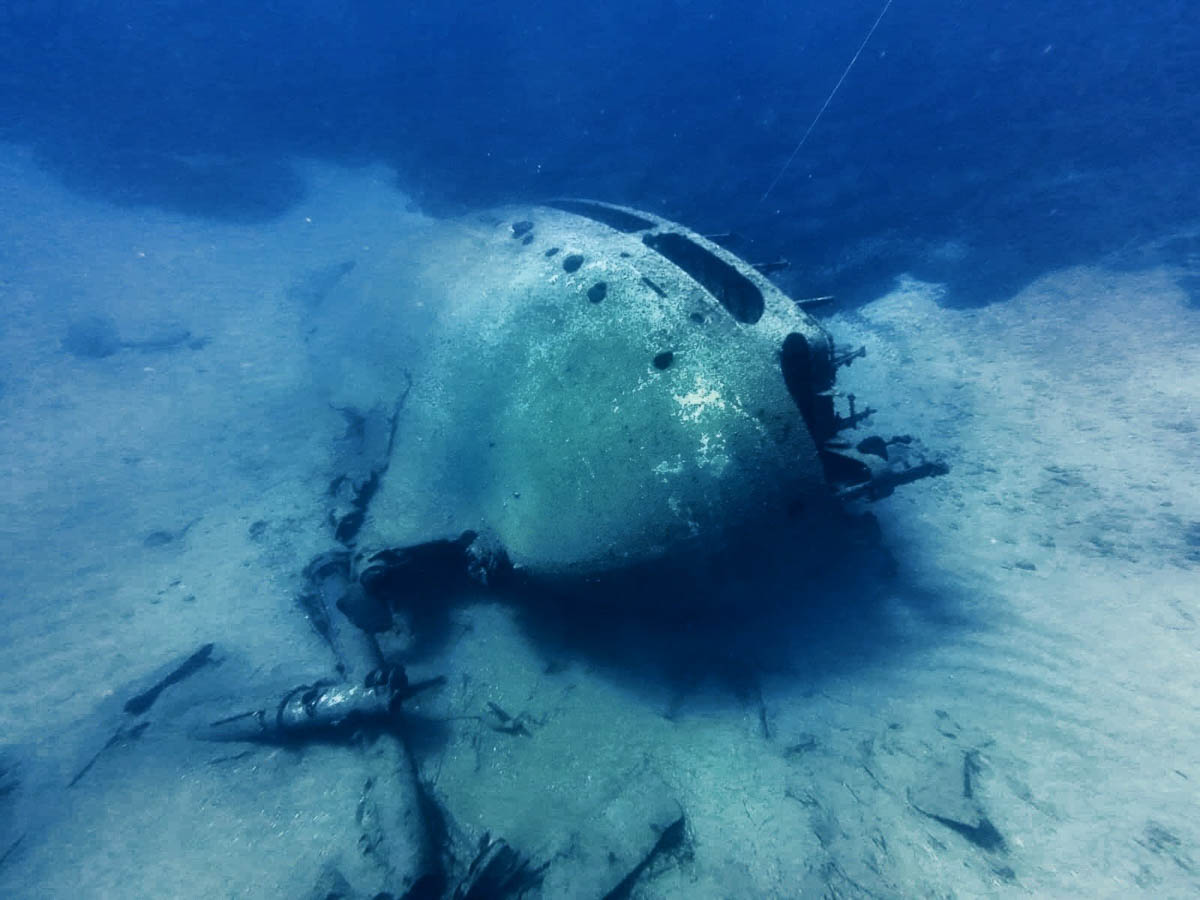
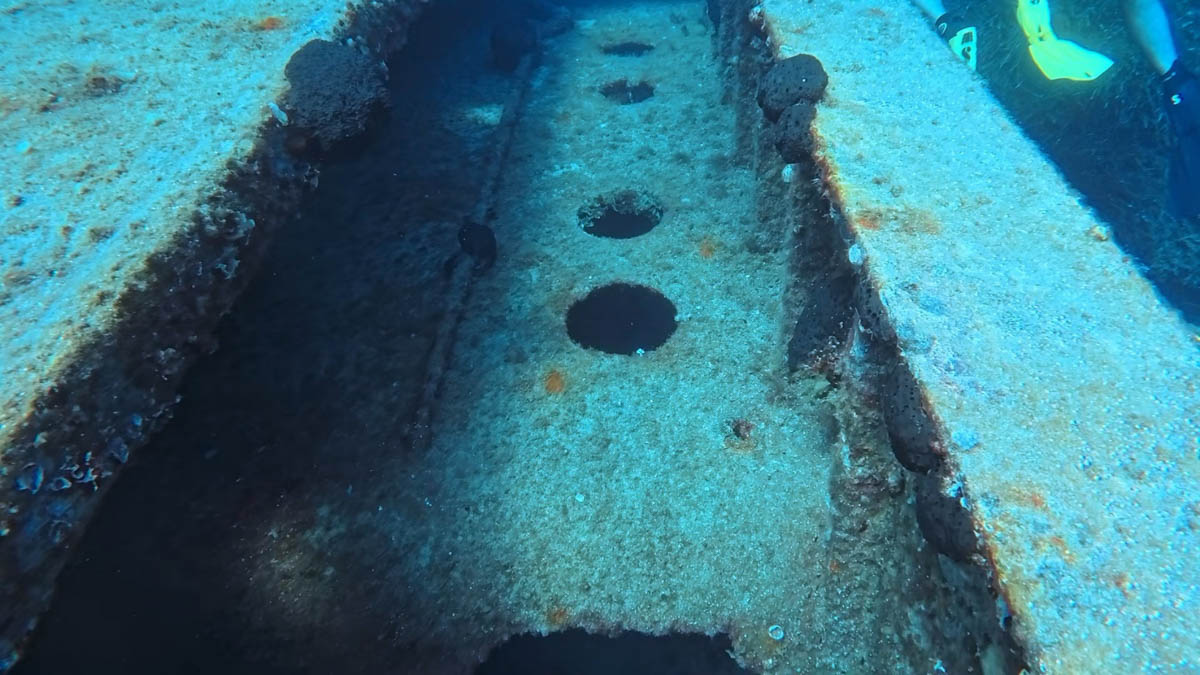
The stern section lies substantially intact on its starboard side, while much of the remaining structure is broken into separate pieces extending across the seabed.
Large metal components, machinery, structural sections and other debris form a trail across the white sand and rocky bottom.
I had expected a shallow-water cargo wreck to retain more of its original shape.
Instead, I found extensive damage.
Local accounts suggested that the ship had struck rocks during a storm. That explanation is consistent with the recorded grounding, although it does not independently establish the sequence in which the vessel broke apart.
I wondered whether the initial impact had occurred near the section where the ship eventually separated.
Could later storms have moved or further damaged the wreckage?
Might some parts have deteriorated and collapsed over the intervening decades?
These are questions rather than conclusions. I am a recreational diver, not a marine accident investigator or naval architect, and the wreck’s present condition alone cannot tell us exactly how it broke apart.
That uncertainty became one of the most fascinating parts of the investigation.
Could There Be More Than One Wreck?
During my research, I came across an older account suggesting that the visible wreckage could represent more than one ship.
Similar suggestions had circulated locally.
At first, it seemed an interesting possibility. After all, the area around Cape Andreas has witnessed numerous maritime accidents.
I began investigating other vessels reported lost in the wider region.
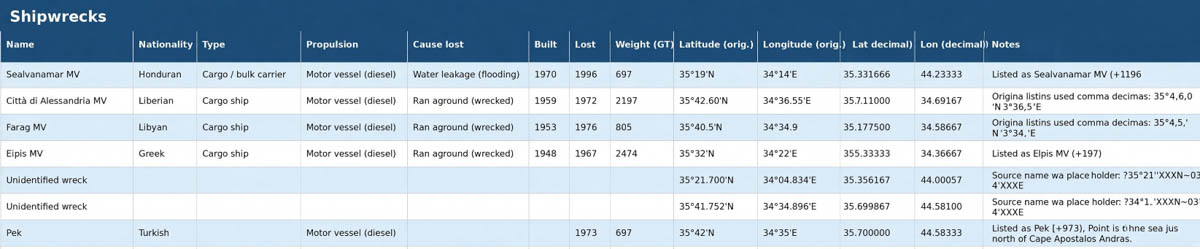
Records available through Wrecksite included references to several ships associated with Cape Andreas and nearby waters.
Among those I investigated were MV Farag, reported wrecked in a storm in March 1976; MV Elpis, recorded as grounded in December 1967; and Pek, another vessel associated with a grounding in the early 1970s.
Other reported losses occurred farther away, so their inclusion in a regional database does not mean their remains are part of this particular dive site.
The historical evidence available to me did not establish that multiple vessels had come to rest at precisely the same location.
Although it is an intriguing idea, I found no compelling reason to reject the conventional identification of the principal wreck as MV Città di Alessandria.
The story was already interesting enough without needing an additional mystery.
Finding a Photograph of the Ship
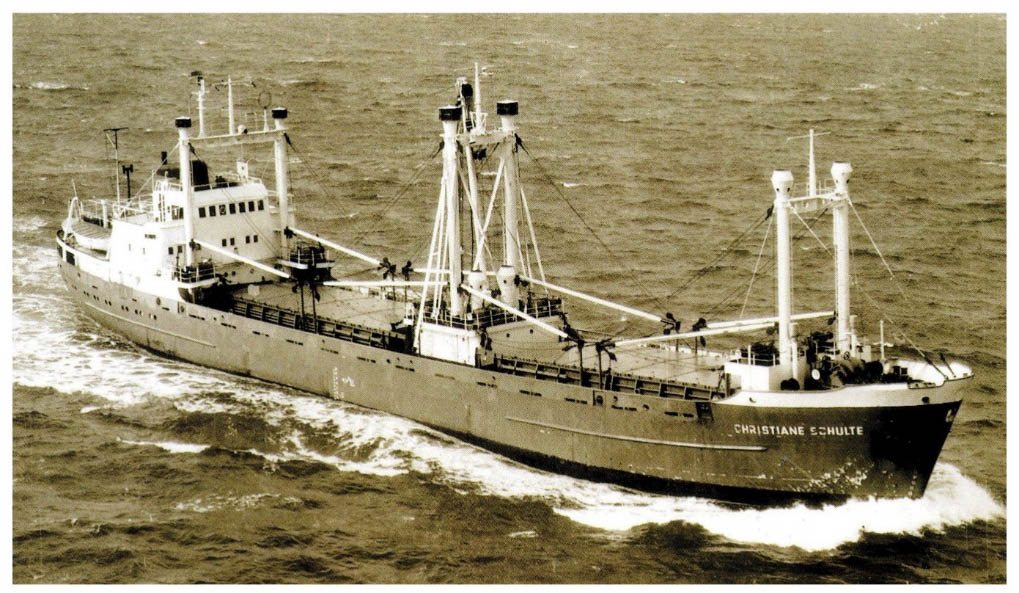
One of my biggest frustrations was the absence of a photograph showing the vessel before it sank.
I searched various historical ship databases, photographic collections and shipbuilding records.
Some contained information about the vessel, but I initially found nothing that showed what it had looked like in service.
To gain a better understanding of its likely appearance, I studied comparable general cargo ships built during the same era.
One particularly useful comparison was MS Ramona, a general cargo vessel built by the Paul Lindenau shipyard in Kiel in 1958.
The surviving historical photograph and specifications of MS Ramona helped illustrate the design characteristics of German-built merchant vessels of that period.
But a similar ship was not the same as finding the vessel itself.
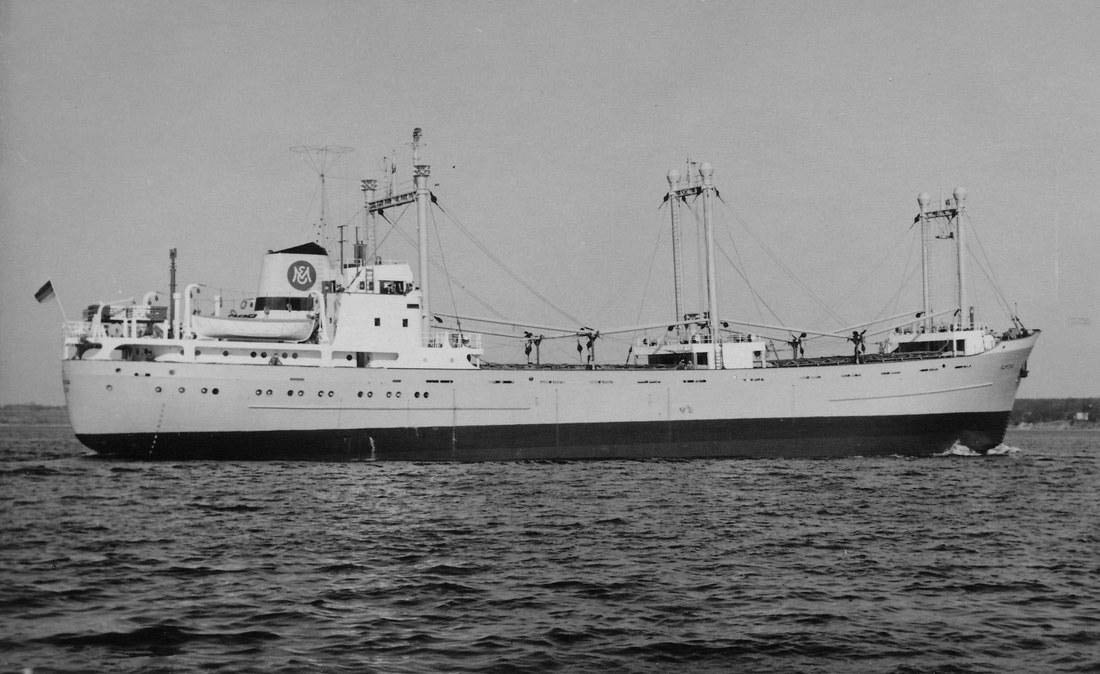
Eventually, after correspondence with the shipyard and follow-up enquiries, I received the photograph I had been searching for.
It showed the ship under its earlier name, Christiane Schulte.
For me, that was a particularly rewarding moment.
Until then, I had known the vessel only as a damaged collection of steel resting on the seabed. Suddenly, I could see it as a working cargo ship, built for a purpose and once crewed by people going about their everyday lives.
The wreck had acquired an identity beyond its present condition.
What Was the Ship Carrying?
Another question concerned the cargo.
Some local stories suggested that the ship had been carrying whisky, and I also heard accounts that cargo had been removed following the sinking.
However, I could find no documentary evidence establishing what was actually on board.
Nor did my dives reveal any identifiable cargo that might have confirmed those accounts.
The absence of visible cargo does not prove that the ship was empty or that anything was removed. It simply means that I could not determine what it had been carrying.
Without a cargo manifest or other reliable records, its final cargo remains unknown to me.
That distinction matters when investigating historical wrecks, where stories can easily become accepted as fact through repetition.
Diving the MV Città di Alessandria
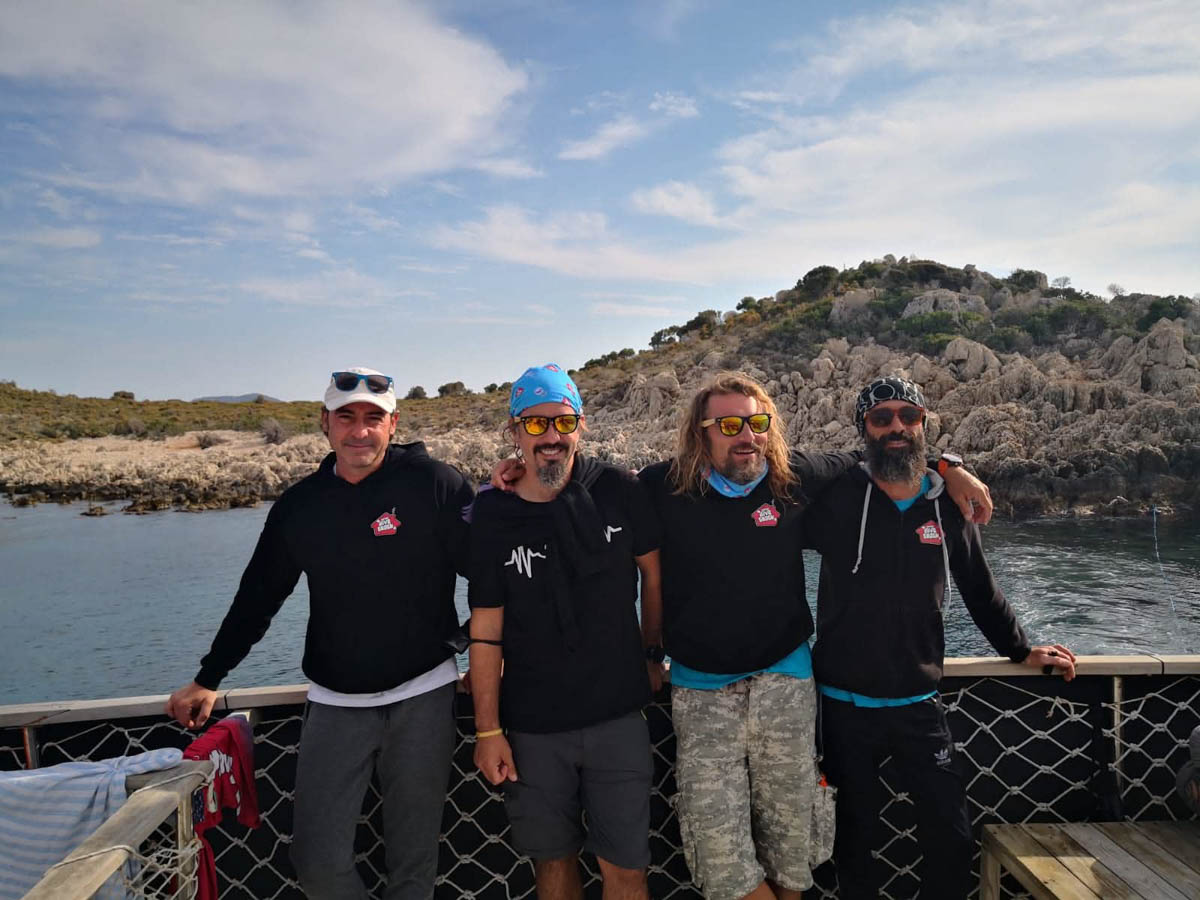
Both of my visits were organised by the team at Diveshack Dive Centre, based in the Kyrenia/Girne area.
Reaching this remote part of the Karpaz Peninsula requires considerable preparation.
The Diveshack crew transport diving equipment, cylinders and compressors by road, with the journey taking several hours. They establish a temporary base and organise diving over a weekend.
Without that logistical commitment, visiting the site would be considerably more difficult.
Our dives were supported by Erkan, Toprak, Alper and Saban, whose experience and careful organisation made the trips possible.
After a briefing, we travelled by boat towards the lighthouse area, a journey of approximately eight to twelve minutes.
We entered the water from the boat and descended towards the wreck.
The stern was our starting point.
Lying on its side, the surviving structure creates an imposing sight, with sections of the hull rising above the seabed.
We followed the wreckage towards the broken portions of the vessel, moving between metal structures, rocks and patches of pale sand.
The maximum depths recorded on my two dives were 15.6 metres in October 2025 and 16.1 metres in June 2026.
Despite those relatively modest depths, the site is not one that should be approached casually.
Broken metal, unstable sections and openings into the wreck all present hazards.
The Machinery and Scattered Debris
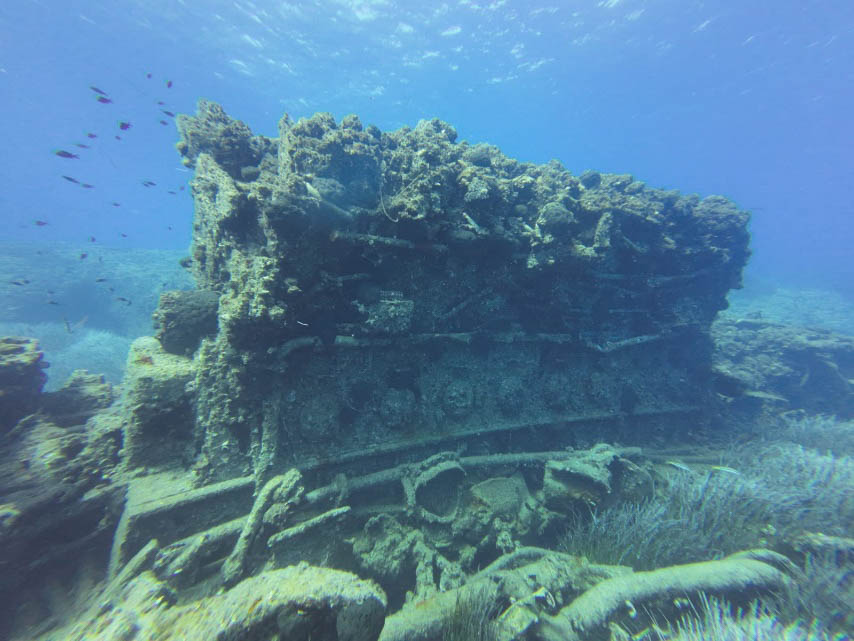
One of the most interesting areas contains large pieces of machinery.
Among the remains are components that appear to be associated with the ship’s diesel engine, as well as a substantial mechanism consistent with an anchor windlass.
The metal is heavily encrusted with marine growth.
Seeing such large pieces of machinery separated from the main hull added to my questions about the vessel’s final moments and the subsequent deterioration of the wreck.
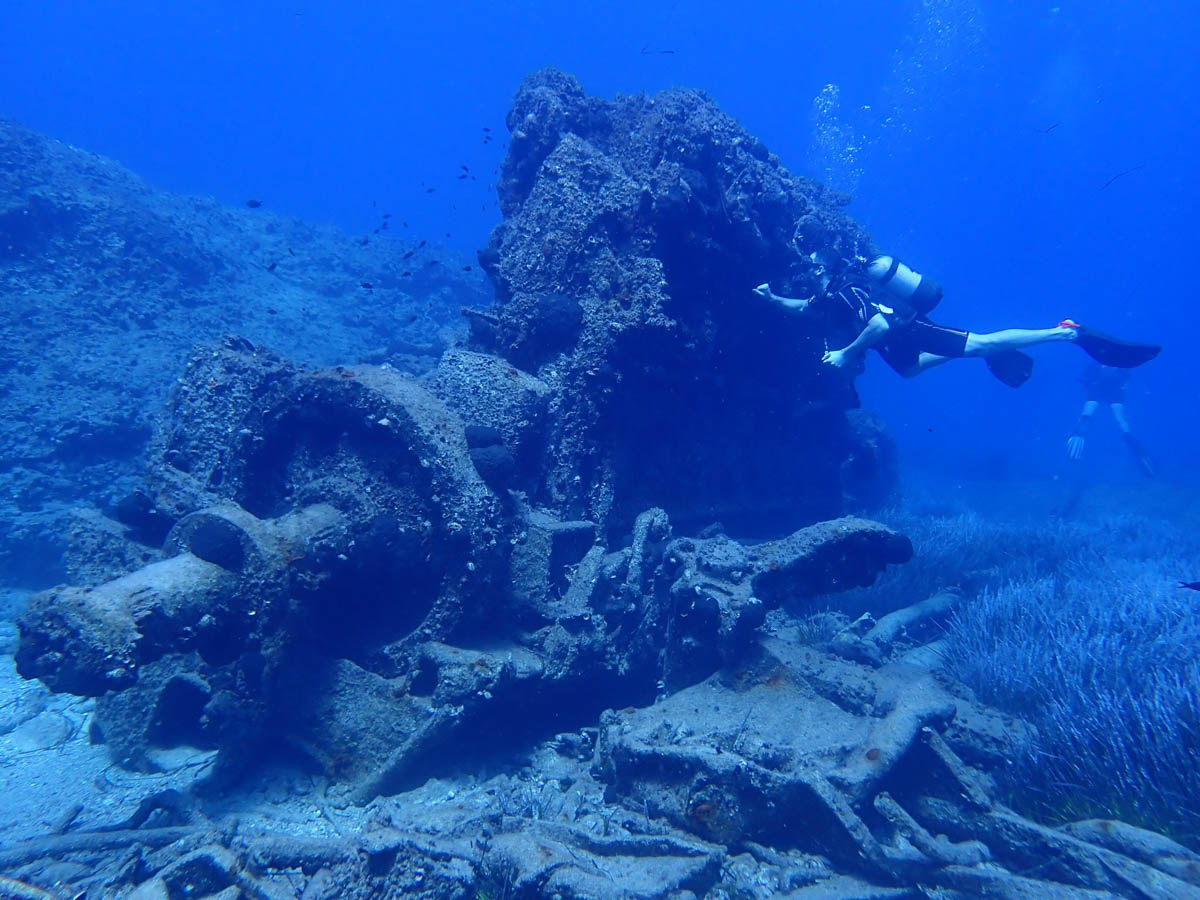
However, the precise identification of individual components, the engine configuration and the mechanisms responsible for the damage would require a specialist examination.
For me, their presence was another reminder of the scale of the cargo ship that once occupied this site.
An Anchor That Steals the Show
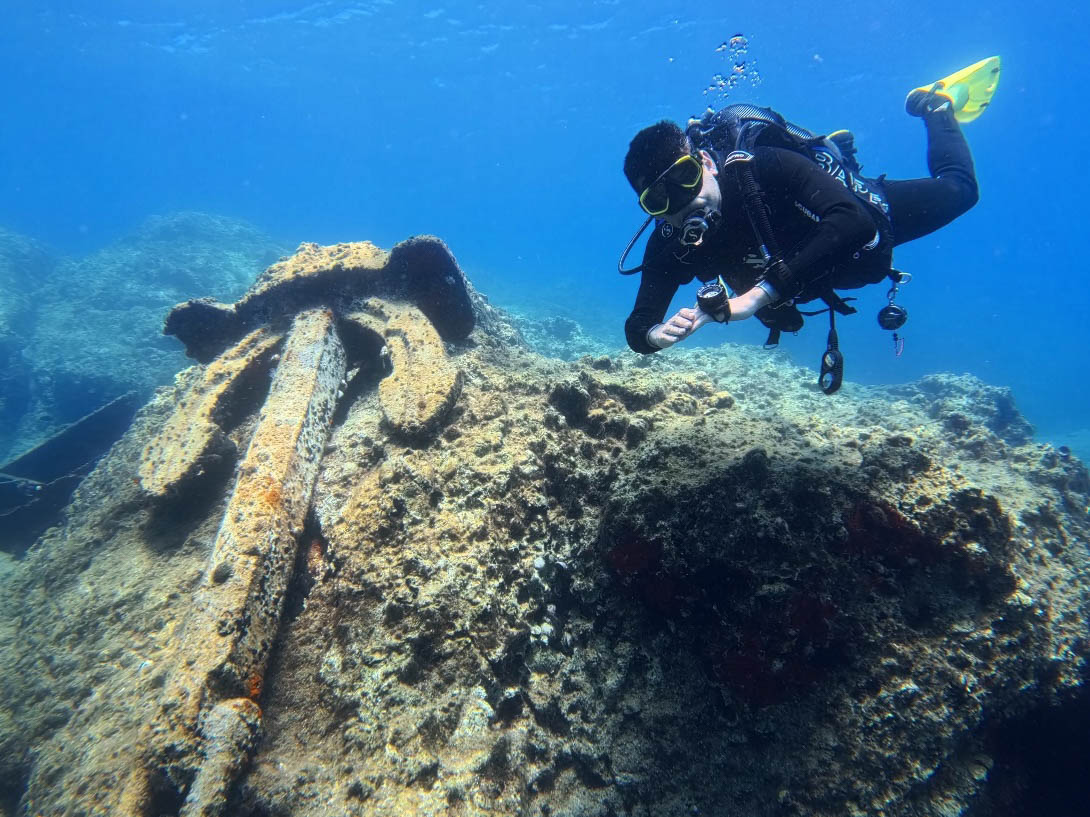
Perhaps my favourite part of the dive was a large anchor standing among the rocks and wreckage.
There is something particularly captivating about an old ship’s anchor.
This one appears almost upright, framed by jagged rock, weathered steel and marine growth.
It has become a memorable photographic feature of the dive.
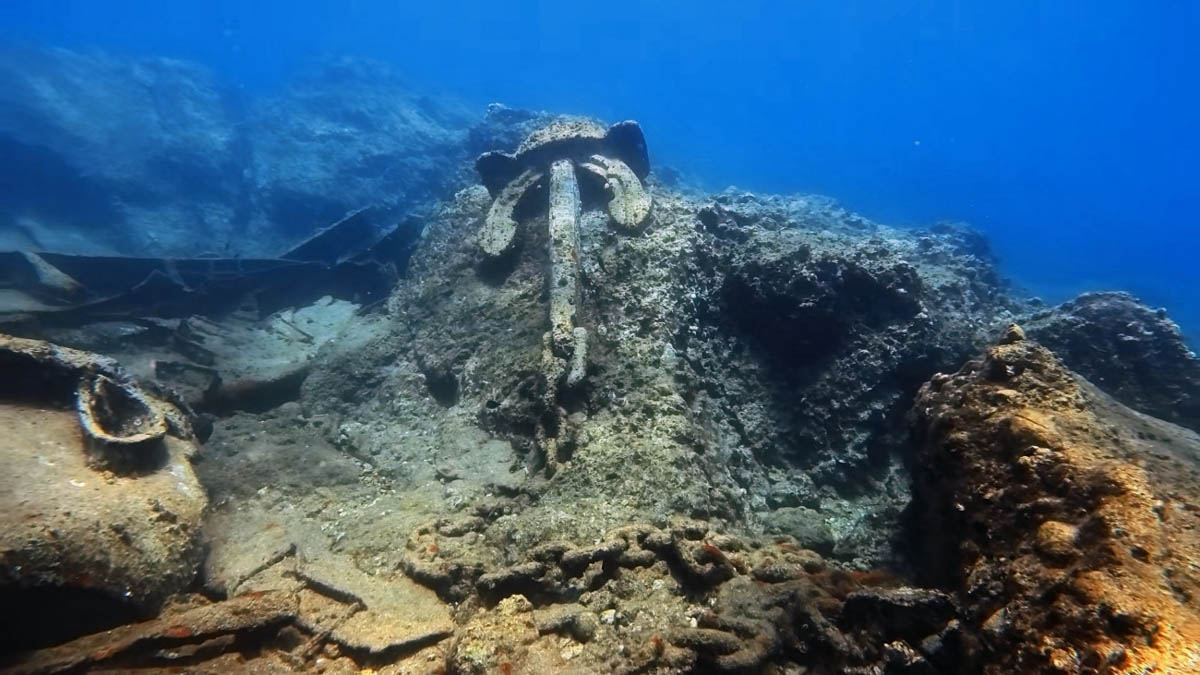
Our group spent time admiring and photographing it before concluding the dive in accordance with our planned profiles and safety procedures.
It was one of those underwater scenes that stays in your memory long after returning to the surface.
A Wreck Full of Marine Life
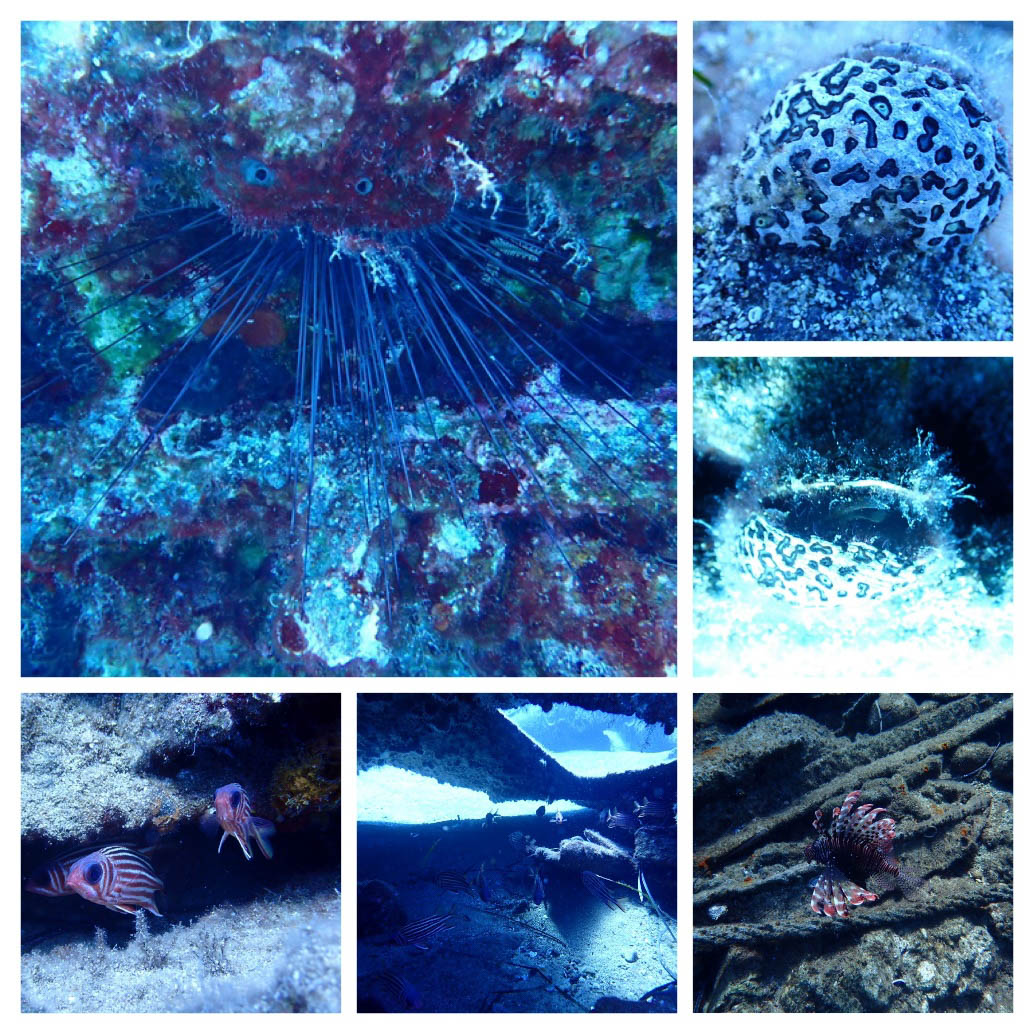
Over the decades, the wreckage has also become habitat for marine organisms.
Fish move around its metal structures, while encrusting life has colonised surfaces that once formed part of a working ship.
During our visits, we observed marine life including lionfish, soldierfish, rabbitfish, sea urchins and a sea hare.
My fellow diver Yağmur Fellahoğlu took photographs capturing some of these encounters and generously made them available for this article.
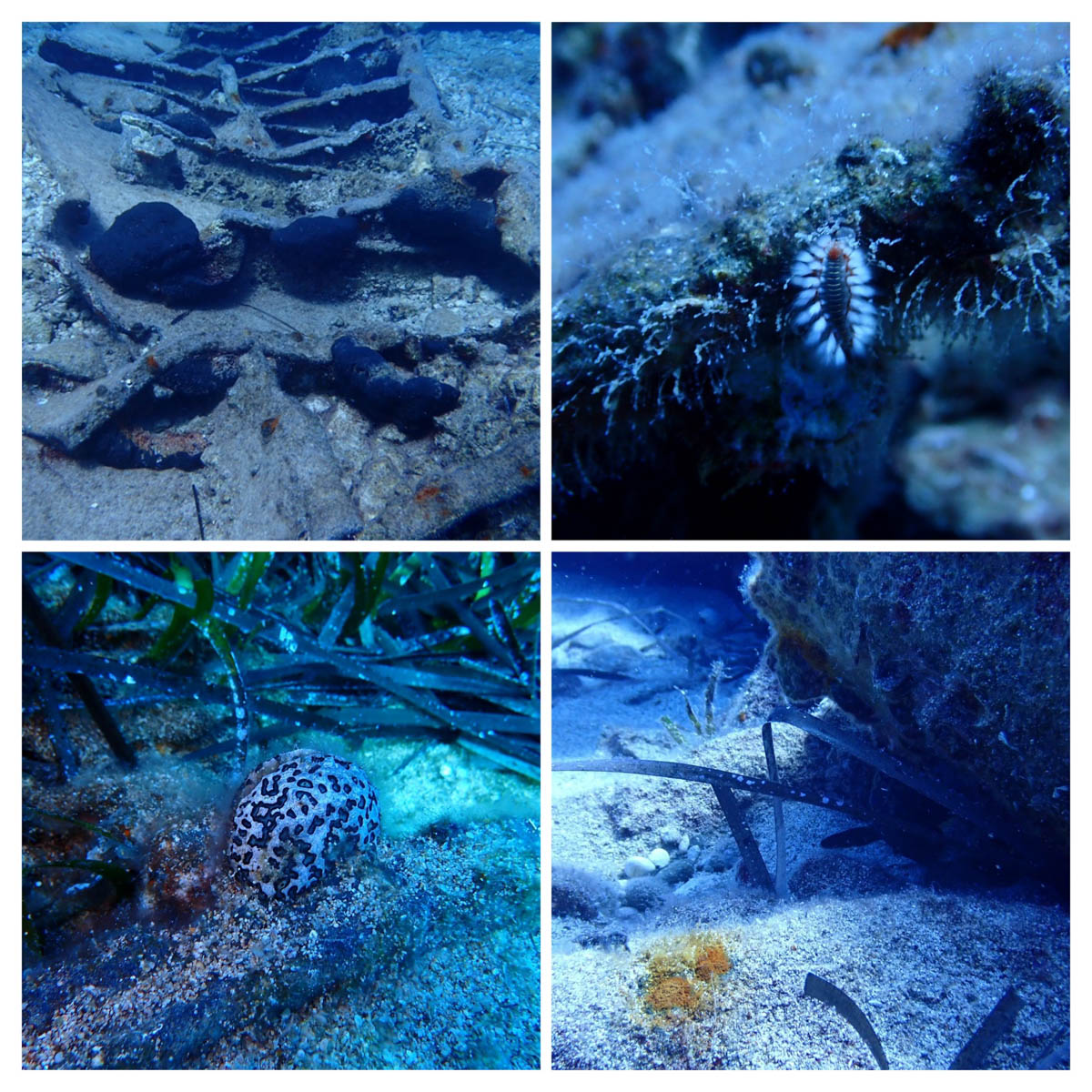
The combination of wreckage, rocky terrain, clear water and marine life makes the site especially rewarding for underwater photography.
Although shipwrecks can provide habitat, their ecological effects are complex. The presence of marine organisms does not by itself establish that a wreck improves the health of the surrounding marine environment.
What is unmistakable, however, is that this former cargo ship has become part of the underwater landscape.
Dive Profiles
October 2025
- Dive time: 37 minutes
- Average depth: 9.2 metres
- Maximum depth: 15.6 metres
- Breathing gas: Air
- Exposure suit: 3 mm wetsuit
- No wreck penetration recorded
June 2026
- Dive time: 35 minutes
- Average depth: 8.9 metres
- Maximum depth: 16.1 metres
- Breathing gas: Air
- Exposure suit: 3 mm wetsuit
- Limited passage through openings recorded
These are my personal logged dive details, not recommendations for other divers. Conditions, individual experience and the condition of the wreck must always guide dive planning.
Respecting the Risks of Wreck Diving
The relatively shallow depth should never be mistaken for an absence of danger.
Some sections of MV Città di Alessandria are severely broken, with sharp metal, confined spaces and potentially unstable structures.
Entering a deteriorating wreck can expose divers to entanglement, reduced visibility, disorientation and obstructions that prevent direct access to the surface.
Even a short swim through an opening can create an overhead-environment hazard.
Divers should remain within their training and experience, follow the guidance of qualified local professionals and avoid entering damaged sections without the specialist preparation, equipment and procedures appropriate for wreck penetration.
Preserving the wreck and its marine life also means avoiding unnecessary contact with its structures or disturbing objects that may have historical value.
A Personal Journey Through Maritime History
What began as an enjoyable dive became something much more meaningful.
I started writing about the wreck after my first visit in October 2025, fascinated by its history and determined to find out more.
During the process, I had to put the project aside following the death of my father.
Returning to the research and finally completing the article has therefore carried particular personal significance.
I hope, wherever he is, that he can see I finished it.
I am grateful to everyone who helped me along the way, especially those who shared information, provided photographs and made the dives possible.
There are still unanswered questions about the vessel’s final voyage, its cargo and the circumstances that left it in such a damaged condition.
Perhaps further records or information from other divers will help answer them.
For now, I am pleased to have learned more about the identity of this remarkable wreck and to have shared some of its story.
I hope to return to the Karpaz Peninsula, explore more wrecks and continue discovering the history hidden beneath the Mediterranean.
Christoforos Psyllides is a recreational scuba diver and PADI Master Scuba Diver. This article reflects his personal diving experiences and research rather than a formal archaeological or marine accident investigation.
Acknowledgements
Special thanks to the Diveshack Dive Centre team, Erkan, Toprak, Alper and Saban, for organising the dives and providing logistical and diving support.
Thanks also to Yağmur Fellahoğlu for her marine-life photography, Çiğdem Çağlar for the research lead that helped identify the vessel, and Burcu Mahmutoğlu for her encouragement and assistance in bringing the article to publication.
The author also acknowledges the historical shipping and shipbuilding sources consulted during the investigation.