


Fragments recovered from Bermuda’s underwater world more than half a century ago are offering a remarkable glimpse into the diving life of Peter Benchley, the author whose novel Jaws became one of the most influential shark stories ever written.
The objects are part of a personal collection scheduled for auction on October 29, but their significance extends well beyond their potential value to collectors.
Among the items is a group of marine artefacts recovered during dives undertaken by Peter and his wife, Wendy, alongside legendary Bermudian wreck explorer Teddy Tucker and his wife, Edna.
In personal recollections supplied to The Scuba News through Willow Auction House, Wendy Benchley describes how those early experiences opened an extraordinary world of underwater exploration for the couple.
The collection provides a rare opportunity to look beyond Benchley’s literary fame and explore his lifelong relationship with the ocean, from historic shipwrecks and marine exploration to his later dedication to shark conservation.
Wendy Benchley Remembers the Bermuda Dives of 1969
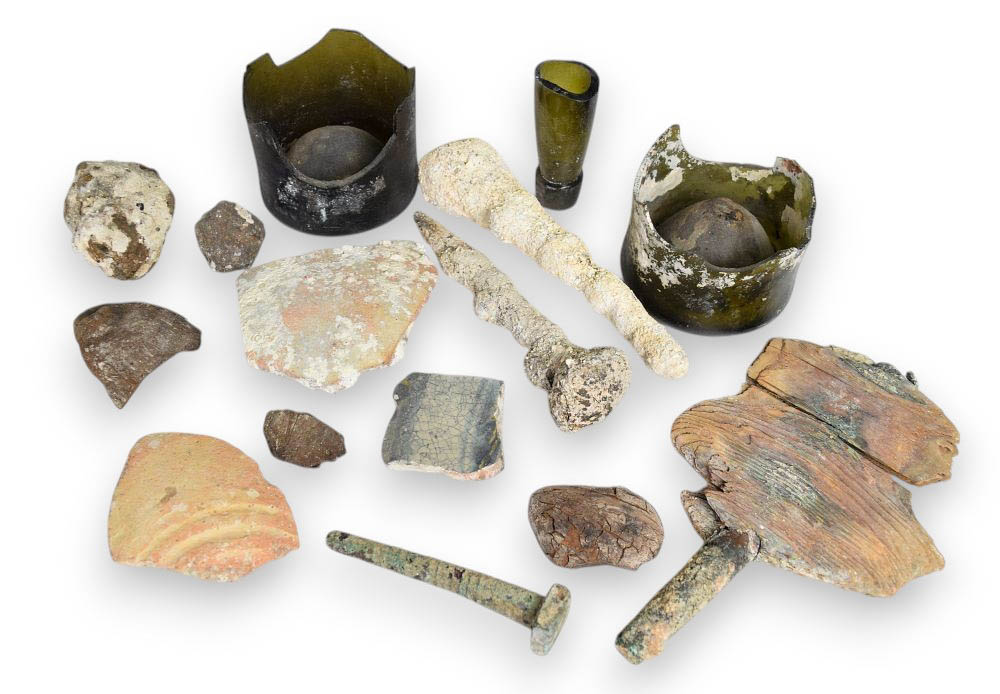
One of the most personal items in the auction is Lot 291, a collection of Bermuda shipwreck artefacts recovered by Peter and Wendy Benchley.
The assemblage contains 14 objects recovered from underwater sites around Bermuda during approximately 1969 and 1970.
They include fragments of old glass bottles, ceramic pieces, iron spikes and a copper-alloy fitting, many carrying the weathering and marine encrustation associated with prolonged immersion.
Some of the bottle fragments are described in the catalogue as having manufacturing characteristics associated with the eighteenth and nineteenth centuries.
Although modest in appearance, the objects have considerable personal significance.
In a statement shared specifically for this feature, Wendy Benchley recalled:
“I’ve kept these fragments from our first Bermuda dives with Teddy and Edna Tucker for over 50 years. Those first dives in 1969 opened up a fascinating world of exploration for us.”
That recollection gives the collection a dimension that cannot be captured by an auction estimate.
These were not simply objects acquired through collecting. They were physical reminders of underwater experiences Wendy had preserved throughout much of her life with Peter.
The catalogue also records that the artefacts are accompanied by a handwritten provenance note from Wendy.
While their recovery in Bermuda is documented through the collection and Wendy’s account, the precise wreck sites from which individual pieces originated have not been established in the information supplied to The Scuba News.
Teddy Tucker and the World Beneath Bermuda
The Benchleys’ connection with Teddy Tucker represents an important chapter in Peter’s relationship with maritime history.
Tucker, one of Bermuda’s best-known shipwreck explorers, developed an extraordinary knowledge of the island’s reefs, wrecks and historical artefacts.
His understanding of underwater archaeology was built through decades of practical exploration and research.
For Peter Benchley, who would go on to write about underwater adventure and the mysteries of the sea, that knowledge proved influential.
Wendy recalled the admiration Peter felt for Tucker, sharing his description of the Bermudian explorer as “a master of every discipline having to do with history and the ocean.”
Another item in the auction illustrates that connection.
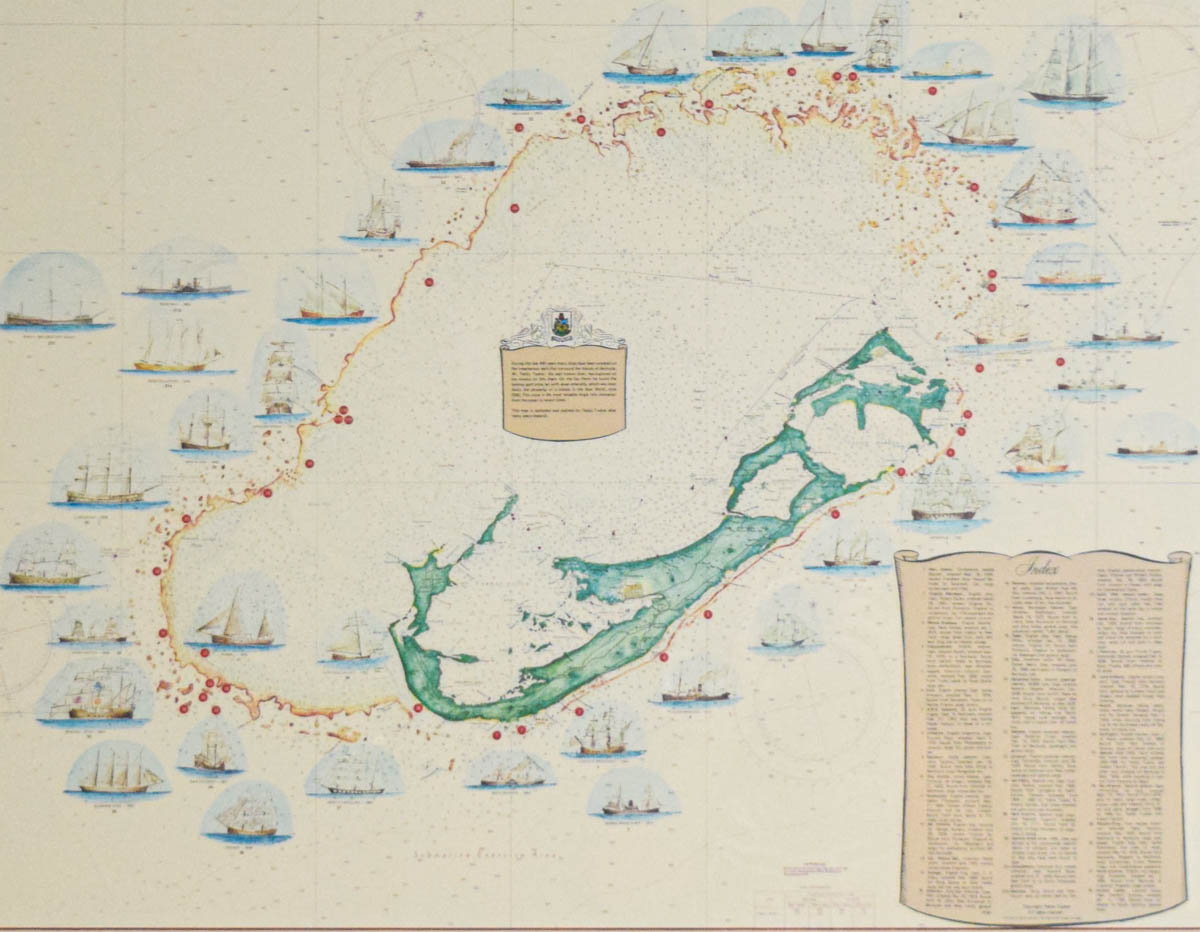
Lot 22, Teddy Tucker’s illustrated Bermuda Shipwreck Map, depicts 38 historic wrecks around the islands, dating from 1563 to 1967.
The chart combines the geography of Bermuda with illustrations of wrecked vessels and a historical index, reflecting the depth of maritime history surrounding the island.
Its presence among Benchley’s possessions is a reminder that his interest in shipwrecks extended beyond the experiences that later appeared in his fiction.
The relationship with Bermuda and Tucker also helped inspire The Deep, Benchley’s underwater adventure novel, subsequently adapted into the 1977 film starring Jacqueline Bisset, Nick Nolte and Robert Shaw.
As Bermuda’s Royal Gazette has documented, the forthcoming auction includes other material connected with the novel and its film adaptation, much of which has its own links to the island.
A Diving Life Beyond the Famous Novel
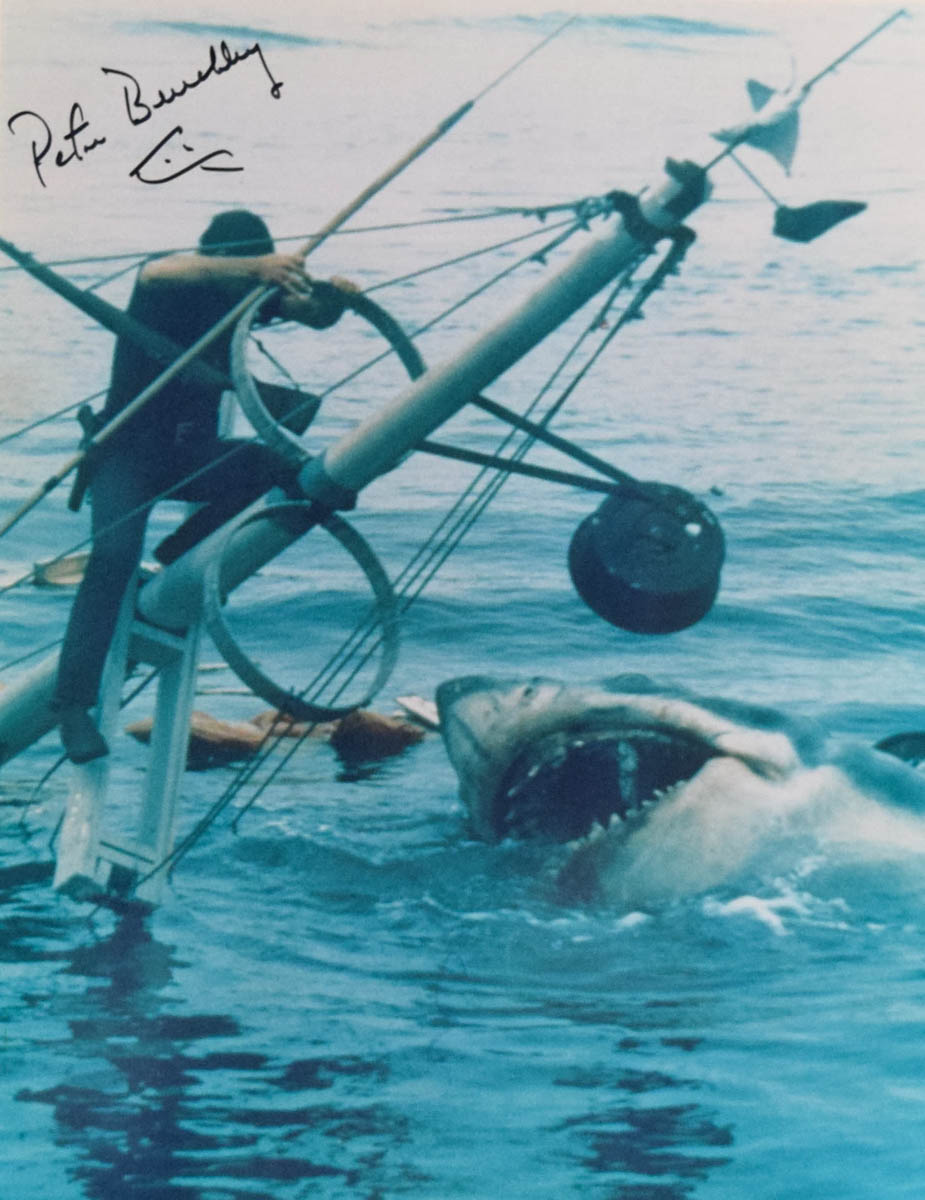
Peter Benchley is remembered primarily for Jaws, published in 1974 and adapted into Steven Spielberg’s enormously successful film the following year.
Yet diving, exploration and marine wildlife were important parts of his life outside the stories that made him internationally famous.
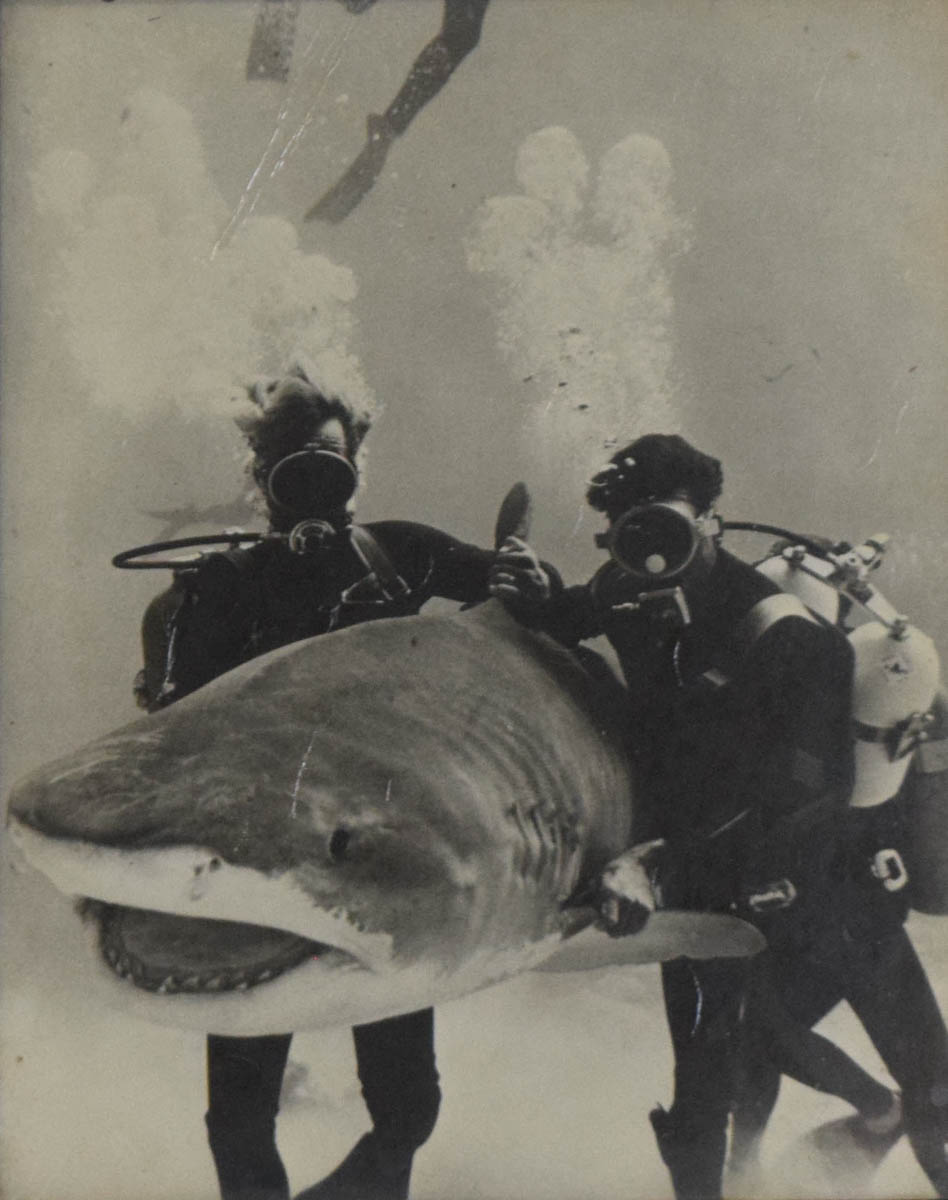
The Peter Benchley Collection catalogue includes personal diving equipment, historic underwater photographs, marine specimens and items associated with his travels.
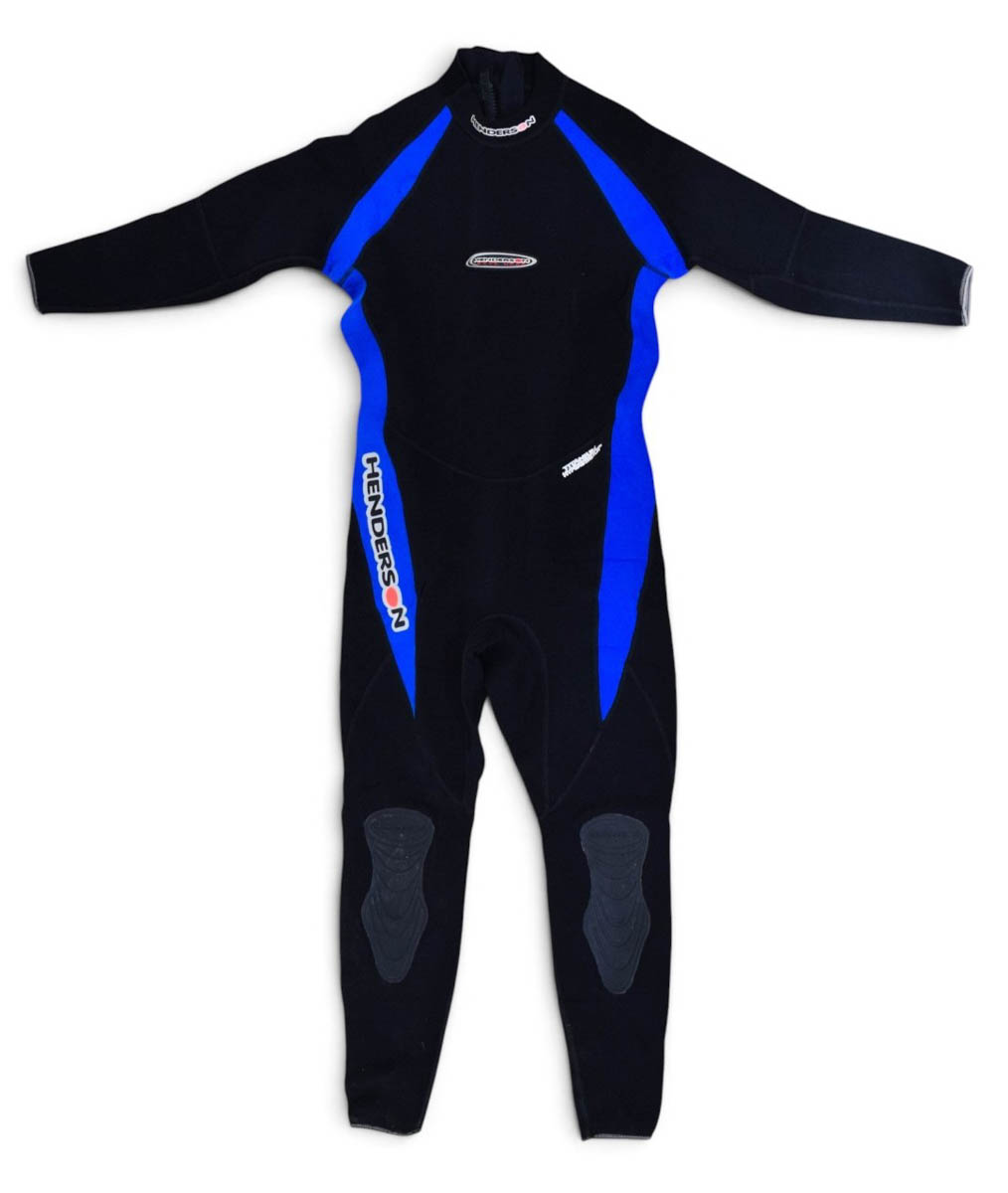
Among them is Lot 232, Benchley’s Henderson Titanium Hyperstretch wetsuit.
The black and blue, full-length 3mm wetsuit is a practical reminder that Benchley was not merely an observer of the underwater world.
It is one of several objects that connect his published work with personal experiences beneath the surface.
The wider collection also includes photographs associated with shark encounters, marine exploration and the people who influenced his understanding of the ocean.
These materials reveal a broader life story encompassing literature, exploration, history and conservation.
From Jaws to Shark Conservation
Perhaps the most significant aspect of Benchley’s legacy is the evolution of his relationship with sharks.
Jaws helped establish an enduring popular image of the great white shark as a terrifying predator. As public awareness of marine conservation developed, Benchley became increasingly concerned about the fear of sharks associated with his most famous work.
During the later part of his life, he became an advocate for shark protection and ocean education, using his public profile to encourage greater understanding of marine wildlife.
The auction house’s account of the collection documents that transition from celebrated novelist to committed conservationist.
His work also continues through Wendy Benchley’s own involvement in ocean conservation and marine education.
The diving equipment, photographs and objects recovered from Bermuda help explain why the ocean remained such an important part of their lives.
They offer a different perspective on a writer whose name became inseparable from one of cinema’s most famous fictional sharks.
A Personal Collection Supporting Ocean Conservation
The Peter Benchley Collection: Jaws, A Life of Writing, A Legacy of Stories will be offered by Willow Auction House in Lincoln Park, New Jersey, on Thursday, October 29, 2026.
The auction includes approximately 300 lots covering Benchley’s literary career, work as a White House speechwriter, personal interests, diving experiences and ocean conservation activities.
Among the more widely recognisable items are memorabilia associated with Jaws, original typewriters, books, photographs and an original film-related T-shirt given to Benchley by director Steven Spielberg.
However, the underwater objects tell a different story.
The surviving fragments from Bermuda, Tucker’s shipwreck chart and Benchley’s diving equipment offer a tangible connection to the places and experiences that helped shape his understanding of the sea.
According to Beneath the Sea, Wendy Benchley has chosen the auction to benefit Beneath the Sea and WildAid, organisations involved in marine education and wildlife conservation.
The auction begins at 11 a.m. Eastern time on October 29, with online participation available through Willow Auction House.
The full Peter Benchley Collection catalogue provides additional information about the lots and auction arrangements.
The Legacy Beneath the Surface
More than five decades after the publication of Jaws, Peter Benchley’s cultural influence remains immense.
Yet the preserved fragments from Bermuda tell a quieter and arguably more personal story.
They recall a young couple discovering historic wrecks, learning from an experienced Bermudian explorer and developing a relationship with the underwater world that would continue for decades.
Wendy Benchley’s decision to preserve those small objects for more than 50 years is a reminder that the significance of an underwater discovery is not always measured by rarity or financial value.
Sometimes, its greatest importance lies in the memories it carries.
And in Peter Benchley’s case, those memories provide another way of understanding the man behind Jaws: not only as a storyteller, but as a diver whose experiences beneath the surface helped shape a lifelong fascination with the sea.
