


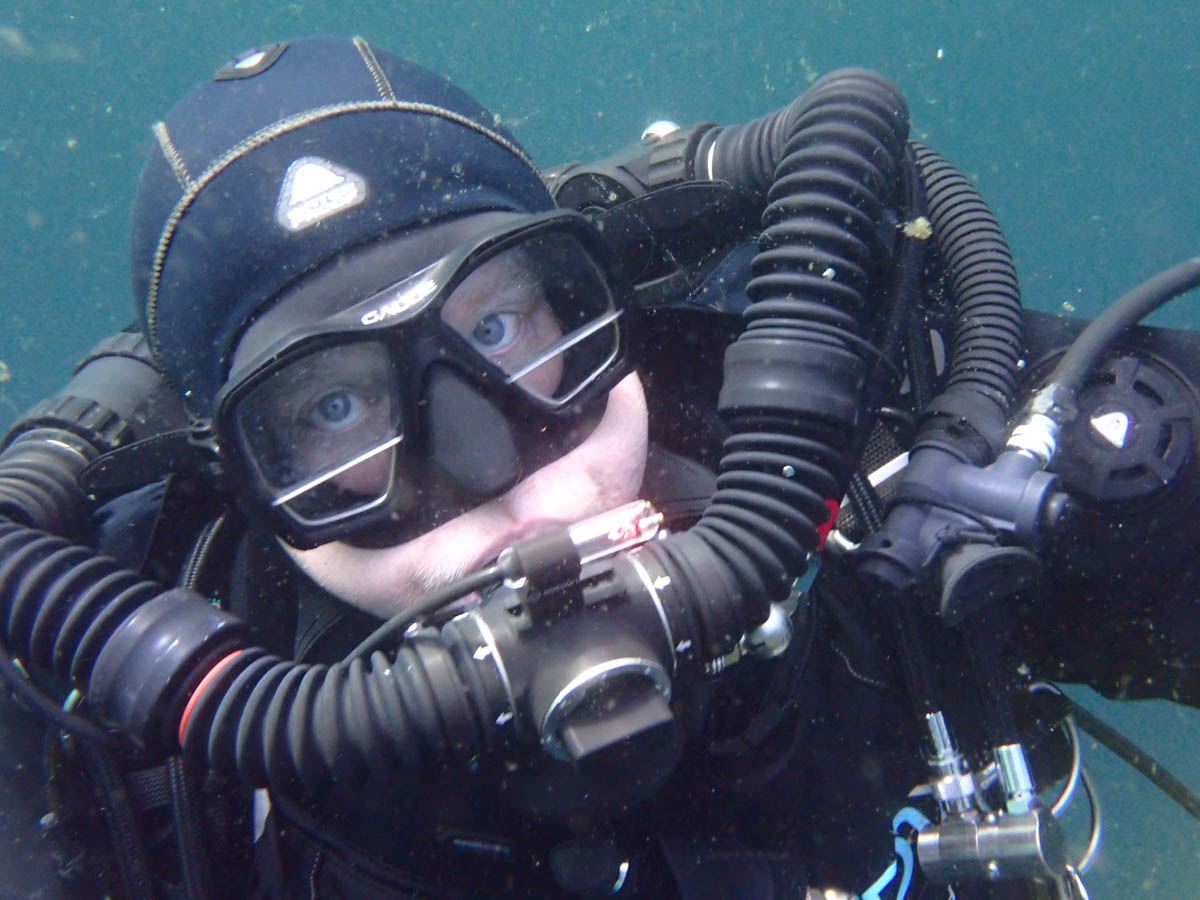
Updated 9 October 2026: This article now includes additional scientific commentary from study researcher Dr Emmanuel Gouin, alongside photographs supplied by the research team.
New research involving experienced technical divers has found significantly more detectable gas bubbles following closed-circuit rebreather dives using heliox than trimix. However, one of the researchers has told The Scuba News that the results should not be interpreted as evidence that either breathing mixture provides safer or more effective decompression.
The study, published on 6 October 2026 in the peer-reviewed journal Physiological Reports, examined decompression and pulmonary stress during demanding rebreather dives to approximately 50 metres.
All nine divers breathing heliox had detectable venous gas emboli following their dives, compared with five of the ten divers breathing trimix.
The difference was statistically significant 45 minutes after surfacing, although it was no longer significant at the 90-minute measurement.
None of the participants developed symptoms of decompression sickness.
Following publication of the findings, The Scuba News contacted Dr Emmanuel Gouin of CHU de Brest and the ORPHY laboratory at the University of Brest to examine the implications for technical divers.
His response provides important context, particularly concerning the additional decompression time received by the trimix group and the limitations of comparing the two breathing mixtures directly.
Testing Heliox and Trimix at 50 Metres
The research involved 19 experienced male technical divers undertaking standardised closed-circuit rebreather dives in French waters.
The dives reached approximately 50 metres and lasted an average of 147 minutes, including decompression.
Participants used one of two breathing mixtures:
- Heliox: 16% oxygen and 84% helium.
- Trimix: 16% oxygen, 32% helium and 52% nitrogen.
Both mixtures contained the same oxygen percentage, but differed substantially in their helium and nitrogen content.
Helium is widely used in technical diving because it reduces breathing-gas density and the narcotic effects associated with nitrogen at depth.
Heliox contains oxygen and helium, while trimix combines oxygen, helium and nitrogen.
Researchers investigated circulating gas bubbles, lung function, pulmonary ultrasound findings, heart rate variability and inflammatory markers.
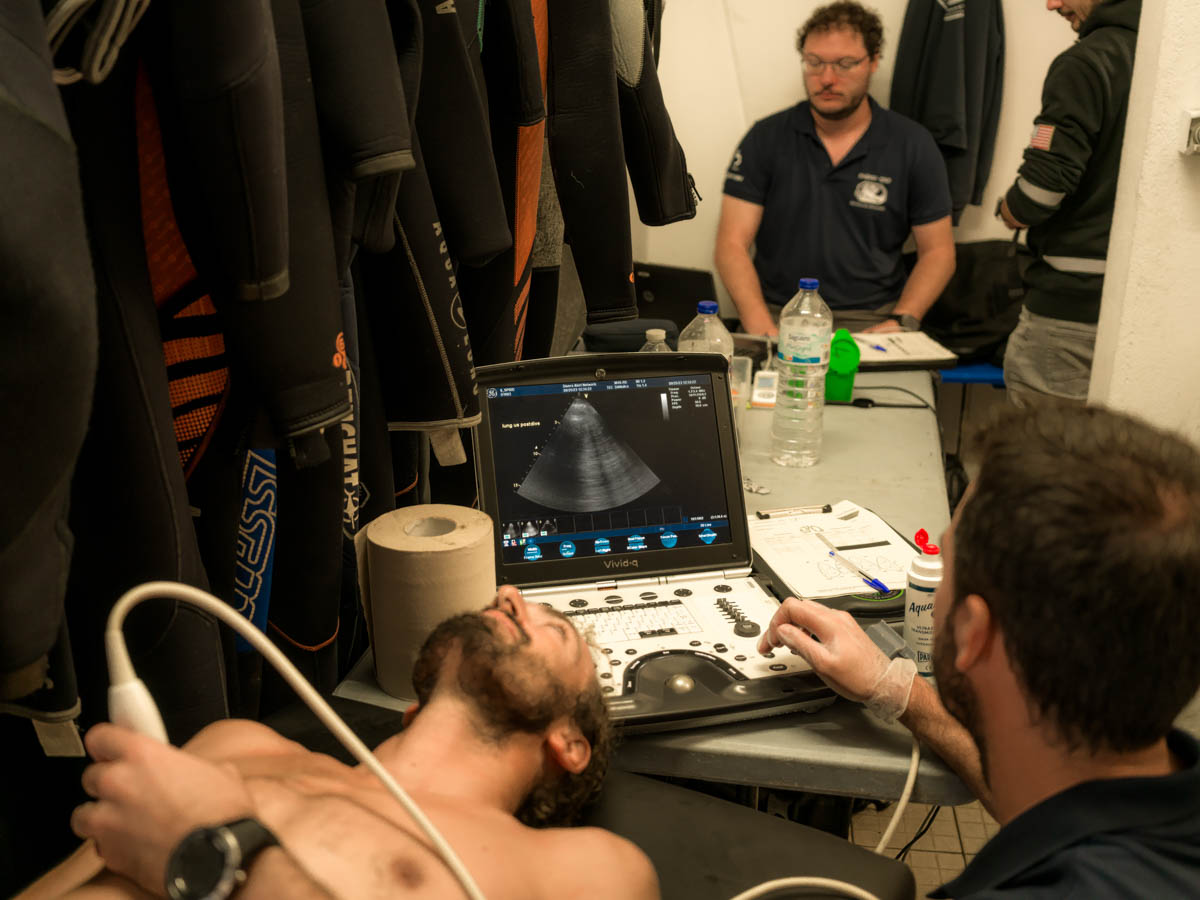
The aim was to understand how the different mixtures influenced physiological responses under the conditions studied, rather than establish which gas should be preferred for technical diving.
More Bubbles Detected Following Heliox Dives
The most striking finding concerned venous gas emboli, commonly described as circulating gas bubbles.
These bubbles can develop during decompression as dissolved inert gases leave the body’s tissues.
Their presence can indicate decompression stress, although detecting bubbles does not necessarily mean that a diver will develop decompression sickness.
At 45 minutes after surfacing, the researchers recorded a median of 12 bubbles per ten cardiac cycles in the heliox group, compared with zero in the trimix group.
The difference was statistically significant, with a reported p-value of 0.03.
Every diver in the heliox group had detectable bubbles, compared with half of the trimix group.
By 90 minutes after surfacing, however, the difference between the groups was no longer statistically significant.
The researchers also identified bubbles through cardiac ultrasound examinations.
Dr Gouin supplied The Scuba News with an annotated ultrasound image taken after a heliox dive, showing the bubbles identified during the examination.
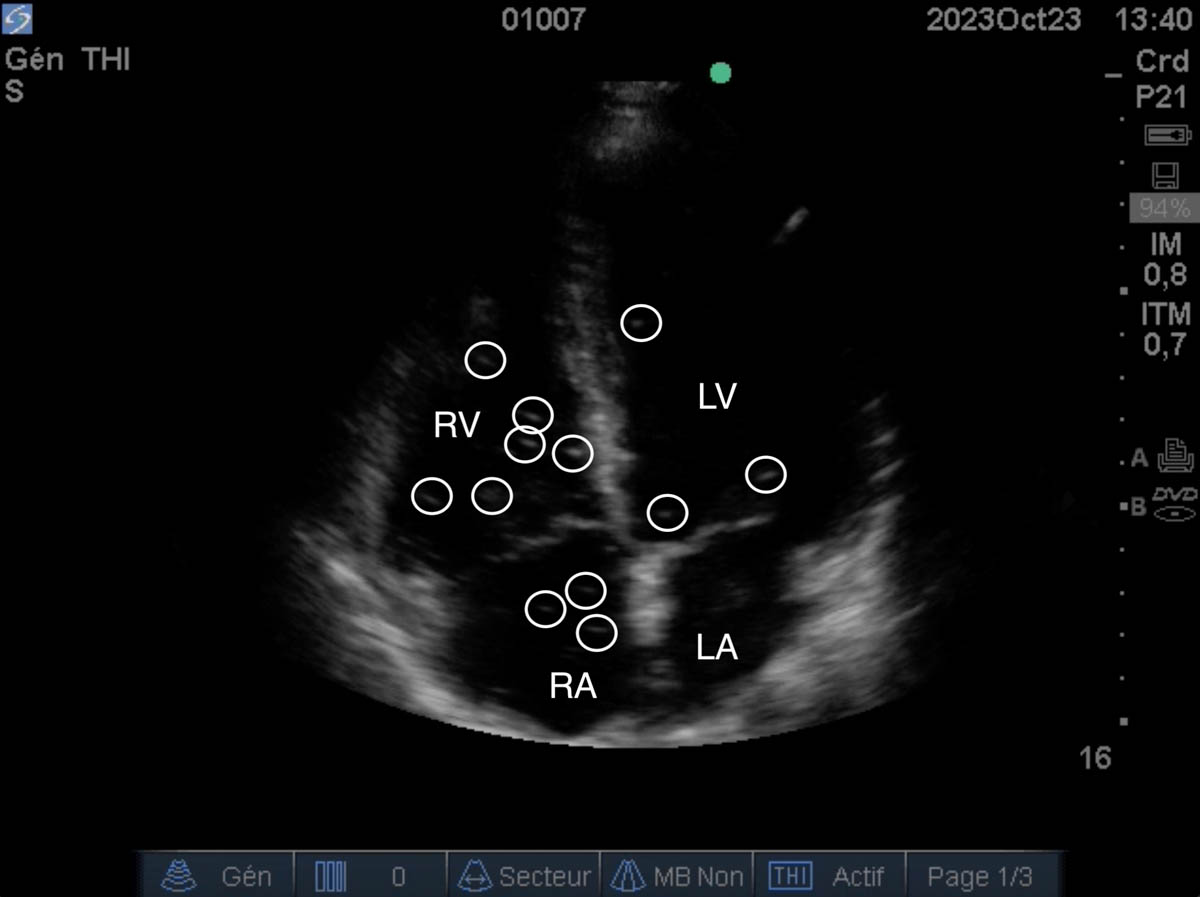
He explained that the heliox group demonstrated a substantial bubble load despite relatively conservative decompression settings, and that arterial bubbles were sometimes observed.
That observation raises further physiological questions, although the clinical significance of these bubbles remains uncertain.
Why the Trimix Divers’ Additional Decompression Matters
A central limitation of the study concerns how the divers’ decompression schedules were managed.
Although the participants followed comparable dive profiles, decompression was governed by the obligations calculated for the heliox group.
The trimix divers therefore received additional decompression relative to the schedules indicated by their own dive computers.
Responding to questions from The Scuba News, Dr Gouin acknowledged that this inevitably influenced the observed bubble load.
Only half of the trimix divers had detectable bubbles, but he cautioned that this might not have been the result had they followed their computers’ prescribed decompression profiles.
This distinction matters because it prevents the results from being treated as a straightforward comparison of the decompression efficiency of heliox and trimix.
The study demonstrates a difference in detectable bubble formation under the specific experimental conditions. It does not establish that the same difference would occur if each group followed its own calculated decompression schedule.
Dr Gouin also noted that the trimix divers completed deeper stops than those recommended by their computers because they were following the heliox-driven profile.
The study did not provide evidence that those additional stops were harmful, but neither does it establish that such a strategy should be adopted more widely.
Do Existing Decompression Algorithms Fully Account for Helium?
Another important question concerns how decompression algorithms calculate obligations for helium-rich breathing mixtures.
Technical divers may regard the additional decompression time associated with helium in the Bühlmann algorithm as an unnecessary penalty.
However, Dr Gouin highlighted the substantial bubble formation observed in the heliox group despite that additional calculated decompression obligation and the use of a relatively conservative gradient factor setting of 70%.
He suggested that this could indicate that the decompression stress involved was not fully accounted for by the algorithm.
That remains a possibility requiring further investigation, not a demonstrated failure of the model.
The researcher’s comments also underline the distinction between detecting circulating bubbles and establishing actual clinical risk.
A diver can have detectable venous gas emboli without experiencing decompression sickness.
Conversely, the absence of a significant bubble load at a particular measurement does not establish that a decompression procedure is risk-free.
Dr Gouin identified the relationship between bubble formation, decompression sickness and inflammatory responses as an important unresolved question.
He also noted that other research has produced findings that complicate simple comparisons between helium-based and nitrogen-containing mixtures.
The present study therefore cannot be used to conclude that either heliox or trimix offers superior decompression safety.
What Happened to the Divers’ Lungs?
The research team also examined whether the breathing mixtures produced measurable changes in respiratory function.
Neither group experienced clinically significant changes in pulmonary function.
The researchers recorded a moderate reduction in lung diffusion capacity of approximately 6%, irrespective of the breathing mixture.
Lung ultrasound examinations identified minor temporary changes, while blood tests showed mild inflammatory responses in both groups.
The heliox divers also demonstrated transient complement activation and increased circulating platelets, suggesting some differences in the body’s inflammatory response.
However, the researchers did not establish a clear gas-dependent difference in overall pulmonary stress.
These findings reinforce the need to consider several physiological measurements rather than relying on circulating bubble counts alone.
Could the Findings Change Decompression Planning?
For technical divers, the obvious question is whether the results should influence breathing-gas selection or decompression procedures.
At present, the researchers do not believe the evidence supports such changes.
Dr Gouin told The Scuba News that the differences in calculated decompression obligations prevent a direct comparison of the two groups’ decompression efficiency.
He also made clear that the findings are insufficient to support changes to decompression models at this stage.
The study involved a relatively small group of divers, and the measurements reflect particular breathing mixtures, dive profiles, decompression schedules and post-dive observation periods.
The findings cannot automatically be extended to different depths, exposures, gas mixtures or diver populations.
Further research could examine bubble formation alongside biological stress responses, including inflammatory markers, to better understand how these measurements relate to decompression sickness risk.
Such work may eventually contribute to refinements in decompression modelling, but the present study does not provide a basis for altering established procedures.
What Technical Divers Should Take From the Research
Helium remains an important component of technical diving gas planning because of its low density and reduced narcotic effects compared with nitrogen.
Those benefits are particularly relevant to breathing resistance and the management of carbon dioxide retention during deep dives.
The new research does not undermine those established considerations.
Instead, it highlights the complexity of decompression physiology and the difficulty of interpreting differences between breathing mixtures when the groups do not receive equivalent decompression relative to their calculated obligations.
The finding that all heliox divers developed detectable post-dive bubbles deserves further investigation.
Equally important is the researchers’ warning that the lower bubble counts observed in the trimix group cannot be separated from the additional decompression those divers received.
For now, the appropriate conclusion is not that one gas is safer than another, but that more evidence is needed to understand how breathing-gas composition, decompression algorithms and individual physiological responses interact.
The original research, Heliox versus trimix in closed-circuit rebreather diving: A comparative study of pulmonary and decompression stress in male divers, was published in Physiological Reports on 6 October 2026.
Additional scientific commentary was provided directly to The Scuba News by Dr Emmanuel Gouin, MD, MSc, CHU de Brest and Laboratoire ORPHY, University of Brest.

