



Updated 11 October 2026: This article has been expanded to include additional memories and reflections supplied by DCU Sub-Aqua Club, with the club’s permission.
Tributes have been paid to Brian Stone, one of Ireland’s most influential underwater photography pioneers, following his death at the age of 67.
An accomplished underwater photographer, diving instructor and academic at Dublin City University (DCU), Stone made an extraordinary contribution to Irish diving. His influence extended from the development of underwater photography education and marine scientific research to the establishment of a university diving club that would transform the lives of hundreds of students.
Yet for those who knew him personally, his greatest achievement may have been something far less tangible than his photographs, research or professional accomplishments.
It was the community he helped create, the friendships he encouraged and the opportunities he gave people who might otherwise never have discovered the underwater world.
A Pioneer of Irish Underwater Photography
Stone played an important role in establishing underwater photography as an accessible and rewarding part of recreational diving in Ireland.
Through his involvement with Diving Ireland, formerly the Irish Underwater Council, he helped develop underwater photography training and encouraged divers to explore the creative possibilities of taking a camera beneath the surface.
When the organisation began developing an underwater photography course in 2009, Stone contributed to its teaching materials and practical instruction, subsequently helping to refine the programme as digital photography technology advanced.
His approach was built around participation and encouragement rather than competition.
In 2013, he established an underwater photography exhibition that became an important fixture within Ireland’s diving community.
Rather than focusing on awards or rankings, Stone wanted divers to experience the satisfaction of seeing their own underwater photographs professionally printed and exhibited.
The initiative encouraged photographers of different abilities to participate and helped bring the underwater world to audiences who might never experience it firsthand.
More than a decade later, the exhibition continued to travel around Ireland, reflecting the lasting appeal of the concept he had introduced.
In Afloat’s tribute to Stone, Sarah Staunton, President of Diving Ireland, remembered him as a pioneer whose contribution helped shape the country’s underwater photography community.
His generosity with his knowledge and his willingness to encourage others were recurring themes in the tributes that followed his death.
The University Diving Club That Became a Community
While Stone’s photographic achievements were considerable, his involvement with Dublin City University created a different and deeply personal legacy.
Approximately 25 years ago, while working as a lecturer at DCU, he founded the university’s Sub-Aqua Club.
It was an ambitious undertaking with limited resources and no certainty that the venture would succeed.
According to a tribute shared with The Scuba News by DCU Sub-Aqua Club, there was little money available in the beginning. Stone nevertheless believed that creating opportunities for students to experience scuba diving was worth the effort.
He helped establish the club, organise training and secure the equipment necessary to introduce students to an activity that could otherwise be financially inaccessible.
What began as a relatively modest university initiative eventually developed into a thriving diving community.
Over the years, hundreds of students have been introduced to diving through the club.
But its significance extends well beyond the number of people who learned to dive.
The club became a place where lasting friendships were formed, relationships began and shared adventures created memories that members would carry with them long after leaving university.
Some members met their closest friends through the club. Others met future partners. Many discovered interests and opportunities that influenced their lives well beyond their student years.
In its tribute, DCU Sub-Aqua Club reflected on how one person’s decision to establish a diving club had created an enduring community that continues to bring people together.
It is a reminder that the influence of a dedicated instructor or club founder can extend far beyond the original purpose of teaching people to dive.
Making Diving Accessible to Everyone
One of the most revealing aspects of the club’s tribute concerns Stone’s personal generosity towards students.
He understood that university life often came with financial pressures and was determined that a lack of money should not prevent enthusiastic students from becoming involved.
Club members remember him providing lifts to dive sites, helping students find or organise equipment and offering encouragement whenever someone needed additional support.
His generosity extended beyond formal training.
The club recalls occasions when Stone would ensure that students could enjoy the social side of diving even when they had little money to spare.
These gestures may have seemed relatively small at the time, but they helped create an atmosphere in which students felt welcomed, supported and included.
He was remembered as patient, kind and generous with his time, someone who helped others without seeking recognition.
For many members, Stone was more than an instructor or the founder of their club.
He was a mentor who demonstrated that diving was as much about friendship, mutual support and shared experiences as it was about developing technical skills.
That philosophy helped shape the culture of DCU Sub-Aqua Club and remains part of the organisation’s identity today.
Teaching People to Appreciate the Underwater World
Stone’s enthusiasm for underwater photography was closely connected to his approach to teaching diving.
He encouraged people not simply to enter the water and complete a dive, but to pay attention to the environment around them.
The smallest marine organisms, changing underwater habitats and subtle details of marine life were all subjects worthy of observation.
Photography provided a means of developing that appreciation.
By encouraging divers to slow down, look carefully and understand what they were seeing, Stone helped others develop a deeper connection with the marine environment.
The DCU Sub-Aqua Club tribute remembers his talent as an underwater photographer and the enthusiasm with which he shared his passion.
His influence was therefore not confined to teaching camera techniques.
He helped people discover an entirely different way of experiencing the underwater world.
For students taking their first steps into diving, that combination of technical instruction, curiosity and encouragement could be transformative.
Where Underwater Photography Met Marine Science
Stone’s professional career at Dublin City University brought together computer science, image analysis, engineering and environmental research.
His academic interests provided opportunities to apply technologies associated with photography and digital imaging to the scientific study of marine ecosystems.
His research included work on systems capable of automatically collecting and analysing images of fish, seals and cetaceans.
Through projects associated with the Marine & Environmental Sensing Hub and the Insight Centre for Data Analytics, he contributed to collaborative research involving marine biodiversity monitoring and environmental science.
These initiatives brought together expertise from DCU, the Marine Institute and other research organisations.
The objective was to develop practical technological approaches that could help researchers collect, interpret and understand information about marine environments.
Professor Fiona Regan, director of the DCU Water Institute, remembered Stone’s enthusiasm for combining engineering, software and image analysis to address scientific challenges.
His work also involved students, including contributions to the development of a fish-identification system.
It was another example of how Stone’s professional expertise and personal enthusiasm for the underwater world complemented one another.
The same curiosity that encouraged him to photograph marine life also helped drive research into how technology could improve scientific understanding of the oceans.
Preserving Ireland’s Underwater Heritage
Stone also applied his diving and photographic expertise to underwater archaeology.
Among his contributions was participation in archaeological surveys of the Tayleur, the historic vessel that sank in Dublin Bay in 1854.
Working alongside marine archaeologist Eoghan Kieran and a team of licensed divers, he helped document the wreck through underwater photography and video.
The work produced material for the State and contributed to the development of approaches to diving expeditions involving protected historic wreck sites in Irish waters.
His photographs also contributed to the Shipwreck Inventory of Ireland.
These projects demonstrated the wider value of underwater photography beyond recreational diving and artistic expression.
Accurate photographic records can support archaeological research, preserve evidence of historic sites and help document underwater heritage for future generations.
Stone’s ability to combine diving experience with technical knowledge made him a valuable contributor to this work.
A Life Behind the Camera
Stone’s underwater photography took him far beyond the Irish coastline.
His travels included diving expeditions to the Caribbean, the Azores and the Red Sea, where he photographed subjects ranging from small marine organisms to sharks and other large marine animals.
He was also involved with the Curragh and Dalkey sub-aqua clubs, maintaining strong connections throughout Ireland’s recreational diving community.
Some of his photography remains on public display at Valentia Lighthouse in County Kerry, where a permanent installation introduces visitors to the diversity of marine life found beneath the surface.
His photographs also form part of the broader legacy of Irish underwater photography that he helped develop.
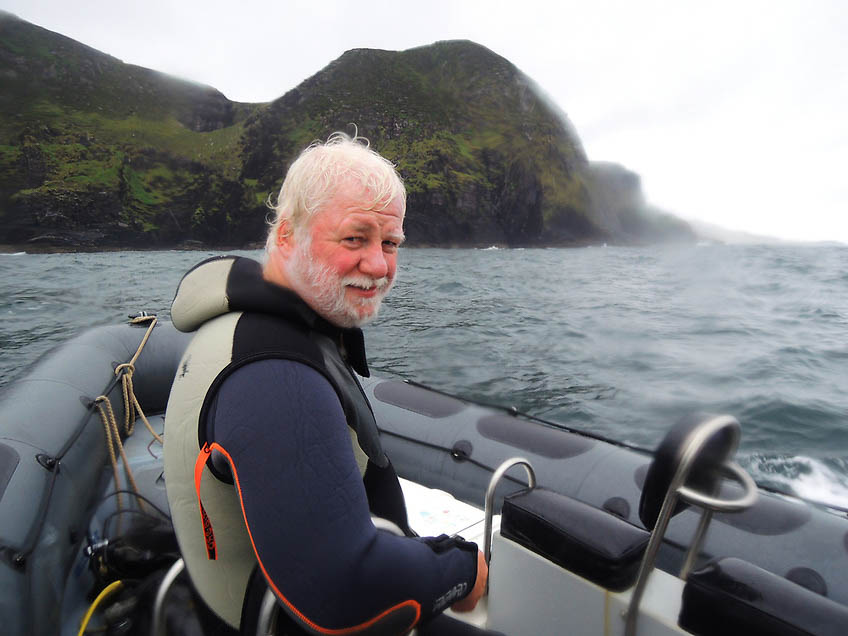
Ironically, one challenge in documenting Stone’s life has been finding photographs of the photographer himself.
Conor Meyler, Vice President Communications at Diving Ireland and a member of DCU Sub-Aqua Club, told The Scuba News that photographs of Stone were difficult to locate because he was so often the person behind the camera.
Meyler has been helping to seek out additional images from those who knew him.
It is a fitting reflection of someone who spent so much of his time documenting the underwater world and the experiences of others.
Celebrating 25 Years of DCU Sub-Aqua Club
Stone’s contribution to university diving will also be reflected in an exhibition marking the 25th anniversary of DCU Sub-Aqua Club.
The exhibition is scheduled to take place at the university library from 12 to 23 October 2026 and will feature examples of his underwater photography.
The anniversary provides an opportunity to reflect not only on the club’s history but also on the remarkable influence of its founder.
What began as an initiative to introduce university students to scuba diving became an organisation that shaped friendships, encouraged exploration and created a lasting sense of belonging.
For those who passed through the club, its history is inseparable from Stone’s generosity and determination to make diving accessible.
Every new student who joins, every diving expedition organised and every friendship formed through the club continues a legacy established more than two decades ago.
A Legacy Measured in People
Brian Stone’s achievements in underwater photography, diving education, marine science and underwater archaeology represent a substantial contribution to Ireland’s diving community.
His work helped develop educational programmes, encouraged photographers, supported scientific research and contributed to the documentation of important maritime heritage.
But the memories shared by DCU Sub-Aqua Club reveal another dimension to his life.
They describe someone who gave his time freely, helped students overcome financial barriers and created opportunities for people to experience something that might otherwise have remained beyond their reach.
His kindness and encouragement helped turn a university diving club into a community that has continued to flourish for a quarter of a century.
The club’s tribute captures the affection in which he was held, remembering not simply what he accomplished but the way he made people feel welcome and valued.
For the photographers he inspired, his influence can be found in the images they continue to capture.
For the researchers who worked alongside him, it remains in the scientific projects and technologies he helped develop.
And for the generations of students who discovered diving through DCU Sub-Aqua Club, his legacy lives on in the friendships, adventures and shared experiences that began because he believed the club was worth creating.
Brian Stone leaves behind far more than a collection of remarkable underwater photographs.
He leaves a diving community that continues to grow because of the opportunities he gave others.
The Scuba News thanks Conor Meyler of Diving Ireland and DCU Sub-Aqua Club for sharing additional memories and reflections for this tribute. The club’s contribution has been incorporated with permission and acknowledgement.
