


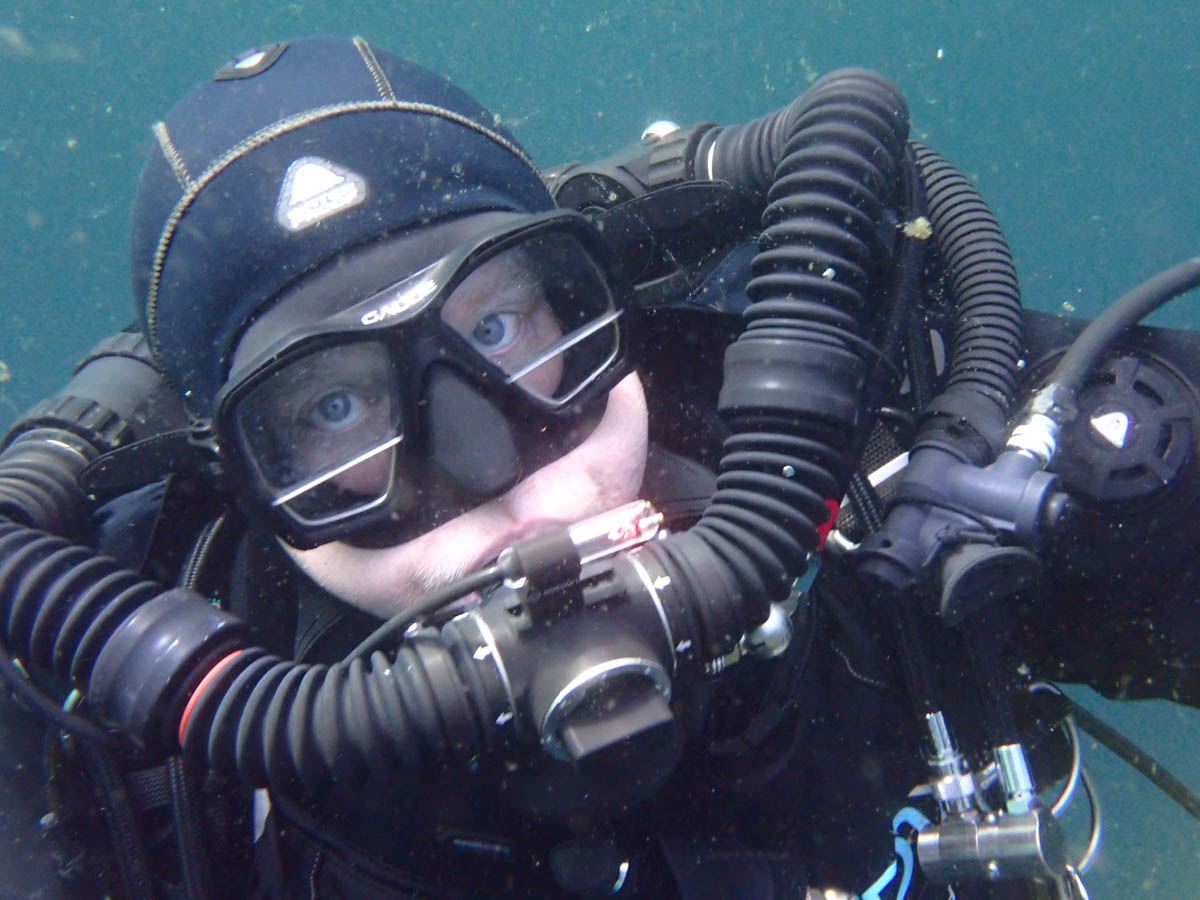
New research involving experienced technical divers has found that helium-rich heliox produced significantly more detectable gas bubbles after closed-circuit rebreather dives than trimix, raising fresh questions about how breathing-gas composition influences decompression stress.
The study, published on 6 October 2026 in the peer-reviewed journal Physiological Reports, compared the physiological effects of heliox and trimix during demanding rebreather dives to approximately 50 metres.
Researchers found that all nine divers breathing heliox had detectable venous gas emboli after their dives, compared with five of the ten divers breathing trimix.
The difference was statistically significant 45 minutes after surfacing, although it had disappeared by the 90-minute measurement.
Importantly, none of the participants developed symptoms of decompression sickness, and the researchers emphasised that the relationship between these findings and actual decompression sickness risk remains uncertain.
Testing Two Breathing Mixtures at 50 Metres
The research team investigated 19 experienced male technical divers undertaking standardised closed-circuit rebreather dives in French waters.
The dives reached approximately 50 metres and lasted an average of 147 minutes, including decompression.
Participants used one of two breathing mixtures:
- Heliox: 16% oxygen and 84% helium.
- Trimix: 16% oxygen, 32% helium and 52% nitrogen.
Both mixtures contained the same oxygen percentage, allowing researchers to examine differences associated with the inert-gas composition.
Helium is widely used in technical diving because it reduces breathing-gas density and the narcotic effects associated with nitrogen at depth.
Heliox eliminates nitrogen from the breathing mixture, while trimix combines oxygen, helium and nitrogen.
The researchers examined several physiological responses, including circulating gas bubbles, lung function, pulmonary ultrasound findings, heart rate variability and inflammatory markers.
More Bubbles Detected After Heliox Dives
The clearest difference emerged from measurements of venous gas emboli, commonly described as circulating gas bubbles.
These bubbles can form during decompression as dissolved inert gases leave the body’s tissues.
Although their presence is associated with decompression stress, detectable bubbles do not necessarily mean a diver will develop decompression sickness.
At 45 minutes after surfacing, researchers recorded a median of 12 bubbles per ten cardiac cycles in the heliox group, compared with zero in the trimix group.
The difference was statistically significant, with a reported p-value of 0.03.
Every heliox diver had detectable bubbles, compared with half of those breathing trimix.
However, by 90 minutes after surfacing, the difference between the groups was no longer statistically significant.
The findings suggest that the choice of breathing mixture may influence the timing and extent of detectable post-dive bubble formation under the conditions studied.
They do not establish that heliox is inherently more dangerous than trimix.
What Happened to the Divers’ Lungs?
The researchers also investigated whether the different gas mixtures produced measurable changes in respiratory function.
Overall, the results were reassuring.
Neither breathing mixture produced clinically significant changes in pulmonary function.
The researchers observed a moderate reduction in lung diffusion capacity of approximately 6%, regardless of the gas mixture used.
Lung ultrasound examinations identified minor, temporary changes, while blood testing revealed mild inflammatory responses in both groups.
Divers breathing heliox also demonstrated transient complement activation and an increase in circulating platelets, suggesting some differences in the body’s inflammatory response.
However, the study did not identify a clear gas-dependent difference in overall pulmonary stress.
Why the Findings Need Careful Interpretation
One important consideration is the way decompression was managed during the study.
The divers followed shared dive profiles, with decompression schedules based on the obligations of the heliox divers.
Because the trimix divers generally had shorter calculated decompression obligations, they effectively received additional decompression time relative to their own computer calculations.
This could have contributed to the lower bubble counts observed in the trimix group.
The study was also relatively small, involving only 19 participants, and measurements were taken at selected intervals after surfacing.
It therefore cannot establish whether the observed difference would persist across other depths, exposure times, decompression strategies or diver populations.
Most importantly, the researchers did not demonstrate a difference in the incidence of decompression sickness.
What Does This Mean for Technical Divers?
For technical divers, the findings highlight the complexity of selecting breathing mixtures for deep dives.
Helium remains valuable because of its low density and reduced narcotic effects compared with nitrogen. Those benefits are particularly relevant when managing breathing resistance and carbon dioxide retention at depth.
However, decompression behaviour cannot necessarily be predicted from those advantages alone.
The research suggests that different proportions of helium and nitrogen may produce measurable differences in post-dive bubble formation, even when divers undertake comparable profiles.
That is an important scientific observation, but it is not a reason for divers to abandon established gas-selection practices or modify decompression procedures based on a single small study.
Further research involving larger groups, different dive profiles and more extensive post-dive monitoring will be needed to determine whether the findings have practical implications for decompression planning.
For now, the study adds another piece to the complicated relationship between breathing-gas composition, decompression physiology and diving safety.
The original research, Heliox versus trimix in closed-circuit rebreather diving: A comparative study of pulmonary and decompression stress in male divers, was published in Physiological Reports on 6 October 2026.

