


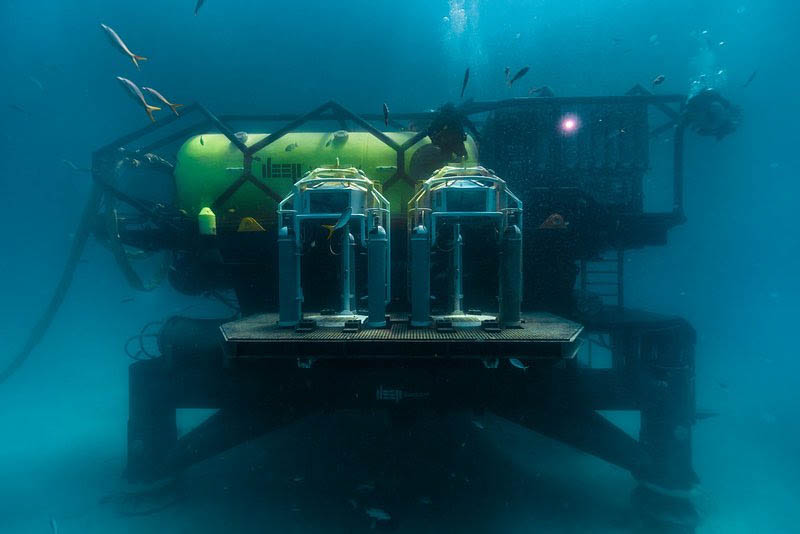
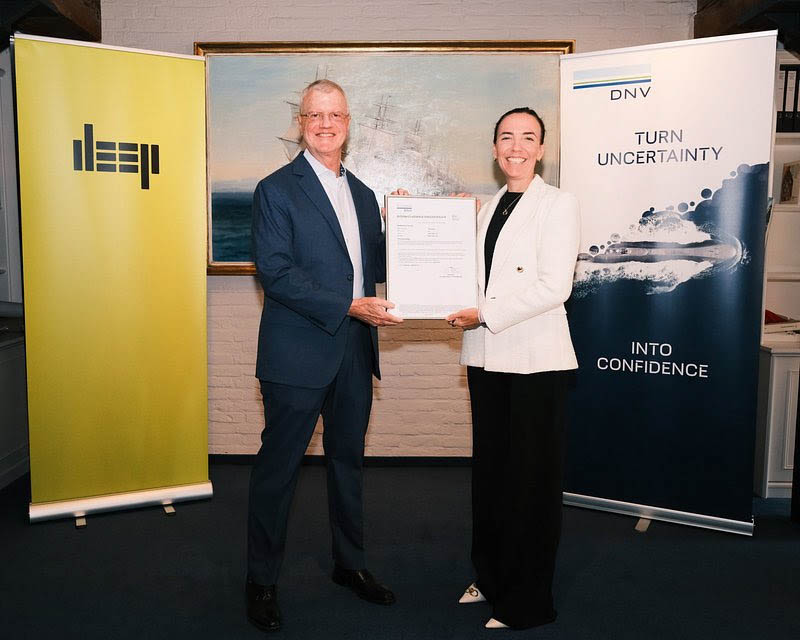
DEEP’s Vanguard underwater habitat has reached a significant milestone in its development, receiving an Interim Classification Certificate from maritime classification society DNV and clearing the way for the system to begin its initial operating phase.
The pilot subsea habitat was installed 17 metres below the surface at Tennessee Reef in the Florida Keys in June 2026. With the interim certificate now awarded, DEEP says crews will be able to begin living in saturation aboard Vanguard as the company prepares for missions involving marine science, human performance research and training in extreme environments.
The certification was formally presented at the International Maritime Museum in Hamburg.
For DEEP, the milestone represents an important transition from building and deploying Vanguard towards proving how the habitat performs with people living and working underwater for extended periods.
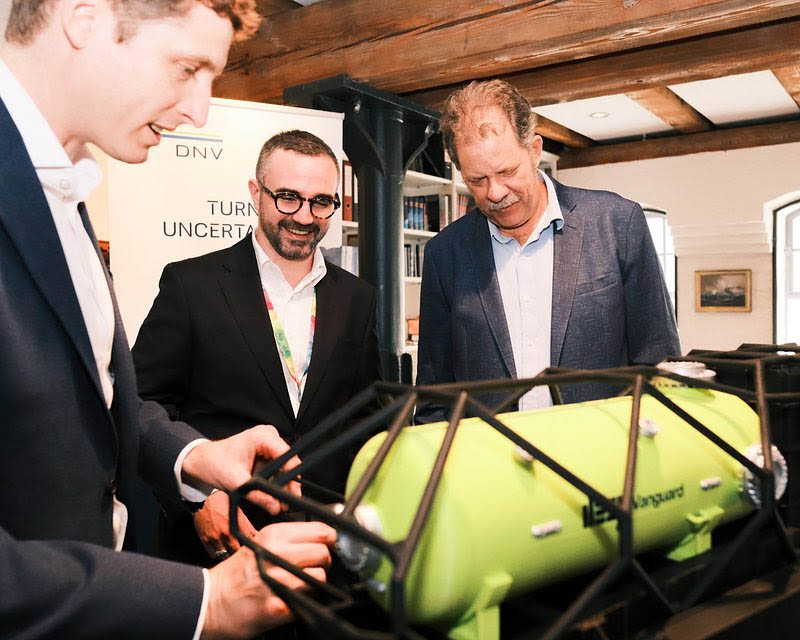
According to DEEP’s announcement, DNV has worked with the company throughout Vanguard’s design, construction and installation, providing independent assurance against applicable classification requirements and safety standards.
Vanguard is also the first project pursuing classification under DNV’s newly published rules covering people living in underwater habitats.
Norman Smith, Chief Technology Officer at DEEP, said the interim certificate validated the design and engineering work completed on Vanguard and would allow the team to begin extended-stay saturation diving operations.
“This certificate means Vanguard can begin extended stay saturation dive operations, getting us closer to a continuous human presence in the ocean,” Smith said.
The development does not yet represent full classification of Vanguard.
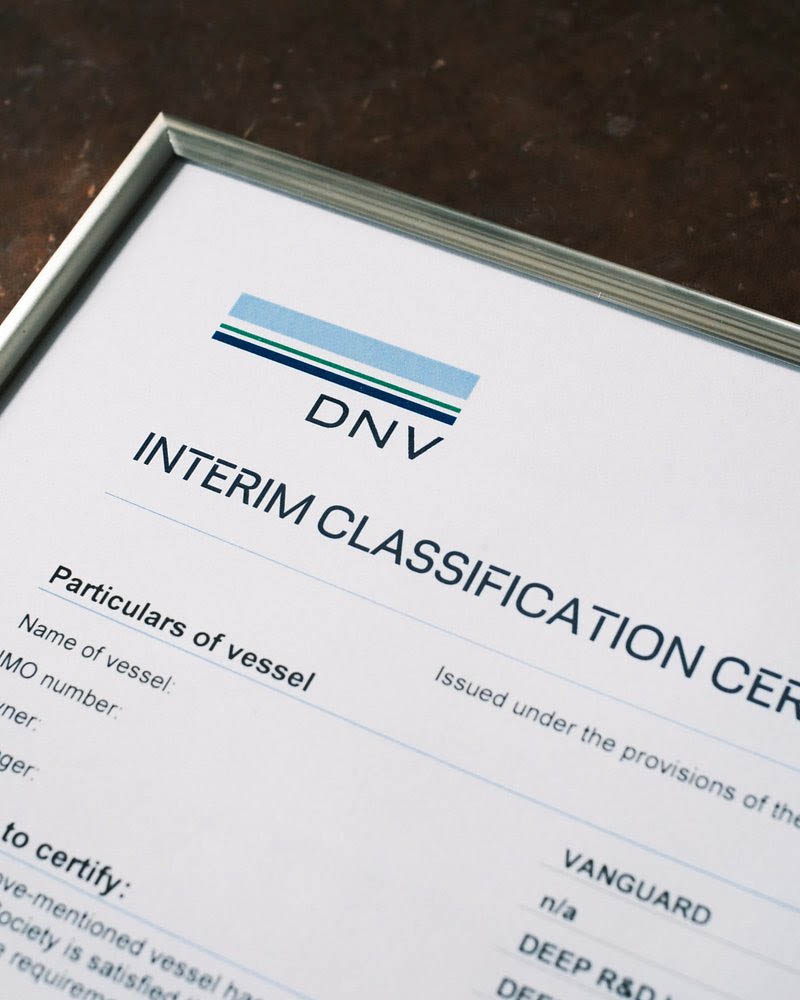
DEEP says full DNV classification will follow saturation diving operations, additional system testing and any upgrades identified during the initial operating period. That distinction makes the coming operational phase particularly important, with Vanguard moving from engineering and installation into sustained human occupation.
Jonathan Struwe, Head of Underwater Technology at DNV, described the interim certification as a pioneering step and confirmed that DEEP is the first organisation pursuing classification under DNV’s new rules for living in underwater habitats.
Four People Living Beneath the Surface
Vanguard has been designed to provide a dry subsea living environment for as many as four people, allowing crews to remain underwater for missions lasting five days or longer without repeatedly returning to the surface.
DEEP sees the habitat as a platform for scientific research, environmental monitoring, coral restoration, advanced diving training and astronaut training.
The company has previously outlined how classification forms part of a wider programme of testing and operational preparation before Vanguard reaches full capability. In a technical update published earlier in 2026, DEEP said its eventual objective was to operate Vanguard with four people living underwater for seven days or more.
Saturation changes the way extended underwater missions can be conducted. Once occupants have become saturated at their operating pressure, they can remain at depth rather than undergoing decompression after every excursion, with decompression undertaken at the conclusion of the mission.
For scientists and other underwater professionals, that has the potential to substantially increase useful working time at depth.
A Testbed for Something Much Larger
Vanguard is not intended to be the end point of DEEP’s underwater habitat programme.
The pilot system is being used to develop the engineering, operational procedures and experience required for the company’s larger Sentinel concept, a modular subsea habitat system intended to support a longer-term human presence beneath the ocean.
That makes the start of crewed Vanguard operations important beyond the individual habitat. It will provide practical evidence about how DEEP’s systems perform when people begin living and working underwater for extended periods.
DNV will remain involved as Vanguard progresses towards full classification.
For now, the interim certificate represents the bridge between deployment and sustained operation. The next major test will happen underwater, when Vanguard begins doing what it was built to do: supporting people living and working beneath the surface for days at a time.
Comments