


Five years after bottom-towed fishing was prohibited across a large section of the Sussex coast, researchers are reporting encouraging signs that the damaged marine ecosystem is beginning to recover.
Expanding mussel beds, increasing numbers of black sea bream and observations of sand eels and mackerel are among the changes being documented by the Sussex Kelp Recovery Project.
The findings do not mean that the region’s once-extensive kelp forests have already returned. Instead, they suggest that the seabed may be entering the early stages of a natural recovery process that could ultimately take decades.
A Lost Underwater Forest
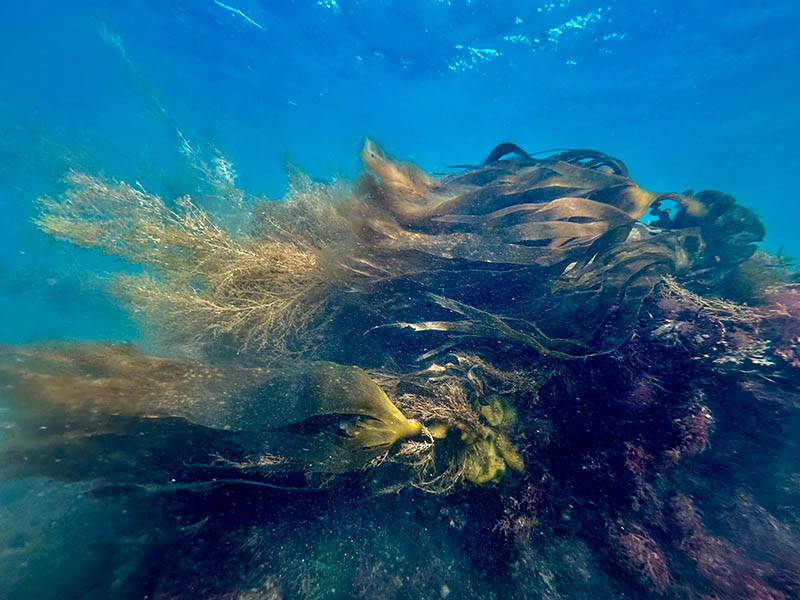
Dense kelp forests once extended for more than 40 kilometres along the Sussex coast, providing nursery habitat for fish and invertebrates while supporting local fisheries and a diverse marine ecosystem.
The Great Storm of 1987 caused extensive damage to the kelp, but increasing bottom-trawling activity, pollution, sedimentation and changing environmental conditions prevented the habitat from recovering naturally.
By the time the Sussex Kelp Recovery Project was established, approximately 96 per cent of the area’s historic kelp forest had been lost.
A major change came in March 2021, when the Sussex Inshore Fisheries and Conservation Authority introduced its Nearshore Trawling Byelaw. The measure now protects 304 square kilometres of nearshore seabed from bottom-towed fishing gear.
Rather than attempting to plant kelp across such a large area, the project has adopted a nature-led approach. By removing one of the principal sources of physical disturbance, researchers hope the seabed will progress through the ecological stages required for kelp to re-establish itself.
Mussel Beds Provide an Important Foundation
Among the clearest changes so far is the appearance of large, multi-layered mussel beds.
These beds bind and stabilise areas of seabed while creating hard surfaces to which young kelp can attach. In parts of Sussex where loose sediment dominates, that stable foundation may be essential if underwater forests are to return.
George Short, Kelp Recovery Coordinator for the Sussex Kelp Recovery Project, told the Chartered Institution of Water and Environmental Management that the scale of the mussel-bed recovery had exceeded expectations at this early stage.
The project is also recording a recovery in black sea bream, an important species for Sussex’s inshore fishing community.
Male black sea bream create distinctive nests on the seabed during the breeding season. These nests are particularly vulnerable to bottom-towed fishing equipment. Underwater video monitoring and observations from local fishers now indicate that the species is increasing within the protected area.
Sand eels and mackerel are also reportedly becoming more abundant, while local divers have observed small amounts of kelp appearing in previously damaged locations.
Recovery Is Encouraging, but Far from Complete
Researchers are careful not to suggest that the historic kelp forest has already been restored.
The project’s monitoring programme uses baited underwater cameras, environmental DNA, diver observations and seabed sampling to investigate how marine life changes following the removal of trawling pressure.
Long-term monitoring is particularly important because marine ecosystems can take years or decades to recover. Changes recorded during the first five years may represent the beginning of ecological succession rather than the return of a mature kelp forest.
Other pressures have also not disappeared. Marine heatwaves, sediment entering coastal waters, pollution and poor water quality could all restrict the ability of kelp to recolonise the area.
The project is therefore investigating these continuing threats while collecting the evidence needed to distinguish short-term fluctuations from genuine, sustained recovery.
A Possible Model for Marine Rewilding
Sussex is home to what is described as the UK’s largest marine rewilding project. Its scale makes it an important test of whether protecting a damaged seabed and allowing nature to lead can restore a complex coastal ecosystem.
The early results indicate that removing bottom-towed fishing gear can benefit more than kelp alone. Mussel beds, commercially important fish and the wider seabed community may begin recovering before the underwater forest itself becomes established.
For divers, the changes also demonstrate the value of sustained underwater observation. Local divers have helped record new kelp growth, recovering habitats and returning species in places where conventional monitoring can be difficult or expensive.
Five years remains a short period in the life of an ecosystem. Nevertheless, Sussex now offers something increasingly valuable in marine conservation: credible evidence that when a major source of disturbance is removed, damaged seabeds can begin to repair themselves.
