


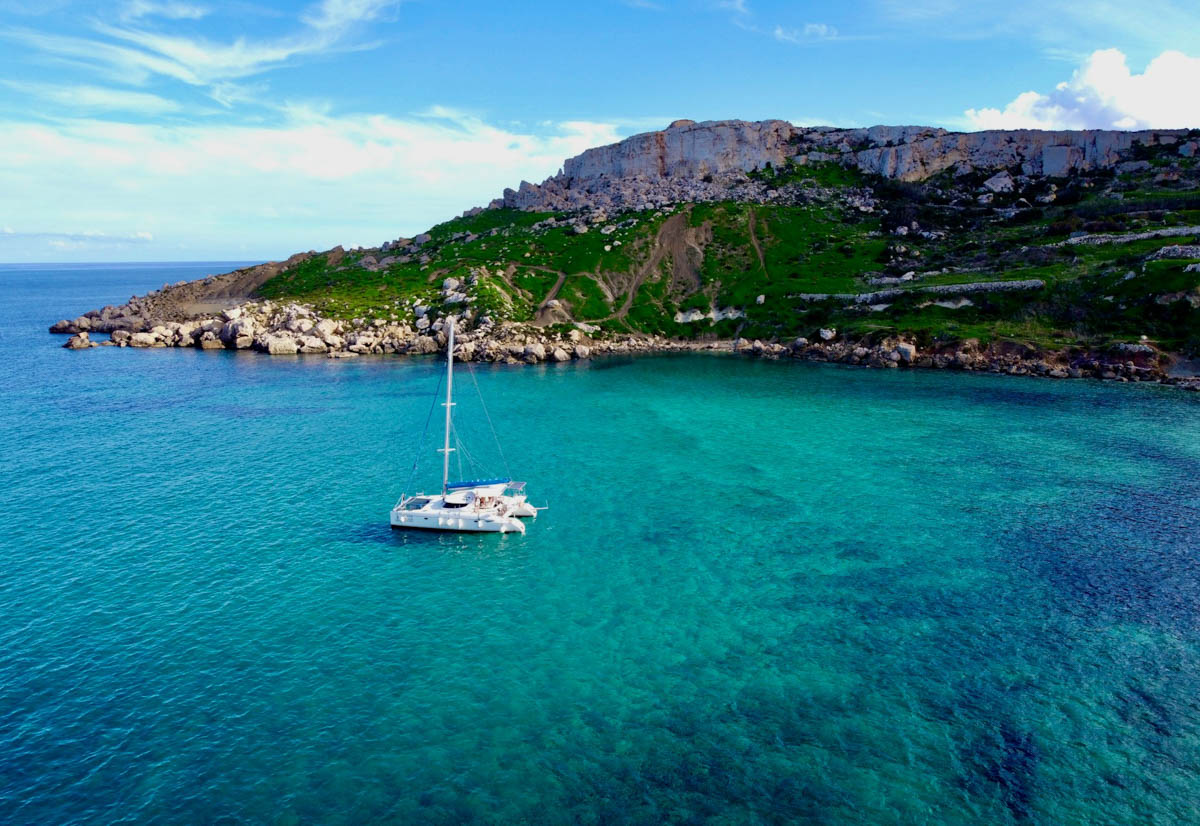
For a century, yachting has measured status in metres of length. But a new generation of superyacht catamarans is quietly rewriting the maths — because when it comes to how a charter actually feels, beam matters more than length overall.
The volume equation
Consider the numbers. A typical 50-metre monohull carries a beam of around nine metres. The 43.5-metre Tecnomar catamaran THIS IS IT, available for charter, carries a beam of 14.5 metres — over 50 percent wider. That translates into interior volumes and deck areas that rival monohulls ten to fifteen metres longer, with a main salon that opens through floor-to-ceiling glass onto an exterior lounge complete with bar, games area and swimming pool on a single, seamless level.
For charter groups, volume is the metric that matters. Nobody on board experiences “length overall.” Everyone experiences the width of the dining table, the size of the sun pads, and whether twelve guests can spread out without negotiating for space.
Stability: the underrated luxury
Multihulls barely roll at anchor. For guests prone to seasickness — often the quiet reason a family books a villa instead of a yacht — that stability transforms the holiday. Glasses stay put, sleep comes easily, and shallow twin hulls open anchorages that deep-draft monohulls must admire from a distance. In cruising grounds like the Bahamas or the Aegean’s shallower bays, that access is a genuine itinerary advantage, not a footnote.
Where the monohull still wins
Honesty matters in this comparison. Monohulls retain real advantages: a classic profile that many owners simply prefer, generally higher top speeds in the displacement superyacht class, deeper charter fleet choice, and marina berths designed around their dimensions — a wide-beam catamaran can face berthing constraints in the Mediterranean’s older ports. And for guests who want the traditional superyacht silhouette arriving at Monaco, the monohull remains the definitive statement.
The design frontier
What has changed is that catamarans are no longer the budget option. Yachts like THIS IS IT carry interiors in beige, platinum, gold and carbon by Mattia Piro and Gian Marco Campanino, with the finish quality of any Italian flagship. The multihull has moved upmarket — and the charter market has followed, with wide-body designs consistently booking strong seasons precisely because they photograph, entertain and sleep like far larger yachts.
How to choose
The decision comes down to how a group actually uses a yacht. Charterers who prioritise entertaining space, pool decks, stability at anchor and access to shallow cruising grounds will get more yacht per metre — and often per euro — from a large catamaran. Charterers who prioritise passage speed, classic aesthetics and the widest possible choice of vessels will stay with the monohull.
Either way, the old assumption — that a catamaran is the compromise — no longer survives contact with the modern fleet. Step aboard a 14.5-metre-wide main deck once, and length overall stops being the number you ask about first.