



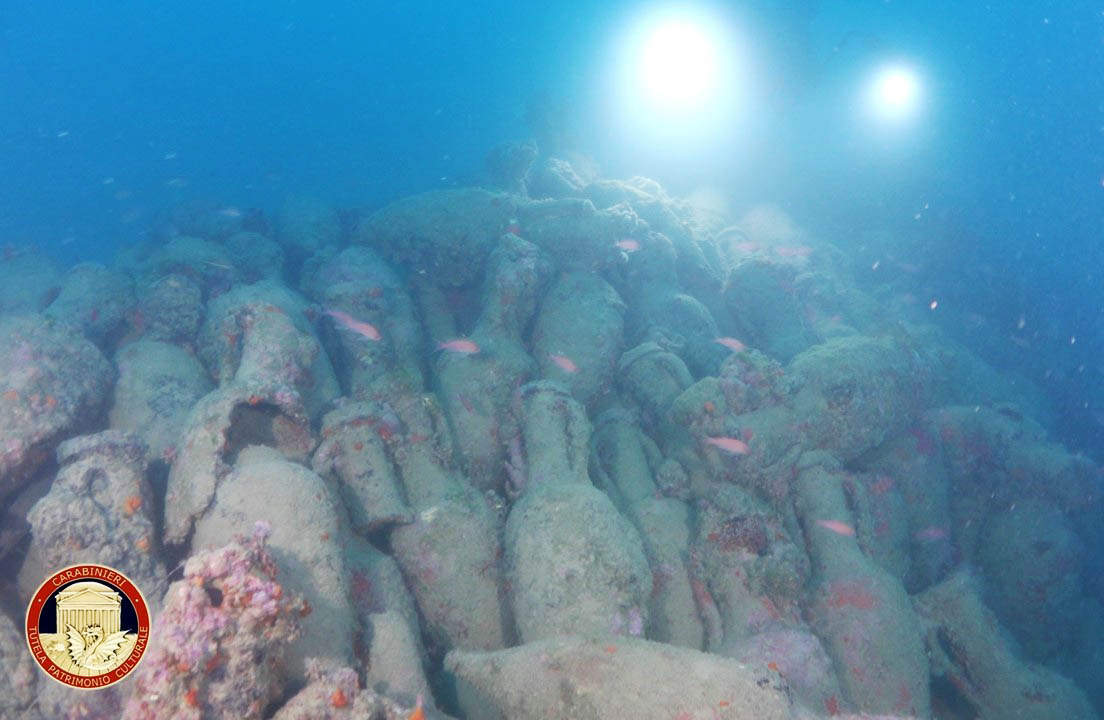

A Roman-era shipwreck carrying hundreds of ancient amphorae has been identified 46 metres beneath the surface off Sicily, giving archaeologists a remarkable new window into Mediterranean maritime trade more than 2,000 years ago.
A remarkable Roman shipwreck has been identified off the coast of Sicily, with hundreds of ancient ceramic amphorae still lying on the seabed more than two millennia after the vessel sank.

The wreck was located approximately three miles (4.8 kilometres) off Mazara del Vallo, on Sicily’s southwestern coast, at a depth of 46 metres (151 feet).

Italian authorities have provisionally dated the wreck to between the 2nd and 1st centuries BC. The Italian Ministry of Culture describes the discovery as one of the most important underwater archaeological finds of recent years.
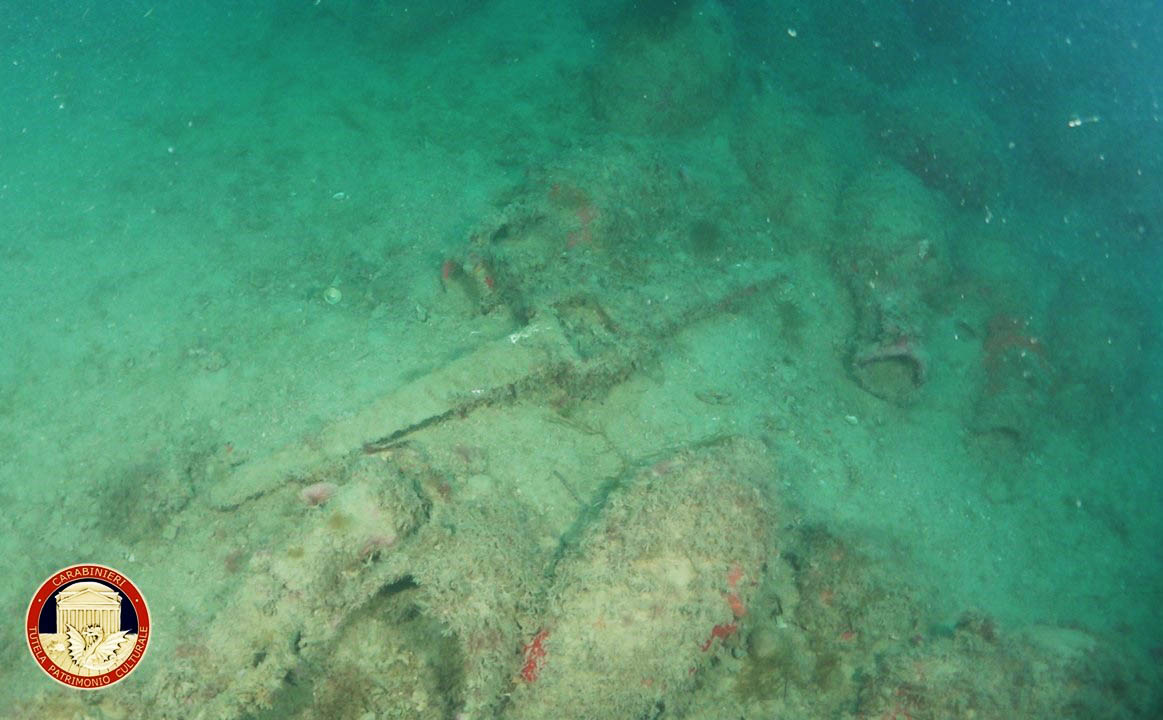
Hundreds of amphorae on the seabed
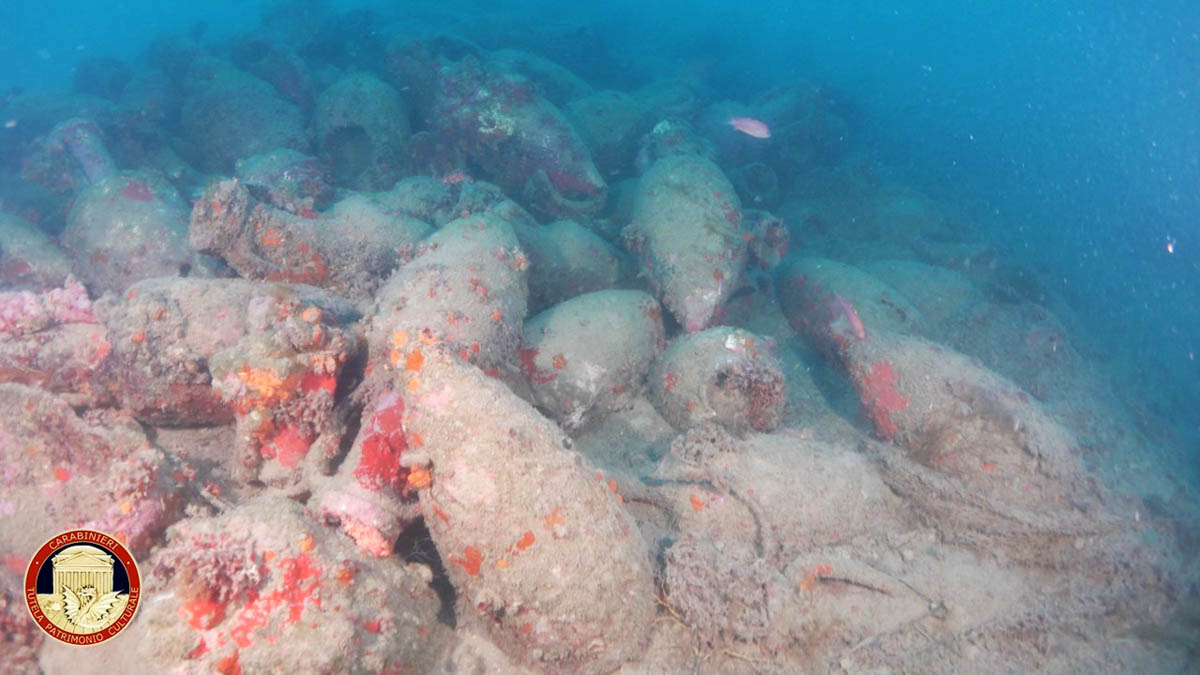
What makes the site particularly significant is the quantity of material still present.

Hundreds of amphorae have been identified across the wreck site, predominantly vessels of the Dressel 1A type. Two lead anchor stocks and another structure made from lead were also documented.
Dressel 1 amphorae were widely used during the late Roman Republican period, with the type strongly associated with the transportation of wine and other commodities around the Mediterranean.
The discovery therefore offers archaeologists an opportunity to investigate not simply a sunken vessel, but a snapshot of the commercial networks that connected Mediterranean communities more than 2,000 years ago.
The discovery was reported by private citizens
The wreck was not initially announced as the result of a conventional archaeological excavation.
According to Italy’s Ministry of Culture and the Carabinieri’s Cultural Heritage Protection Command, the site came to the attention of authorities following a report from private citizens.
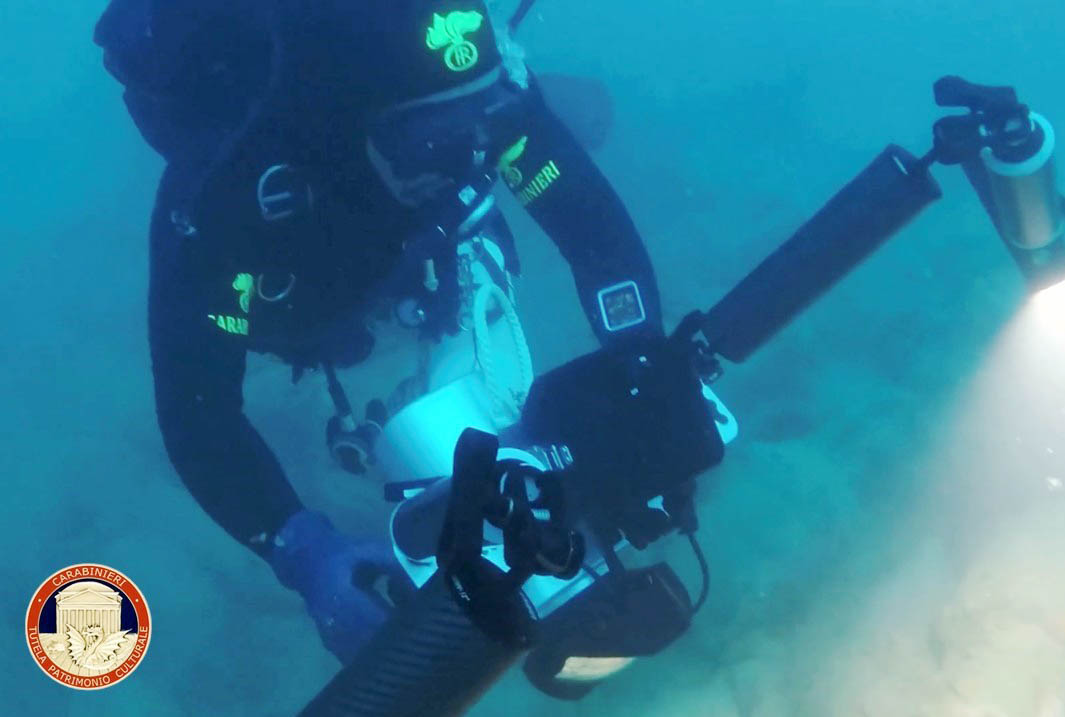
A subsequent joint survey was carried out by the Carabinieri Cultural Heritage Protection Unit in Palermo, the Sicilian Superintendency of the Sea and the Carabinieri Underwater Unit in Messina, with support from a Carabinieri patrol vessel from Trapani.
The official accounts are careful about the distinction: the wreck was identified during the subsequent joint inspection following the private report, rather than simply being described as an archaeological excavation undertaken by recreational divers.
A remarkable underwater time capsule
For divers, the images of the site offer a glimpse into something that would normally be hidden beneath centuries of sediment and seawater.
The concentration of amphorae provides archaeologists with an unusually tangible connection to the vessel’s final voyage. Each surviving container can potentially contribute information about the cargo, its origin and the commercial routes followed by the ship.
The wreck’s location also places it within a historically important Mediterranean maritime environment. Sicily occupied a strategic position between different commercial and cultural spheres, making its surrounding waters an important corridor for ancient shipping.
The cargo may therefore help researchers reconstruct aspects of the trade networks operating across the region during the final centuries of the Roman Republic.
The investigation is only beginning
The discovery does not mean the wreck is about to be stripped of its cargo.
Italian authorities say the site will undergo further documentation and investigation by the Sicilian Superintendency of the Sea. The work will focus on reconstructing the archaeological context and determining appropriate measures to protect the site.
That distinction is important. At this stage, the archaeological significance of the wreck is still being assessed, and the exact story of the vessel, its voyage and its loss remains to be established.
For now, what is known is already extraordinary: more than 2,000 years after a Roman-era vessel disappeared beneath the Mediterranean, hundreds of its amphorae remain concentrated on the seabed off Sicily.
And the next chapter of its story will be written not by treasure hunters, but by underwater archaeologists carefully documenting what the sea has preserved.
Comments