



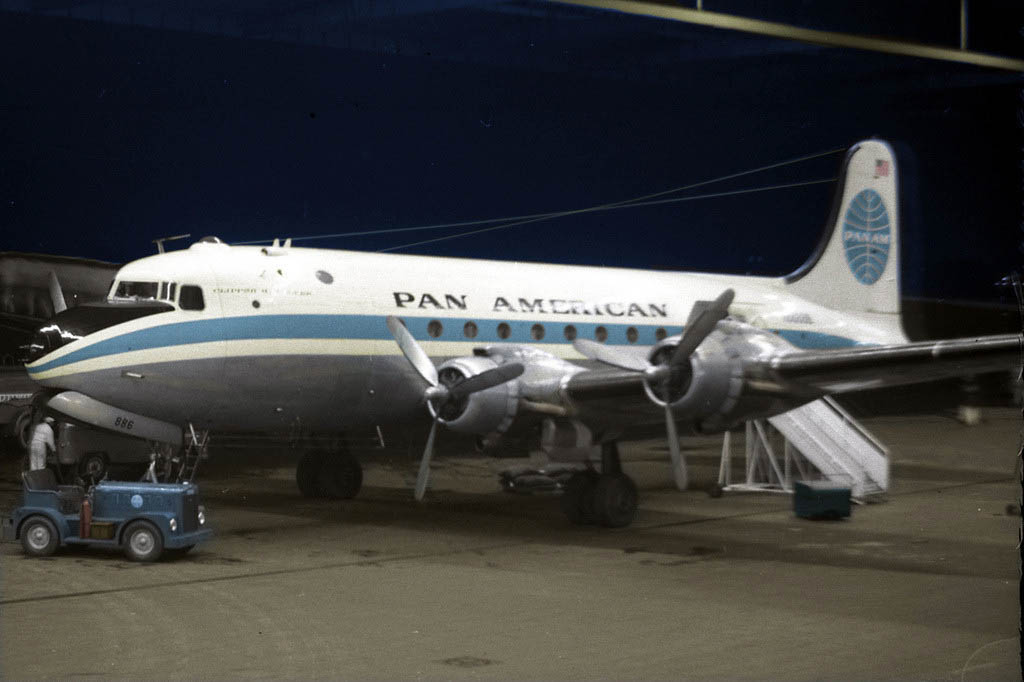
Decades after plunging into the ocean off northern Puerto Rico, the lost Pan American Airways flight Clipper Endeavor has finally been found. A multi-year investigation spearheaded by the Air/Sea Heritage Foundation, working alongside Deep Sea Vision (an Eco Minerals company) and Discovery Channel’s Expedition Unknown—uncovered the wreck 74 years after its fatal crash. Finding this historical aircraft offers closure on a tragic event that permanently reshaped modern aviation safety standards.
On April 11, 1952, Pan Am Flight 526A—a Douglas DC-4 registered as the Clipper Endeavor—departed San Juan–Isla Grande Airport in Puerto Rico bound for Idlewild International Airport (now JFK) in New York City. On board were 64 passengers and five crew members. Shortly after its 12:11 PM takeoff, poor maintenance led to a critical failure in engine number 3, followed almost immediately by the loss of engine number 4.

Unable to maintain altitude or return to the runway, the crew was forced to ditch the aircraft in rough ocean waters roughly 11 miles northwest of San Juan, just nine minutes after takeoff. The heavy impact tore the plane apart, causing it to sink in a mere three minutes. Tragically, overwhelming panic inside the cabin prevented many travelers from evacuating before the plane went under, resulting in 52 passenger fatalities. The U.S. Coast Guard ultimately rescued 17 survivors, including all five crew members. This disaster became a landmark moment for commercial aviation, directly inspiring modern safety protocols such as mandatory pre-flight safety briefings and standardized over-water survival gear.

Shortly after liftoff, the aircraft’s third engine failed at an altitude of 350 feet (110 m). The crew quickly feathered the propeller to minimize aerodynamic drag and turned back toward San Juan Airport. Although they managed to climb to 550 feet (170 m), engine number 4 also cut out, leaving both engines on the right wing completely dead and rendering the plane unable to stay airborne. Recognizing the crisis, Captain Burn radioed air traffic control to declare an emergency and announce an impending ditching roughly seven miles north-northwest of Isla Grande.
At 12:20 PM, Clipper Endeavor struck the Atlantic waters, where 15-knot (28 km/h) winds were churning up rough swells. The impact severed the tail section behind the main cabin bulkhead, sending the remains to the ocean floor in under three minutes. According to survivors, many individuals who made it through the landing unharmed were gripped by panic; terrified of the violent waves and potential shark attacks: and tragically hesitated to step out of the sinking fuselage onto the waiting life rafts.

Once the control tower received Captain Burn’s distress call, they immediately alerted the U.S. Coast Guard (USCG). Within six minutes, Lieutenant Ted Rapalus was airborne in a PBY-5A Catalina flying boat. A second USCG PBY was mid-maintenance—with its bilge pump and auxiliary power unit (APU) uninstalled, but given the severity of the situation, crew members rushed it back into service, sending it aloft under Lieutenant Commander Ken Bilderback just 10 minutes later. Meanwhile, the USCG buoy tender Bramble deployed with medical staff aboard, alongside two Air Force SA-16 amphibians dispatched from Ramey Air Force Base on the island’s northwestern tip. Ultimately, these combined forces pulled 12 passengers and all five crew members from the turbulent ocean.
Commander Bilderback’s PBY brought 15 survivors aboard, but the flying boat quickly ran into trouble. Missing its bilge pump and APU, the plane took on significant amounts of water, leaving it dangerously underpowered for a takeoff. The crew shifted the survivors onto the Bramble, though deteriorating sea conditions halted the transfer with two teenage survivors still aboard. Facing a choice between abandoning the aircraft or navigating the open ocean, Bilderback opted to taxi the PBY through the rough swells all the way into San Juan Harbor. As the waterlogged plane rounded Fort El Morro, crowds gathered along the shoreline to cheer their return.
Key Findings of the Official Investigation:
Investigators determined that a combination of mechanical failure and flight dynamics brought down the aircraft. Maintenance crews had discovered metal debris in engine number 3’s oil before the flight, a clear trigger for a full engine replacement under company guidelines. Because this policy was ignored, the engine failed moments into the flight, accompanied by defects in other engine components. Additionally, after losing the second engine, the pilots tried to force a climb without applying full power. This pitched the nose up and bled off airspeed, leaving the aircraft trapped at an altitude too low to pull out of the descent.
Ultimately, legal investigations exonerated Captain Burn, concluding that the crash was the direct result of inadequate maintenance and flawed engine components rather than pilot error.
A initial mission featured on Expedition Unknown in October 2024 failed to locate the Clipper Endeavor, but a follow-up expedition in June 2026 successfully discovered the long-lost aircraft. The wreck was found roughly 2,000 feet (610 meters) deep, prompting explorers to record over 350,000 photographs of the site. Out of respect for the fallen, officials have no plans to salvage the 39 unrecovered bodies. Team member Russ Mathews emphasized that the underwater resting place will remain undisturbed, as it stands as the victims’ sole permanent memorial.
Comments