


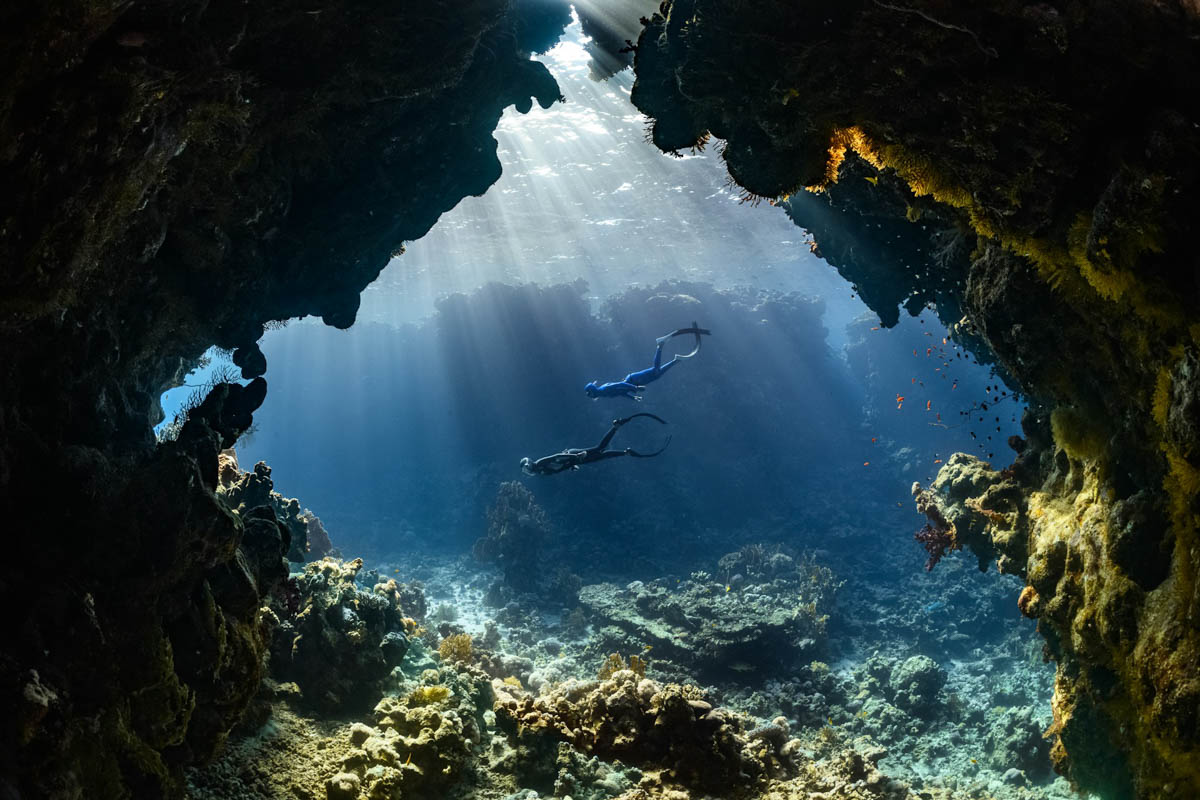
For most divers, a specific moment always sticks out more than the entire dive trip. It could be the time when they spotted their first sea turtle gliding by, a manta ray floating around them like an apparition, or even just seeing a reef shark lurking near their point of view. Even if the marine animal is not rare, sometimes all that counts is the peaceful and undisturbed encounter.
It is no wonder that marine animals are what inspire most people to learn how to dive. There are reefs and shipwrecks and underwater caves, but nothing makes for an engaging dive like live subjects do.
A good diver always knows what a successful encounter entails. According to NOAA Fisheries, the trick for observing marine wildlife is to admire without getting too close. This means enjoying the moment while being respectful to both the environment and the creatures living there.
Importance Of Marine Encounters For Divers
Before a dive holiday, people usually learn about the behavior of marine animals. The student working on an essay on marine biology, ecology, conservation, or ocean tourism would also require academic assistance from essay writers from Washington DC in order to properly construct their research into an argumentative paper. Why does marine wildlife matter? How should divers think about their experiences?
As per Adam Jason, an expert in education, the more emotionally a student connects to an animal subject, the better the essay they will write about it. This principle applies to diving too. Even though a manta ray looks magical, a good essay must be informative and contain information about the animal’s movement, habitat, nutrition, and conservation status.
Most divers want to see something beautiful, giant, uncommon, smart, or even exotic. The more unusual it is, the longer it stays in people’s minds. No one goes back after a holiday and tells their friends: “Visibility was great and I saw a common fish.” Well, somebody might, but their stories require improvement.
1. Sea Turtles
Sea turtles rank high on the wish list of many divers because they are serene in a way that no human being ever is. They are slow-moving animals that breathe air, navigate the reefs easily, and appear oblivious to the hustle and bustle of the aquatic environment.
Most divers admire sea turtles due to their easy-to-recognize grace and elegance. When they come close to coral or head for the surface, they can mesmerize even the most experienced divers.
The most interesting experiences with turtles take place when divers leave the turtles alone and let them do what they want. Pursuing a sea turtle is counterproductive because it might cause the creature to become agitated.
2. Manta Rays
The manta ray is an impressive creature because of its impressive size and swimming techniques. Its large body looks intimidating in photographs; however, when swimming, it is controlled gently by the powerful fins that resemble wings.
Divers usually try to meet mantas in cleaning stations. Small fish clean parasites from their skin, providing people with an opportunity to observe them calmly. Nighttime diving with mantas may also become possible in certain regions since lights attracting plankton can gather these rays to feed.
In fact, the beauty of mantas lies in simplicity: they are gentle creatures that evoke admiration with their enormous size and elegant movements.
3. Reef Sharks
Most new scuba divers are afraid of sharks. When they see reef sharks underwater, this fear often gives way to awe. The reef sharks are silent and deliberate. They are attentive, graceful, and much less curious about humans than one would expect.
Divers want to meet reef sharks because these predators symbolize the untamed wilderness of the oceans. Having sharks around makes one understand that there is more to a reef than meets the eye. A healthy reef ecosystem should include hunters, hunted animals, safe spots to hide, and constant struggle for existence.
It is important to act calmly when encountering sharks. Divers need to make no abrupt movements, maintain proper buoyancy, and obey all local diving guidelines.
4. Octopuses
There are few marine creatures as beloved by scuba divers as octopuses. These animals change color, slip into tight crevices, move with an odd kind of swagger, and even appear to look at the divers themselves.
Locating an octopus is an accomplishment on par with solving an underwater riddle. First, there is just the rock. Suddenly, however, an eye twitches, the surface changes, and the “rock” becomes very much alive. The sensation is quite gratifying.
Octopuses also cause divers to slow down and pay attention. Fast divers do not see octopuses, but patient ones do.
5. Dolphins
Dolphins appeal to people since they appear sociable and intelligent animals. They are fast swimmers, vocal, and usually travel in pods. Dolphins can be seen as personal creatures since they seem to show curiosity on occasion.
Nevertheless, one needs to be careful when coming across a dolphin. There are regulations regarding the interaction with any marine mammal in numerous locations. One should always adhere to the existing laws, and no behavior should disturb the animal’s life routine.
The ideal scenario when it comes to a dolphin experience would be one where dolphins come across naturally, and the diver only observes them.
6. Whale Sharks
As the largest species of fish in the ocean, this alone provides a good reason why whale sharks would be on every diver’s wish list. As filter feeders, the sheer size of these gentle giants is awe-inspiring without making them seem intimidating.
The presence of a whale shark while scuba diving can make someone feel small in the right way. This might be uncomfortable, but that does not mean that it is a bad feeling.
It is important to manage whale shark ecotourism to minimize the stress caused to the animals. Divers must ensure they do not get too close or block the path of the creature.
7. Seahorses
Unlike most other creatures mentioned here, seahorses are small in size, yet they are popular due to their uniqueness. The combination of their tail curves, vertical position, and slow movements creates an illusion that they are not of this world.
Seahorses are neither noisy nor dramatic. They require patience. Most divers will have to seek the help of a local guide or use sharp eyesight to find one.
Here is where buoyancy comes into play. Divers who kick up sand, break off coral formations, or speed around will do harm both to the surroundings and themselves.
Conclusion
The marine creatures most sought after by divers tend to be those capable of evoking emotions. Each of them has its own special qualities, which motivate divers to cherish the ocean.
Some inspire by sheer size. Others by intelligence. Yet others by appearance, adaptation, or rarity. Great encounters not only fill divers with excitement; they become increasingly respectful as well.
A diver observing marine life will learn a vital lesson time and again: the ocean was never created for tourists. It is home. The privilege is being given an unobtrusive peek into it.