




Some of the world’s most experienced cave rescue divers are once again navigating flooded tunnels in Southeast Asia, this time in a desperate effort to reach seven villagers trapped inside a remote cave system in Laos.
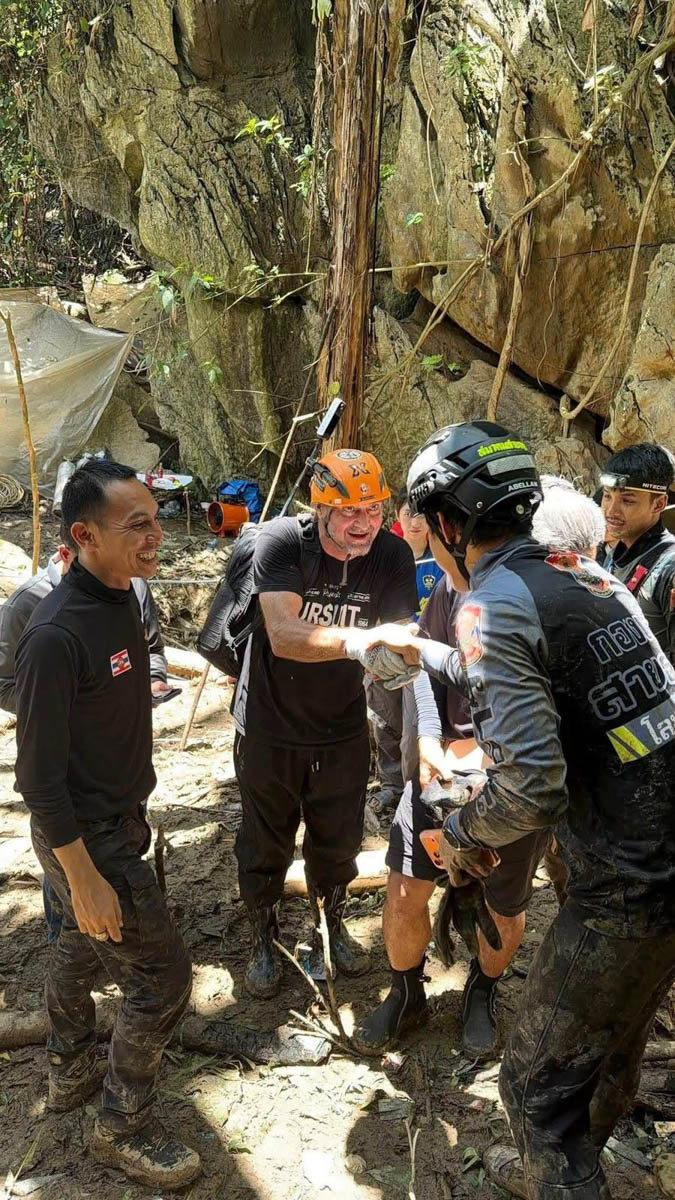
Among the international rescue personnel are veteran cave divers Mikko Paasi and Norraseth “Nut” Palasri, both of whom were involved in the world-famous 2018 Tham Luang cave rescue in Thailand, bringing years of high-risk flooded cave rescue experience into the Laos operation.

The seven trapped individuals reportedly entered the cave searching for gold ore and wildlife before heavy rain triggered flash flooding and landslides that blocked their exit. One member of the group escaped before conditions deteriorated completely and alerted authorities. Rescue teams now believe the remaining villagers may still be alive in an elevated air pocket deeper inside the cave system.

For divers, this story is about far more than a remote cave incident. It is a stark reminder of just how dangerous submerged cave systems become during monsoon conditions, even for highly trained professionals.
Video and images released from the rescue site show divers crawling through tight mud-filled restrictions, navigating near-zero visibility water, and hauling equipment through narrow submerged passages barely large enough for a single diver. Reporting from The Guardian suggests rescuers are working through flooded sections as narrow as 60 centimetres high.

Among the rescue personnel are veteran cave divers linked to the globally watched 2018 Thai cave rescue, an operation still regarded as one of the most technically complex underwater rescue missions ever attempted. That mission required divers to transport sedated children through flooded cave tunnels for hours at a time under extreme conditions.
The Laos rescue carries many of the same dangers that make cave diving one of the most unforgiving forms of diving on the planet. Unlike open-water diving, cave divers operate in overhead environments where direct ascent to the surface is impossible. Visibility can collapse instantly from disturbed sediment, floodwater can rapidly change flow conditions, and narrow restrictions leave almost no margin for error.
According to reporting from Associated Press and ABC Australia, rescue teams have already faced severe access challenges, including a steep mountainous approach to the cave entrance and unstable flood conditions inside the system. Around 100 rescuers from Laos and Thailand are believed to be involved.
For the global dive community, the operation also highlights the small but highly specialised network of cave divers repeatedly called upon during extreme emergencies around the world. Many of these divers train for years in complex line navigation, gas management, confined-space movement, and emergency rescue procedures that most recreational divers never encounter.
Cave diving fatalities remain relatively rare compared to participation levels, but incidents often become high-profile because rescue options are extraordinarily limited once divers or explorers become trapped underground. Flooded cave systems can quickly become lethal environments due to rising water, falling oxygen levels, strong currents, entanglement hazards, and complete darkness.
At the time of writing, rescuers had not yet confirmed direct contact with the trapped villagers, but efforts to pump water from the cave and push deeper into the flooded system were continuing around the clock.
This story is likely to resonate deeply with technical divers worldwide because it demonstrates the real-world value of cave diving expertise beyond exploration. These are the moments where highly specialised dive training moves from sport and exploration into life-saving emergency response.
As the operation continues, divers around the world will be watching closely and hoping for another successful outcome against extremely difficult odds.
Comments