




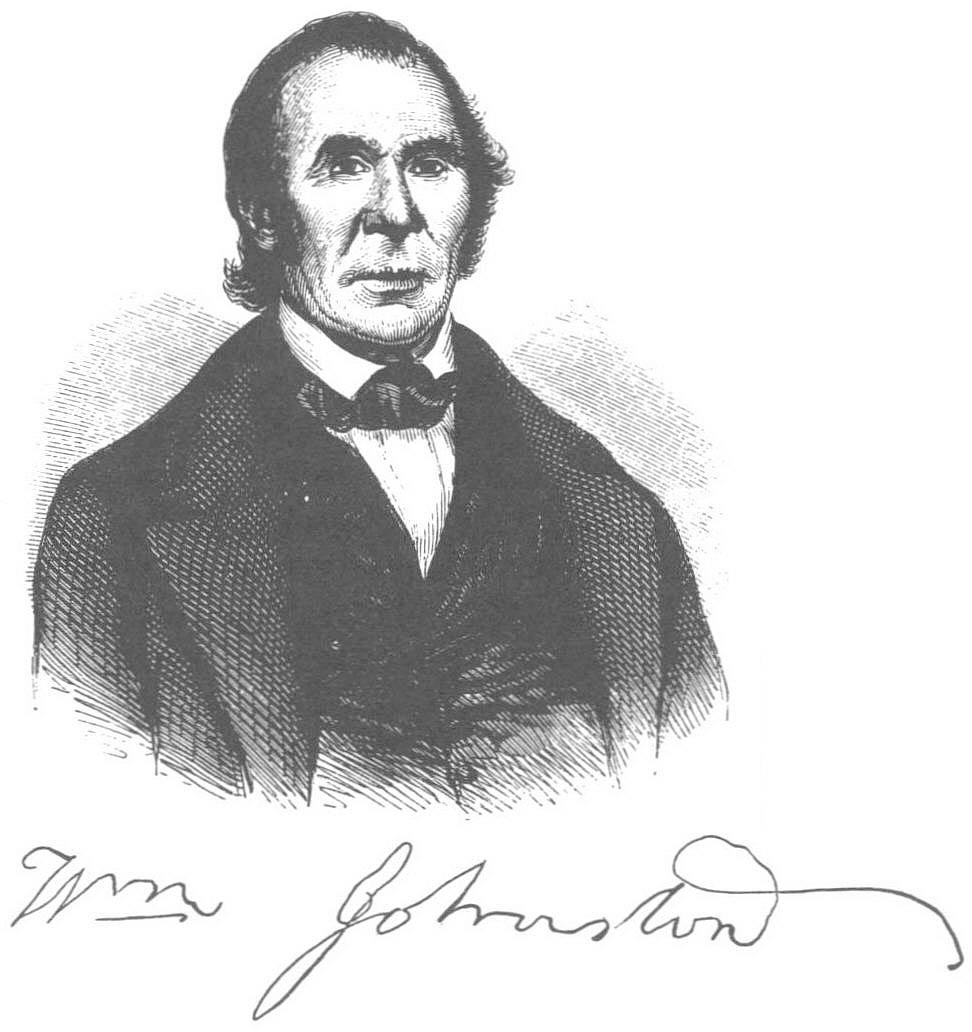

Known as the “Pirate of the St. Lawrence,” William “Bill” Johnston (1782–1870) was a notorious figure who thrived in the legal gray areas of the Thousand Islands. Born in Trois-Rivières, Quebec, his life spanned the turbulent border conflicts between Ontario and New York, where he earned a reputation as a cunning smuggler, outlaw, and insurgent.
Johnston’s legacy is defined by his defiance of both British and American authorities. Operating within the labyrinthine channels of the St. Lawrence River, he utilized the dense archipelago to hide from the law while conducting raids and illicit trade. His career culminated in his role as a rebel leader during the 1838 uprisings, solidifying his status as one of the most colorful and polarizing characters in Canadian-American maritime history.
By 1784, the Johnston family had relocated to Bath, situated near Kingston in Upper Canada, providing the setting where Bill would spend his formative years. During his early adulthood, he established himself as a versatile entrepreneur, working simultaneously as a merchant, an agriculturist, and a freighter responsible for transporting cargo along the St. Lawrence River.
His intimate knowledge of the local waterways soon led him into the lucrative world of cross-border smuggling. This illicit trade surged in popularity following the American government’s implementation of the Embargo Act of 1807, which severely limited legal commerce with British territories. Johnston’s personal life also became increasingly tied to the southern side of the border when, in 1810, he wed Ann Randolph, an American citizen.
The onset of the War of 1812 placed Johnston in a precarious position, as British officials grew increasingly wary of his American wife and his extensive social connections across the border. These suspicions led to his arrest in June 1813 on charges of collaborating with the enemy. The authorities informed him that he would remain imprisoned until the war’s conclusion and moved to seize his entire estate, which was valued at approximately £1,500.
Driven by resentment over the loss of his property and his harsh treatment, Johnston staged a successful jailbreak and sought refuge in Sackets Harbor, New York. He promptly defected to the American side, utilizing his encyclopedic knowledge of the Thousand Islands to act as a specialized scout and maritime raider. Leading armed crews in nimble, small vessels, he launched a campaign of terror against the Canadian coastline and disrupted British supply lines. While his actions were fueled by a thirst for revenge, his motives were often blurred by a pursuit of personal profit through plunder, earning him a lasting reputation in Canada as a notorious traitor.
The life of William Johnston—the self-styled “Admiral of the Patriot Navy”—is a study in contradictions, shifting from Canadian-born tavern keeper to celebrated American outlaw.
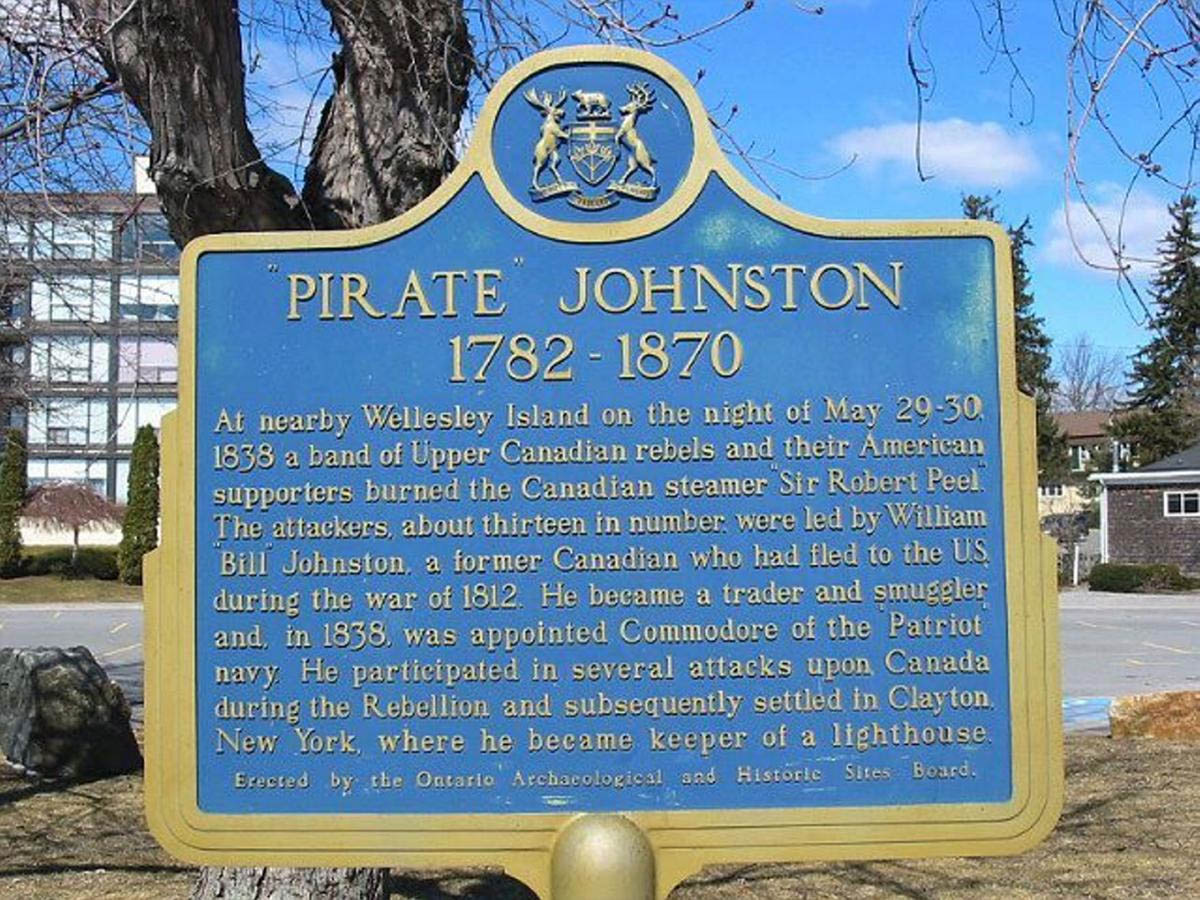
He is best remembered for the May 1838 destruction of the Sir Robert Peel, an act of rebellion that saw his crew loot the vessel and set it ablaze after forcing its passengers onto the shore of Wells Island. While the British and American governments viewed him as a dangerous fugitive, Johnston possessed an uncanny ability to navigate the political tides of his era. After being told by President Martin Van Buren that he deserved a gallows rather than a pardon, Johnston simply waited for a change in administration to receive his freedom from William Henry Harrison. Ultimately, the man who was once the subject of a $500 manhunt ended his career as a government employee. By 1853, he was the official tender of the Rock Island Lighthouse, a position that allowed him to look out daily upon the site of his most infamous maritime raid.
While residing in Clayton, Johnston operated a local tavern, though rumors persisted that his illicit activities never truly ceased; some accounts even suggest he continued smuggling throughout the years of the American Civil War. His past exploits remained a centerpiece of his domestic life, with local legend claiming that during special celebrations, his family and their visitors were served meals on silver platters looted from the wreckage of the Sir Robert Peel. Despite a life defined by violence, rebellion, and high-stakes crime, Johnston ultimately passed away from natural causes at the age of 88.
The legend of Bill Johnston, the self-proclaimed “Admiral of the Thousand Islands,” is a wild mix of historical rebellion and local folklore. While the romanticized version of his story involves him vanishing into the mist or living out a defiant exile, the reality of a slip-and-fall on a dock is a sobering reminder that even the most “immortal” figures are subject to the mundane laws of physics.
Comments