



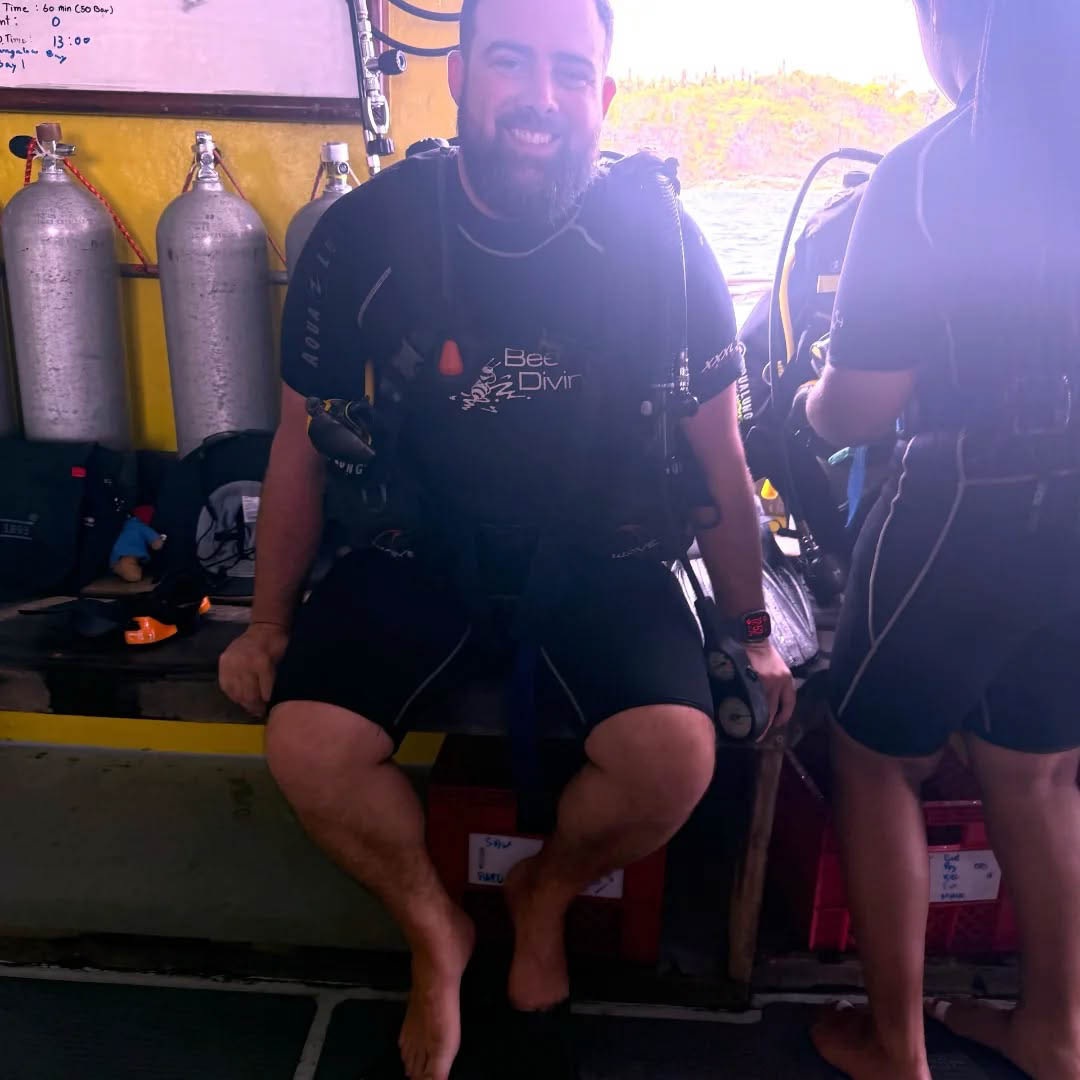
I’m a forty-one-year-old male. I work a desk job, and recently I’ve been put on the Omnipod 5 insulin pump.
I was very healthy growing up. Homemade meals, lots of exercise, plenty of time outdoors. Very little screen time. It was the nineties. I didn’t really like sweets. I didn’t drink soda. I drank a lot of water and was interested and motivated in martial arts, running, and most importantly scuba diving—although I had yet to try it. It was something my dad did before he passed, and my mum’s partner after.

Then, at twenty-seven, I got a cold. It never really went away. I just kept getting worse. I almost became the newest member of the twenty-seven club. I went to the doctor and was diagnosed with type one diabetes. That’s a difficult moment to process. You’re suddenly balancing between highs and lows—hyperglycaemia and hypoglycaemia. Too high, and it damages your body over time. Too low, and things get dangerous quickly. Shaking, sweating, confusion. In severe cases, coma or even death.

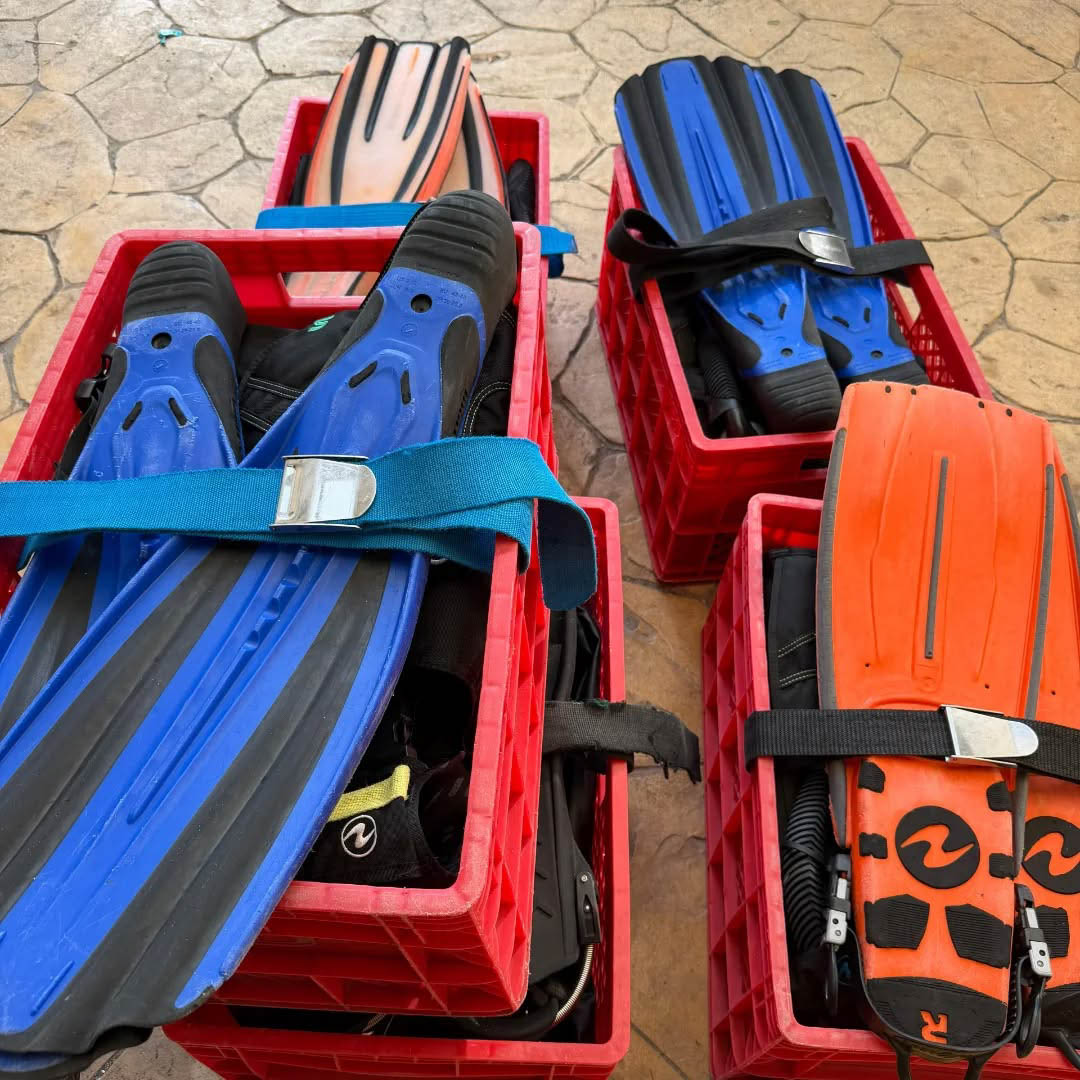
For me, one of the biggest changes was my focus. It just wasn’t the same as before. So I stopped thinking about diving. It was no longer an option for me. Most diving organisations and dive centres wouldn’t allow it anyway. But more importantly, I didn’t trust my own body anymore. I had to relearn my limits. It wasn’t about pushing them—it was about understanding them again.
It took nearly thirteen years before I had the opportunity to learn to dive again, and now, with technological advances like continuous glucose monitoring (CGMs), it seemed a little more plausible.

Since then, I’ve completed my PADI Open Water, Advanced, and Rescue. It was time to dive.
So what did I need to do to dive as safely as possible? And more importantly, not become a liability to my buddy.
I’m going to step through the preparation. For me, it starts before the holiday—three or four days before I even get in the water. Firstly, I work very closely with my type 1 diabetes care team. Without them, diving would not be signed off, and I would not be safe. I make sure I understand exactly what they’re telling me, and I ask questions, ultimately I am responsible for my safely. As I was on a pump for the holiday, and for diving I would have to remove it— because it doesn’t work underwater or under pressure—I had to go back to MDI (Multiple Daily Injections), which means manual injections. The care team walked me through how much to inject and when. For me personally—and this is not medical advice—I had to understand enough of what they were telling me to calculate the injections myself. If I needed to make any tweaks, for example if I was going too low or not running stable, it would be very difficult to contact the care team in time due to time zone delays. I asked for an old finger-prick glucose monitor in addition to my CGM. The reason for this was that, during my Open Water and Advanced courses, I noticed the glucose readings were erratic. Finger-prick testing is generally more accurate than CGMs. CGMs are not pressure- rated equipment; they are typically designed for water resistance, not depth pressure. Diving introduces increased atmospheric pressure, which can affect how the device behaves. For example, I was getting low readings (hypo) after diving but didn’t feel low. I discussed this with my doctor, who explained that CGMs measure glucose in interstitial fluid—the fluid between your cells. When diving, fluid dynamics in the body can shift slightly, which may lead to inaccurate readings. In the days leading up to the dive, I had some very strict rules. I wouldn’t carb load too much and aimed to keep my blood sugar as stable as possible. For example, if I went hypo the day before the dive—or even the day before that—I wouldn’t dive. So the general rule was simple: if my control had been off, I didn’t dive.
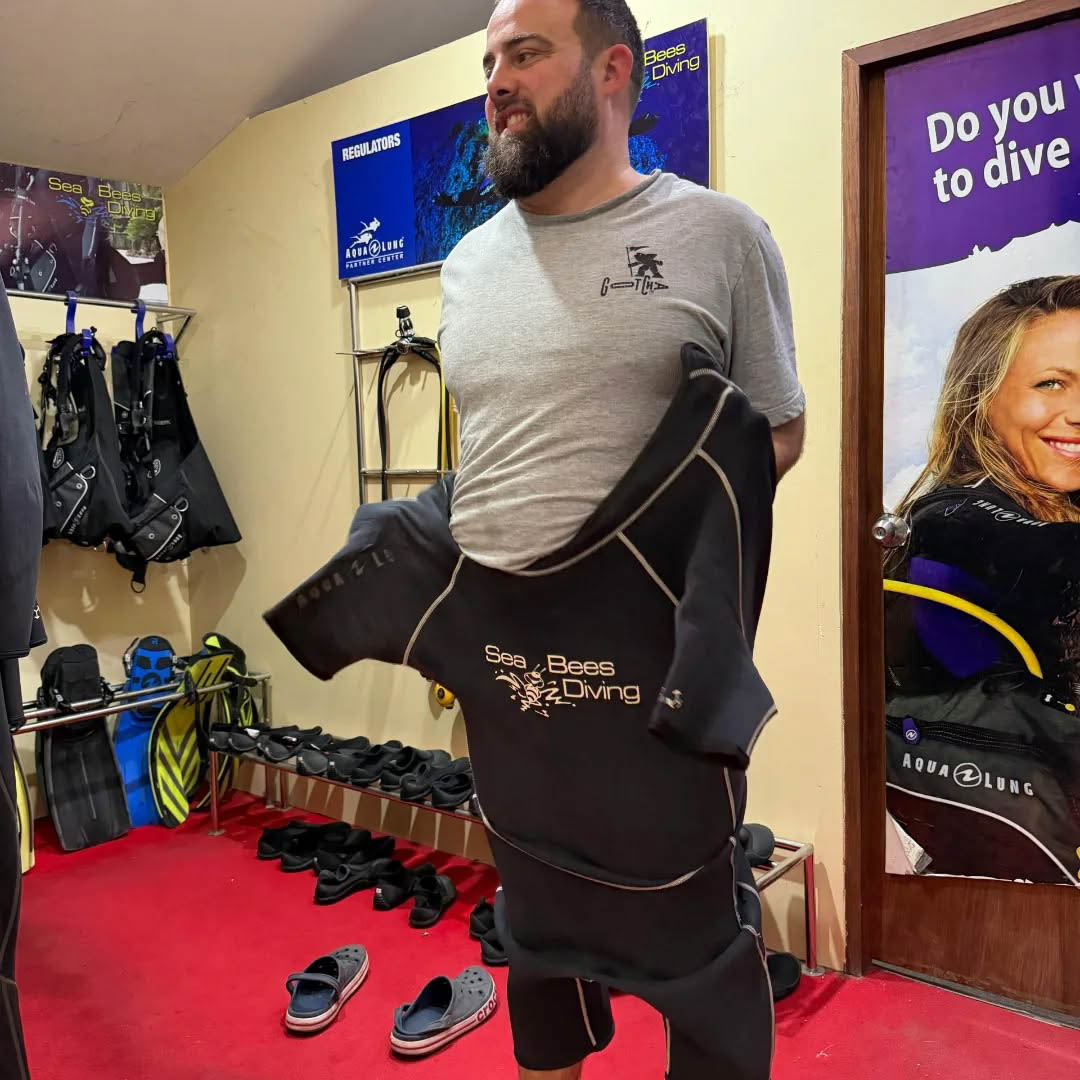
On the day of the dive, I check my blood sugar multiple times. I make sure I’m in range, with no unusual drops or spikes. I also aim to bring my blood sugar up towards the higher end of my target range. This will be different for everyone, as we each set our own targets. For me, I aim to be around 10 mmol/L. If it’s the first dive in a set, I’m less concerned about how I’m eating. But on day two or three, I focus more on slower-release carbohydrates and some protein. This helps reduce the risk of delayed hypoglycaemia and keeps my blood sugar rising gradually to support the physical activity.
During the dive, I made sure I had hypo treatment with me and didn’t rely on the food offered by the boat. You never really know what will be available, and if it’s something you don’t usually eat, it’s harder to predict how your body will respond and what it will do to your blood sugar. For me, I always carried two small bottles of full-fat Coke, as well as liquid dextrose. It works extremely fast and comes in small pouches. I even kept one tucked into my wetsuit sleeve in case I started to feel off during a dive. In my opinion, it’s much safer to run slightly high than risk going too low. So if in doubt, I would take a small amount. I use my dive logbook to track more than just the dive itself—I use it to understand my diabetes. Alongside the standard metrics like water temperature, air temperature, air in, air out, and depth, I also log how I felt, what my blood sugar was doing beforehand, and how it behaved after the dive. I track whether it dropped, how much dextrose I needed between dives, and any patterns I notice. Over time, this gives me a clearer picture of how my body responds, so I can make smarter decisions on future dives. The dives I do are deliberately conservative. I stick to conservative dive profiles and avoid pushing limits.
I stay close to my buddy—within arm’s reach—which is just good diving practice. I’m not chasing depth, extending bottom time, or diving in challenging conditions. I’m not diving to prove anything. I’m diving to come back up safely—and to experience things I wouldn’t otherwise have access to.
The risk, in my opinion, isn’t diabetes—it’s complacency. As divers with type 1 diabetes, we have an extra challenge. We need a much higher level of awareness of what our bodies are doing—something most people take for granted, or don’t even think about, because their body manages it for them. We don’t have that luxury. It does carry more risk, to put it lightly. But for me, what I get out of diving completely outweighs that risk. It’s an incredible world down there—one you can’t fully understand through a screen.
As Jacques Cousteau said, we must go and see for ourselves. That said, I don’t believe this is for everyone. Especially if you’re a type 1 diabetic with poor control, frequent hypos, reduced awareness of lows, or if you’re ignoring medical advice—diving is not something you should be doing. It’s not a natural environment.
At depth, you’re fully reliant on your preparation and your body behaving as expected. And if your diabetes isn’t well controlled, it’s very easy to fall into a hypo. That said, if you are tightly controlled and following the guidance of your care team, it is possible. It requires discipline. And it’s not something to take shortcuts with—your safety, and your buddy’s safety, depend on it.
Comments