




𝑻𝒉𝒆 𝑺𝒕𝒐𝒓𝒚 𝒐𝒇 𝒕𝒉𝒆 𝒊𝒓𝒐𝒏 𝒔𝒊𝒅𝒆𝒉𝒘𝒆𝒆𝒍𝒆𝒓 𝑪𝒉𝒊𝒄𝒐𝒓𝒂
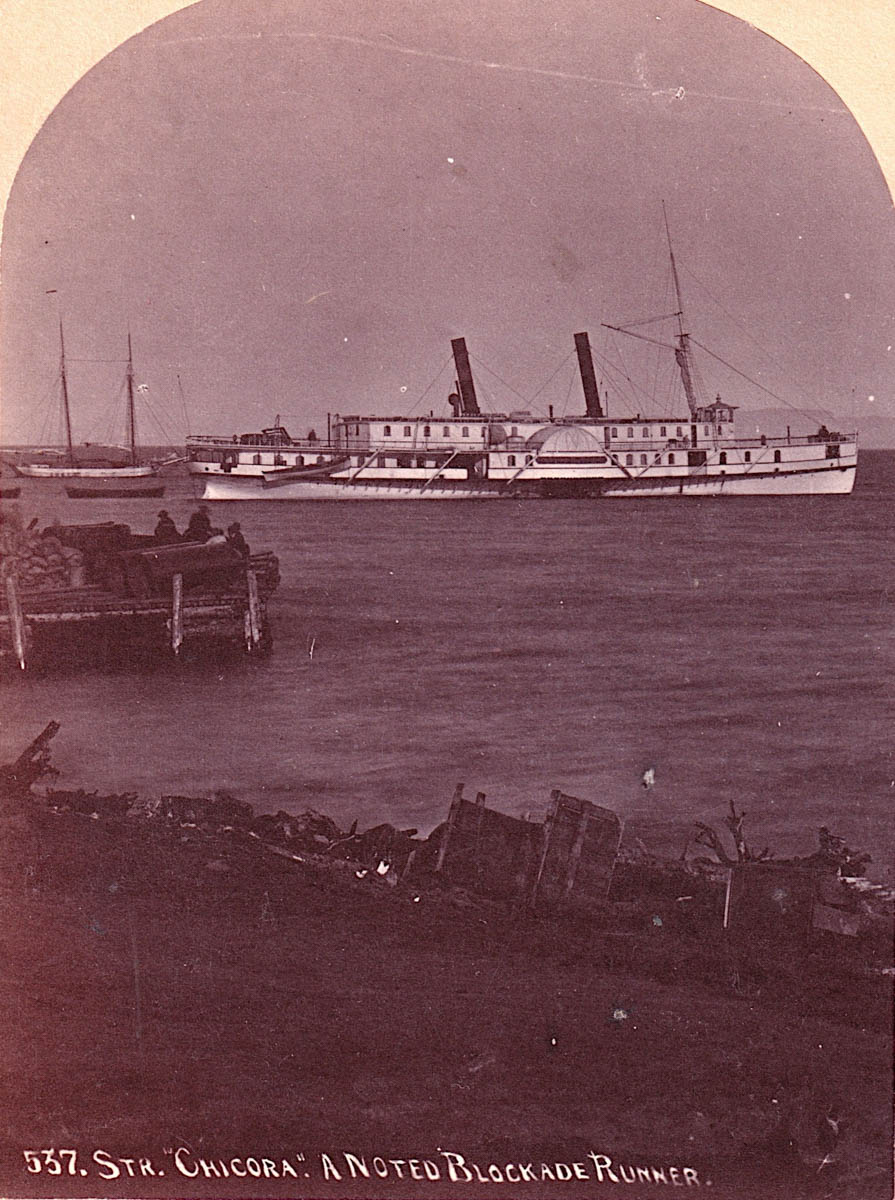
Brendon Baillod owns six original stereoviews that show the steamer Chicora on Lake Superior and Lake Ontario, many of which refer to her as a “Civil War blockade runner.” He thought I’d show some of my views of her as well as her interesting history.

The Chicora was an early iron-hulled steamer built at Birkenhead, England in 1864 for the specific purpose of being fast enough to run goods to the Confederacy through the Union blockades. She was christened “Let Her Be” as she was the fastest vessel of her line with a top speed of 21 mph. She had twin oscillating engines and six boilers that fired 28 ft. sidewheels. She was extremely fast for a 220 ft. iron hulled steamer.

In April of 1864 she sailed from England to Bermuda under the name Chicora. From there she sailed to Charleson, SC and Wilmington, NC, passing the Union blockades. Her career as a blockade runner was short-lived and she was laid up at Halifax, Nova Scotia in 1865 at the conclusion of the War.
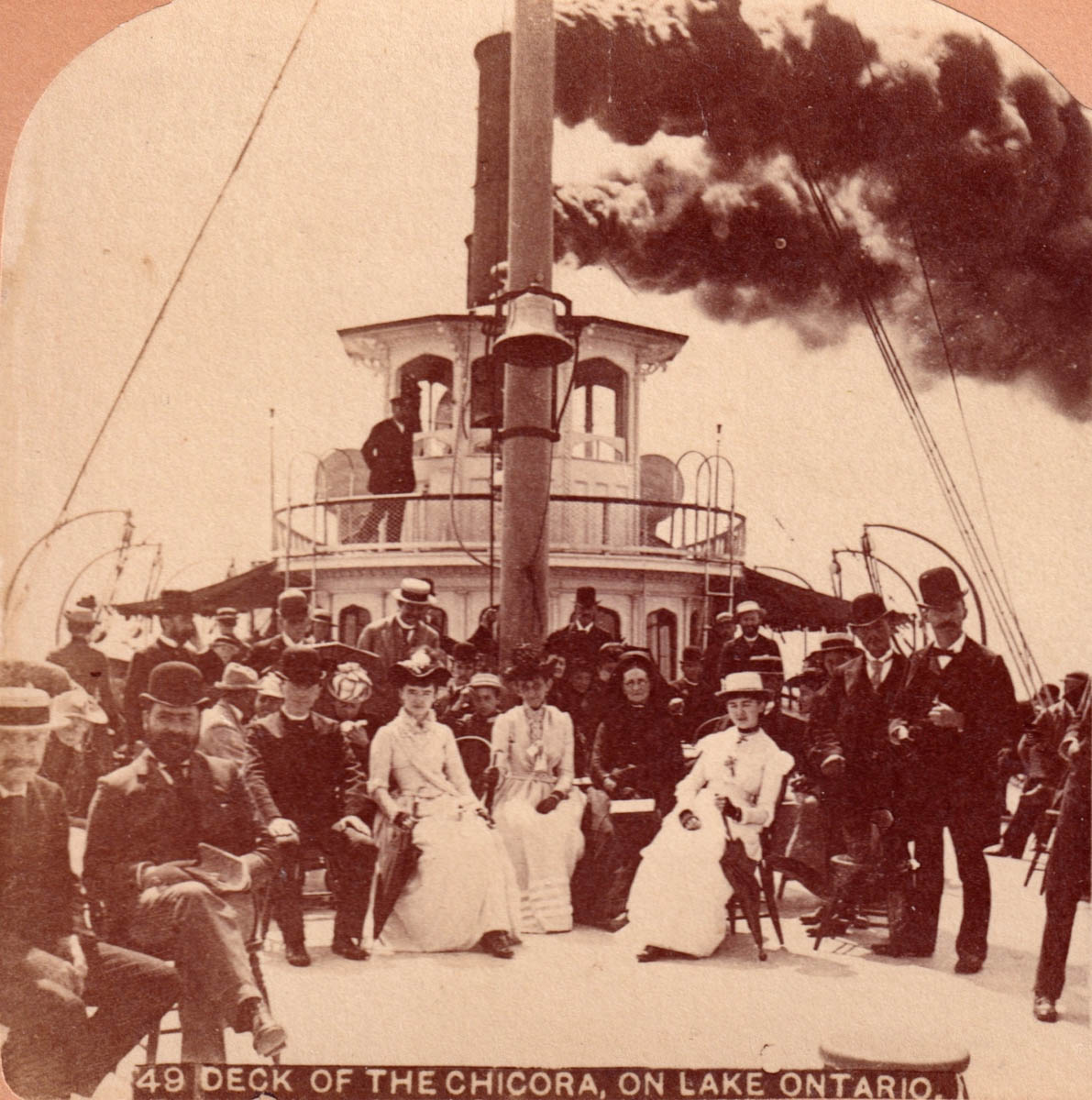
In October of 1867 she was purchased by Toronto owners for service between Collingwood, Ontario and Lake Superior ports. She was subsequently cut in two at Montreal in order to pass to Lake Ontario and Lake Erie. Four of her boilers were removed and she was rebuilt at Buffalo by David Bell for passenger and mail service.

Between 1868 and 1876, she ran frequent trips between Collingwood and Lake Superior and was briefly chartered as a yacht for Lord Dufferin, the Governor General of Canada. During this period, she frequently called at Duluth and several photos of her there are known.
Beginning in 1877 she returned to the lower Lakes running primarily on Lakes Erie and Ontario. Many views of her from this period are known as well. Being iron-hulled, she had an extremely long career and was repowered at Toronto in 1890. She continued running on Lake Ontario until 1920 when she was finally cut down to an iron-hulled barge and renamed Warrenko. She was towed in this capacity until 1939 when she sank on the north side of Howe Island in the St. Lawrence River. She was eventually raised and broken up, having lasted an incredible 75 years.
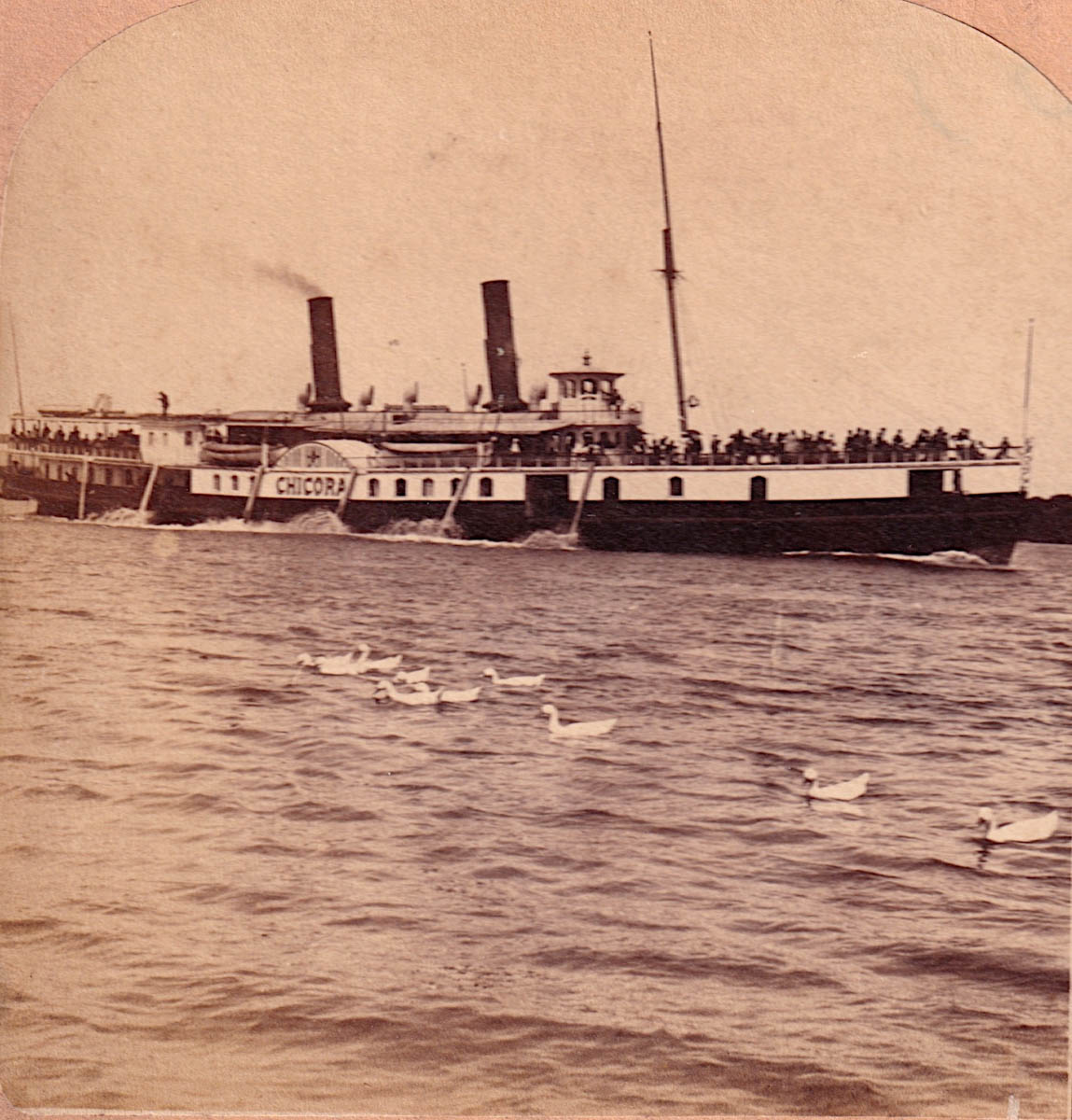
Throughout her career, she was frequently photographed due to her notoriety and was easily recognizable by her twin smokestacks which ran fore-and-aft instead of side-by-side like most lake vessels.
Thanks to Brendon Baillod for the submission of the article and photos from his collection.
About Brendon
In Brendon’s spare time he researchs Great Lakes maritime history with an emphasis on the shipwrecks of Lakes Michigan and Superior. He has been featured on the Discovery Channel, the History Channel’s Deep Sea Detectives series and several regional television programs. His work has been published in several regional historical journals and he has authored two shipwreck nominations to the National Register of Historic Places. Brendon is currently the President of the Wisconsin Underwater Archeology Association and a Director at Large of the Association for Great Lakes Maritime History who recently awarded him their 2008 Award for Historic Interpretation. He is an active member of the Wisconsin Marine Historical Society, the Great Lakes Historical Society, the Keweenaw County Historical Society and the Wisconsin Maritime Museum. His current projects include the book Ghosts of the Oceana Coast, a survey of Pentwater, Michigan shipwrecks and the book Ghosts of the Ozaukee Coast, a survey of Port Washington, Wisconsin shipwrecks. He has also worked on creating an inventory of submerged cultural resources in Michigan’s Keweenaw Peninsula, creating a catalog of all vessels constructed in Michigan’s Keweenaw and creating a database of all the historical losses of Lake Michigan.
Comments