
Close Menu
    Facebook X (Twitter) Instagram
    New
    • 36 Hours Underwater in Cold Water, How Did This Diver Survive?
    • Raja Ampat – A Tale of Two Reefs
    • Paul & Heather McCartney’s Trip to Canada to Protest Against Seal Hunt (2006)
    • Scuba Diving In Cold Weather
    • New Handbook by the Business of Diving Institute Charts a Profitable Course for Scuba Instructors
    • U.S. Coast Guard Came to the Rescue of Canadians Stuck on Ice
    • Chase the Warmth: Best Tropical Dive Trips for Spring
    • Where to Find the Best Wreck Diving in the USA: Top Picks for 2026
    Facebook X (Twitter) Instagram Pinterest YouTube LinkedIn TikTok Threads Mastodon
    Contact Advertise Destinations
    The Scuba News
    Curacao Vacation Guide
    • Home
    • News
      • Commercial Diving News
      • Community News
      • Dive Center News
      • Dive Resort News
      • Environmental News
      • Equipment News
      • Event News
      • Photo and Video News
      • Training News
      • Travel News
    • Events
    • Scuba Features
      • Commercial Diving Features
      • Community Features
      • Dive Center Features
      • Dive Resort Features
      • Environmental Features
      • Equipment Features
      • Event Features
      • Maritime History
      • Photo and Video Features
      • Training Features
      • Travel Features
      • Video Articles
      • What Divers Say
    • Travel
      • Travel News
      • Travel Features
      • Travel Offers
    • Surface Interval
      • Books
      • Movies
      • Podcasts
      • TV
      • Webinars
    • News by Destination
    The Scuba News
    Home » Raja Ampat – A Tale of Two Reefs
    Dive Resort Features

    Raja Ampat – A Tale of Two Reefs

    Barry ColemanBy Barry ColemanMarch 18, 2026No Comments6 Mins Read
    Facebook Twitter Pinterest LinkedIn Tumblr Email
    Raja Ampat, Barry Coleman
    Image copyright: Barry Coleman

    Celia and I had been looking forward to this adventure for many years. We have explored dive sites in over 42 countries, and everything we had heard about Raja Ampat suggested that it would be one of the best in terms of the entire ecosystem. That expectation was not misplaced.

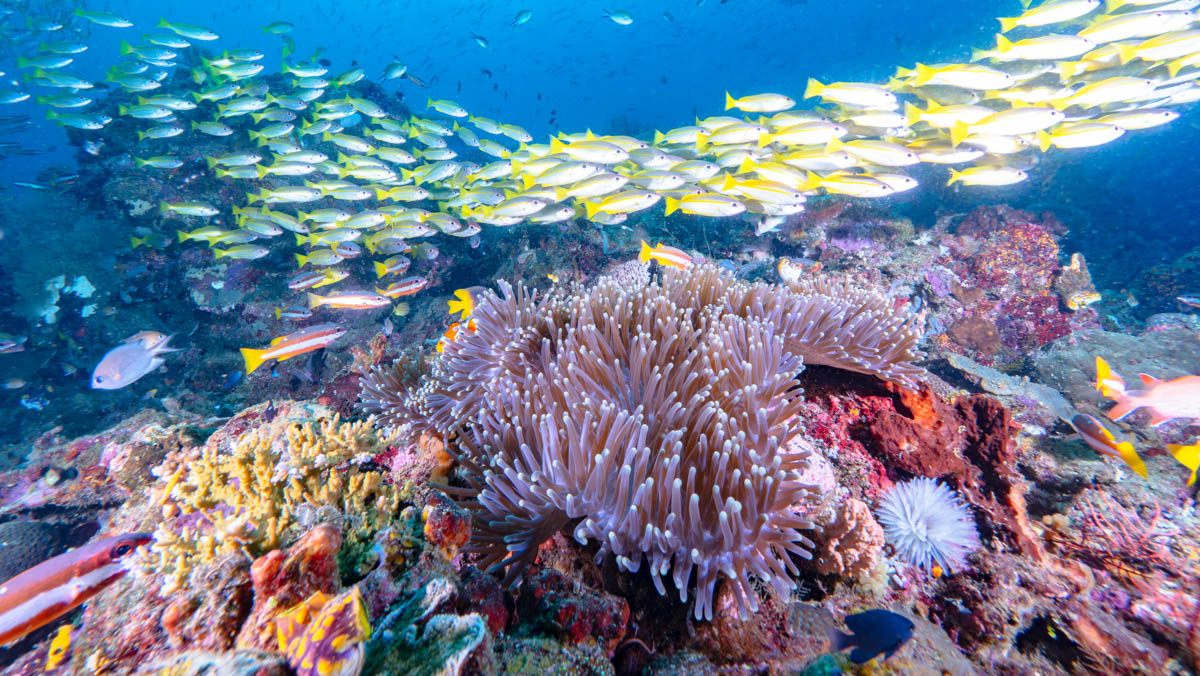
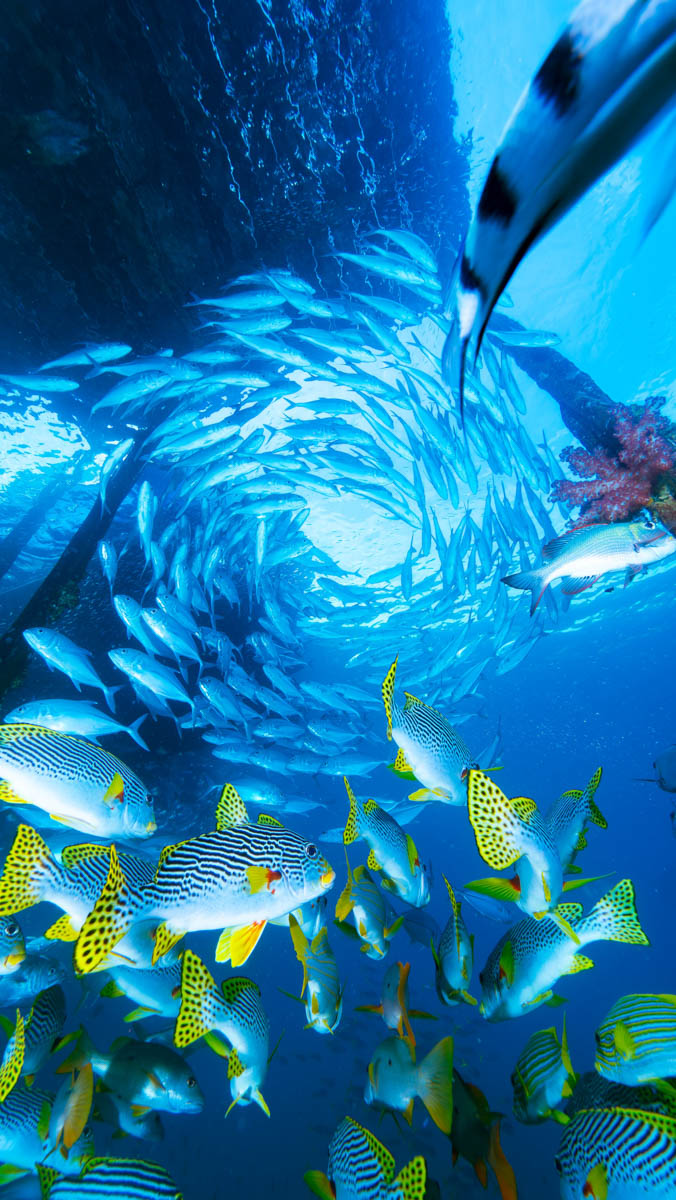
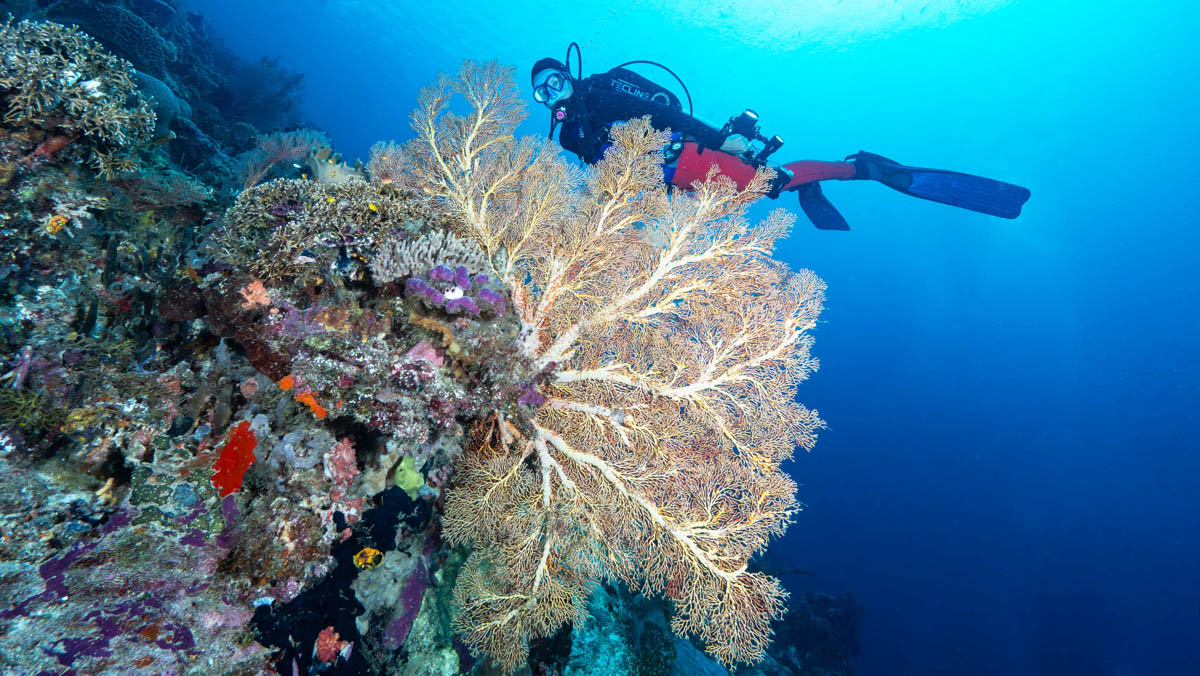
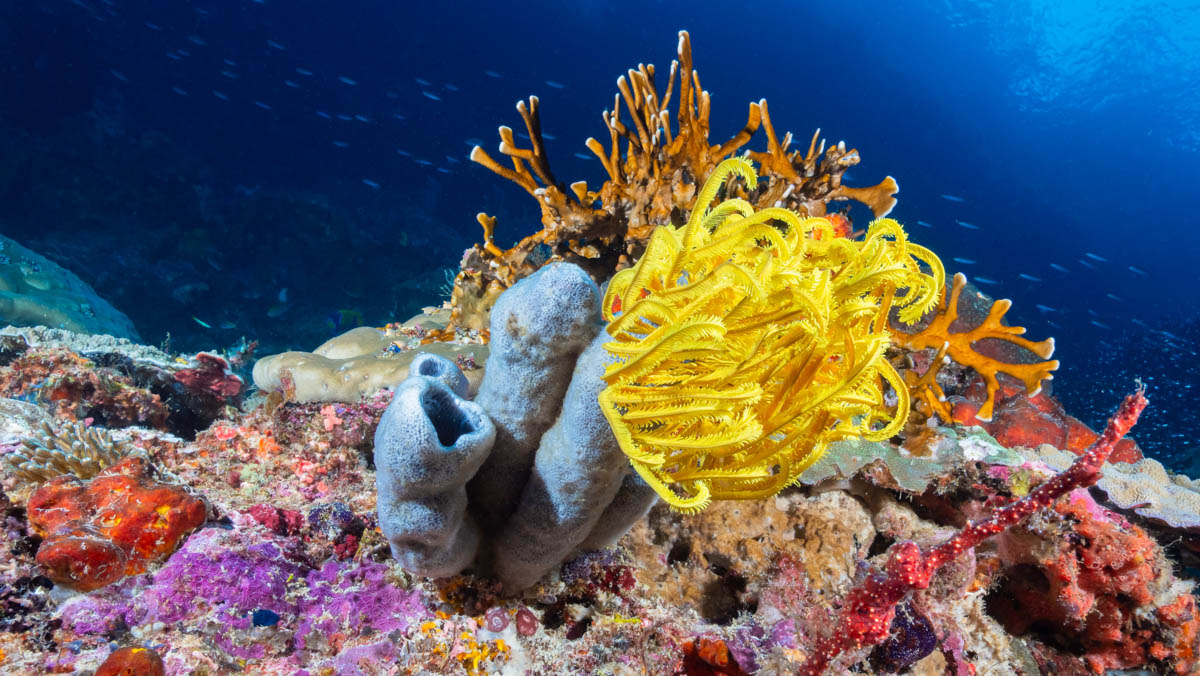
    There were some amazing sites, and perhaps the most striking for me, from a coral perspective, was Melisa’s Garden. I stopped taking photographs just to take in the sheer scale and beauty of what I was seeing.

    Melisa’s Garden, near Piaynemo Island on the western side of the Raja Ampat archipelago, represents what many people imagine when they think of pristine reef systems—dense, diverse coral structures, abundant fish life, and a system that appears balanced and thriving.
    Raja Ampat, Barry Coleman
    Image copyright: Barry Coleman

    However, this was not the full picture.

    As we moved east, even within relatively short travel distances, the contrast became noticeable. At sites such as Lighthouse Reef, in the Eastern region of the archipelago, we observed areas where green and brown algae are prominent, with sections of reef showing signs of stress. In some areas, fishing lines were caught on the reef and discarded, plastic debris had become entangled on coral structures, where live coral had already declined.

    These observations suggest that parts of the reef system are experiencing pressure, with conditions consistent with early-stage shifts toward algae-dominated environments. This type of change is well documented in reef science and is often associated with a combination of coral mortality and environmental stress.
    Raja Ampat, Barry Coleman
    Image copyright: Barry Coleman

    There is a term for one of the primary drivers of this process: Land-Based Marine Pollution (LBMP). This includes nutrient input from sources such as wastewater discharge, agricultural runoff, and broader coastal development. While I did not directly measure these factors, the conditions observed are consistent with environments where elevated nutrient levels can accelerate algae growth.

    For divers, these changes can be understood quite simply:

    • Small patches of algae → normal or early imbalance
    • Algae covering dead coral → recent mortality
    • Algae encroaching on live coral edges → active competition
    • Dense algae with reduced fish life → advanced ecosystem stress

    What is important to understand is that algae itself is not the initial problem—it is the response. Once coral is weakened or dies, algae can establish itself very quickly, often within weeks, while coral recovery takes years, if it occurs at all.

    The implications of this are significant. Reef systems can shift from coral-dominated to algae-dominated states far faster than many people realise, and once that shift is established, it becomes increasingly difficult to reverse.
    Raja Ampat, Barry Coleman
    Image copyright: Barry Coleman

    Scientists are actively monitoring these risks in Raja Ampat, including:

    • Cyanobacteria outbreak capable of smothering reefs
    • Nutrient-driven algal blooms
    • Impacts from coastal development and resource extraction
    • Tourism-related wastewater and infrastructure pressure

    There is substantial scientific evidence confirming that algae growth is a secondary response to coral stress, and that phase shifts can occur when key controls—such as low nutrient levels and healthy herbivore populations—are disrupted.

    For me personally, the experience was both inspiring and sobering.

    On one side, I saw some of the most beautiful reef systems I have ever encountered. On the other, I saw what could represent a likely future—reef areas where structure remains, but much of the living system has already been lost.

    It is this contrast that stayed with me.
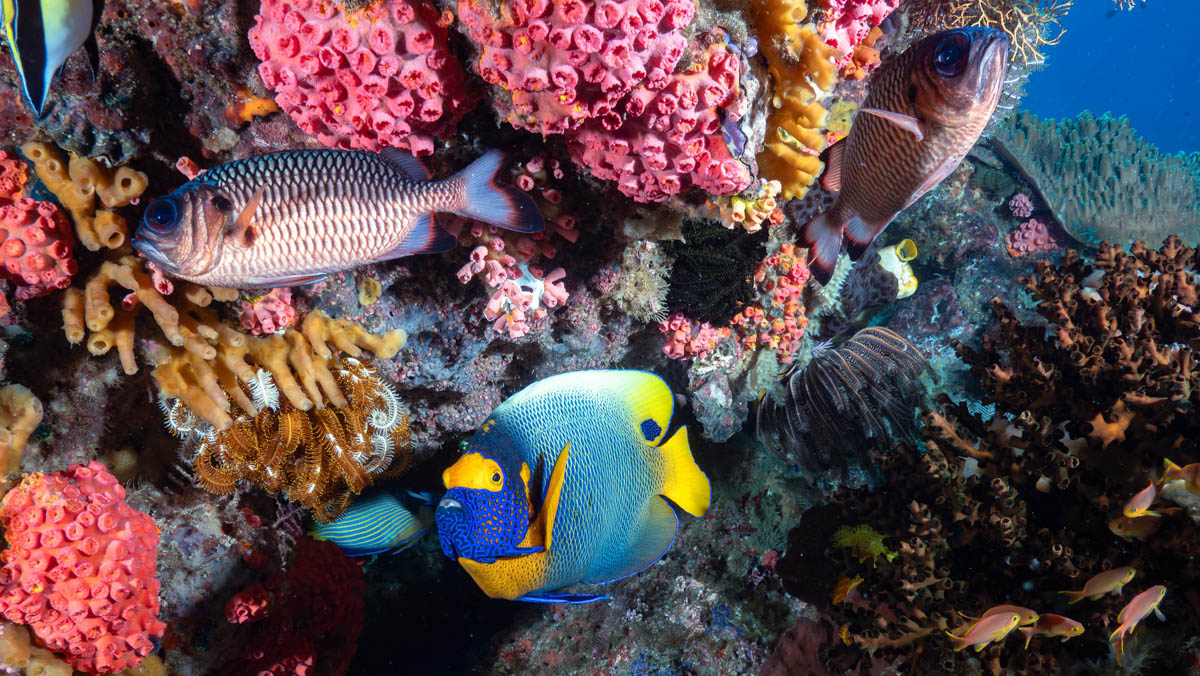
    Raja Ampat, Barry Coleman
    Image copyright: Barry Coleman

    I did not have enough time to fully explore the region, and I sincerely hope that there are many more systems like Melisa’s Garden that remain in a healthy state. The reefs in the western areas we visited were, without question, exceptional.

    However, the variation between sites raises important questions.

    One of the more concerning aspects for me was not just what I saw underwater, but what I heard on land. In discussions with people working within the tourism sector, there appeared to be limited awareness of LBMP and the role that wastewater and nutrient input can play in reef degradation, and there are some operators who take this matter seriously and have gone to great lengths to prevent their impact. This highlights a potential gap between conservation policy and on-the-ground understanding.

    Tourism in Raja Ampat has increased significantly in recent years. This brings clear benefits—employment, income, and global awareness of the region’s importance. It also introduces additional pressure.

    It is easy to focus on diver impact, and while poor buoyancy control can certainly damage reefs, this is not the primary issue. The larger concern is waste management—black water, grey water, solid waste, and the infrastructure required to support growing tourism.

    From towns and land-based accommodation, including resorts and homestays, to liveaboard charter vessels, the cumulative waste load is significant. Without effective management, all of this has direct pathways into the marine environment.

    More tourism means more infrastructure, more demand, and more pressure on the system.

    The Indonesian government, along with various organisations, is actively involved in managing and protecting this region, and significant work has been done to establish marine protected areas and conservation frameworks. However, like many parts of the world, there is an ongoing balance between economic development and environmental protection.

    Raja Ampat remains one of the most extraordinary marine environments on the planet. We feel truly fortunate to have experienced it, and the reefs we saw in good condition are something I will not forget.

    At the same time, the contrast we observed serves as a reminder that even the best reef systems are not immune to change.

    What happens next will depend not only on policy and protection, but on awareness, education, and the ability to manage the pressures that come with increased human activity.

    I only hope that future generations will still see places like Melisa’s Garden as they are today.

    It is also important to recognise that Raja Ampat is not only about its reefs. The tropical forests, often overlooked, are equally impressive in their scale and beauty. These landscapes, with their unique wildlife and birdlife, form an integral part of the ecosystem.

    The relationship between land and sea here must never be underestimated. These forests are not separate from the reefs—they are connected systems, and what happens on land ultimately influences what happens below the surface.

    The forests themselves are well worth experiencing, both for their grandeur and for the diversity of life they support. The birds and other species are as much a part of Raja Ampat as the reefs.

    Learn more about Meridian Dive at: https://meridiandive.com

    Comments

    Share. Facebook Twitter Pinterest LinkedIn Tumblr Email
    Previous ArticlePaul & Heather McCartney’s Trip to Canada to Protest Against Seal Hunt (2006)
    Next Article 36 Hours Underwater in Cold Water, How Did This Diver Survive?
    Barry Coleman
    • Website
    • Facebook
    • Instagram
    • LinkedIn

    Recreational Scuba Agency development, meeting International standards and trends; On the Board of Directors for DiveISC.com. Conceptualized and co-development the world's first recreational rebreather, the Poseidon MK6, founder of RAID AB recreational scuba diving training agency. Project director for International Scuba Certification Agency. Recreational Scuba diver training.

    Related Posts

    Chase the Warmth: Best Tropical Dive Trips for Spring

    Two Divers Found Alive After Going Missing During Dive at Malaysia’s Pulau Redang

    The Ultimate Guide to Island Hopping in the Philippines

    Leave a ReplyCancel reply

    Advertisement
    Scuba Mask Straps
    Advertisement
    Blue
    Advertisement
    Emperor Divers
    Advertisement
    Geneinno
    Advertisement
    DiveAssure
    Advertisement
    Scuba Fix at Kirk Scuba Gear
    Advertisement
    Kirk Scuba Gear
    Advertisement
    DiveHeart Courses
    Liveaboard Destinations
    • Antarctica Liveaboards
    • Arctic Liveaboards
    • Australia Liveaboards
    • Bahamas Liveaboards
    • Belize Liveaboards
    • Cayman Islands Liveaboards
    • Colombia Liveaboards
    • Costa Rica Liveaboards
    • Croatia Liveaboards
    • Cuba Liveaboards
    • Djibouti Liveaboards
    • Domincan Republic Liveaboards
    • Egypt Liveaboards
    • Fiji Liveaboards
    • Galápagos Liveaboards
    • Greece Liveaboards
    • Guatemala Liveaboards
    • Hawaii Liveaboards
    • Honduras Liveaboards
    • India Liveaboards
    • Indonesia Liveaboards
    • Italy Liveaboards
    • Madagascar Liveaboards
    • Malaysia Liveaboards
    • Maldives Liveaboards
    • Mexico Liveaboards
    • Micronesia Liveaboards
    • Myanmar Liveaboards
    • Oman Liveaboards
    • Panama Liveaboards
    • Papua New Guinea Liveaboards
    • Philippines Liveaboards
    • Polynesia Liveaboards
    • Portugal Liveaboards
    • Saba and St Kitts Liveaboards
    • Saudi Arabia Liveaboards
    • Seychelles Liveaboards
    • Solomon Islands Liveaboards
    • Spain Liveaboards
    • Sri Lanka Liveaboards
    • St Maarten Liveaboards
    • Thailand Liveaboards
    • Tonga Liveaboards
    • Turkey Liveaboards
    • Turks and Caicos Liveaboards
    • Vanuatu Liveaboards
    • Venezuela Liveaboards
    • Virgin Islands Liveaboards
    • Yemen Liveaboards
    Quick Scuba Search
    Asia Australia Canada Cayman Islands David Suzuki Diver Travel Dive Shows Dive Travel Egypt Environment Environmental Articles Environmental News Galapagos India Indonesia Ireland Liveaboard Holidays Liveaboards Liveaboards Egypt Liveaboards Galapagos Liveaboards Indonesia Liveaboards Maldives Liveaboards Red Sea Liveaboard Travel Liveaboard Travel Deals Maldives Mexico New Zealand PADI Philippines Red Sea Scuba Diver Travel Scuba Diver Travel Deals Scuba Diving Canada Scuba Diving Egypt Scuba Diving Galapagos Scuba Diving Indonesia Scuba Diving Maldives Scuba Diving Red Sea Scuba Travel Scuba Travel Deals Sharks South Africa Travel UK
    Liveaboard.com
    About The Scuba News
    Developed by a small team of dedicated scuba diving media professionals, The Scuba News brings you the best and most up to date scuba diving information from around the world.

    Covering everything from the world of scuba diving including: The Environment, Dive Centers, Dive Resorts, Diving Equipment, Photos and Videos, Diver Training and news which affects the whole scuba community.

    If you have any questions about The Scuba News or you would like to contribute to our news and blog pages please do not hesitate to contact us.
    Scuba News Categories
    • Commercial Diving News
    • Community News
    • Dive Center News
    • Dive Resort News
    • Environmental News
    • Equipment News
    • Event News
    • Photo and Video News
    • Training News
    • Travel News
    Scuba Diving Features
    • Commercial Diving Features
    • Community Features
    • Dive Center Features
    • Dive Resort Features
    • Environmental Features
    • Equipment Features
    • Event Features
    • Maritime History
    • Photo and Video Features
    • Training Features
    • Travel Features
    All content copyright The Scuba News unless otherwise stated. | A DiveMedia Company. Affiliate Disclosure

    Type above and press Enter to search. Press Esc to cancel.