

Born without arms, Jessica Cox became a licensed pilot, learned to operate aircraft using her feet and went on to discover a new challenge beneath the surface with adaptive diving organisation Diveheart. Her remarkable diving story is now finding a new audience.
When Jim Elliott, founder and president of the US-based adaptive scuba organisation Diveheart, recently revisited the story of Jessica Cox on social media, the response was immediate. His Facebook post attracted more than a thousand likes, introducing another audience to a woman whose achievements have challenged assumptions about disability for years.
Jessica Cox was born without arms and developed the ability to carry out an extraordinary range of activities using her feet. From everyday tasks to operating an aircraft, she has continually demonstrated that conventional approaches are not always the only way to achieve something.
But alongside her achievements in aviation, Jessica also wanted to explore the underwater world.
That ambition brought her to Diveheart in Illinois in 2009.
From the Cockpit to the Water
Jessica had already established herself as a pioneering aviator before beginning her adaptive scuba training.
In 2008, she became the first person without arms to earn a pilot certificate, operating a light aircraft using her feet. It was an achievement that required determination, specialist instruction and an ability to adapt established techniques to her own requirements.
Scuba diving presented a different set of challenges.
Underwater, divers must manage their breathing apparatus, buoyancy, mask and other equipment while maintaining awareness of their surroundings.
For Jessica, whose feet serve many of the functions traditionally performed by hands, this meant developing techniques that would enable her to operate scuba equipment independently wherever possible.
Rather than treating those requirements as a reason to exclude her from diving, Diveheart worked with Jessica to explore practical solutions.
Learning to Dive with Diveheart
Jessica travelled from Arizona to Illinois to participate in training organised by Diveheart, a nonprofit organisation dedicated to making scuba diving more accessible to people with disabilities.
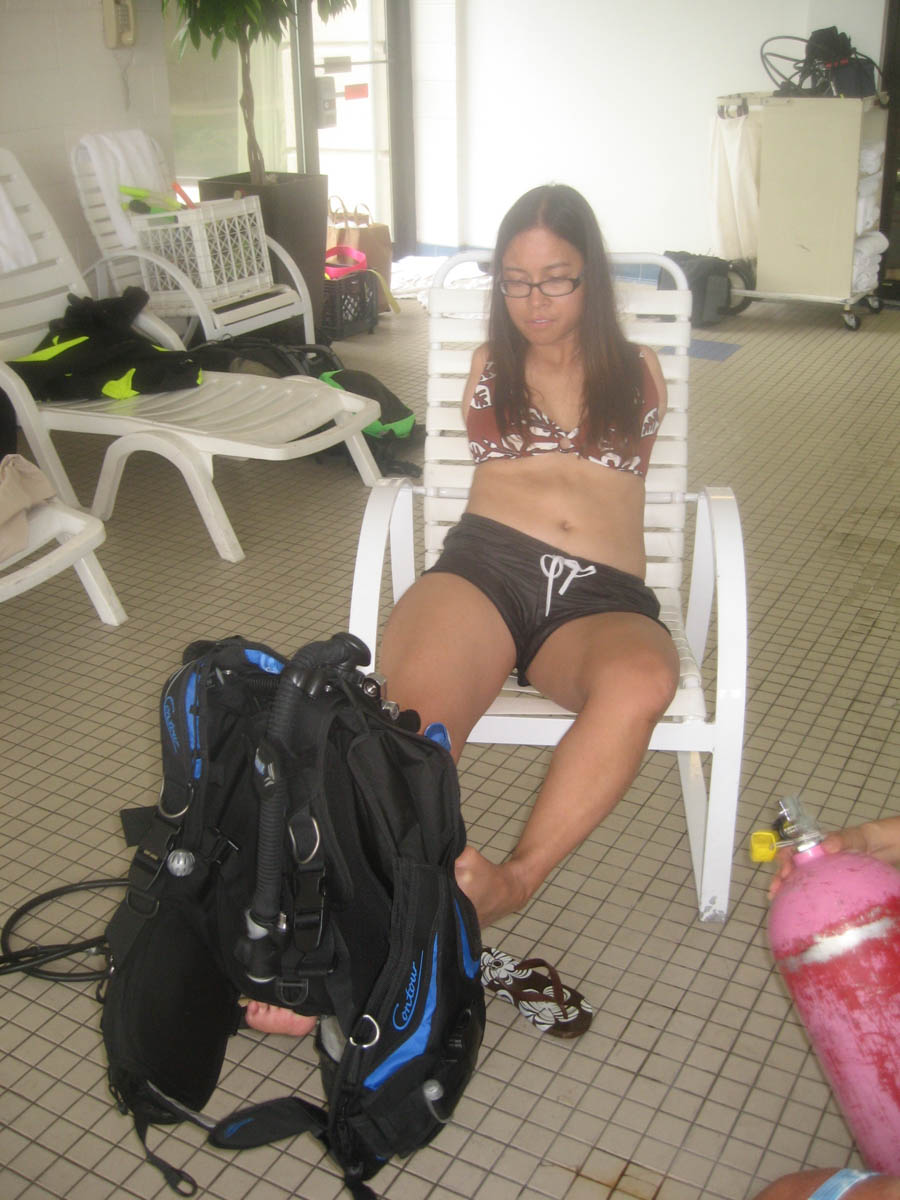
Her initial sessions took place in a swimming pool at the Holiday Inn Select in Naperville.
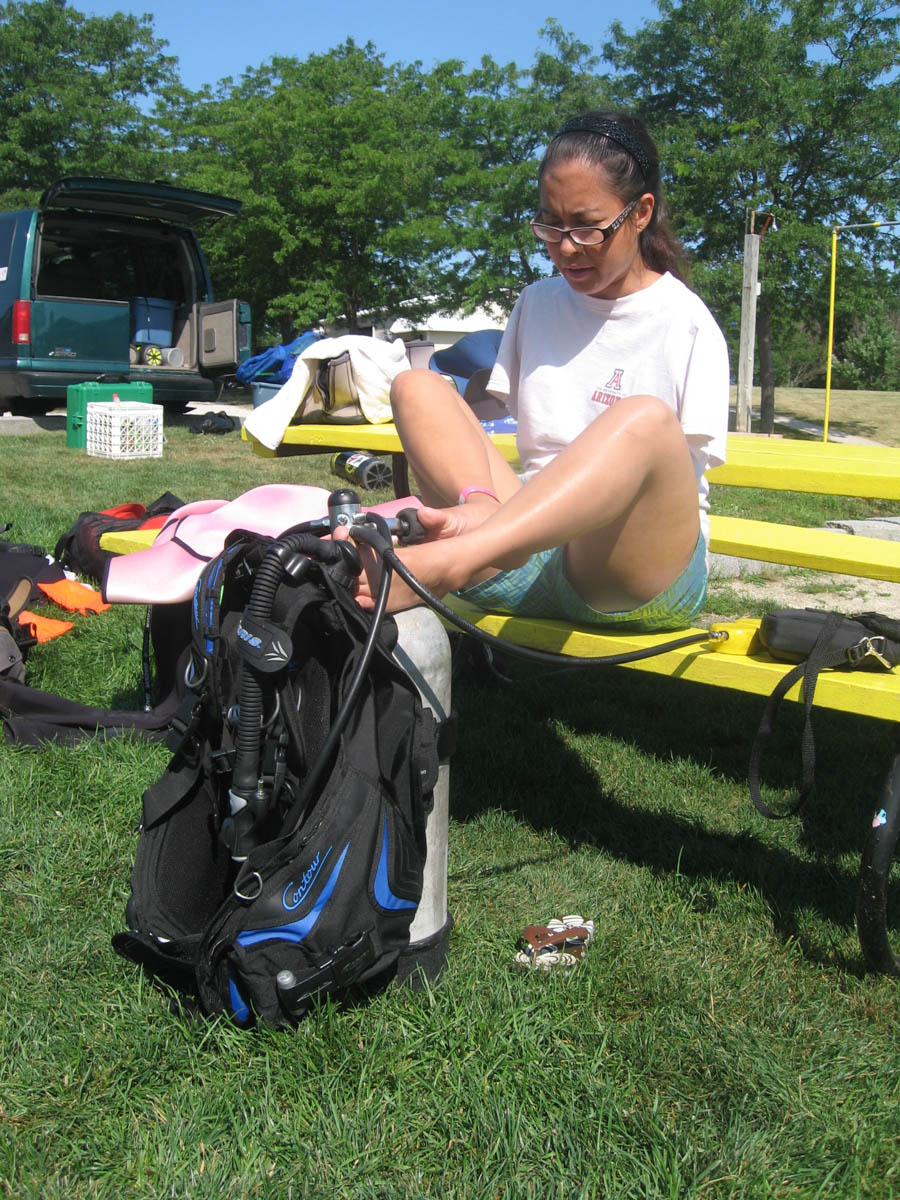
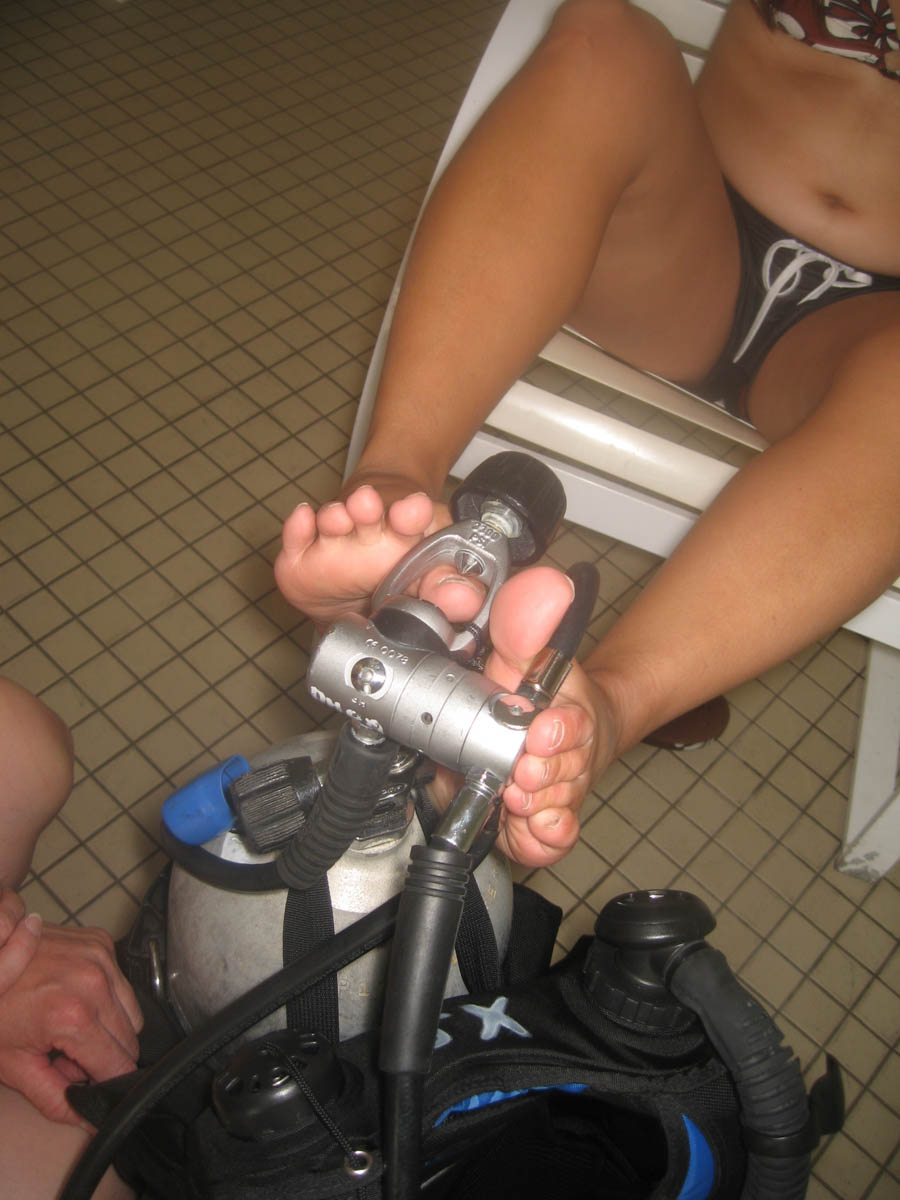
Photographs from the training show Jessica preparing equipment using her feet, including attaching a regulator to a scuba cylinder and working with her buoyancy compensator.
The images offer a fascinating insight into the practical side of adaptive diving.
Tasks that many divers perform almost automatically required different techniques, careful preparation and equipment adjustments.
According to contemporary reporting, Jessica’s training included managing her mask, operating her equipment and adapting her buoyancy configuration. Because her feet were essential for operating equipment, traditional fin use also required reconsideration.
The aim was not simply to get Jessica underwater. It was to help her develop the skills needed to participate in the activity as fully as possible.
Taking the Next Step into Open Water
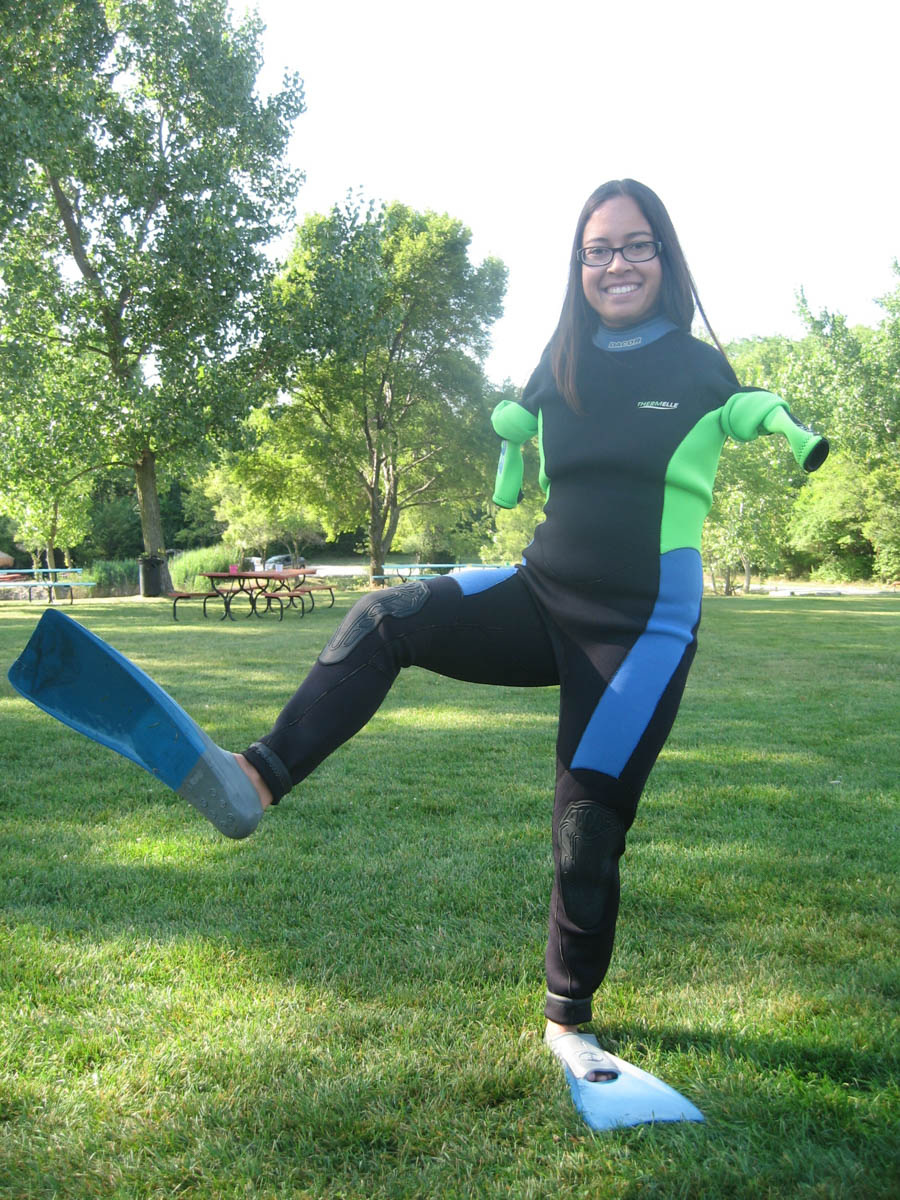
After her initial pool sessions, Jessica progressed to open-water diving at an Illinois quarry.
Her training resulted in a restricted open-water certification, with requirements for accompanying dive buddies.
It was an important achievement, but it also demonstrated that adaptive diving is not necessarily about following one standard equipment configuration or training method.
Different divers have different physical capabilities, and successful adaptation requires understanding the individual rather than making assumptions about what they can or cannot do.
Jessica’s experience also helped identify opportunities for improvements in equipment design.
In subsequent work, engineering students at Northwestern University developed modifications intended to improve her ability to control buoyancy and operate scuba equipment, including changes to the buoyancy system, harness and inflator arrangement.
The project reflected a wider principle in adaptive diving: equipment and procedures can sometimes be redesigned around the diver, rather than expecting every diver to adapt to the same equipment.
Breaking Down Barriers to Diving
For Diveheart, Jessica’s experience reflects a broader mission that extends well beyond any individual training session.
Founded by Jim Elliott, the organisation introduces people with disabilities to scuba diving through adaptive instruction, supported experiences and specialist programmes.
Its work includes people with physical disabilities, military veterans and others who may encounter barriers to conventional diving activities.
Adaptive diving requires appropriate training, individual assessment and suitable supervision. Not every diving environment or activity is appropriate for every participant, but thoughtful adaptations can help make the underwater world accessible to more people.
Jessica’s story illustrates that approach particularly clearly.
Her achievements do not mean that every challenge disappears. Rather, they demonstrate what can become possible when determination, instruction and practical problem-solving come together.
A Story Worth Revisiting
More than 17 years after Jessica first trained with Diveheart, her experience continues to attract attention.
The renewed interest following Jim Elliott’s Facebook post is a reminder that some diving stories deserve to be rediscovered.
Jessica’s journey from the cockpit to the underwater world offers a different perspective on what it means to become a scuba diver.
It also raises an important question for the diving industry: how many people might discover diving if accessibility, training and equipment design were considered from the very beginning?
Readers can explore Diveheart’s original story and photographs of Jessica Cox, learn more about Diveheart’s adaptive dive training programmes or discover ways to support the organisation’s work.
Photographs supplied by Diveheart. The Scuba News thanks Jim Elliott for bringing Jessica’s story back to our attention.
