


For decades, the diving industry has faced a familiar challenge: how do you persuade someone who has never considered scuba diving to take their first step underwater?
At Deep Dive Dubai, the answer may be to remove one of the most fundamental barriers altogether: the need to swim.
The Dubai attraction has introduced an underwater walking experience that allows visitors with no swimming ability or diving qualifications to explore part of its extraordinary submerged city. It is an approach that raises an interesting question for the wider diving industry. Could experiences designed for people who would never ordinarily consider scuba diving help introduce an entirely new audience to the underwater world?
Or is the experience simply an adventure in its own right?
Walking Beneath the Surface
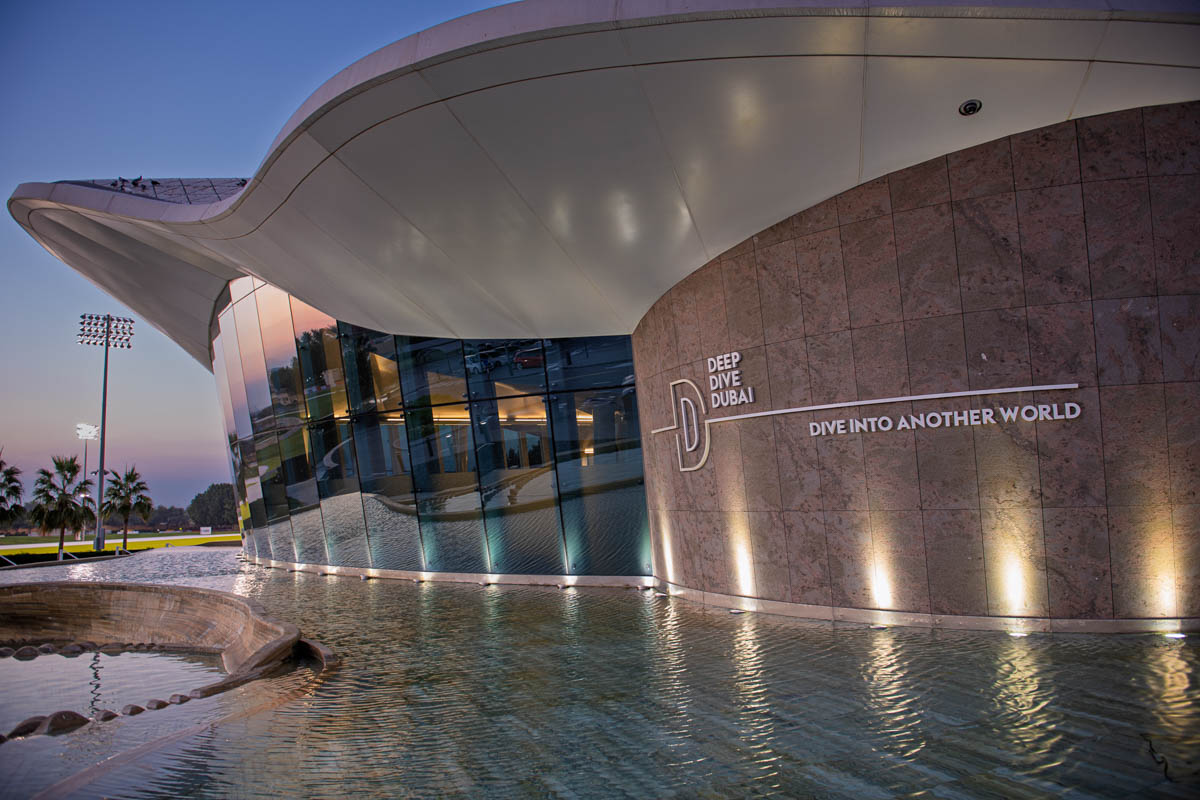
Launched in September 2025, Sunken City Walk takes visitors four metres below the surface of Deep Dive Dubai’s purpose-built underwater environment.
Rather than learning to swim or mastering conventional scuba equipment, participants wear a full-face mask and walk along a submerged platform, accompanied by an instructor.
The experience takes place in water maintained at approximately 30°C, offering visitors an opportunity to look out across the attraction’s elaborate underwater city without needing to swim.
According to the facility’s published information, the activity is open to visitors aged 10 and above. The overall experience lasts approximately one hour, including around 20 minutes underwater, and is currently advertised at AED 600.
It is a markedly different proposition from a conventional introductory scuba dive.
For someone who cannot swim, the idea of descending beneath the surface can seem entirely inaccessible. Sunken City Walk changes that equation by creating a controlled environment in which the participant’s experience is built around walking rather than swimming.
The result is an underwater encounter that would otherwise be beyond the reach of many visitors.
Reaching an Audience That Scuba Diving Often Misses
Speaking exclusively to The Scuba News, Jesper Kjøller, Manager of Marketing, Brand and Dive Standards at Deep Dive Dubai, explained that the experience has attracted considerable interest from visitors who might not otherwise participate in an underwater activity.
One particularly interesting trend has emerged among guests from Southeast Asia, where Kjøller says the experience has proved especially popular.
Many of these visitors are not confident swimmers, making the opportunity to explore an underwater environment without swimming skills particularly appealing.
That response is significant because it demonstrates how removing a practical barrier can open an underwater attraction to people who might never have considered booking a scuba diving experience.
The appeal is not necessarily about learning to dive. It may simply be about experiencing something previously considered impossible.
For the visitor, walking beneath the surface of a spectacular submerged city can be the entire objective.
For the diving industry, however, it presents a potentially interesting point of first contact.
Does an Underwater Experience Create Future Divers?
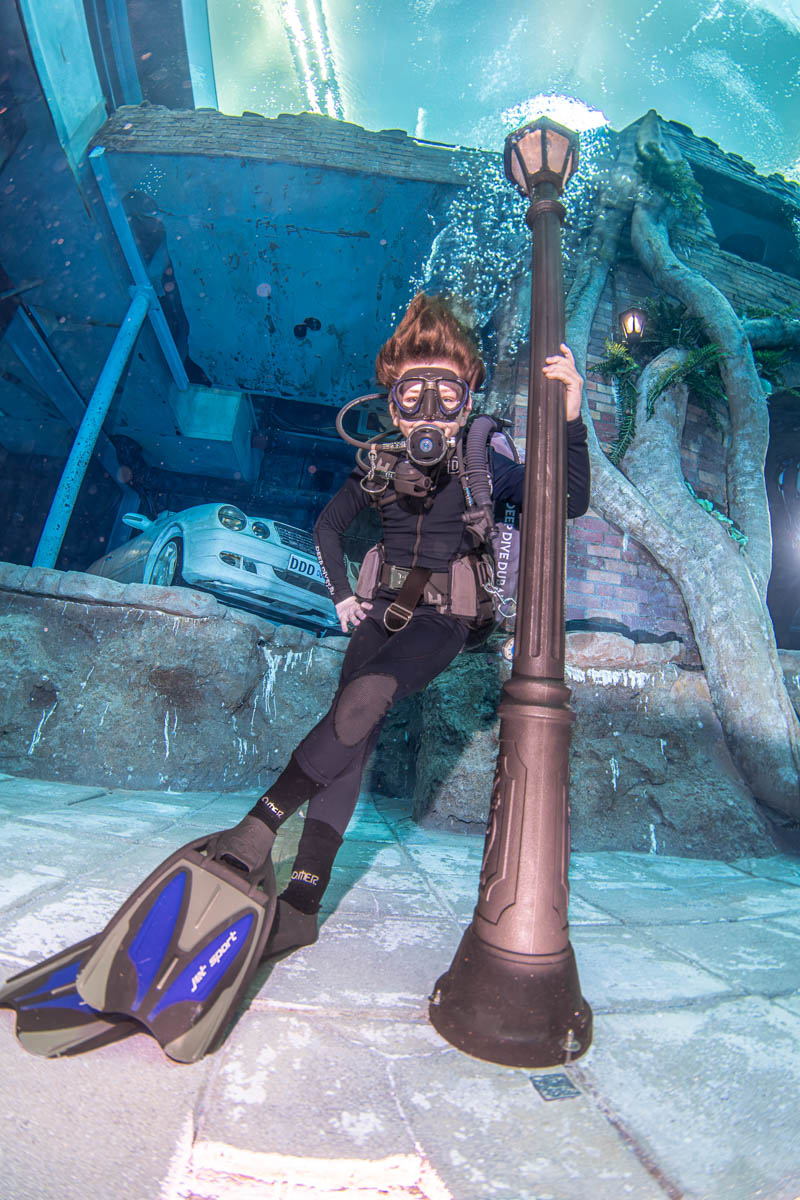
The natural assumption might be that introducing non-swimmers to the underwater world could encourage some of them to progress to scuba diving.
But Kjøller is careful not to make that claim.
Deep Dive Dubai does not currently track whether participants in Sunken City Walk subsequently book an introductory scuba experience or pursue diver certification.
Without that information, there is no reliable basis for suggesting that the activity is producing new divers.
Kjøller’s assessment is that many visitors are likely to regard the walk as a bucket-list experience rather than the beginning of a longer diving journey.
That distinction matters.
An experience can successfully introduce someone to an underwater environment without necessarily changing their interest in scuba diving. The two outcomes should not be confused.
Nevertheless, there is an opportunity worth considering.
Someone who has never imagined going underwater may leave with a different understanding of what is possible. They may discover that being beneath the surface is enjoyable rather than intimidating, even if they have no immediate ambition to become a diver.
Whether that initial experience develops into something more will depend on what happens next.
Making the Next Step Accessible
The diving industry already has established pathways for newcomers, including PADI’s Discover Scuba Diving programme and supervised introductory experiences offered by dive centres around the world.
Deep Dive Dubai itself offers introductory scuba diving experiences for non-certified visitors, providing a potential next step for guests who want to explore beyond the walking platform.
But there is an important difference between making an experience available and persuading someone to take it.
As Kjøller observed in his correspondence with The Scuba News, the industry’s responsibility is to make the next step easy to find for those who want it.
That is perhaps the most useful lesson from Sunken City Walk.
Rather than treating every underwater visitor as a prospective scuba customer, operators can recognise that people arrive with different motivations, abilities and expectations.
Some want a single memorable experience. Others may discover an interest they did not previously know they had.
Creating a clear, welcoming route from one activity to another allows that interest to develop without assuming it will.
A Different Way to Introduce the Underwater World
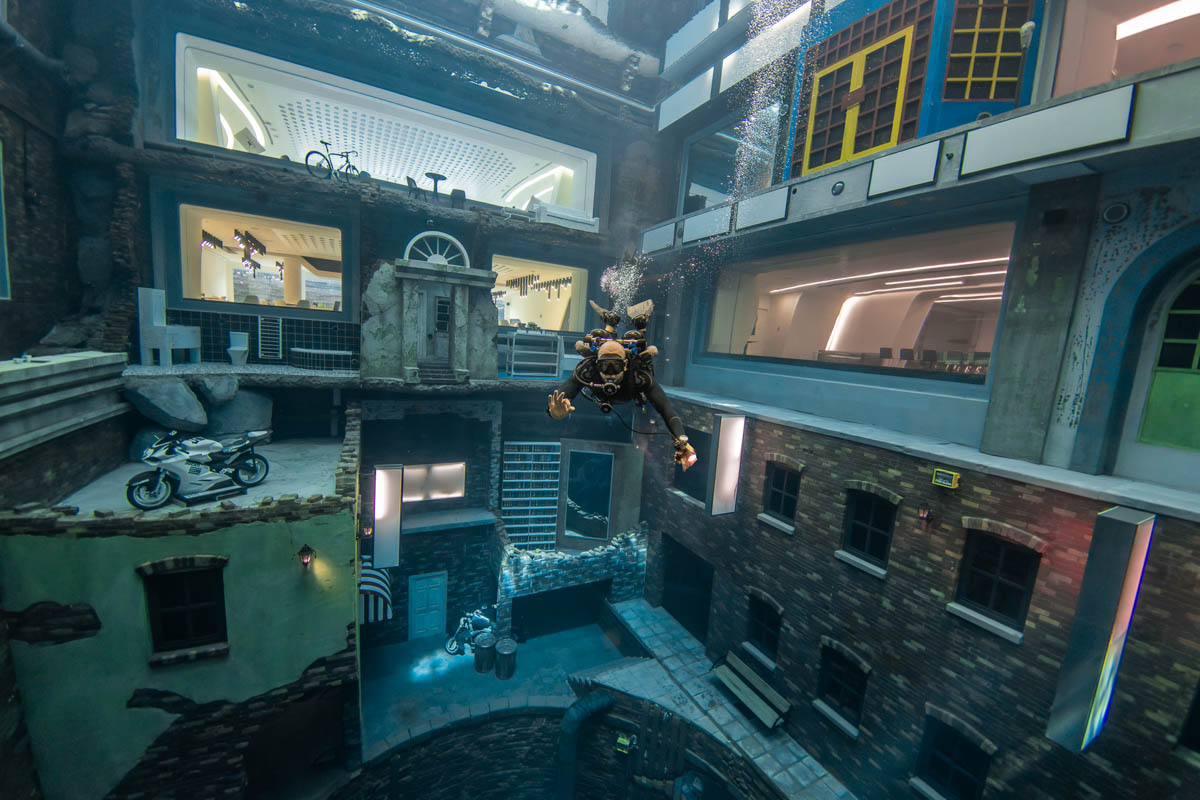
Deep Dive Dubai is already unusual. Its 60-metre-deep pool contains an elaborate submerged environment designed to resemble an abandoned city, with streets, buildings and rooms that can be explored by appropriately qualified divers.
Sunken City Walk extends access to a small part of that environment for people who might otherwise remain spectators.
It also offers a useful reminder that access to the underwater world does not have to begin with a conventional scuba diving course.
The wider significance may be less about whether underwater walking produces certified divers and more about what happens when an activity traditionally associated with swimming ability becomes accessible to non-swimmers.
For some visitors, the walk will be an unforgettable one-off experience.
For others, it might be the first moment they realise they want to discover more.
Until there is evidence of progression into scuba diving, those possibilities remain just that: possibilities.
But removing a barrier that once prevented someone from experiencing the underwater world is an achievement in itself. And for an industry continually looking for ways to reach new audiences, it is an approach worth watching.
