



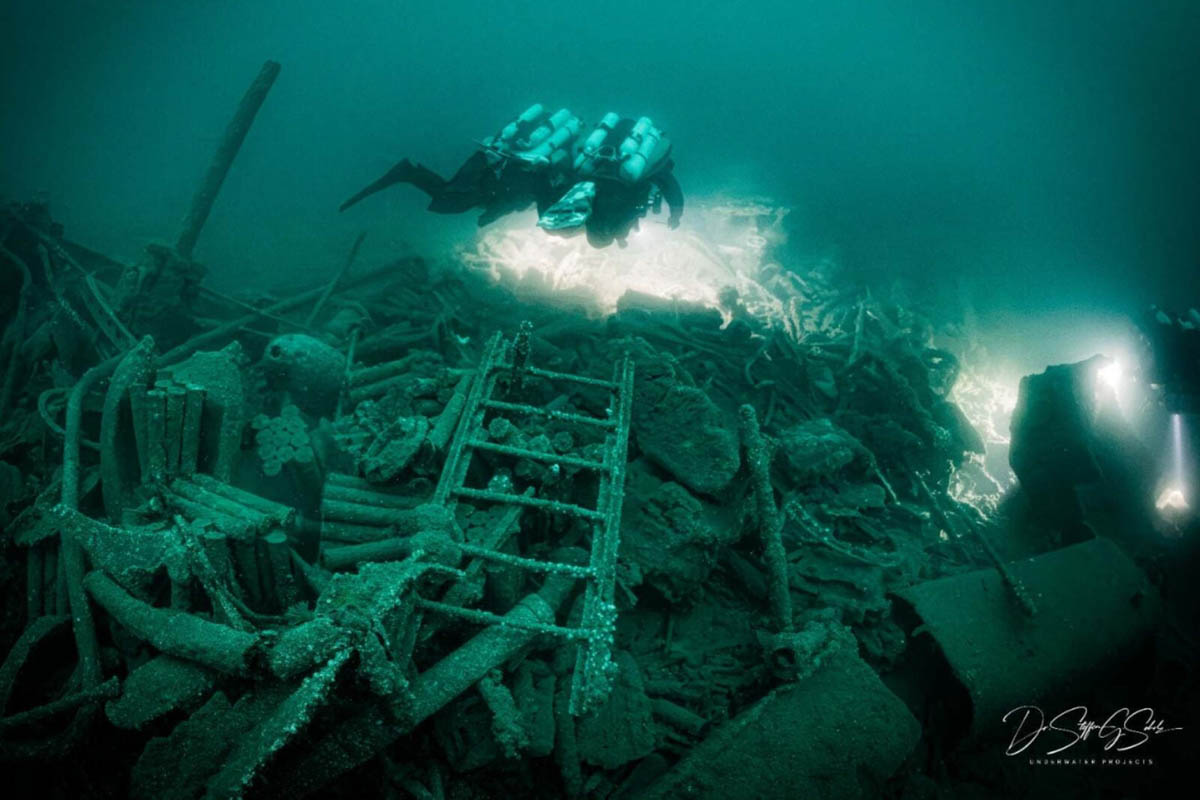

Technical divers have identified the long-lost wreck of HMS Tiger at 62 metres south of the Isle of Wight, solving a maritime mystery that had endured since 1908.

More than a century after HMS Tiger disappeared beneath the English Channel, an international team of technical divers has located and documented the wreck of the Royal Navy destroyer south of the Isle of Wight.

The discovery brings an end to a search for the last missing British 30-knot torpedo boat destroyer sunk in the English Channel.

HMS Tiger was lost on 2 April 1908 after crossing into the path of the much larger armoured cruiser HMS Berwick during night manoeuvres. The collision was catastrophic.
Berwick struck the destroyer amidships, effectively cutting Tiger in two.
Of the 57 men aboard, 35 lost their lives.
A Nearly Four-Year Search
Finding Tiger was not simply a case of divers stumbling across an unidentified wreck.
The international team from ProjectXplore, working with Dave Wendes, skipper of the dive charter boat Wight Spirit, combined extensive historical research with side-scan sonar surveys and a series of technical dives.
According to ProjectXplore’s detailed account of the discovery, the targeted search for Tiger lasted nearly four years.
A potential wreck site was surveyed using towed side-scan sonar in April 2025. The significance of the data was not recognised until further processing later that year revealed the outline of a wreck.
The team returned in March 2026 to conduct a higher-resolution sonar survey.
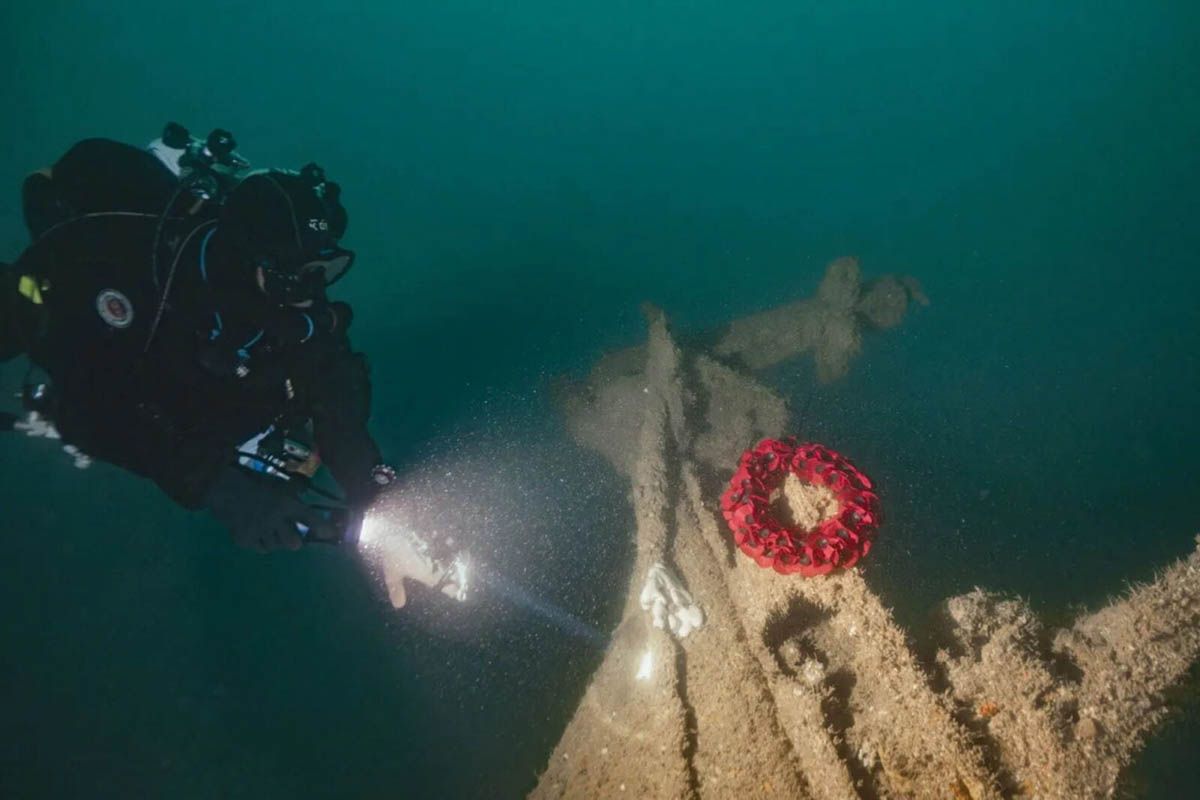
Divers reached the stern section in June, followed by dives on the bow during July. A final high-resolution sonar survey was completed on 24 July, the date ProjectXplore records as the formal discovery of HMS Tiger.
The wreck lies at a maximum depth of approximately 62 metres, with a least depth of around 58 metres.
That puts the site firmly into technical-diving territory.
Two Halves, 140 Metres Apart
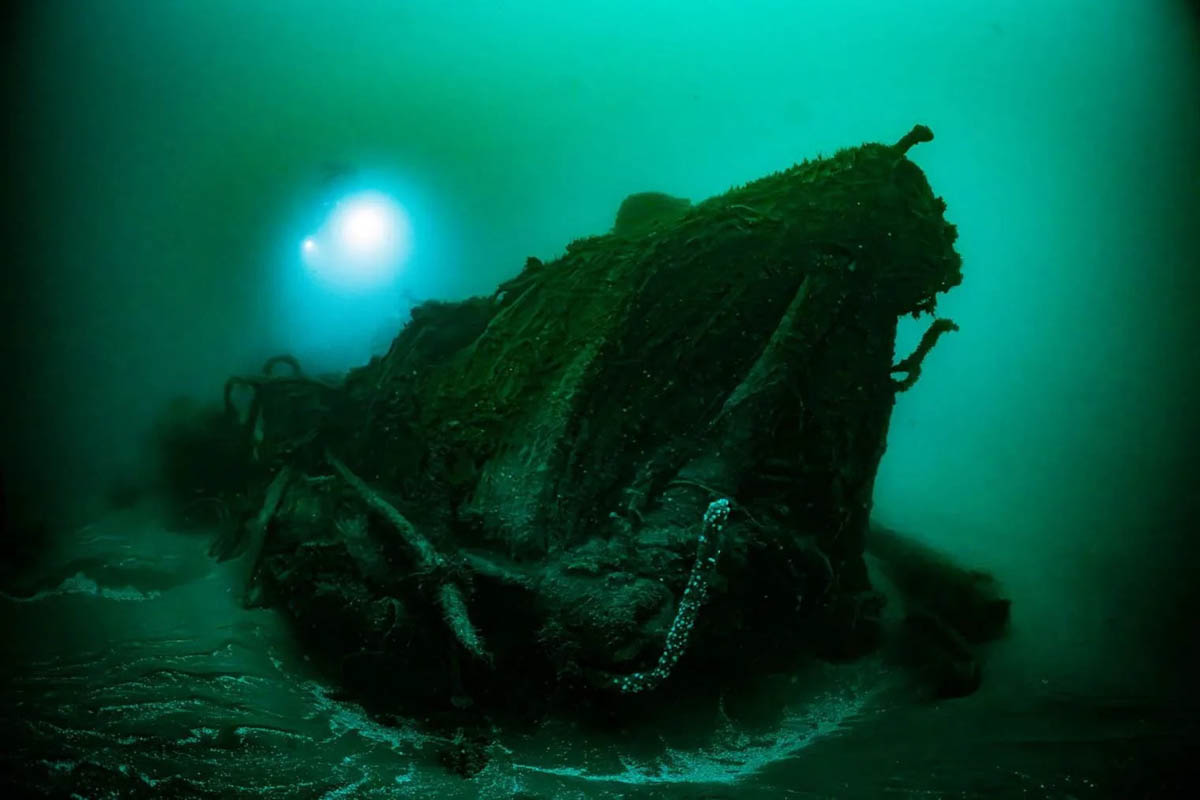
What the divers found on the seabed closely reflects contemporary accounts of Tiger’s violent loss.
The ship rests in two main sections, each approximately 34 metres long and six metres wide. Remarkably, the bow and stern now lie around 140 metres apart.
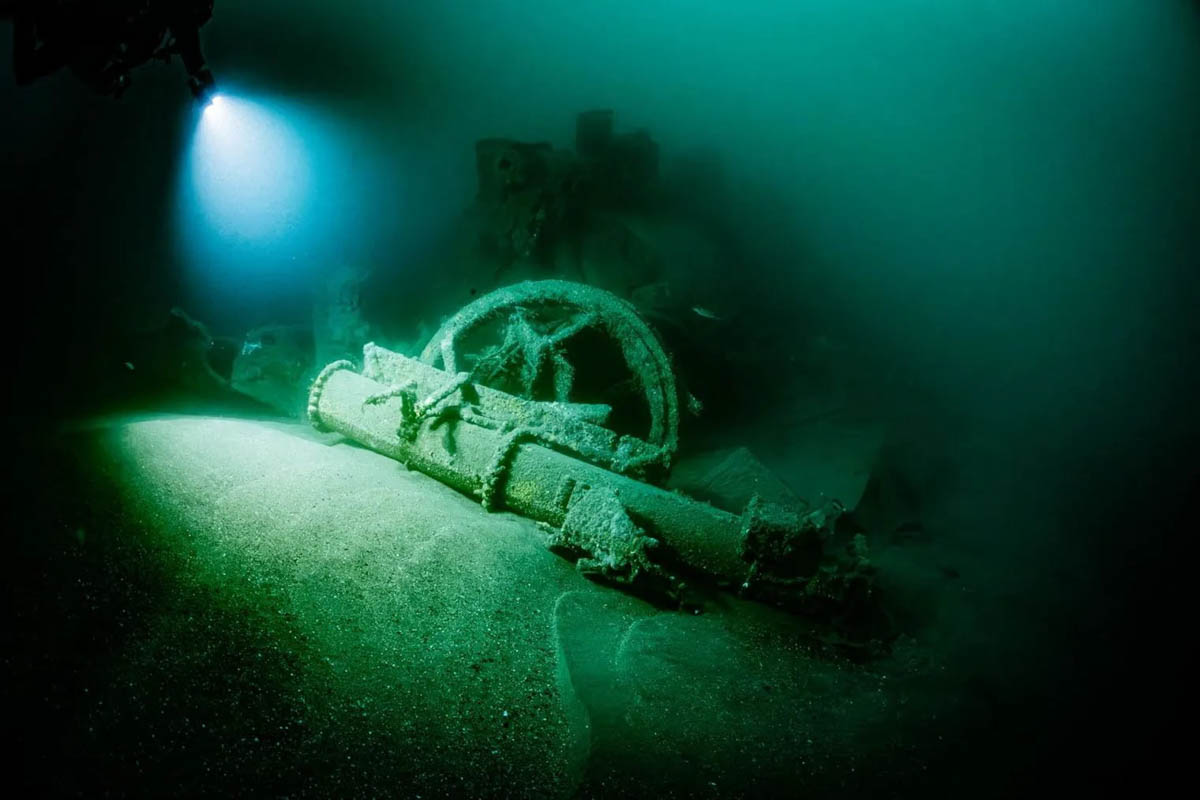
Among the features documented by the expedition are two intact deck-mounted torpedo tubes, davits, boilers and other structural components.
Measurements obtained using GPS and side-scan sonar were consistent with Tiger’s original dimensions of approximately 67.6 metres long and 6.25 metres wide.
The location of the break in the wreck also corresponds with historical accounts of where HMS Berwick struck the destroyer.
Together, those features allowed the team to positively identify the wreck.
The Wreck May Reveal Tiger’s Final Moments
The discovery has potentially added something more significant than simply another location to Britain’s maritime archaeological record.
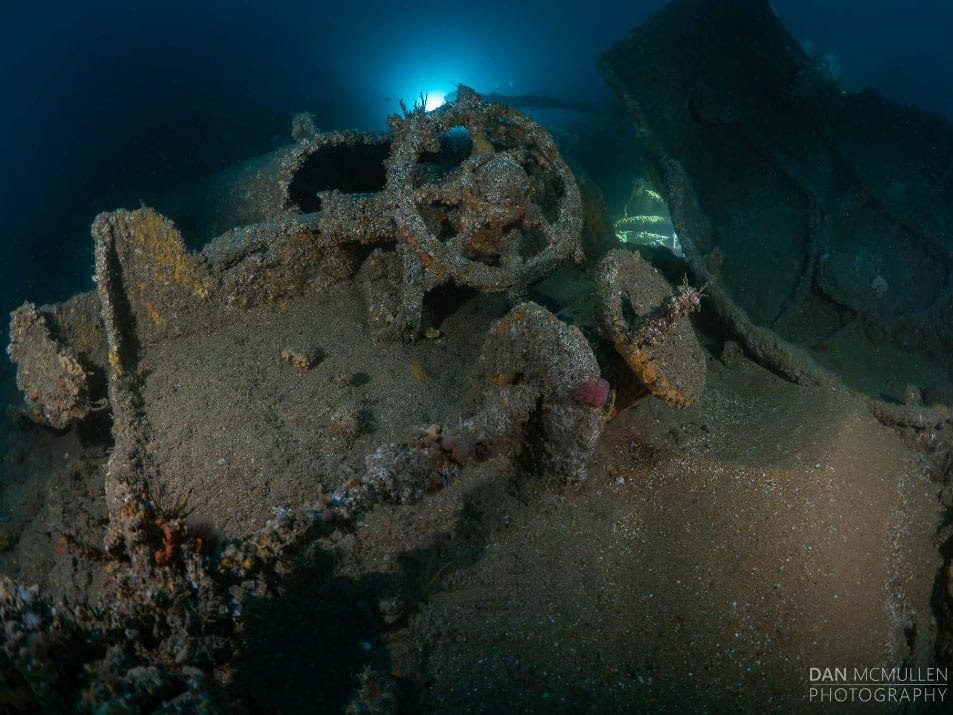
Evidence documented on the wreck may provide additional insight into what Tiger was doing immediately before the collision.
ProjectXplore reports that the positions of the ship’s engine telegraph and rudder indicator suggest Tiger had apparently neither reduced speed nor altered course immediately before being struck by Berwick.
It is an extraordinary physical snapshot of the final moments of a disaster that happened 118 years ago.
During the night manoeuvres on 2 April 1908, the approximately 400-ton Tiger strayed into the path of the roughly 9,800-ton HMS Berwick.
There was little opportunity for either vessel to avoid the collision.
The cruiser struck Tiger in the middle. The destroyer’s bow sank almost immediately, while the badly damaged stern remained afloat for only a few minutes.
Fewer than half of Tiger’s 57 crew survived.
A Wreck That Could Receive Greater Protection
The discovery also comes as Britain considers stronger protection for its historic military wrecks.
The Royal Navy confirmed the discovery of HMS Tiger as the UK Government moves to expand protection for military shipwrecks through the Armed Forces Bill.
The proposed changes would allow potentially thousands of military wrecks to receive automatic protection once discovered.
Importantly for divers, protection would not necessarily mean closing wrecks to responsible diving.
The Royal Navy says divers would remain able to visit protected places provided they follow a “look but don’t touch” approach and do not disturb or remove material from the sites.
That distinction matters.
Technical divers and wreck researchers have played an important role in locating, identifying and documenting Britain’s lost maritime history. HMS Tiger is another example of what can be achieved when archival research, modern sonar technology and highly skilled diving are brought together.
After 118 years, Tiger has finally been found.
And 62 metres beneath the English Channel, the two halves of the destroyer are still helping to tell the story of the night she was lost.
Comments