



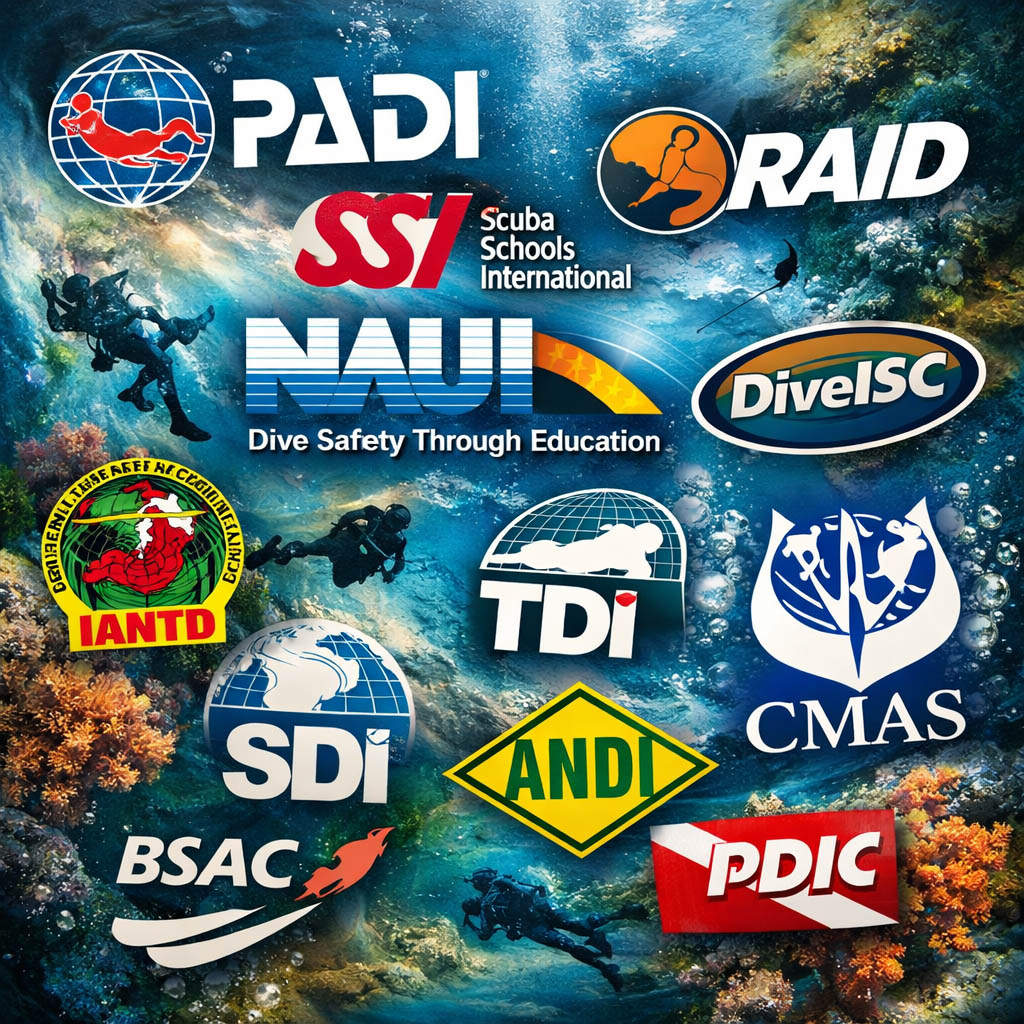
The scuba training world is rich with options. Divers often collect not just certifications, but stories about why they chose one training agency over another – whether that was based on philosophy, course structure, career goals, or the instructor who helped them take their first breath beneath the waves.
To understand diver preference, it helps to look beyond opinions and explore the major organisations themselves – how they position training, what they offer, and how divers experience those differences.
Global Standards And Why They Matter
All reputable recreational certification organisations adhere to internationally recognised training criteria that help ensure diver safety and course equivalency. For example, the List of diver certification organizations maintained on Wikipedia catalogues agencies recognised around the world, illustrating how varied the training landscape has become while still operating around shared competencies.
In practice, this means that an entry-level qualification from one agency will often meet equivalent minimum dive skills expectations from another, provided the organisation is accredited by recognised standards bodies such as the World Recreational Scuba Training Council.
PADI – The Most Ubiquitous Name In Diving
The Professional Association of Diving Instructors is the largest recreational dive training agency in the world and serves as the primary certification system encountered by many holiday divers and travellers. With courses ranging from Open Water Diver through to Master Scuba Diver Trainer and professional leadership levels, PADI’s presence in thousands of dive centres worldwide makes its certification widely recognised and accepted.
Divers often choose PADI for its structured progression pathways and the reassurance that their qualifications will be understood virtually anywhere they travel.
SSI – Flexibility And Integrated E-Learning
Scuba Schools International (commonly referenced via DiveSSI) offers a modular training system that combines theory via digital learning with pool and open water skills. SSI’s digital ecosystem allows students and instructors to track progress efficiently, which many divers appreciate for its clarity and flexibility.
SSI certifications are recognised globally, and many divers report finding the digital component particularly helpful in preparing for in-water training.
SDI – Practical Skills And Modern Equipment Focus
Scuba Diving International (SDI) emphasises practical skill application and modern diving tools – most notably encouraging dive computer use from early training stages. SDI often appeals to divers who want a training system that feels immediately aligned with real-world diving practice.
As the recreational arm of the broader SDI/TDI family, SDI integrates closely with technical and public safety diving pathways for divers who plan a long-term dive education journey.
RAID – A Modern, Online-Driven System
Dive RAID International brings a contemporary approach to scuba training with a strong emphasis on online learning. Originally developed to support rebreather training, RAID has expanded to offer a full suite of recreational, technical, and freediving courses.
RAID’s online theory delivery streamlines academic learning, letting students complete much of their classroom work at their own pace before entering the water, an approach many divers find efficient and supportive of diverse learning styles.
NAUI – Educator Autonomy And Depth Of Training
The National Association of Underwater Instructors is one of the oldest dive training agencies and is known for giving instructors greater autonomy in how they deliver curriculum content. This often translates into courses with deeper discussions on dive theory and safety scenarios, which many passionate divers appreciate.
NAUI’s flexible educator-led model attracts those who prefer a more conversational and explorative approach to dive education.
IANTD – Pioneering Technical And Nitrox Training
The International Association of Nitrox and Technical Divers (IANTD) has a strong reputation particularly among technical divers. Originally created to introduce nitrox and technical diving into mainstream training, IANTD’s certifications span recreational through advanced technical skills, including cave and rebreather disciplines.
Divers drawn to IANTD often appreciate its historical role in advancing enriched air and technical training.
TDI – Technical Diving Specialists
Technical Diving International (TDI) specialises in advanced breathing gas mixtures, decompression procedures, and rebreather systems, with courses designed to prepare divers for deeper, more complex environments. Its close operational partnership with SDI means that many divers begin with recreational SDI courses before progressing into TDI technical training.
Divers interested in pushing boundaries beyond recreational depth limits often look to TDI for its technical rigour.
ANDI – “SafeAir” And Nitrox Origins
American Nitrox Divers International (ANDI) has made significant historical contributions to safe nitrox training, co-founding early standards for enriched air diving. Its ongoing programs support recreational and speciality training with a consistent focus on organised breathing gas education.
Divers interested in advanced gas management and safe nitrox use often cite ANDI’s early role in those disciplines.
Other Recognised Agencies
The dive training landscape is broad: organisations such as the British Sub-Aqua Club (BSAC), Confédération Mondiale des Activités Subaquatiques (CMAS), and national federations form part of recognised certification ecosystems in Europe and beyond, providing club-based and federation-style training options that are often deeply rooted in community diving culture.
These organisations remind divers that structured education can take many forms – from club-run programmes to commercial training paths.
Why Divers Choose One Agency Over Another
Once agency credibility is established, preference quickly shifts to practical experience. Across diver communities, several consistent factors influence agency choice:
- Instructor quality outweighs branding: The same certification can feel very different depending on the instructor and dive centre.
- Learning style matters: Some divers prefer digital learning and modular delivery, while others thrive on discussion and hands-on mentorship.
- Long-term goals shape paths: Recreational divers may prioritise global recognition, while aspiring tech divers consider agencies with stronger progression into advanced training.
- Local availability influences choice: Many divers simply choose the agency offered where they live or where they first fell in love with diving.
So, Which Diving Agency Is Best?
Across the diverse landscape of scuba training agencies, there is no universal “best”. What matters most is finding a reputable centre, a committed instructor, and a programme that aligns with your learning style and diving ambitions.
Every major agency covered here – from PADI to RAID to TDI and beyond – operates within safety-verified frameworks. The real difference lies in how those frameworks are delivered and experienced beneath the surface.
Your favourite diving agency will ultimately be the one that took you from your first breath underwater to confident, capable diving for a lifetime of exploration.
Comments


1 Comment
DiveISC (International Scuba Certification) was created to provide a modern, professional, and globally recognised alternative in diver education — one built around clarity, safety, and practical real-world training rather than legacy structures or brand dominance.