

For decades, scuba equipment has followed a familiar formula. A cylinder carries breathing gas, a buoyancy compensator manages changes in buoyancy, and additional weights help the diver achieve the correct balance underwater.
While individual components have become more sophisticated, the fundamental arrangement has remained largely unchanged.
Avelo Labs and Shearwater Research believe there is an opportunity to rethink that arrangement. Their collaboration combines a water-based buoyancy system, an electronically powered Jetpack and integrated dive computer technology, offering an alternative approach to how divers manage their equipment underwater.
In exclusive written interviews with The Scuba News, Avelo founder and CEO Aviad Cahana and Shearwater CEO Jason Leggatt discussed the origins of the technology, the engineering challenges behind it and the potential implications for diver training.
The Question That Started Avelo
For Cahana, the inspiration came from a familiar frustration: the physical burden of conventional scuba equipment.
During a dive at Mala Wharf in Maui, he began considering whether the volume of a scuba cylinder could change during a dive, potentially reducing the amount of ballast a diver needed to carry.
Conventional cylinders displace water, requiring the diver to compensate for that displacement. As breathing gas is consumed, the cylinder becomes lighter, while changes in depth also affect the volume of gas inside a traditional buoyancy compensator.
The result is a system requiring ongoing management.
Cahana’s concept eventually developed into the Avelo System, which uses a Hydrotank containing a flexible breathing-gas bladder surrounded by a water chamber.
Water can be pumped into the chamber to increase the system’s mass or released to reduce it. Unlike a gas-filled buoyancy compensator, the water does not undergo significant compression as the diver changes depth.
This allows the equipment to maintain more stable buoyancy through the dive profile, although changes in exposure-suit compression, breathing and other factors still require appropriate diver management.
Cahana explained that reducing equipment weight was the original objective. The potential advantages for buoyancy stability became clearer during the subsequent development and testing process.
Why Shearwater Became Involved
Shearwater is best known for its dive computers, which have established a strong reputation across recreational and technical diving.
Its involvement with Avelo therefore represents an expansion beyond conventional dive instrumentation.
For Leggatt, the attraction was not simply the prospect of developing another approach to buoyancy.
He was interested in the broader question of why scuba equipment remains relatively heavy when many other activities have embraced changes in materials, electronics and human-centred design.
After experiencing the Avelo System, Shearwater recognised an opportunity to contribute its engineering and manufacturing expertise to a more integrated diving platform.
The resulting Shearwater Jetpack combines the backplate and harness with the pump, battery and hydraulic controls needed to operate the Hydrotank.
Shearwater’s role as lead Jetpack manufacturer also introduces its established engineering, servicing and distribution experience into the wider Avelo ecosystem.
For Leggatt, reliability remains central to that relationship. The equipment must work as an integrated system while retaining the standards of manufacturing, diagnostics and support that divers expect from Shearwater.
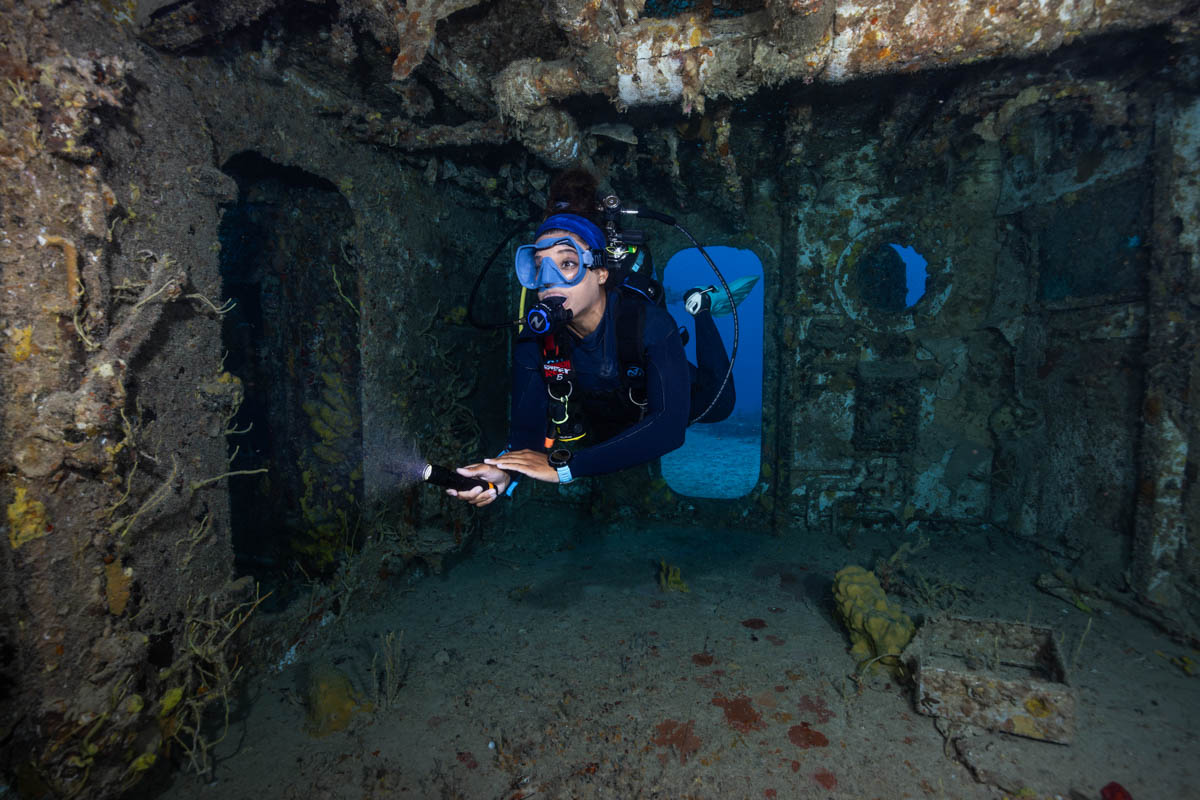
Turning a Dive Computer Into a Buoyancy Instrument
One of the most interesting aspects of the collaboration is the relationship between the equipment and the information available to the diver.
Traditional dive computers provide information including depth, time, decompression status and, where supported, breathing-gas pressure.
Avelo Mode extends this information by providing real-time feedback relating to buoyancy and diver workload on compatible computers.
Cahana describes this as turning the dive computer into a buoyancy instrument, allowing divers to see information that has traditionally been difficult to quantify during a dive.
The potential applications extend beyond the immediate underwater experience.
Avelo Edge and Edge Pro analyse dive performance after surfacing, examining factors such as buoyancy stability, workload and efficiency.
Avelo’s Efficiency Index is intended to give divers a measurable reference for their performance and progression.
For instructors, the company believes this information could provide a more detailed picture of how students are performing underwater, rather than relying solely on direct observation.
Leggatt sees opportunities for more effective coaching and improved post-dive analysis, with data becoming increasingly useful as equipment and training platforms develop together.
However, the effectiveness of these tools in improving training outcomes and diver retention will ultimately need to be assessed through practical experience and independent evidence.
Engineering Challenges and Reliability
Developing the Avelo System required overcoming challenges that differ considerably from those associated with conventional scuba equipment.
Cahana described a lengthy development process involving repeated prototypes and design revisions, complicated by manufacturing and supply difficulties during the COVID-19 pandemic.
Changes to individual components could influence the behaviour of the wider system, making integration a central engineering challenge.
Shearwater brought additional manufacturing and design capabilities to the Jetpack, alongside its experience of electronics operating in demanding underwater environments.
An important distinction is that the Avelo System is not designed to make continuous automatic buoyancy corrections.
Divers establish the appropriate buoyancy and use the electrically powered pump when adjustments are required.
The companies argue that the system’s buoyancy characteristics allow it to remain comparatively stable between those adjustments.
Nevertheless, this remains life-support equipment. Battery operation, equipment inspection, correct weighting and appropriate responses to malfunctions are important parts of its safe use.
Avelo requires divers to complete dedicated training before using the system. Its published user manual sets out equipment preparation, servicing requirements and operating precautions.
Leggatt emphasised the importance of rigorous engineering, diagnostics and serviceability, alongside training that covers equipment behaviour and failure scenarios.
The different operating characteristics of the Avelo System should not be interpreted as eliminating the risks associated with diving or replacing the need for established diving skills.
CE Marking Opens the European Market
The collaboration reached a significant milestone in October 2026 when the Shearwater Jetpack achieved CE marking.
According to Shearwater’s announcement, the certification allows the Jetpack to enter the European market following the applicable conformity assessment.
The company identifies the relevant European personal protective equipment regulation and EN 250 assessment as important elements of that process.
For Avelo, the milestone creates opportunities to develop its network of instructors and participating dive centres across Europe.
Cahana explained that the company’s priorities now extend beyond the hardware itself.
Instructor development, dive centre onboarding and the ability to provide appropriate training and technical support are essential to expanding access to the system.
The companies have also identified professional development activities in Bonaire during November as part of their wider training efforts.
Could Data Change Diver Training?
Both executives believe the long-term significance of the technology could lie in the training environment.
Buoyancy control is fundamental to many diving activities, from maintaining position underwater to avoiding unintended contact with marine habitats.
It is also a skill that requires practice, particularly for newer or infrequent divers.
Cahana believes that reducing the amount of attention devoted to managing equipment could allow divers to concentrate more fully on their surroundings, their buddy and other diving skills.
Leggatt sees a related opportunity in using measurable performance information to help instructors identify areas where students can improve.
These are promising possibilities, but they are not yet proof that the system produces superior outcomes for every diver.
Training quality, diver experience, equipment familiarity and environmental conditions remain important variables.
The more significant development may be the emergence of a diving system in which buoyancy management, instrumentation and training are designed to work together rather than independently.
What Comes Next?
With DEMA Show 2026 approaching, Avelo and Shearwater are continuing to develop their equipment, software and training programmes.
Cahana indicated that the show would provide an opportunity to introduce prospective Avelo Dive Centres to the system and explore analytical tools including Avelo Edge and Edge Pro.
He declined to disclose further announcements ahead of the event.
Leggatt is equally interested in the longer-term possibilities, including lighter equipment, improved integration and potential applications beyond the current recreational diving configuration.
Those developments remain prospective and will require further engineering, training and safety considerations.
For the wider diving industry, the most interesting question is not whether water-based buoyancy will replace every conventional BCD.
It is whether an integrated approach to equipment, data and training can make diving more accessible, more efficient and easier to learn without compromising safety.
Avelo and Shearwater are pursuing one possible answer. How widely that approach is adopted will depend on practical performance, training outcomes, affordability and long-term reliability.
What is already clear is that the partnership represents a different way of thinking about equipment that divers have taken for granted for generations.
