

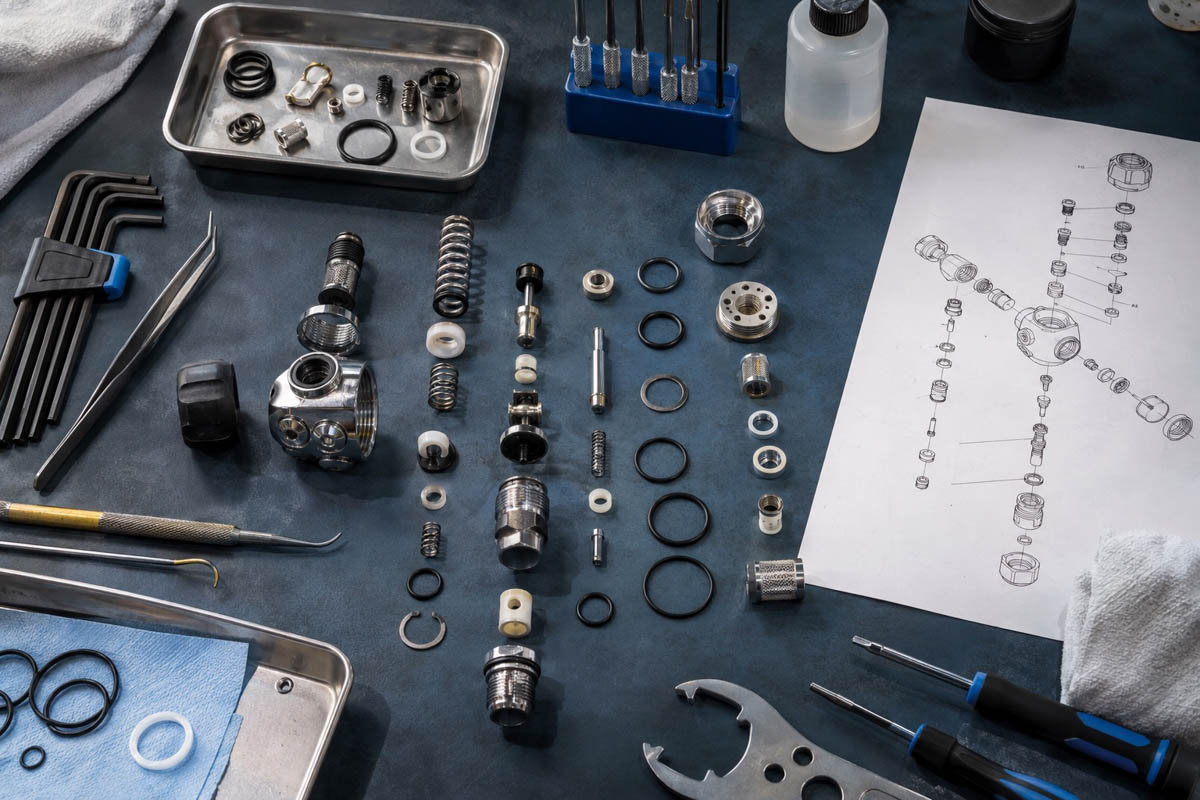
A service kit is an essential starting point. It is not always a complete answer. The regulator itself, its exploded diagram and the condition of every component determine what the technician actually needs.
For many routine overhauls, the correct manufacturer service kit contains the normal replacement items and the work proceeds as expected.
But technicians also encounter another situation: the regulator is open, the scheduled parts have been replaced, and one additional seat, diaphragm, washer, filter, spring or small sealing component prevents the service from being completed.
The Regulator Decides What the Service Requires
A professional technician does not assume that every component requiring replacement will be inside one packet.
The service manual and exploded diagram identify the complete assembly. Disassembly and inspection then reveal wear, corrosion, damage, deformation or previous incorrect assembly that may require parts beyond the standard kit.
This does not mean that service kits are incomplete by definition. Many kits include the critical seats, diaphragms and seals required for their intended service schedule. Others are deliberately limited to selected routine-replacement items.
The important point is simpler: the technician must understand exactly what the kit contains and confirm that the remaining serviceable components are fit for continued use.
A Small Part Can Create a Large Delay
For an individual diver, the result may be an inconvenient delay.
For a dive centre, school or rental operation, it may remove revenue-producing equipment from use during the busiest part of the season. A regulator worth hundreds of euros can remain on the bench because one inexpensive component cannot be obtained.
This is why the true servicing question is not only, “Can I buy the service kit?”
It is also, “Can I obtain the individual component that the inspection shows I need?”
A Practical Example From Regulator Servicing
ScubaGaskets supplies service kits and individual components for a wide range of regulator designs.
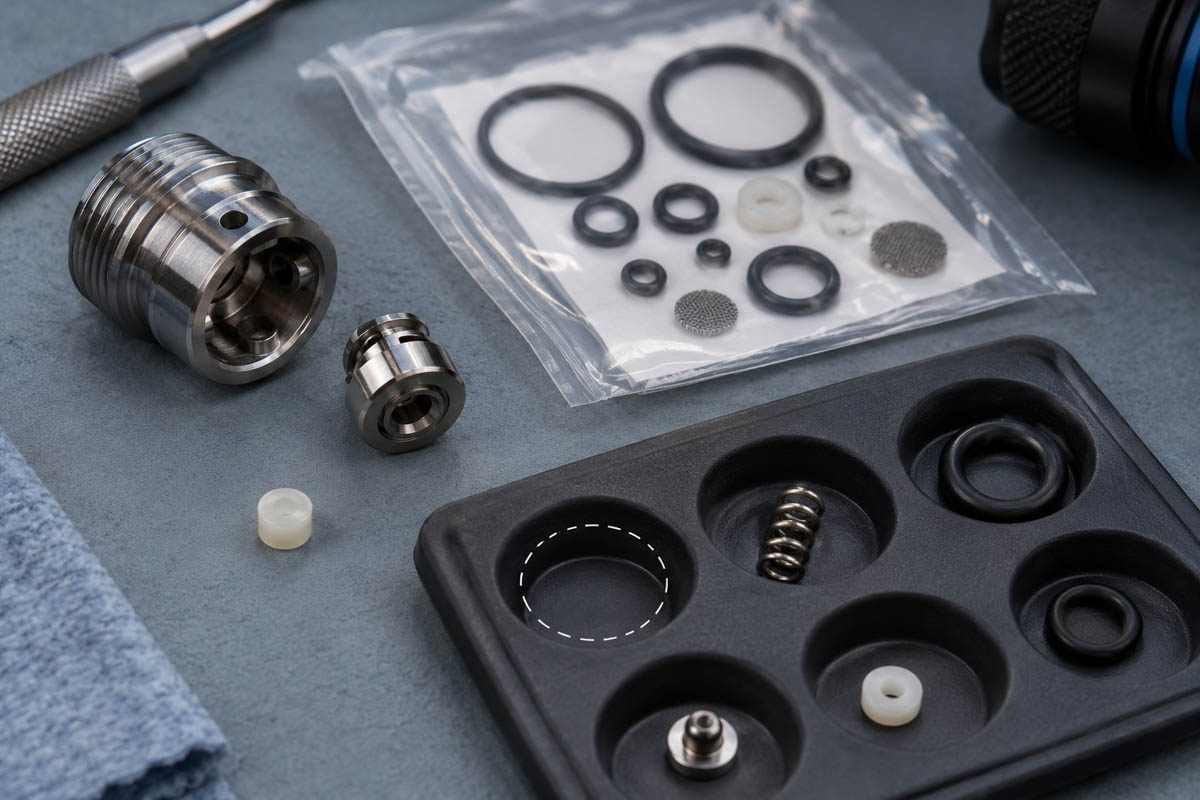
In some applications, however, the high-pressure seat required by the technician is not supplied as a complete new metal-and-polymer assembly inside the scheduled kit. Replacing the entire original assembly can also become difficult when the complete part is unavailable.
The solution developed by ScubaGaskets is to retain the original metal carrier when it remains serviceable and replace the worn polymer centre with a purpose-made replacement HP-seat insert.
This approach addresses the wear surface without unnecessarily discarding the carrier.
It is not a shortcut. The carrier must be inspected carefully, the insert must be correct for the application, and assembly and adjustment must follow the applicable technical procedure.
Regulator servicing is work for trained technicians using suitable tools and test equipment.
Diaphragms Require the Same Discipline
The same principle applies when a first-stage diaphragm is needed but is not supplied in the normal service kit.
ScubaGaskets can supply selected replacement diaphragms separately, allowing the technician to obtain the wear component required to complete the service without depending on the contents of the scheduled kit alone.
Suitability should never be inferred from appearance alone.
Dimensions, material behaviour, seating geometry and the exact regulator application must be verified against reliable technical information. A part that appears similar is not automatically interchangeable, especially in life-support equipment.
Before Opening the Regulator
Technicians should:
- Check the exact regulator model and revision.
- Review the service manual and exploded diagram.
- Confirm the contents of the scheduled service kit.
- Identify additional wear components that may be required.
- Make sure the required individual parts and test equipment are available.
What Years of Supplying Technicians Have Taught Us
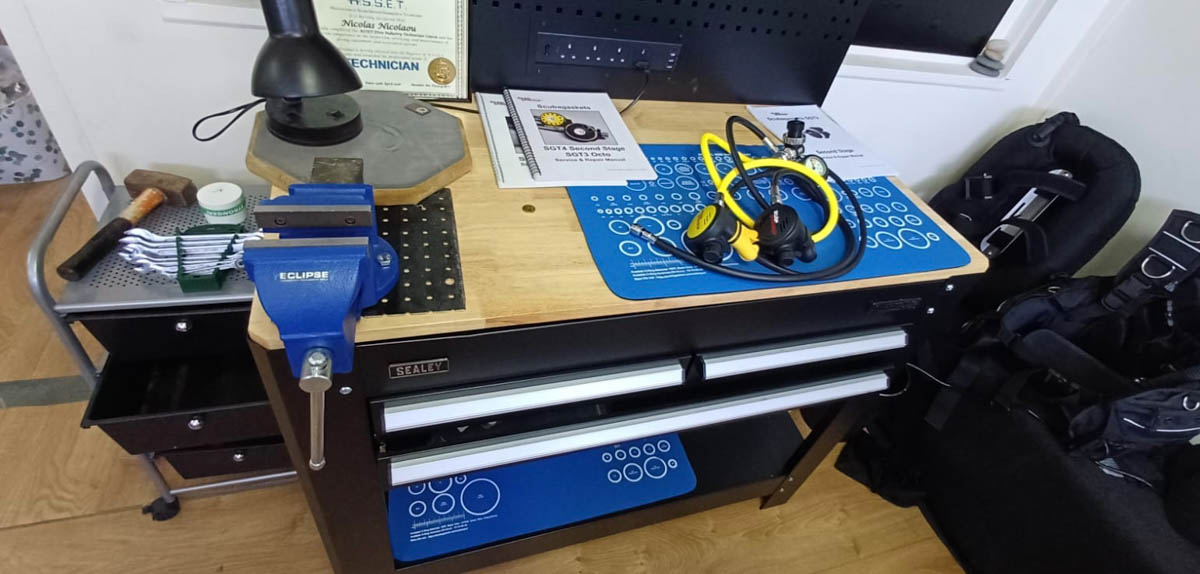
ScubaGaskets does not see only which regulators are sold. Through orders from technicians and service centres around the world, we also see what happens years later when those regulators arrive on the bench.
We see the difficult jobs that cannot be completed by the standard kit alone.
We see serviceable metal components waiting for one replaceable polymer part.
We see technicians searching for diaphragms, seats, filters, washers and O-rings that may cost little but determine whether the complete regulator returns to the water.
That experience has shaped how ScubaGaskets thinks about equipment support.
Selling a component is useful only when the technician can identify it correctly, obtain it when needed and use it within a documented servicing procedure.
The Lesson Is Larger Than the Service Kit
A regulator is not supported by one packet.
It is supported by technical information, individual-part availability, competent servicing and a supplier prepared to help after the original sale.
Those are the details that determine whether good equipment continues working or ends up on a shelf.
The science of scuba O-rings. Keeping you underwater longer.
More about that soon.