




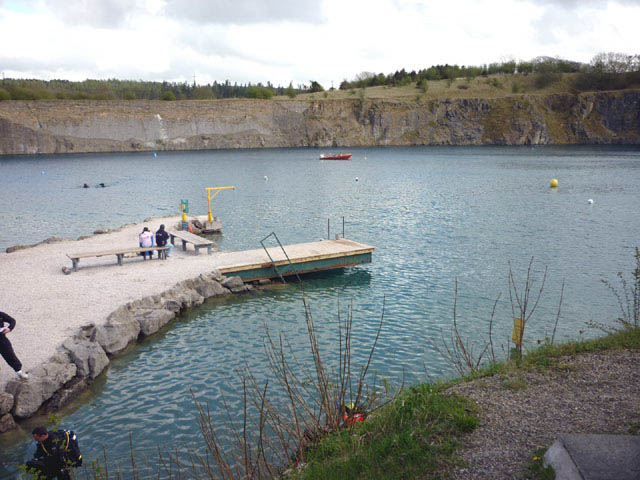

A coroner at Preston Coroner’s Court has examined the death of a recreational diver following an incident at Capernwray Diving Centre, with evidence presented suggesting that immersion pulmonary oedema, or IPO, was the most likely physiological trigger behind a fatal chain of events.
The inquest, reported by LancsLive, heard how 52-year-old Mark Powell from Cumbria died after a training dive at the inland site, also known as Jackdaw Quarry, on 3 May 2025.
A Routine Training Dive That Escalated at the Surface
According to evidence presented in court, the dive itself was uneventful until the final phase of the ascent.
Witnesses described how Powell showed signs of difficulty as he approached the surface and accepted an alternate air source from his instructor. After surfacing, he was initially responsive, but his condition deteriorated rapidly.
The inquest heard that he began calling for help and displaying signs of acute distress. Witness accounts described sudden, uncontrolled movements at the surface, consistent with a diver struggling to breathe.
Despite rapid intervention, Powell submerged again and was recovered shortly afterwards. Attempts at resuscitation were unsuccessful.
Coroner: IPO “Most Likely Event” Behind Loss of Control
The coroner, Kate Bisset, recorded a conclusion of death by drowning.
However, the court heard medical evidence indicating that immersion pulmonary oedema, a condition in which fluid enters the lungs during a dive, was the most likely underlying cause that led to the loss of breathing control.
The coroner stated that the sequence of events described by witnesses was consistent with IPO, noting that the condition can cause sudden breathlessness, confusion, and an inability to maintain normal breathing, even at the surface.
Importantly, the conclusion stopped short of definitively proving IPO, instead framing it as the most plausible explanation based on the available evidence.
Why This Case Matters for Divers
Immersion pulmonary oedema remains one of the least understood and most under-recognised risks in diving.
Unlike many diving incidents, IPO can:
- Occur without warning
- Worsen during ascent or immediately after surfacing
- Be mistaken for equipment failure or panic
- Lead to rapid incapacitation
Because IPO symptoms can resemble panic or stress responses, incidents are sometimes misinterpreted, particularly when based solely on witness observations.
The Preston inquest highlights a critical point for the diving community: what appears to be panic at the surface may, in some cases, be the visible result of a serious physiological event.
A Measured Conclusion, and an Ongoing Question
The inquest’s conclusion reflects the limits of current understanding.
While drowning was formally recorded as the cause of death, the evidence pointed strongly towards IPO as the initiating factor. As with many similar cases, definitive confirmation remains difficult.
For divers, instructors, and training organisations, the case reinforces the importance of recognising unusual breathing distress, particularly at or near the surface, and treating it as a potential medical emergency rather than a behavioural issue.
The Bigger Picture
As awareness of IPO continues to grow, cases like this are shaping how the diving community understands risk.
They also underline a broader shift in diving safety thinking, where not all incidents fit neatly into traditional categories such as equipment failure, procedural error, or panic.
In some situations, the cause may lie deeper, within the body itself, and recognising that distinction can be the difference between confusion and clarity when seconds matter most.
Comments