



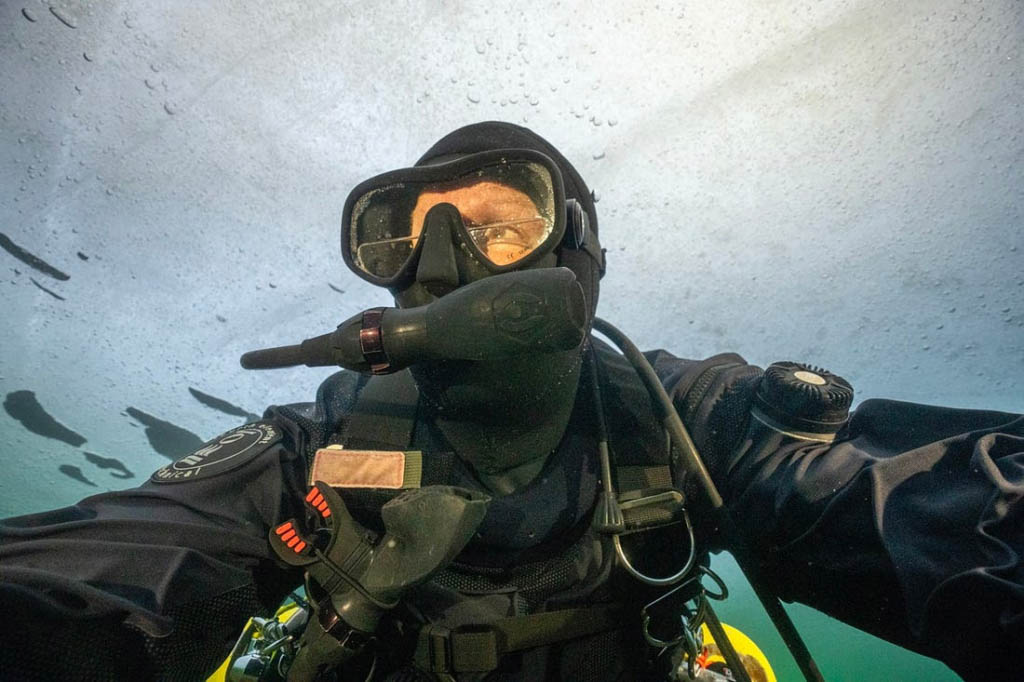

Staying Warm for Winter Dives
If you’re diving in a drysuit, staying warm starts with wearing the right layers. Think of it like getting dressed for winter; each layer has a job to do, and together they keep you comfortable underwater.

Here’s the simple three-layer system:

• Base layer: This sits next to your skin and is often made of polyester or polypropylene. Its main job is to move sweat away from your body so you don’t get chilled by damp fabric. Fourth Element J2 undergarments (Confession: I am supported by the brand, but am a true believer) are the gold standard in this category, and Patagonia Capilene base layer garments are a good choice, too. Just never choose cotton for the layers closest to your skin.
• Insulating layer: This is where the warmth comes from. Materials like merino wool, fleece, or microfibre trap heat and keep it close to your body. Specially engineered garments made with Aerogel, such as the Fourth Element Halo AR, offer phenomenal insulation properties in a thinner, less buoyant undersuit. The wind- and water-repellent stretch outer layer is also useful, since you may be standing in the elements with your dry suit open to the waist. Remember that technical undergarments should provide warmth even if your suit is flooded. This is one of the reasons to invest in comfort and safety.

• Shell (your drysuit): The suit itself creates a layer of air around you, which helps slow heat loss further and protects you from the cold water. Ensure it is large enough to accommodate your layered undergarments plus room for movement and insulating air. Neoprene offers the best insulation, but it will require a lot of weight to sink. Technical laminated drysuits are the norm today in most situations, and they are lighter weight for travel.
The thickness of your insulation depends on a few things: how cold the water is, how easily you get cold, and how active you expect to be during the dive. A relaxed drift dive or scooter run, and a hard-working wreck dive may call for different setups, even in the same water temperature. Remember, a tight drysuit (“cave-cut”) that crushes your undergarment will not be as warm as one with more room for air.
Some divers choose electrically heated vests or undergarments for extra comfort, especially on long or cold dives. These can be great, but they need to be used thoughtfully. First, never use an electrical device that was not purpose-built and tested for diving. Electrocution and burns have been recorded in divers who used motorcycle thermal gear underwater.
But the greatest safety risk comes from how you use your heating system. Warming yourself too much during the deep or bottom part of the dive can increase inert gas uptake and may raise the risk of decompression sickness, especially if you get cold on ascent, as can occur with a battery failure. A warm dive must be followed by a warm deco. A warm dive followed by cold deco is dangerous.
A safer approach is to keep heated gear off or on the lowest setting during descent and the bottom phase, then turn it up a bit during ascent and safety or decompression stops. That way, you stay comfortable while also helping your body off-gas more efficiently, without overheating any one area. The best approach to using artificial heating is to select a setting that provides comfort without making the heat noticeable.
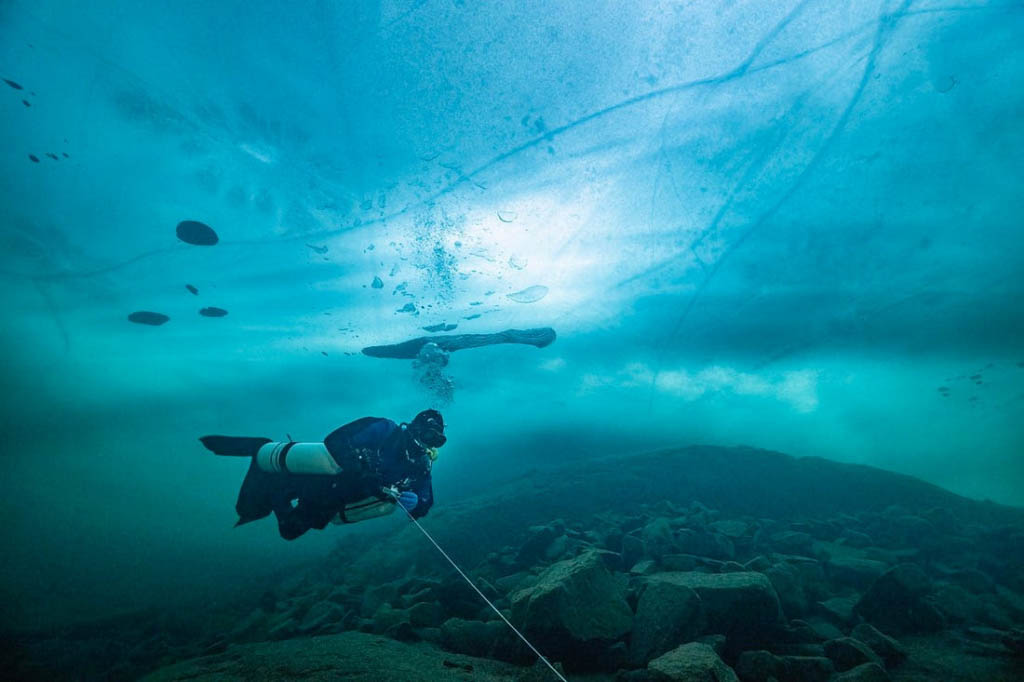
Bottom line: dress smart, plan for the conditions, and use heated gear as a comfort boost, not a replacement for proper insulation.
Other quick tips:
• Place sheepwool insoles in your dry suit boots if you will be standing around on the ice.
• Tuck an extra beanie and light gloves in your drysuit bibs so they will be warm and accessible as soon as you peel out of your suit. Ensure these are extras, since they will get wet.
• Dry everything thoroughly before the next day of diving. Get a strong, battery-operated fan to place inside your suit overnight, or use a boot-drying fan system. I use a Dewalt shop fan powered by my Blacktip scooter batteries that don’t get used much in winter in Canada.
• If you are using artificial heat, plan your dive and undergarments to account for the fact that your system may fail.
• Use a changing poncho if you will be out in the elements while undressing after the dive.
• Use pull-on, waterproof, winter boots for easier dressing and undressing after the dive. Bring along extra socks in case yours get damp during the dive.
Comments