



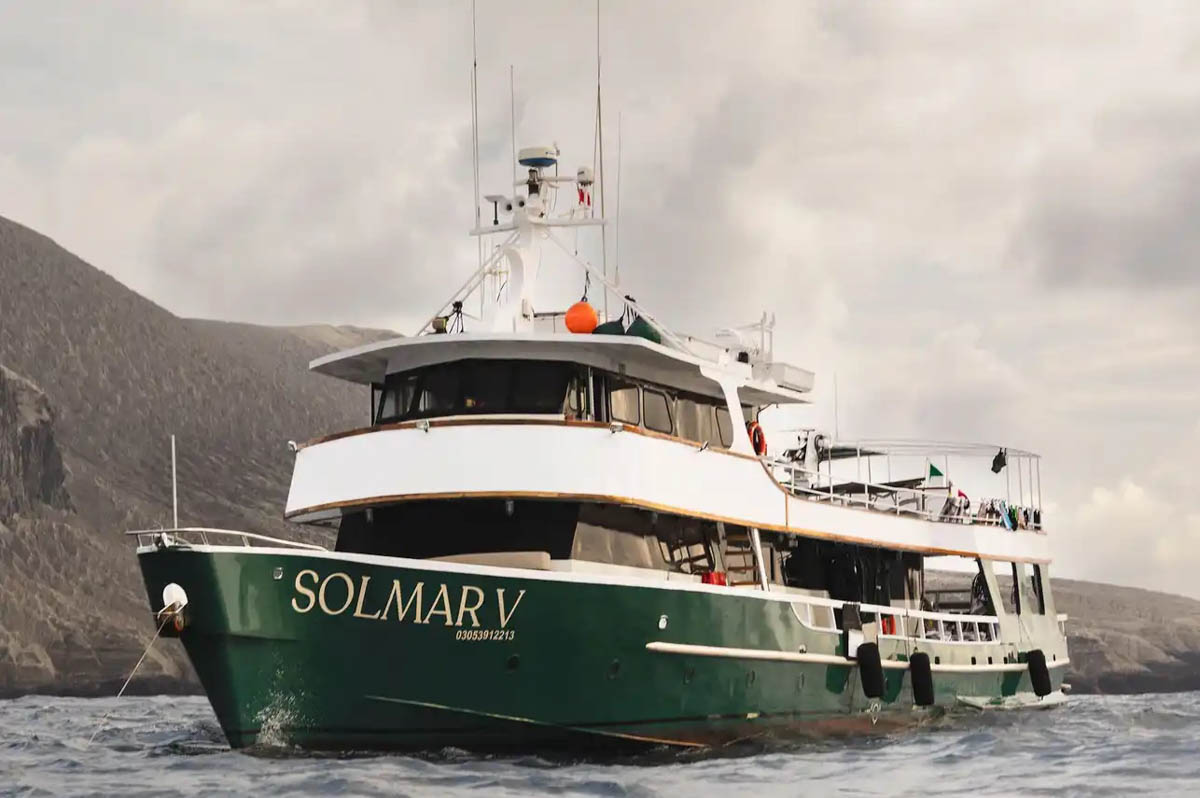

When news breaks that a liveaboard operation has abruptly ceased trading, the immediate facts are often limited. What fills the gap, and spreads fastest, are the voices of divers themselves. In the aftermath of a recent liveaboard shutdown reported elsewhere, social media platforms and diver forums have become an informal record of what happens when a dive holiday collapses with little warning.
On Reddit’s r/scuba community, multiple divers describe last-minute cancellations, unanswered emails, and payments that appear unlikely to be recovered, with one widely shared thread titled “Solmar V Socorro, scam or incident?” drawing dozens of first-hand accounts from affected customers and observers familiar with the vessel’s recent operations. Posters describe being informed of cancellations shortly before departure, after flights and accommodation had already been booked, leaving them scrambling for alternatives or facing substantial losses.
Similar warnings have appeared in specialist underwater photography communities, where divers caution others against booking after experiencing abrupt cancellations and prolonged silence from the operator, as documented in a WaterPixels forum discussion warning of refund issues and operational uncertainty surrounding the vessel’s future. Those community posts, written by repeat liveaboard guests rather than casual travellers, add weight to claims that problems had been building for some time rather than emerging overnight.

Public review platforms echo the same pattern. On a long-running TripAdvisor listing for the vessel, recent traveller reviews include reports of trips cancelled without refunds, with at least one diver stating they eventually recovered funds only after initiating a credit card dispute, as noted in a review on TripAdvisor’s Solmar V page. While reviews alone cannot confirm the financial status of an operator, they do provide a timestamped trail of consumer experiences that align closely with accounts shared elsewhere online.
What makes these social media and forum reactions particularly instructive is not just the volume of complaints, but how familiar the story sounds to experienced divers. Many posters point out that liveaboards operate on thin margins, rely heavily on advance payments, and often lack the consumer protections travellers assume are standard. Once a vessel stops operating, divers frequently discover that deposits are unsecured, insurance exclusions apply, and booking agents may have limited ability to intervene.
The discussion threads also reveal how information asymmetry works against customers. Several divers note that bookings were still being accepted close to scheduled departure dates, with no public indication of financial trouble. By the time cancellations were announced, flights were non-refundable and alternative trips were either unavailable or unaffordable at short notice.
For the wider dive community, this episode has reignited debate about how to reduce risk when booking liveaboard travel. Reddit contributors repeatedly recommend paying by credit card rather than bank transfer, avoiding unusually large upfront payments, and being cautious when communication from an operator becomes inconsistent. Others stress the importance of recognising that even well-known boats can change ownership or management quickly, altering their financial stability without obvious external signs.
Taken together, the social media fallout paints a picture that extends beyond a single failed operation. It highlights a structural vulnerability in liveaboard travel that leaves divers exposed when things go wrong, often with little recourse beyond public warnings and chargeback disputes. For an industry built on trust, reputation, and long-planned journeys to remote destinations, that is a lesson many divers say they are learning the hard way.
Comments