



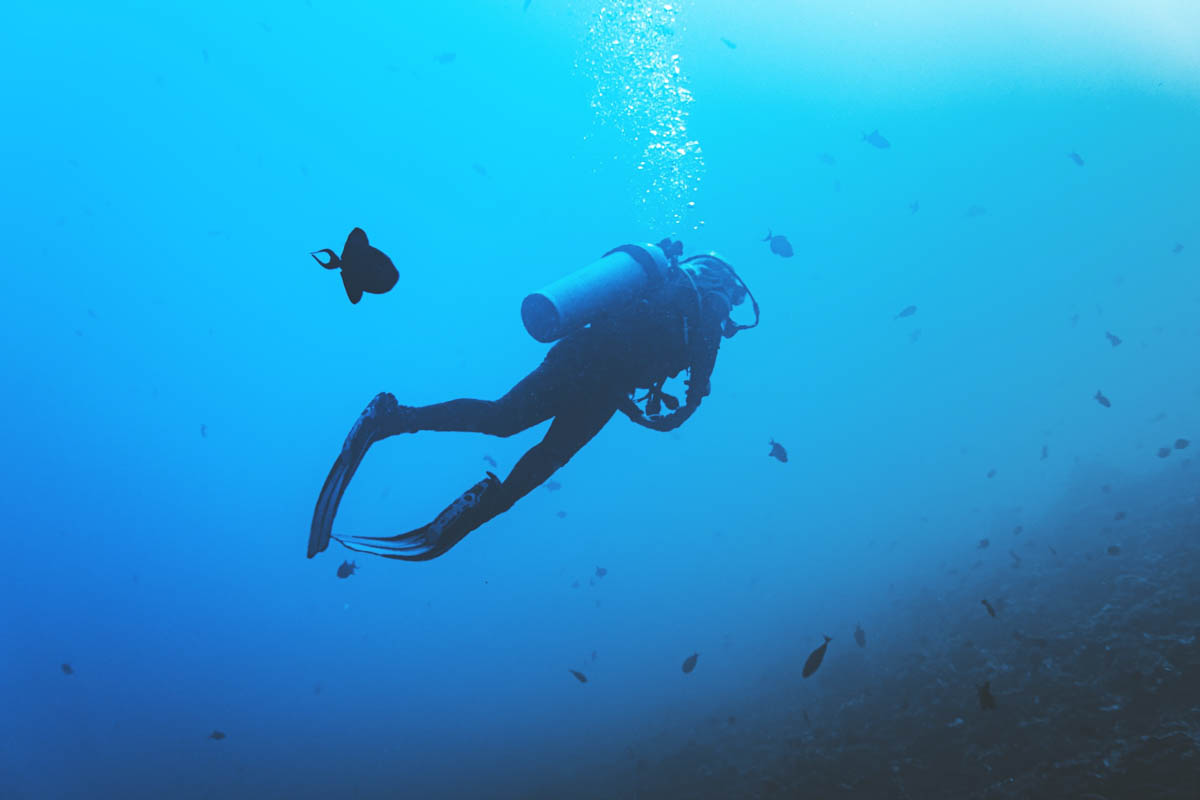

For some scuba divers, the world beneath the surface is a collection of unforgettable memories, each dive site a unique story to be told. Yet for others, it is a map with uncharted pins waiting to be marked, a quest that never ends. These are the divers who rarely, if ever, return to the same place twice. Their reasons are as diverse as the dive sites themselves, spanning psychology, curiosity, and a deep desire for discovery.
The Explorer’s Mindset
Scuba diving is, at its core, an act of exploration. Each descent reveals a new world of coral formations, marine life interactions, and environmental conditions that change daily. For divers who thrive on novelty, the idea of repetition can feel like stagnation. They are driven by what psychologists call the explorer’s trait, a personality dimension linked to openness to experience.
According to a study published in Frontiers in Psychology, individuals high in exploratory traits tend to seek new sensory experiences and derive greater satisfaction from novelty and unpredictability. In diving, that can manifest as a compulsion to “collect” dive sites rather than revisit them.
These divers see the ocean as a lifetime of new encounters waiting to be uncovered, one dive at a time.
Chasing Diversity Beneath the Waves
The underwater world is incredibly varied, and the differences between one dive and another can be profound. A diver who has explored Indonesia’s macro-rich muck sites might next crave the wide-angle majesty of the Red Sea’s coral walls or the haunting wrecks of Truk Lagoon.
“The sea never looks the same twice,” says marine biologist and instructor Dr. Emily Varga. “But for many divers, what’s addictive is the contrast, the ability to see how life, colour, and conditions shift across continents and oceans. Each site is its own ecosystem, its own culture.”
Platforms such as LiveAboard.com and Divebooker make it easier than ever to turn that hunger for diversity into action, connecting divers with trips that span the globe. Some even plan “round-the-world dive itineraries,” crossing regions seasonally to match migration patterns, visibility windows, or bucket-list conditions.
The Collector’s Spirit
For some divers, the drive is not purely about new experiences but about achievement. The idea of “collecting dives” becomes a personal challenge. Similar to mountaineers who aim to conquer the Seven Summits, these divers might aspire to tick off the “Top 100 Dives” listed in the PADI Bucket List of Dive Destinations.
Each new site logged becomes part of a growing personal archive, a record of exploration, proof of experience, and a way to keep motivation alive. Dive computers and digital logs such as Shearwater Cloud or Garmin Dive apps have made this easier than ever.
Avoiding the Trap of Comparison
However, not all reasons for avoiding repeat dives are about discovery. Some divers consciously avoid returning to a site that left a strong impression because they fear it might not live up to the memory.
A perfect dive, calm seas, excellent visibility, and a rare marine encounter, can set an impossible standard. Revisiting the same location later might mean dealing with lower visibility, damaged coral, or missing marine life due to seasonal changes. For these divers, preserving the memory untarnished is worth more than the risk of disappointment.
“It’s like not rereading your favourite book,” says underwater photographer James Silvers. “The first experience was magic. I don’t want to see it again under a different light and ruin that moment.”
Environmental Change and Ethical Motivation
There is also an ecological perspective. As marine tourism continues to grow, divers are becoming more aware of the environmental footprint of their travels. Some consciously choose not to return to the same site out of respect for sustainability, preferring to spread their diving across different regions rather than concentrate impact on one reef system.
Initiatives such as Green Fins and the Reef-World Foundation encourage divers and operators to rotate sites, giving coral ecosystems time to recover from traffic and physical disturbance.
Moreover, coral bleaching, overfishing, and climate change can drastically alter familiar locations. Divers returning after several years may find a reef transformed or tragically diminished. For some, that heartbreak becomes motivation to keep moving forward, exploring healthier reefs or joining conservation-based expeditions where their impact can be positive.
The Paradox of Novelty
Ironically, the divers who never return to the same site often experience a deeper connection to the global ocean as a whole. Instead of becoming attached to one place, they form an intimate relationship with change itself, the knowledge that the ocean is alive, evolving, and endlessly varied.
Every descent, even in unfamiliar water, offers a sense of belonging to something vast and interconnected. As famed oceanographer Sylvia Earle once said, “No water is ever truly foreign. The ocean connects us all.”
When Returning Becomes Rediscovery
Still, even the most restless explorers sometimes find themselves drawn back to a site that once moved them. When they do, it is rarely about repetition but about rediscovery. A reef visited five years later may have regrown. A wreck might now host a new colony of corals. A once-timid turtle may have become the local star.
Returning, in that sense, does not erase adventure; it reframes it. The same site can tell a different story each time, if the diver is willing to listen.
In the end, whether we dive the same site a hundred times or never twice, the ocean remains our shared frontier.
Some divers crave familiarity, while others crave discovery. But all are united by curiosity, awe, and the quiet thrill of descending into the unknown.
Comments