


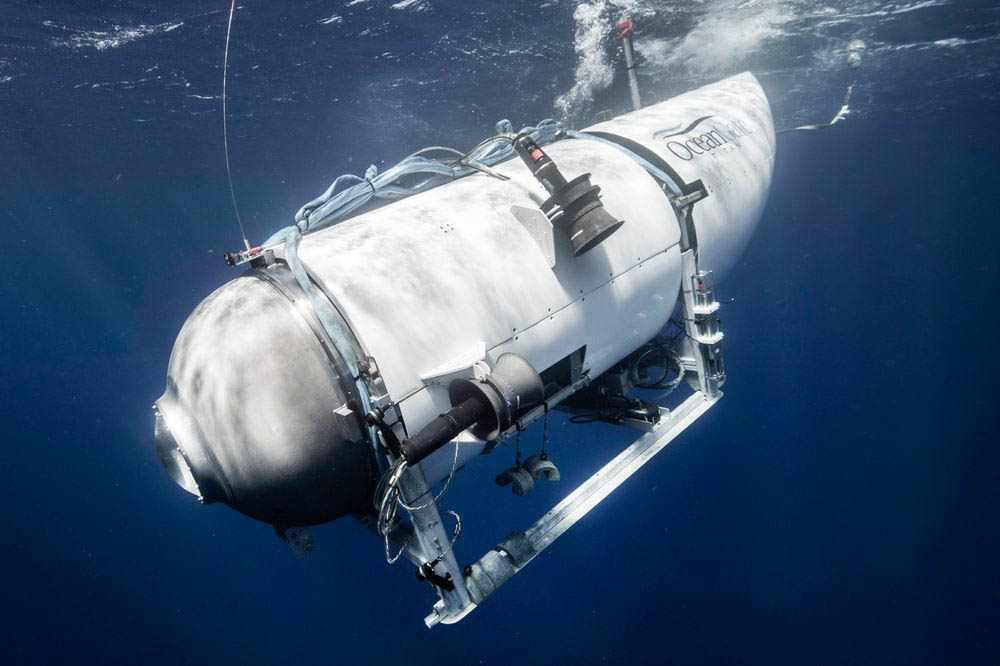
A newly released National Transportation Safety Board (NTSB) report has shed new light on the 2023 Titan submersible disaster, confirming that the vessel’s carbon-fiber pressure hull had suffered progressive delamination and weakening long before its fatal dive.
According to investigators, the structural damage began after dive 80 and worsened following dive 82, setting the stage for a catastrophic buckling failure during the dive that claimed five lives on June 18, 2023. The report concludes that OceanGate’s engineering process was inadequate, producing a submersible that “contained multiple anomalies and failed to meet necessary strength and durability requirements.”
The NTSB found that Titan’s carbon-fiber composite pressure vessel was never properly tested to determine its true strength under repeated load cycles. The company, the report states, “was unaware of the pressure vessel’s actual strength and durability,” and failed to recognize how handling, towing, and environmental conditions could further weaken the structure.
Perhaps most tellingly, investigators noted that OceanGate’s internal monitoring systems were misinterpreted, leading to a critical missed warning. The NTSB concluded that the company “was unaware that the Titan was damaged and needed to be immediately removed from service after dive 80,” a lapse that likely sealed the vessel’s fate.
Beyond technical failings, the report points to regulatory gaps that allowed Titan to operate outside conventional safety frameworks. Existing U.S. and international standards for pressure vessels, it found, are not adequately tailored to experimental submersibles. The Board recommended that the U.S. Coast Guard convene a panel of experts to review current practices and consider enforceable regulations for human-occupied underwater vehicles.
In defining the probable cause, the NTSB cited “OceanGate’s inadequate engineering process,” which led to the operation of a compromised vessel. Contributing factors included weak oversight, incomplete testing, and the absence of a formal certification pathway for innovative designs like Titan.
This latest report deepens the picture first outlined by the U.S. Coast Guard’s Marine Board of Investigation, which earlier concluded that OceanGate’s culture and disregard for established safety practices played a decisive role in the tragedy. Together, the two investigations form a sobering record of how innovation, when untethered from proper engineering discipline, can lead to devastating consequences beneath the sea.
