

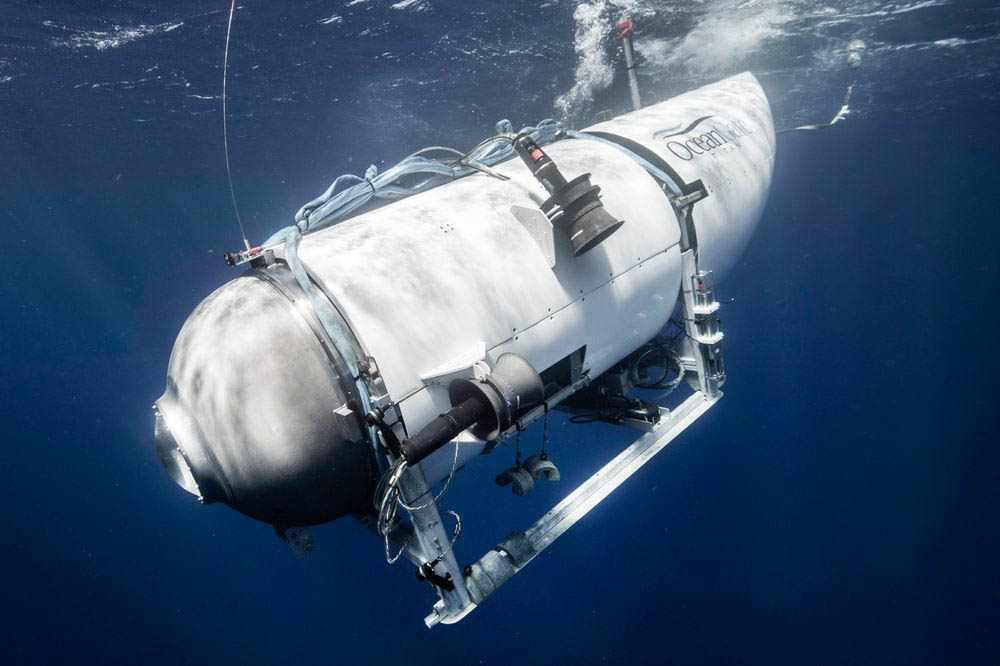

A damning report released Tuesday by the U.S. Coast Guard Marine Board of Investigation has concluded that the 2023 implosion of the Titan submersible, which killed all five people aboard, was “preventable.” The 300+ page Report of Investigation (ROI) details how OceanGate Expeditions’ decisions, internal culture, and disregard for known safety issues directly contributed to the fatal dive to the Titanic wreck site.
According to the Marine Board, the tragedy stemmed from OceanGate’s inadequate sub design, failure to certify or properly maintain the vessel, and its refusal to act on critical safety data gathered during earlier expeditions. The investigation also highlighted systemic issues with industry oversight and regulatory frameworks that allowed a high-risk operation like Titan’s to proceed largely unchecked.
“This marine casualty and the loss of five lives was preventable,” said Capt. Jason Neubauer, Chair of the Titan Marine Board of Investigation. “There is a need for stronger oversight… while still providing a pathway for innovation.”
Key Failures Identified
The report identifies several critical shortcomings by OceanGate:

- Inadequate Design and Certification: The Titan submersible was not built or tested to recognized standards for deep-sea vessels, nor did it undergo third-party certification.
- Ignored Safety Warnings: After its 2022 Titanic expedition, the Titan‘s hull monitoring system generated data indicating potential structural anomalies. OceanGate failed to analyze or act on these warnings before launching its 2023 dive.
- Lack of Maintenance and Storage: No preventative maintenance was carried out before the 2023 dive, and the sub was improperly stored during the off-season.
- Toxic Workplace Culture: Investigators described OceanGate’s internal environment as one where dissent was discouraged and safety concerns were dismissed.
- Regulatory Gaps: The report criticizes both domestic and international frameworks for allowing novel submersibles like Titan to operate without sufficient oversight or clear legal requirements.
- Ineffective Whistleblower Protection: The board found the U.S. Seaman’s Protection Act failed to adequately protect or respond to staff who tried to raise concerns.
Safety Recommendations
The Marine Board issued 17 safety recommendations to address these failures, including:
- Expanded Regulation of Submersibles: Calling for all U.S. submersibles conducting commercial or scientific dives to require Coast Guard documentation.
- Redefining Vessel Classifications: Recommending the end of “Oceanographic Research Vessel” loopholes for deep-diving submersibles.
- Mandatory Dive and Emergency Plans: Operators should submit detailed dive and rescue plans to the local Coast Guard inspection office.
- Improved Whistleblower Protocols: A new agreement between the Coast Guard and OSHA is proposed to better protect and investigate whistleblower claims.
- Stronger International Standards: Urging collaboration with the International Maritime Organization to define and regulate passenger submersibles operating in international waters.
What Happens Next?
The report is now under review by the Commandant of the Coast Guard, who will determine which recommendations will be implemented through a Final Action Memorandum.
The Titan tragedy captured global attention in June 2023 when communications were lost during a dive to the Titanic wreck site. The submersible’s catastrophic implosion was later confirmed following an extensive multi-agency search effort.
The Marine Board’s report casts the clearest light yet on how a combination of corporate negligence and regulatory gaps set the stage for one of the most high-profile underwater disasters in recent memory.
Read the full Marine Board Report of Investigation here
Comments