


In a country famed for desert dunes, ancient temples and Bedouin skies, Jordan’s slender coastline offers a striking contrast. Beneath the warm waters of the Red Sea lies a vibrant, easily accessible underwater world that few divers truly know. For those who explore it, diving in Jordan becomes an experience that rivals the country’s most iconic landmarks.
A Coastline That Captivates
Jordan’s Red Sea coastline may stretch for only about 27 kilometres, but it delivers an impressive concentration of marine diversity. Within this narrow strip lies the Aqaba Marine Reserve, a protected area where fringing reefs begin just metres from shore and drop into a network of coral gardens, walls and canyons. The reserve shelters around 300 species of hard and soft coral and more than 500 species of fish.
Unlike other Red Sea destinations where long boat rides are common, many of Aqaba’s dive sites are just minutes away. According to Aqaba Diving, several reefs can be explored directly from the beach, allowing divers to spend more time underwater and less time travelling.
Getting There
International visitors typically arrive via Queen Alia International Airport in Amman, followed by a scenic 4-hour drive through the desert to Aqaba. Direct flights and seasonal charters also operate to King Hussein International Airport, located just outside the city. Regional travellers can reach Aqaba by crossing from Eilat, Israel, or by ferry from Taba, Egypt, though these options require pre-planning.
Once in Aqaba, dive centres are conveniently clustered along the coast. Well-established operations such as the Red Sea Dive Center and Coral Garden Diving Center provide equipment rental, training, guided dives and packages catering to all experience levels.

Photo by Juanma Clemente-Alloza on Unsplash
What to Expect Underwater
Conditions and Visibility
The Gulf of Aqaba is renowned for calm conditions, light currents and excellent visibility, often exceeding 20 metres. According to PADI, water temperatures range from around 20°C in winter to 27°C in late summer, making diving comfortable year-round. The clear desert climate keeps the water consistently transparent, with ideal conditions in spring and autumn.
Marine Life and Signature Sites
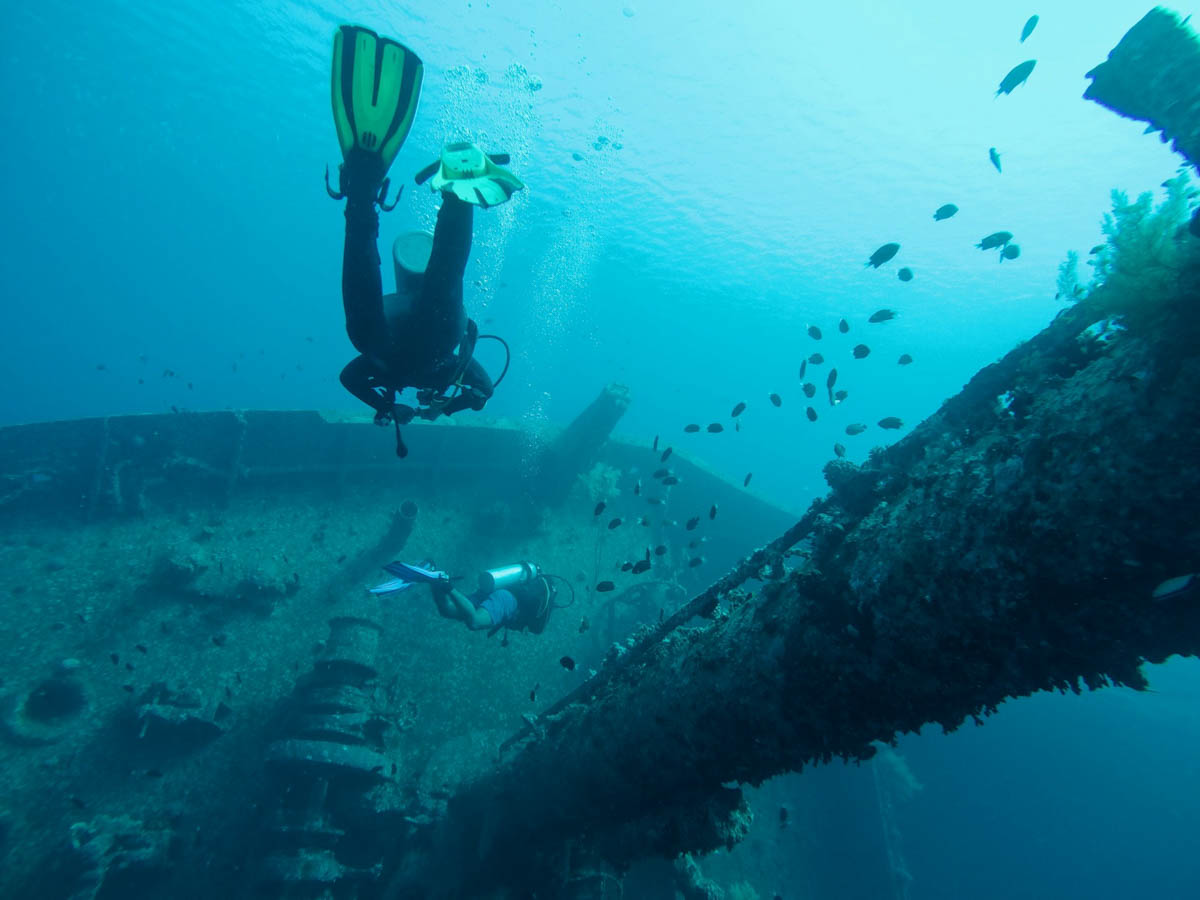
Aqaba’s reefs are home to hawksbill turtles, eagle rays, moray eels and a kaleidoscope of reef fish. Among its standout dive sites are Cedar Pride, Japanese Garden, Seven Sisters & The Tank, and the TriStar plane wreck, each offering a unique mix of coral and structure. The famous Cedar Pride wreck, a 74-metre freighter intentionally sunk in 1985, now sits gracefully between two reefs, carpeted in coral and teeming with life.
Artificial reefs, including sunken tanks, aircraft and vehicles, add a fascinating layer of exploration. As noted by Cat is Out of the Office, the diversity of wrecks and coral gardens makes Aqaba one of the Red Sea’s most photogenic dive destinations.
Night diving is possible with coordination through local operators and the authorities, and the calm waters make Aqaba a favourite for underwater photographers and new divers.
Dive Styles and Variety
From gentle reef slopes to steep drop-offs and swim-throughs, Aqaba caters to all dive preferences. According to Aqaba Diving, many sites begin just 100 metres from the shoreline yet descend well beyond recreational limits, offering flexibility for both beginners and experienced divers. Most dive itineraries feature two morning dives, often with a relaxed lunch interval onshore or aboard the boat.
Photo by Dilip Poddar on Unsplash
Why Jordan Stands Out
1. Fewer Crowds, Healthier Reefs
Aqaba remains one of the quieter corners of the Red Sea. The limited coastline and strict protection measures within the Aqaba Marine Reserve ensure lighter diver traffic and healthier coral growth compared to busier destinations.
2. Effortless Logistics
With compact geography and short travel times to dive sites, logistics are straightforward. Most operators are within minutes of the main hotels, allowing visitors to focus on diving rather than transportation.
3. Exceptional Value
Diving in Jordan is competitively priced. As highlighted by Cat is Out of the Office, shore diving reduces costs, and many centres offer multi-dive discounts and accommodation packages.
4. World-Class Surroundings
Aqaba’s coastal beauty pairs easily with Jordan’s inland wonders. Divers can explore coral reefs in the morning and travel to Petra or Wadi Rum in the afternoon. The contrast of desert, canyon and reef makes the destination unique in the diving world.
5. Conservation Commitment
Marine protection is central to Aqaba’s diving philosophy. Local authorities and dive operators collaborate to preserve coral ecosystems through eco-diving programs, controlled mooring systems and sustainable tourism practices promoted by PADI.
Tips for Planning Your Dive Trip
- Reserve wreck and night dives early, as permits may be required.
- Book gear or training slots ahead during peak seasons.
- Plan for multi-dive days to make the most of Aqaba’s compact reef layout.
- Explore the surrounding desert between dive sessions for a balanced itinerary.
- Support eco-certified operators to help protect Jordan’s growing marine reserves.
A Destination That Delivers Depth and Contrast
Diving in Jordan offers something rare: vibrant reefs, accessible wrecks and serene conditions, all within a short reach of world-famous desert landscapes. The mix of adventure, tranquillity and culture creates an experience that few destinations can match. Beneath the surface of Aqaba, Jordan reveals a side of the Red Sea that is intimate, unspoiled and unforgettable.
