


An in-depth account of the Viking Sky cruise ship emergency and the dramatic evacuation. Amid a violent storm, a cruise liner with more than 1,000 people on board suffers a critical power failure. With its engines down, the vessel is battered by massive waves—one of which smashes through the windows, sending freezing seawater pouring onto the decks.
Drifting dangerously close to the rocky Norwegian coastline, the Viking Sky teeters on the edge of disaster. The captain issues a mayday call, prompting an urgent response from rescue teams bracing for a tragedy that could rival historic maritime disasters.
This is a gripping story of near-catastrophe—one marked by alarming lapses and the narrow avoidance of what could have been a devastating outcome at sea.
The MV Viking Sky is a cruise ship operated by Viking Ocean Cruises, launched in 2016 and beginning service in 2017. On March 23, 2019, the vessel experienced an engine failure near the Norwegian coast, prompting a partial evacuation by helicopter.
The Viking Sky features 465 guest cabins, all of which are exterior-facing and include private balconies. Onboard amenities include two swimming pools, a spa, a fitness center, multiple dining venues, lounges and bars, a sports deck, a theater, and a selection of retail shops.
The ship uses a modern diesel-electric propulsion system, common among contemporary cruise liners. This setup includes an integrated power plant that supplies electricity for all onboard operations, from the twin propellers to hotel services like lighting, air conditioning, and cabin power outlets. Power is distributed through two separate but connected high-voltage switchboards, which receive electricity from four alternators powered by MAN 32/44CR medium-speed diesel engines.
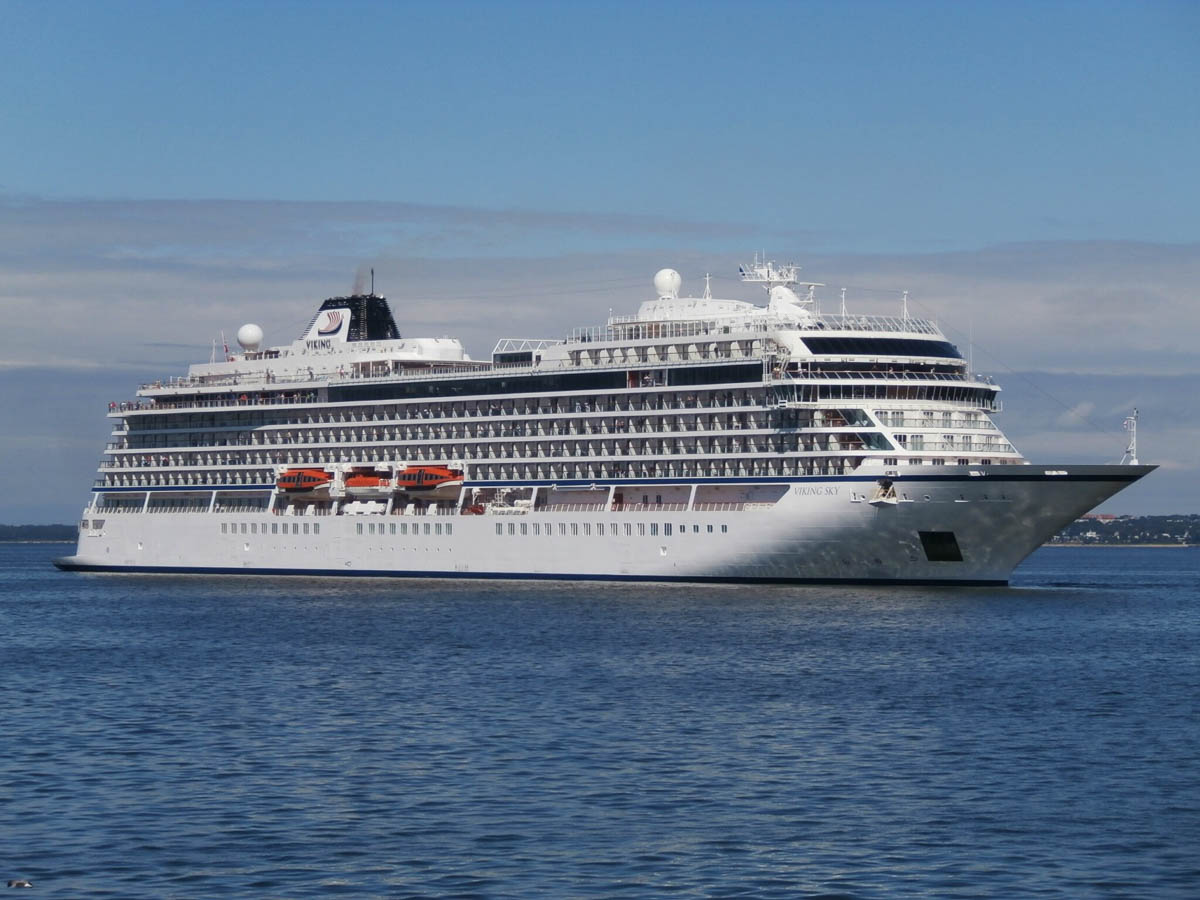

On March 23, 2019, the Viking Sky cruise ship was sailing southwest from Tromsø to Stavanger, Norway, when it encountered severe weather, including strong winds and waves reaching up to 15 meters (49 feet) high. Despite the rough conditions, onboard pilots reported that the weather remained within the ship’s operational limits. At the time, there were 1,373 people aboard—915 passengers and 458 crew members.
At approximately 13:50, while navigating the Hustadvika region between Molde and Kristiansund, the vessel suffered a sudden loss of engine power due to low oil pressure. This triggered an automatic shutdown of all engines, causing the ship to drift dangerously toward the coastline. Alarm systems designed to detect low lubricant levels failed to activate, and since engines can only operate briefly without oil before sustaining damage, the situation quickly escalated. Rescue boats attempting to assist had to turn back due to the rough sea conditions, while tugboats struggled to secure towlines. Anchors were deployed to slow the drift, though with limited success.
Norwegian authorities dispatched six of the country’s fourteen rescue helicopters to the scene. While the crew eventually managed to restart one engine, evacuations by air continued. Police chief Tor Andre Franck noted that, given the storm and limited engine power, it was safer to bring passengers ashore. Over the next five hours, about 100 passengers were airlifted to safety, with four helicopters involved in the operation. The ship had been just 1.1 nautical miles (2 km) from the Møre og Romsdal coastline, and experts later said it came within roughly 100 meters (330 feet) of running aground.
The Accident Investigation Board Norway launched an inquiry into the incident, focusing in part on why the Viking Sky proceeded with its voyage despite existing storm warnings. Investigators from the United Kingdom and the United States also participated in the investigation. Meanwhile, Norwegian police conducted a separate probe, which included input from Lloyd’s Register of Shipping and the engine manufacturer.
On March 27, a safety advisory was issued, urging vessel operators to inspect their lubricating oil systems. The advisory explained that the engine failure was caused by the ship’s movement during rough seas, which disrupted oil circulation and caused the lubricating oil pumps to shut down.
In 2024, media coverage highlighted findings from the Accident Investigation Board’s report, which stated that the ship should not have departed Tromsø due to existing technical issues at the time.