



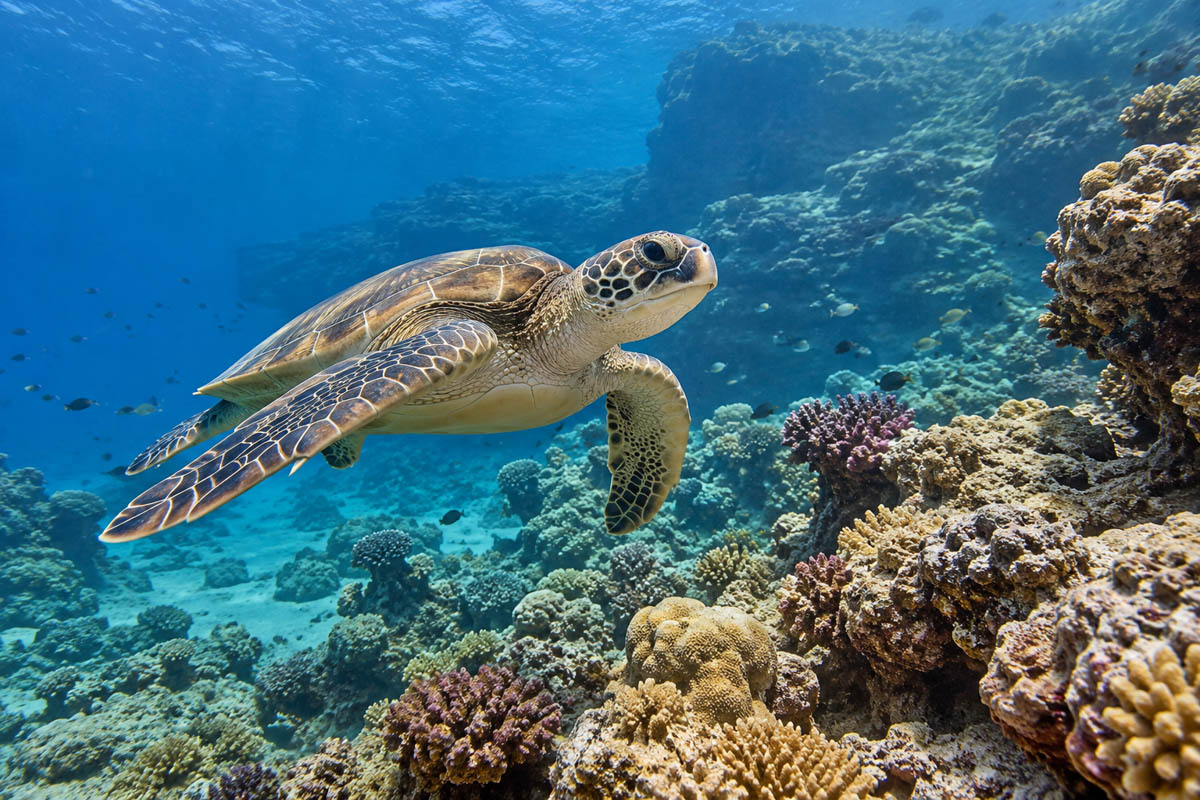

At least six sea turtles have died after becoming entangled in abandoned fishing nets off Oman, with a joint diving team subsequently removing around 1,400 metres of netting from the area.
The incident occurred near Bimmah Beach, beyond Qurayat and close to the well-known Bimmah Sinkhole. The area is frequented by sea turtles and also supports coral reef habitat.
According to the Oman Observer, two separate abandoned fishing nets were discovered underwater, stretching for a combined 1.4 kilometres.
Specialists from Oman’s Environment Authority responded to the incident with volunteer divers from Divers Planet Diving Center.
The Environment Authority team reached the site at around 7:30am, but the turtles caught in the nets had already died.
Yahya al Hooti of the Environment Authority Diving Team said the divers remained in the water until around 2pm as they worked to remove the fishing gear.
The scale of the operation went beyond recovering the dead turtles. The nets had become heavily wrapped around coral structures, creating a continuing threat both to marine animals moving through the area and to the reef itself.
After several hours underwater, the team succeeded in disentangling and retrieving the full 1,400 metres of netting.
The Continuing Threat of Ghost Gear
Abandoned, lost or discarded fishing equipment is commonly known as ghost gear. Once separated from the fishermen who originally deployed it, nets and other fishing equipment can continue trapping marine animals indiscriminately.
The Olive Ridley Project describes ghost gear as fishing gear that has been abandoned, lost or discarded at sea, in ports or on beaches. Unlike conventional bycatch involving fishing equipment that is still being actively operated, ghost fishing continues after the equipment has effectively been lost.
For turtles, the consequences can include entanglement, injury, drowning and death. Nets caught on reefs can also damage coral as currents and wave action move the gear across or around living structures.
The latest incident is not an isolated example of abandoned fishing equipment affecting Oman’s reefs.
In July, more than 60 volunteers took part in an Environment Authority-led underwater cleanup around Al Fahal Island and Athaiba Reef, where approximately three tonnes of fishing nets and ropes were removed.
Al Hooti said at the time that the areas were frequently affected by abandoned fishing nets and called for fishing equipment to be kept away from islands and coral reefs.
Elsewhere in Oman, conservation teams have also documented the interaction between fishing activity and turtles. The Olive Ridley Project reported nine juvenile green turtles caught in fishing nets at Zighy Bay during February 2025, including six animals found in a single net. Those incidents involved active fishing gear rather than abandoned ghost nets, but underline the wider pressures fishing equipment can place on the country’s turtles.
An Important Turtle Habitat
Oman’s coastline has considerable regional importance for sea turtles.
The country supports several turtle species and major nesting areas. Oman’s Environment Authority reported this year that approximately 60,000 green turtles nested within the Ras Al Hadd turtle reserve during the 2025 season.
The Environment Authority has identified fishing nets alongside plastics and light pollution as human-related threats to turtles. During the 2025 season alone, teams removed 120 fishing nets during beach-cleaning operations within the reserve.
The Environment Authority said following the Bimmah incident that it is working with the Ministry of Agriculture, Fisheries and Water Resources on public awareness surrounding abandoned fishing equipment.
For Oman’s diving community, the recovery also demonstrates the role divers can play in protecting underwater habitats. In this case the intervention came too late for the six turtles already trapped in the nets, but removing 1.4 kilometres of fishing gear eliminated an active entanglement hazard from an area used by both turtles and other marine life.
Comments