


Planning the perfect dive trip has never been easy. Between operator websites, social media posts, forum discussions and ageing blog articles, finding reliable, up-to-date information on what a dive site is actually like can involve hours of research, and even then, expectations don’t always match reality.
That’s the challenge that Underwater Atlas hopes to solve.
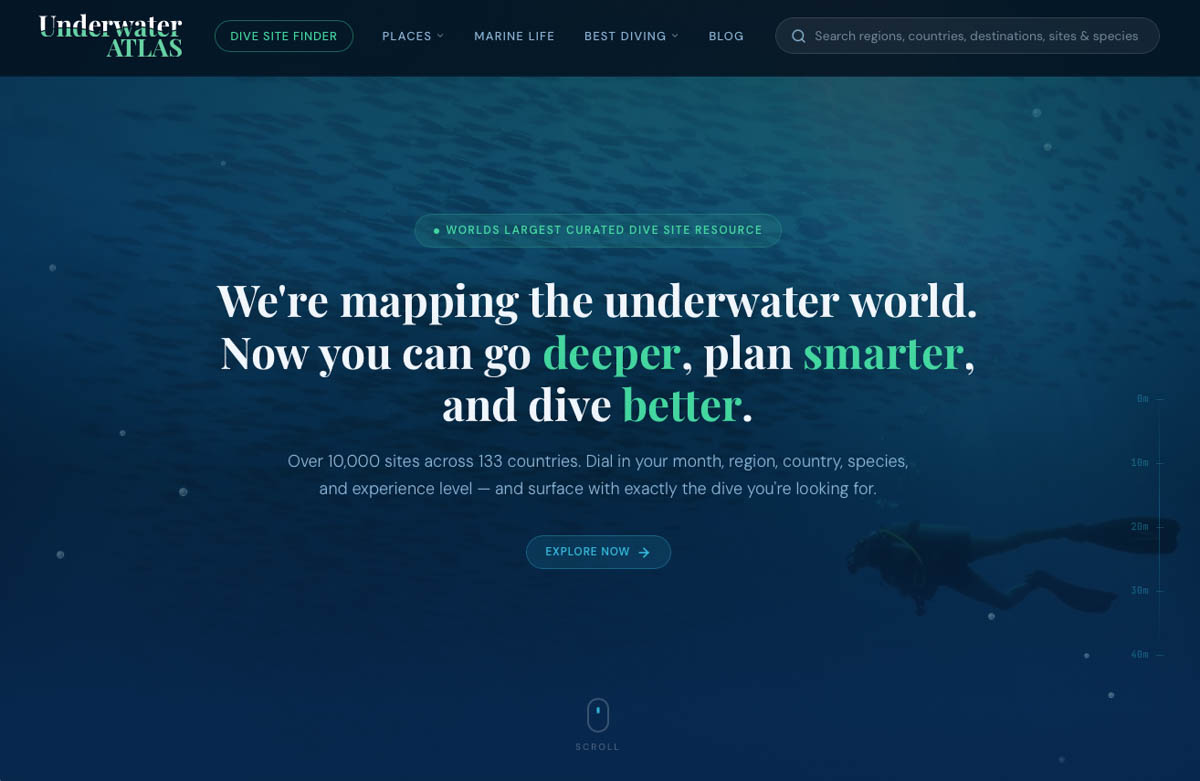
The newly launched platform brings together scientific data, original editorial content and practical planning tools into a single, free resource designed to help divers make more informed decisions before booking their next adventure. According to the company, the platform already covers more than 10,300 dive sites across 133 countries, making it one of the most comprehensive dive-planning resources currently available.
Rather than recommending destinations based on popularity or commercial partnerships, Underwater Atlas aims to provide evidence-based information that helps divers understand what conditions are likely to be when they intend to travel.
A Different Way to Plan Dive Trips
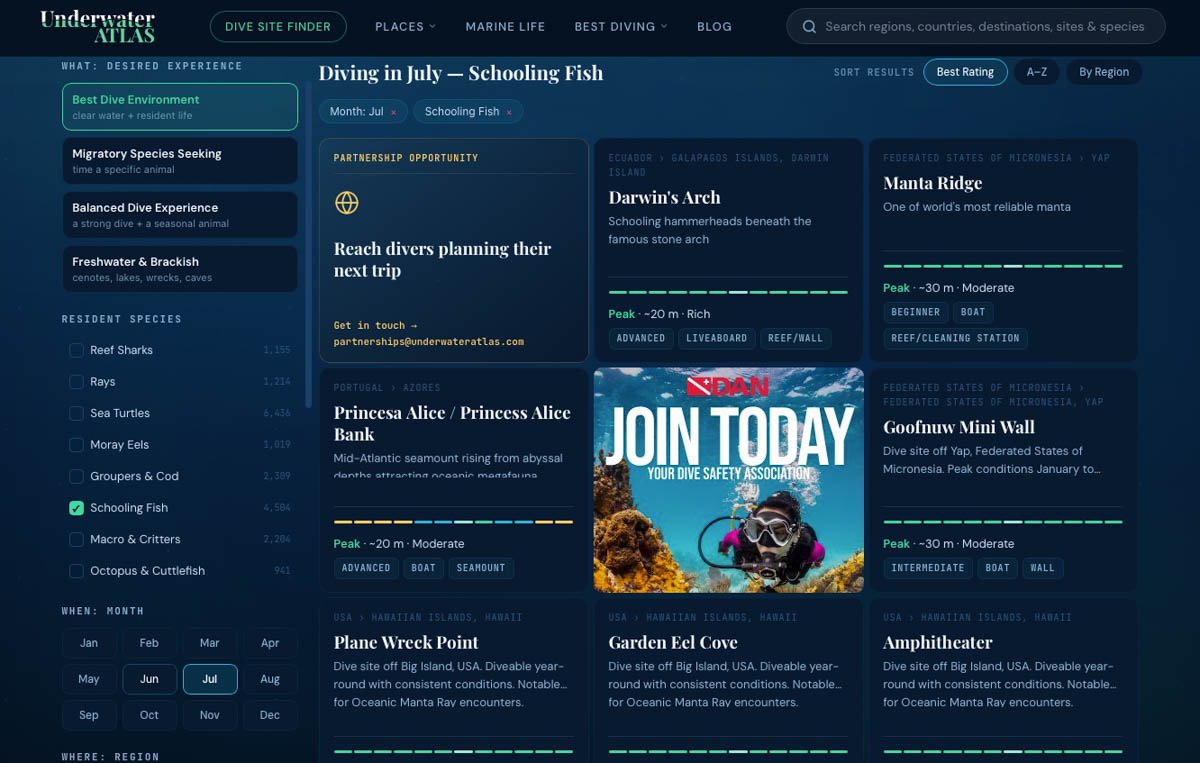
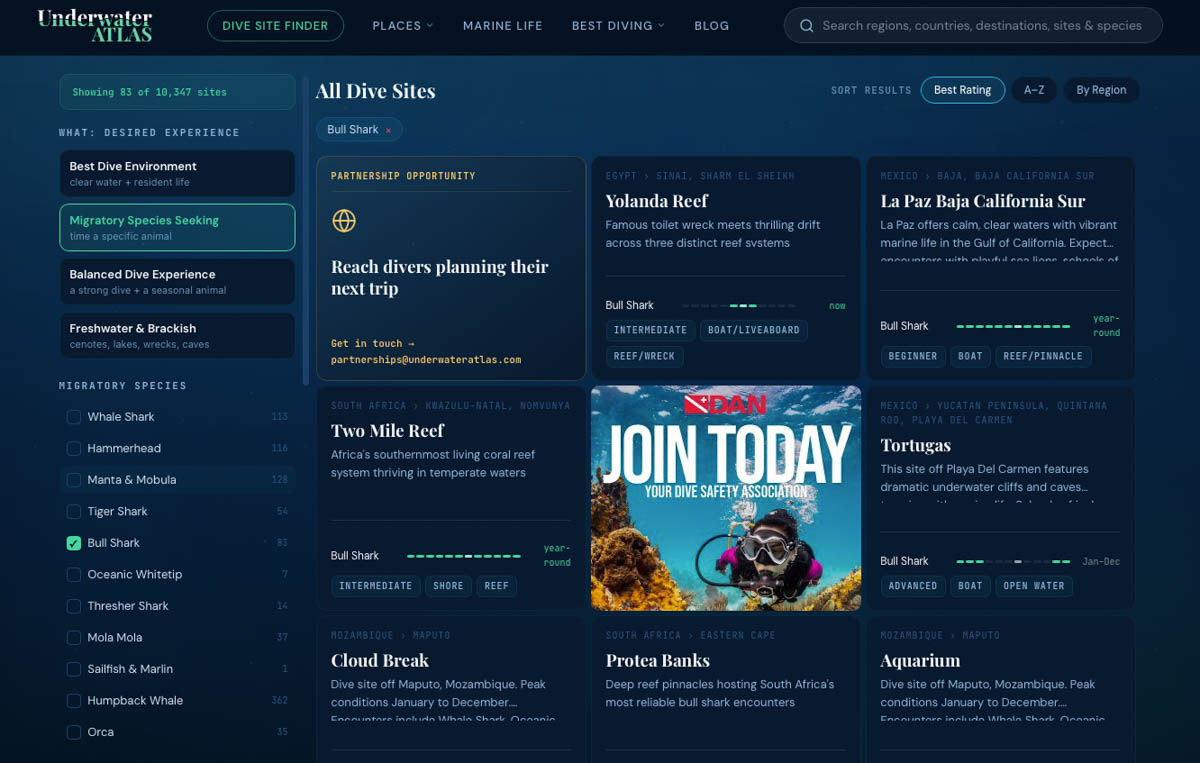
At the heart of the platform is the Dive Site Finder, a search tool that allows divers to rank destinations based on what matters most to them.
Instead of simply filtering locations, divers can prioritise factors such as:
- Overall dive quality
- Specific marine life encounters
- Seasonal wildlife activity
- Freshwater diving
- Month of travel
- Experience level
- Geographic region
Each dive site includes detailed editorial information explaining:
- What the dive is like
- Recommended certification level
- Typical depth
- Shore or boat access
- Best times to dive—and why
- Marine life divers can realistically expect to encounter
Every location has its own original write-up rather than relying solely on raw data.
Built on Scientific Data
One of the platform’s biggest differentiators is the amount of scientific information sitting behind each recommendation.
Rather than relying on anecdotal reports or operator descriptions, Underwater Atlas combines long-term environmental datasets with recognised marine databases.
These include:
- NASA satellite ocean observations
- NOAA sea-surface temperature and coral reef monitoring
- ECMWF climate and weather records
- GBIF, OBIS and WoRMS marine biodiversity databases
- IUCN Red List species information
- US State Department and UK Foreign Office travel advisories
This allows the platform to evaluate factors including:
- Typical underwater visibility
- Water temperature
- Sea conditions
- Rainfall and weather patterns
- Storm season risk
- Reef health
- Seasonal marine life activity
- Travel safety information
Rather than declaring a single “best time” to visit a destination, Underwater Atlas highlights the trade-offs that often exist between conditions and wildlife encounters.
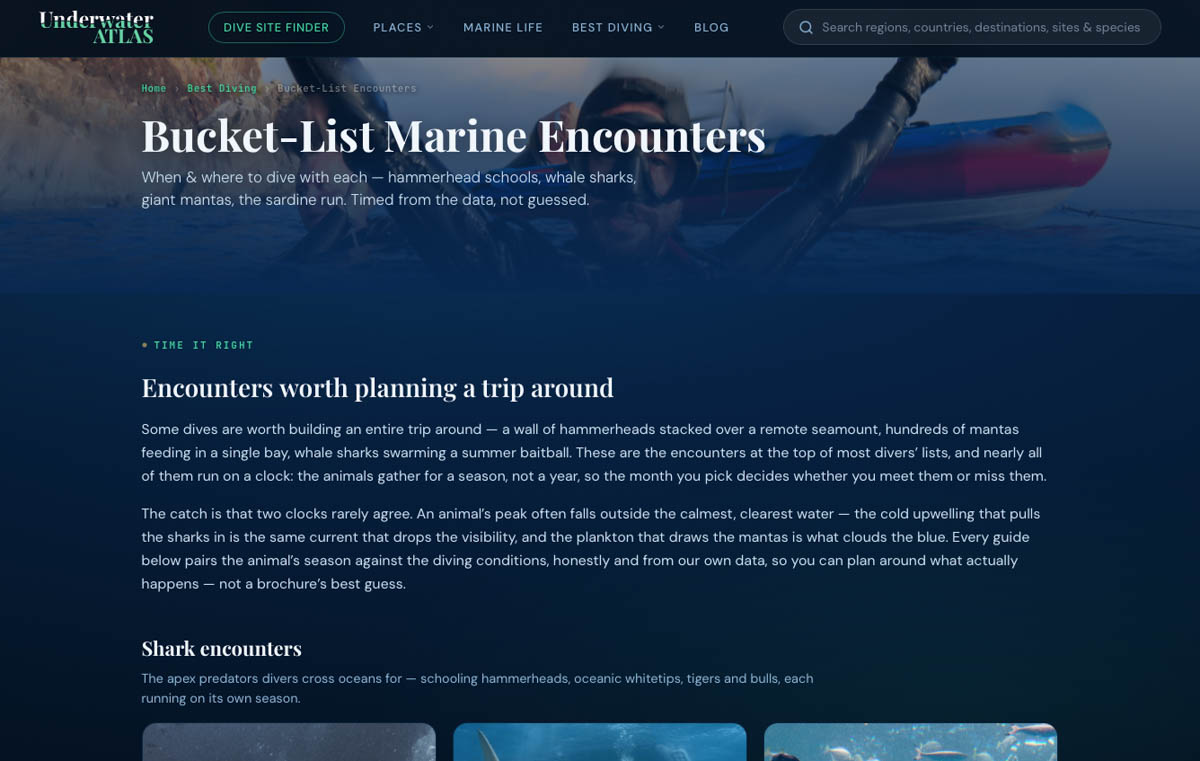
For example, months that attract whale sharks or manta rays may also coincide with nutrient-rich water that naturally reduces visibility. Instead of hiding that complexity, the platform presents the data so divers can decide which factors are most important for their own trip.
Addressing Diver Retention
Underwater Atlas is built around a belief that scuba diving’s biggest challenge is not attracting new divers, but keeping them engaged.
The company estimates that close to one million people worldwide learn to dive each year, yet the global active diver population has remained around six million. It argues that many divers leave the sport after disappointing trips caused not by diving itself, but by unrealistic expectations created through incomplete or outdated information. The estimate of new divers is an Underwater Atlas calculation derived from industry data rather than an official published figure.
Co-founder Tommy Nolen believes improving trip planning could make a meaningful difference.
“Diving doesn’t have a growth problem. It has a retention problem, and the cause is friction. Good, current information about specific dive sites is hard to find. So people get frustrated and book a different trip, or they make an expensive guess and come home underwhelmed. Either way, the sport loses them.”
Fellow co-founder John Kennerty says the goal is to simplify that planning process.
“We built Underwater Atlas to take the friction out of planning. Divers can dig deeper into real data, plan smarter, and have better dives. They get back in the water excited for the next one. And the best part is, it’s free.”
Independent by Design
A notable aspect of the platform is its business model.
Underwater Atlas states that it does not sell dive trips and accepts no payment for placement, positioning itself as an independent planning resource rather than a booking platform.
Alongside its dive site database, divers will also find extensive guides covering:
- Equipment
- Training
- Conservation
- Destinations
- Certification agencies
- Practical advice for the first 50 dives after certification
The company says new destinations, additional features and updated scientific information will continue to be added as the platform evolves.
For divers researching their next destination, or simply curious about what conditions might really be like before they travel, Underwater Atlas offers a new approach built around data, transparency and informed decision-making rather than marketing claims.
Discover More
Underwater Atlas is available now as a free resource at underwateratlas.com. Additional information, media resources and founder interviews are available through the company’s online press centre.