




Affiliate Disclosure: Some content on The Scuba News may include affiliate links. Find out how this supports our work.
For travelling divers, fins are often the most awkward piece of gear to pack. Regulators fit neatly into padded cases, masks slide into side pockets, and wetsuits can be compressed into almost nothing. Fins are different. They are long, bulky, and frequently the reason divers end up checking luggage instead of travelling carry-on.
That is why travel-specific dive fins have become one of the fastest-growing gear categories in scuba diving.
The best travel fins balance three critical things: lightweight construction, compact packing size, and real underwater performance. Nobody wants fins that save luggage space but struggle in current or leave your legs exhausted after a week on a liveaboard.
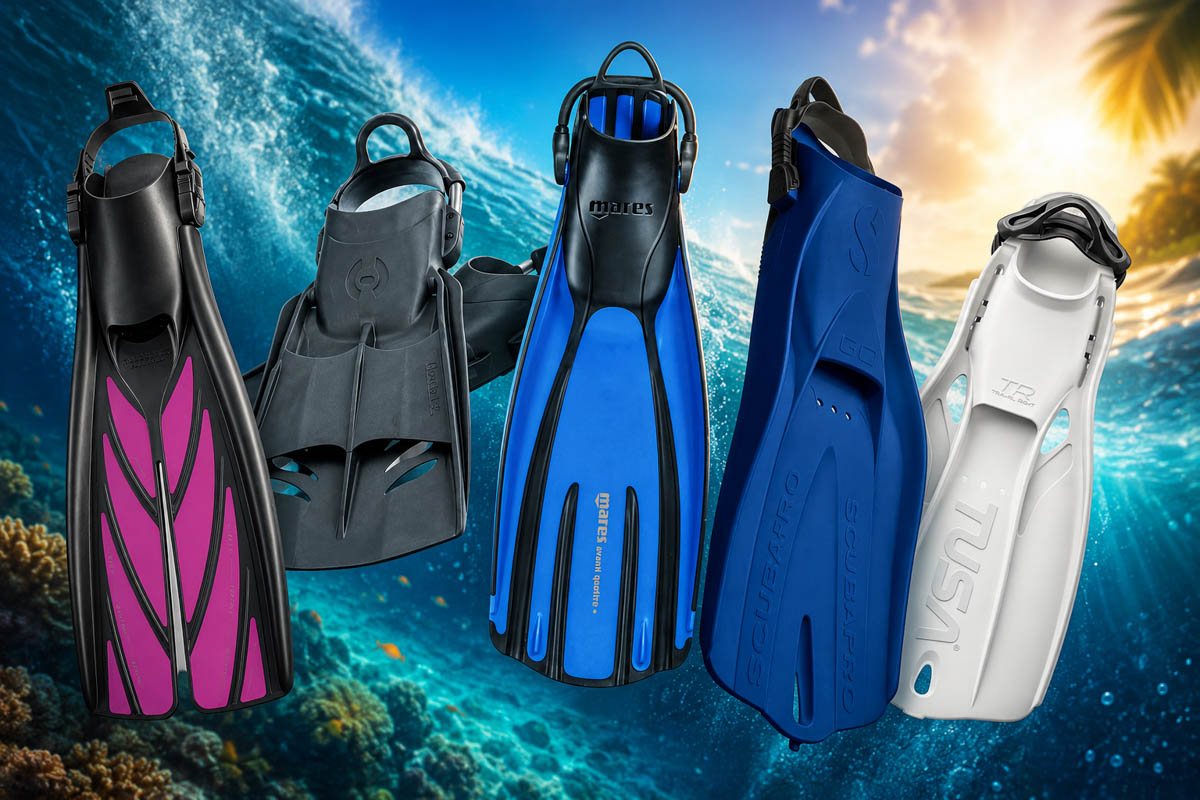
After reviewing some of the most popular travel-friendly fins currently available through Scuba.com and Amazon, these are the standout options for divers planning their next tropical adventure.
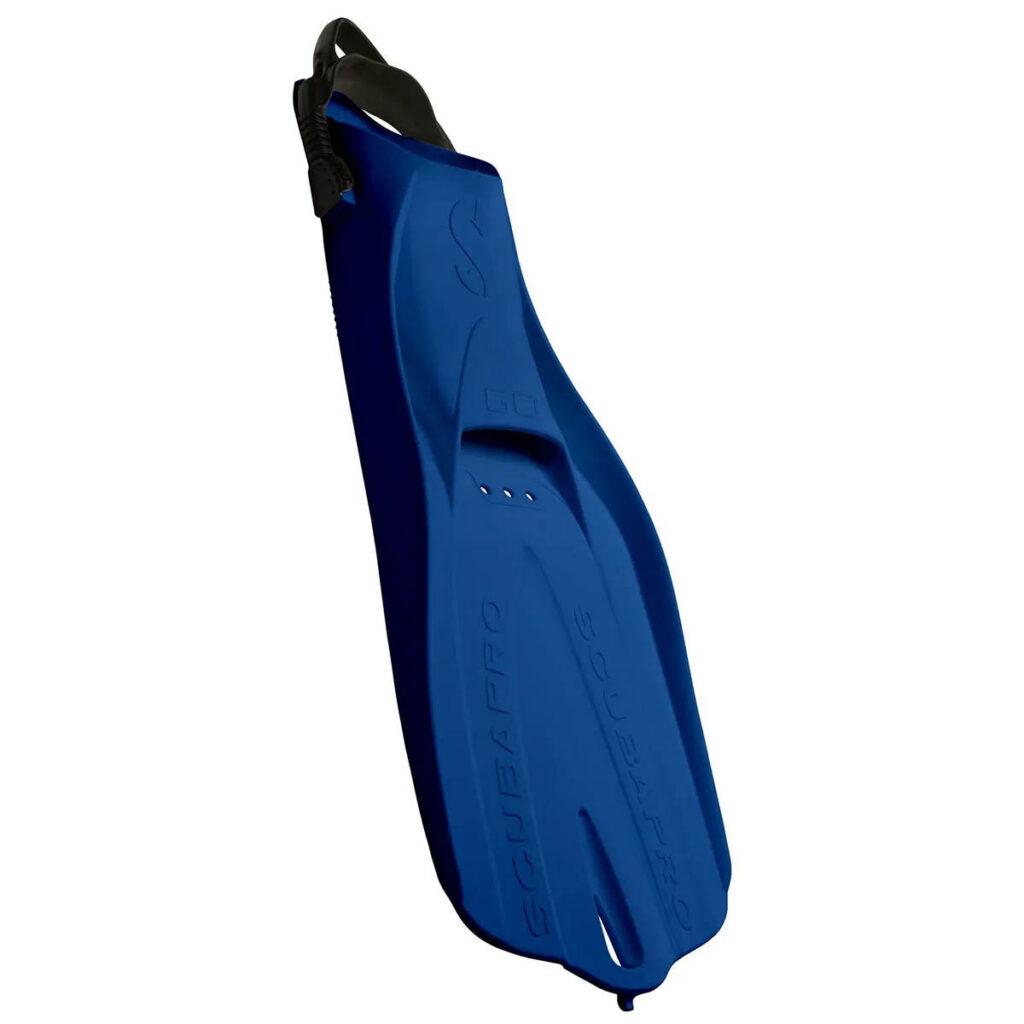
Scubapro GO Travel Fin
The Scubapro GO Travel Fin has become one of the most recognisable fins on dive boats around the world, especially in destinations like the Red Sea, Maldives, Indonesia, and the Caribbean.
What makes it so popular is simple: it was designed specifically for travel. The lightweight Monprene construction keeps baggage weight down while the compact shape allows the fins to stack neatly together inside luggage. Despite the shorter blade, they still provide surprisingly good propulsion underwater.
Unlike many lightweight fins that feel soft and underpowered, the GO Travel Fin maintains enough stiffness for recreational diving in mild to moderate current. They are especially popular with liveaboard divers trying to stay under airline baggage limits.
Divers who mostly dive warm water without heavy currents will likely find these fins hit the sweet spot between portability and performance.
You can check current pricing and availability on Scuba.com or through Amazon.
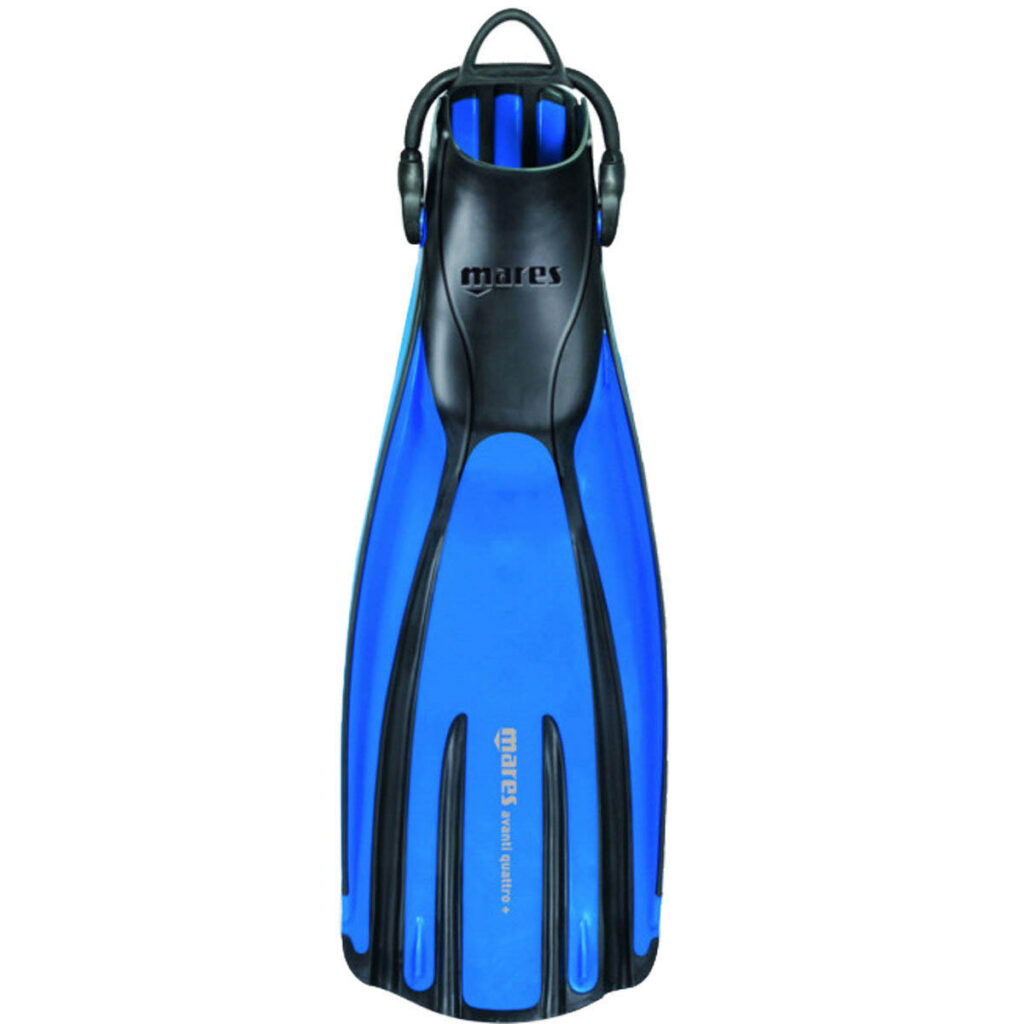
Mares Avanti Quattro+
The Mares Avanti Quattro+ is widely considered one of the best all-around scuba fins ever made. While it is not a dedicated travel fin in the traditional sense, many experienced divers still travel with them because of their reliability and power.
These fins perform exceptionally well in current, which makes them ideal for destinations where conditions can change quickly. Divers heading to places like the Galapagos, Komodo, or certain Red Sea sites often prioritise performance over saving a small amount of luggage space.
The four-channel blade design delivers excellent thrust while reducing leg fatigue during long dives.
Although they are slightly bulkier than compact travel fins, many divers consider the trade-off worthwhile because they work in almost every diving environment.
You can view the Mares Avanti Quattro+ on Scuba.com or find current deals on Amazon.
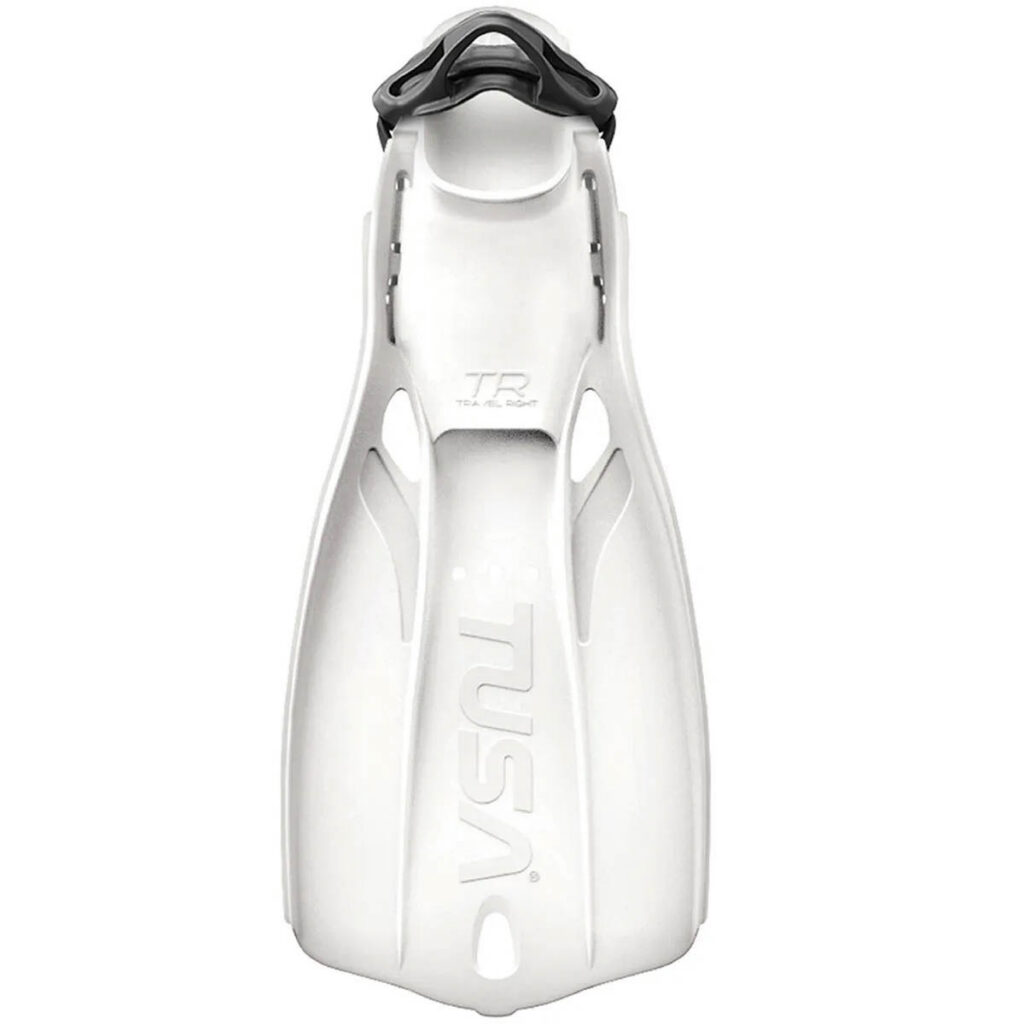
TUSA Travel Right Fins
The clue is in the name.
TUSA designed the Travel Right fins specifically for divers who prioritise lightweight luggage and easy packing. These fins are particularly popular with tropical holiday divers, snorkellers, and newer scuba divers who do not need aggressive propulsion.
One of their biggest advantages is comfort. The bungee strap system makes them quick to put on and remove, especially on busy dive decks.
They are also among the lighter open-heel fins available today, making them a solid option for divers trying to avoid excess baggage fees.
While technical divers or strong-current divers may prefer something stiffer, the Travel Right fins work very well for relaxed reef diving and warm-water travel.
You can explore the TUSA Travel Right Fins on Scuba.com or browse options on Amazon.
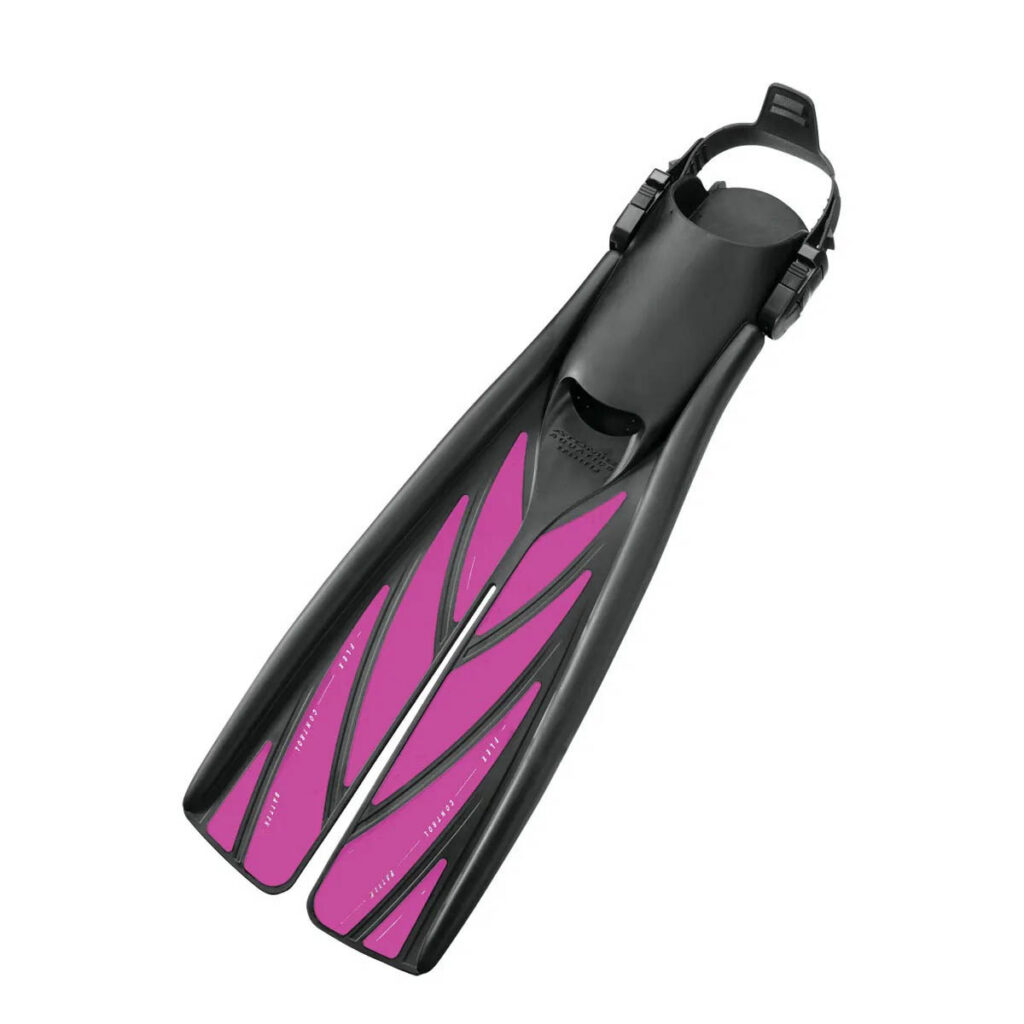
Atomic Aquatics Split Fins
Split fins remain divisive in the diving world. Some divers swear by them, while others will never use anything except traditional paddle fins.
For travel, though, split fins still offer a major advantage: reduced leg fatigue.
The Atomic Aquatics Split Fins are among the best-known premium split fins on the market. They are designed to maximise efficiency while reducing resistance during the kick cycle. For divers with knee issues, hip discomfort, or simply those who prefer relaxed diving, they can dramatically reduce strain over multiple dives per day.
These fins are especially appealing for photographers and older divers who prioritise comfort and efficiency over raw power.
They are not ideal for heavy current or aggressive frog kicking, but for many recreational divers they provide an extremely comfortable underwater experience.
You can view the Atomic Aquatics Split Fins on Scuba.com or compare prices on Amazon.
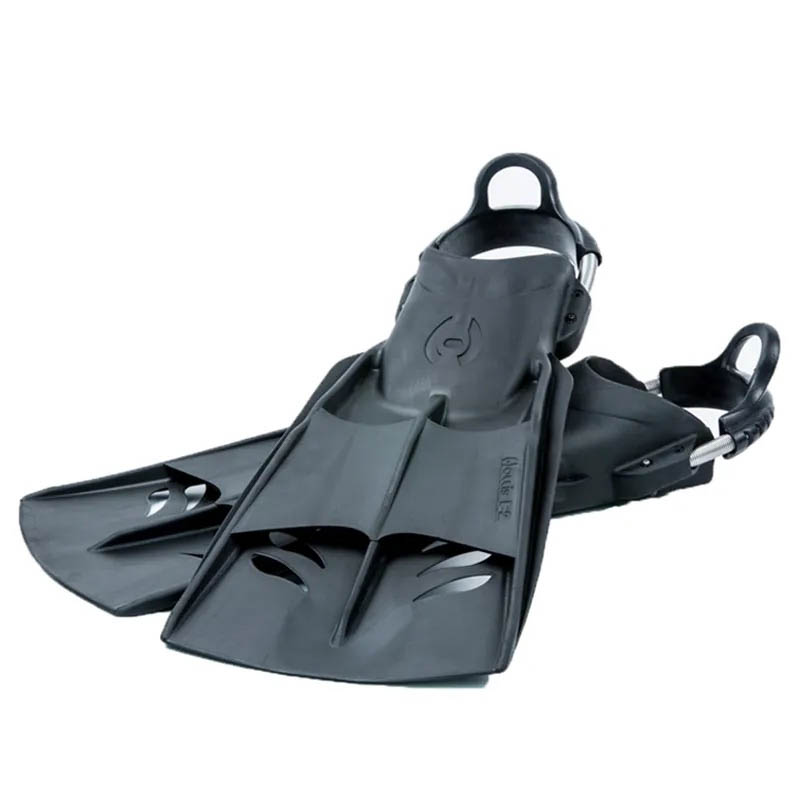
Hollis F-2 Travel Fins
Hollis built the F-2 fins for divers who want compact fins without sacrificing too much performance.
Unlike softer tropical travel fins, the F-2 takes inspiration from technical diving styles while keeping the overall package relatively lightweight and compact.
These fins are popular among divers who travel frequently but still encounter stronger current, cooler water, or more demanding conditions.
The shorter blade design also makes them easier to manoeuvre in tight spaces, which appeals to photographers and divers who prefer precise fin control.
They may not pack quite as small as minimalist tropical fins, but they offer noticeably more power underwater.
You can find the Hollis F-2 Travel Fins on Scuba.com or check availability on Amazon.
What Divers Should Look for in Travel Fins
Not every diver travels the same way.
A diver spending a week drifting through Raja Ampat currents has very different needs compared to someone doing easy Caribbean reef dives.
Before buying travel fins, it helps to think carefully about how and where you dive most often.
Weight Matters More Than You Think
Airline baggage fees continue to increase globally, especially on regional flights used by divers travelling through Southeast Asia, Egypt, and the Pacific.
Heavy fins can easily add several kilograms to luggage.
Modern materials like Monprene and lightweight composites have allowed manufacturers to reduce fin weight significantly without completely sacrificing performance.
Compact Packing Can Save Your Trip
Shorter fins fit far more easily into standard luggage.
Many travel-specific fins are designed to stack together or fit diagonally inside rolling carry-on cases.
This becomes particularly valuable on multi-flight dive trips where checked baggage delays can ruin the first few diving days.
Open Heel vs Full Foot
Most experienced travelling divers still prefer open-heel fins paired with lightweight dive boots.
This setup offers more versatility across different dive environments and provides better comfort during repetitive diving.
However, some tropical divers prefer full-foot fins to save even more luggage space.
Current Performance Still Matters
One mistake many divers make is choosing the smallest and softest fin possible.
That works perfectly in calm lagoons but becomes frustrating when currents increase.
A good travel fin should still provide enough thrust to handle occasional stronger conditions without exhausting the diver.
The Bottom Line
There is no single perfect travel fin for every diver.
The best choice depends on how you dive, where you travel, and how much you value compact packing versus raw underwater power.
For divers wanting the best balance of portability and performance, the Scubapro GO Travel Fin remains one of the strongest overall choices currently available. Divers prioritising current performance may prefer the Mares Avanti Quattro+, while those seeking maximum comfort often lean toward Atomic split fins.
Whatever you choose, investing in the right fins can dramatically improve both your travel experience and your time underwater.
Comments