


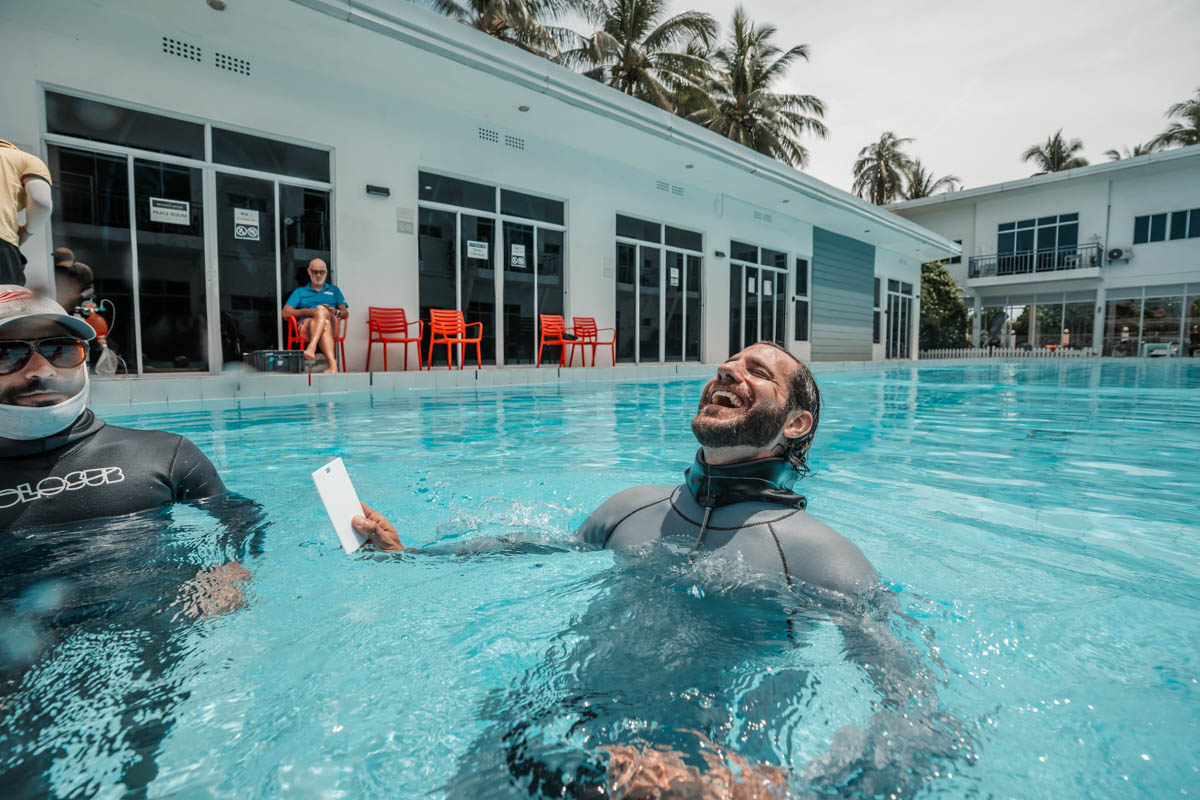

In less than three years, Toronto-born freediver Aaron Fisher has progressed from discovering the sport in a Mexican cenote to representing Canada on the international stage and repeatedly rewriting the country’s men’s static apnea record. Speaking to The Scuba News Canada, he reveals the personal journey behind those extraordinary performances.
Eight minutes and nine seconds. For Canadian freediver Aaron Fisher, that remarkable length of time represents far more than a national sporting achievement.
It represents years of personal discovery, a willingness to embrace uncertainty, friendships formed across continents and an evolving understanding of the relationship between the mind and body.
In September 2026, competing in Singapore, Fisher achieved a breath-hold of eight minutes and nine seconds, setting his eighth Canadian national record in static apnea. His introduction to freediving had come less than three years earlier.
Unlike freediving disciplines that measure depth or distance, static apnea (STA) challenges athletes to remain motionless with their airways submerged, holding their breath for as long as possible before surfacing and completing the required competition protocol.
From the outside, a performance can appear remarkably uneventful. For Fisher, however, beneath that apparent stillness lies an intensely personal experience.
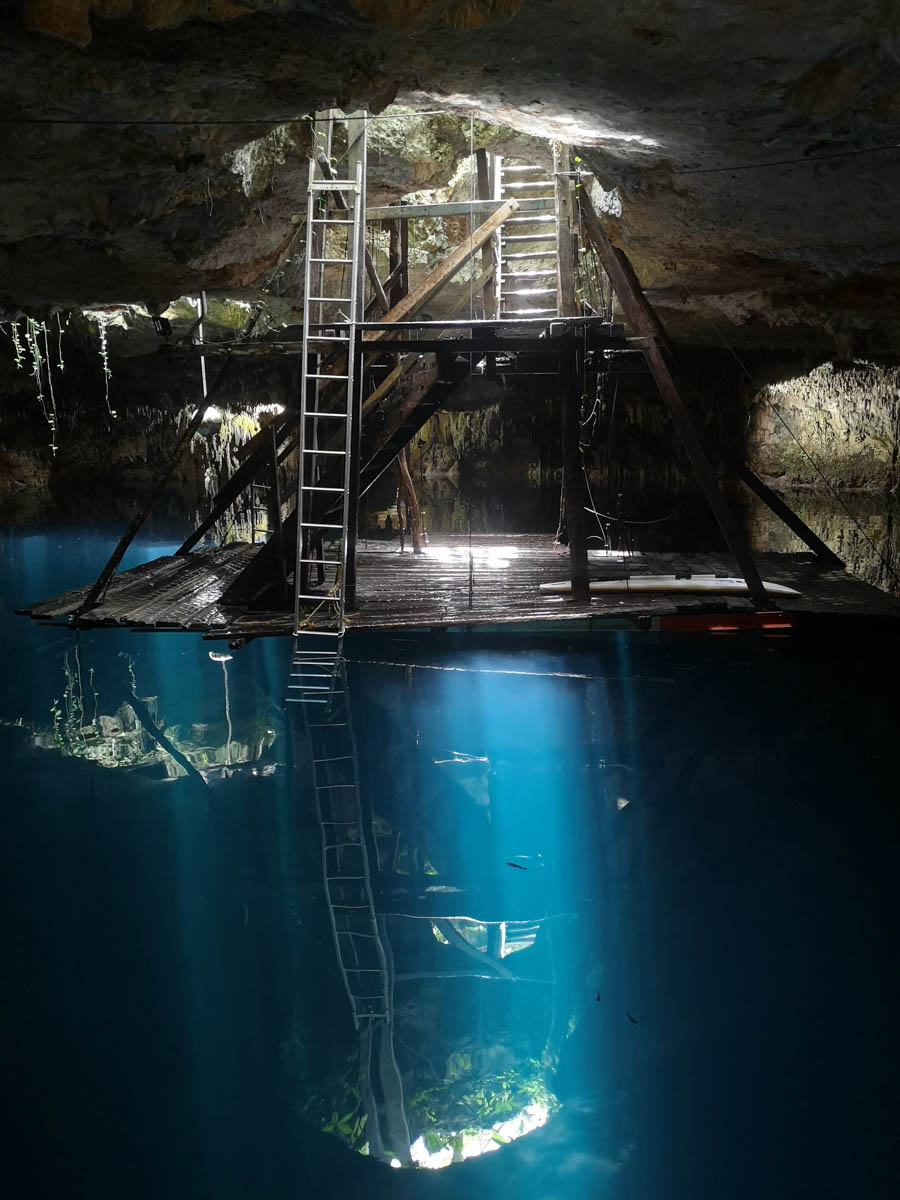
Discovering Freediving in Mexico
Fisher’s introduction to freediving came in late 2023, when a friend invited him to Mexico to experience the sport.
Although he was already an accomplished endurance sports enthusiast, with a background in running, climbing, obstacle racing, triathlons and Ironman events, the underwater environment represented unfamiliar territory.
At the time, he was approaching the end of a period spent living in Costa Rica, where he had been reassessing his personal and professional life following a difficult chapter during the COVID-19 pandemic.
Fisher had experienced anxiety and depression as the routines, social connections and physical activities that had previously shaped his life were disrupted.
His decision to move to Costa Rica provided an opportunity to reflect on those experiences and explore his relationship with himself.
It was during his first freediving course in Mexico that many of those previously separate interests began to come together.
“During that course, when I put my head in the water and allowed myself to settle, everything seemed to click,” Fisher told The Scuba News Canada.
“The meditation, the breathwork, the psychological work, the work I had done on myself, even what living through anxiety and depression had taught me.”
The experience introduced him to an entirely different way of understanding his own reactions, thoughts and physical sensations.
“For me, it became about learning how to live between the inhale and the exhale.”
He could not have known at the time that this curiosity would eventually take him to World Championships and into the Canadian freediving record books.
Finding the Connection Between Breath and Mind
Before discovering freediving, Fisher had worked as a consultant with multinational Fortune 500 companies, focusing on leadership and people development programmes.
He subsequently worked with compression garment company Copper 88 in Canada, bringing his professional interests closer to his passion for endurance sports.
It was through running that he first became particularly interested in breathing patterns.
Observing other athletes under physical pressure, he began noticing changes in their posture and breathing. That curiosity encouraged him to pay closer attention to his own responses, both during exercise and in everyday life.
He began recognising how his breathing changed during difficult conversations, stressful meetings and moments of frustration.
Freediving offered a new environment in which to explore those observations.
In the water, thoughts, tension and changes in emotional state became immediately apparent to him. Rather than experiencing freediving solely as a physical challenge, Fisher began to see it as an opportunity for self-discovery.
Breaking Through in Dahab and Thailand
Despite his enthusiasm for the sport, Fisher’s progression towards competitive success was far from straightforward.
While living and training in Dahab, Egypt, he experienced a prolonged period of frustration as he struggled to reach the existing Canadian men’s static apnea record of seven minutes and 14 seconds.
Months of dedicated training were not producing the results he had hoped for.
His training partner, known as Chilli, supported him throughout this period, providing encouragement when Fisher began questioning his own abilities.
The growing pressure to achieve a national record was also changing his relationship with the sport.
“I had started chasing the record so hard that I was losing myself in it,” he recalled.
“Something that had given me freedom had become something I felt I needed to prove.”
A conversation with his coach, renowned static apnea athlete Florian Dagoury, marked a turning point.
Dagoury, who had been coaching Fisher remotely, invited him to Thailand to train alongside him.
Despite financial and professional uncertainty, Fisher accepted the invitation.
Training with one of the sport’s leading static apnea specialists exposed him to a different perspective on performance, preparation and the relationship between physical capability and psychological pressure.
Just as importantly, it helped him rebuild his confidence.
Fisher began placing greater emphasis on the everyday habits and attitudes of the athlete he wanted to become, rather than concentrating exclusively on the result he wanted to achieve.
He describes this philosophy in a simple phrase:
“Don’t chase the dream. Embody the dreamer.”
Eight Canadian National Records
On 15 February 2025, at the AIDA Panglao Pool Championship in the Philippines, Fisher achieved a static apnea performance of seven minutes and 18 seconds, breaking the Canadian men’s national record for the first time.
The following day, he improved it again, recording seven minutes and 21 seconds.
For an athlete who had spent months struggling to reach the previous record, the consecutive performances represented a significant breakthrough.
Another particularly meaningful achievement followed in May 2025, when Fisher returned to Dahab to compete at the AIDA One Breath Challenge.
Before leaving Egypt, he had regularly gone running with his friend Bambino. During those runs, the two would discuss their ambitions. Fisher wanted to break the Canadian record, while his friend dreamed of opening a freediving school.
By the time Fisher returned, Bambino had established One Breath Academy.
When Fisher completed a successful seven-minute, 23-second performance, it was Bambino, acting as a competition judge, who presented him with the white card confirming his latest national record.
“His dream had become the setting for mine, and we were both there to see it,” Fisher explained.
The achievement carried a significance that went beyond the competition result. It brought together two friends who had shared their ambitions long before either had realised them.
Fisher’s Canadian AIDA static apnea record progression continued throughout 2025 and 2026:
- February 2025: 7 minutes, 18 seconds
- February 2025: 7 minutes, 21 seconds
- May 2025: 7 minutes, 23 seconds
- June 2025: 7 minutes, 29 seconds
- December 2025: 7 minutes, 33 seconds
- April 2026: 8 minutes, 2 seconds
- September 2026: 8 minutes, 4 seconds
- September 2026: 8 minutes, 9 seconds
His competition history can be explored through his AIDA athlete profile, while his eight national records are also documented by The Freedive Ranking.
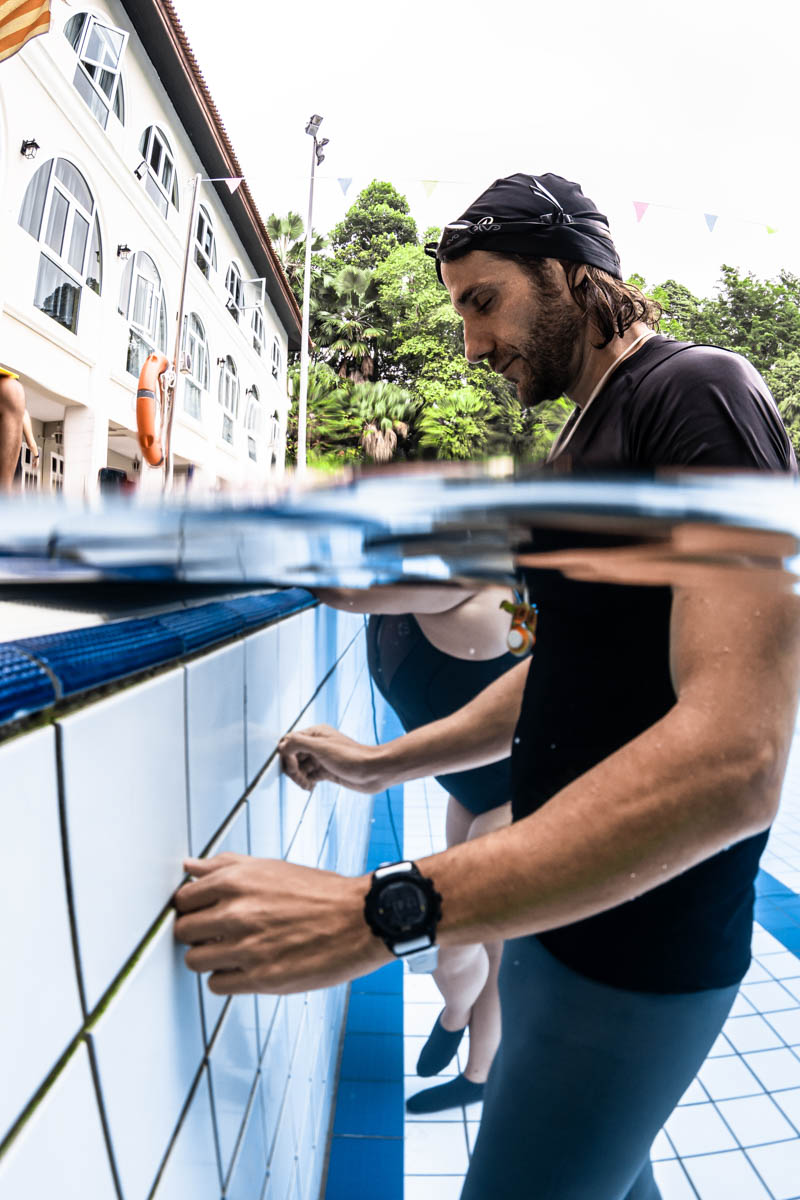
Eight Minutes and Nine Seconds in Singapore
By September 2026, Fisher had already exceeded the eight-minute barrier in competition.
Competing in Singapore, he extended his Canadian national record to eight minutes and four seconds before improving it again the following morning.
His latest performance of eight minutes and nine seconds represented a moment of sporting achievement, but Fisher remembers the experience primarily for the emotions he felt during it.
“During the 8:09 in Singapore, I remember a feeling of pure joy,” he said.
“The words in my mind were, ‘I have everything I need inside of me. Inside of me is everything I need.’”
After surfacing and completing the required protocol, he waited for the judge’s decision.
The white card confirmed his eighth Canadian national record.
Although Fisher reports achieving a personal best of nine minutes and 35 seconds during supervised training, he is careful to distinguish that performance from his recognised competition best.
Competition introduces a fixed performance schedule, expectations, other athletes and judges, all of which can change the psychological demands of a breath-hold.
For Fisher, learning to manage those pressures remains an important part of his development.
His Singapore performance is documented in the AIDA competition results.
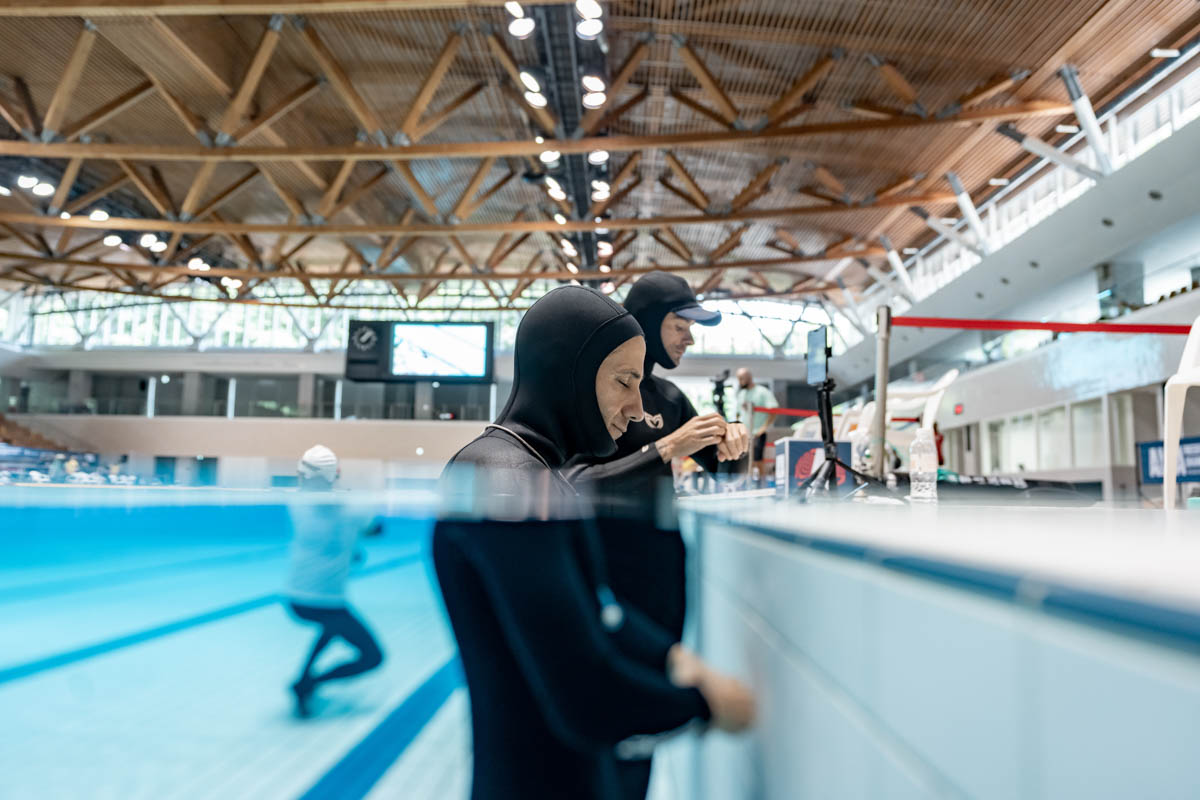
Representing Canada on the World Stage
Fisher’s rapid progression has also taken him to international freediving championships.
His first AIDA World Championships experience came in Wakayama, Japan, in 2025.
Surrounded by athletes from across the globe, many of whom had dedicated years of their lives to freediving, he found himself reflecting on how far he had travelled since accepting his friend’s invitation to Mexico.
“Going to Worlds for the first time felt, to me, like going to the Olympics,” he recalled.
At the AIDA World Championships in Budapest in June 2026, Fisher recorded a static apnea performance of seven minutes and 20 seconds.
He describes representing Canada as one of the most meaningful aspects of his competitive journey.
While international championships inevitably bring intense competition, he also values the opportunities they provide to exchange experiences, learn from other athletes and develop friendships within the global freediving community.
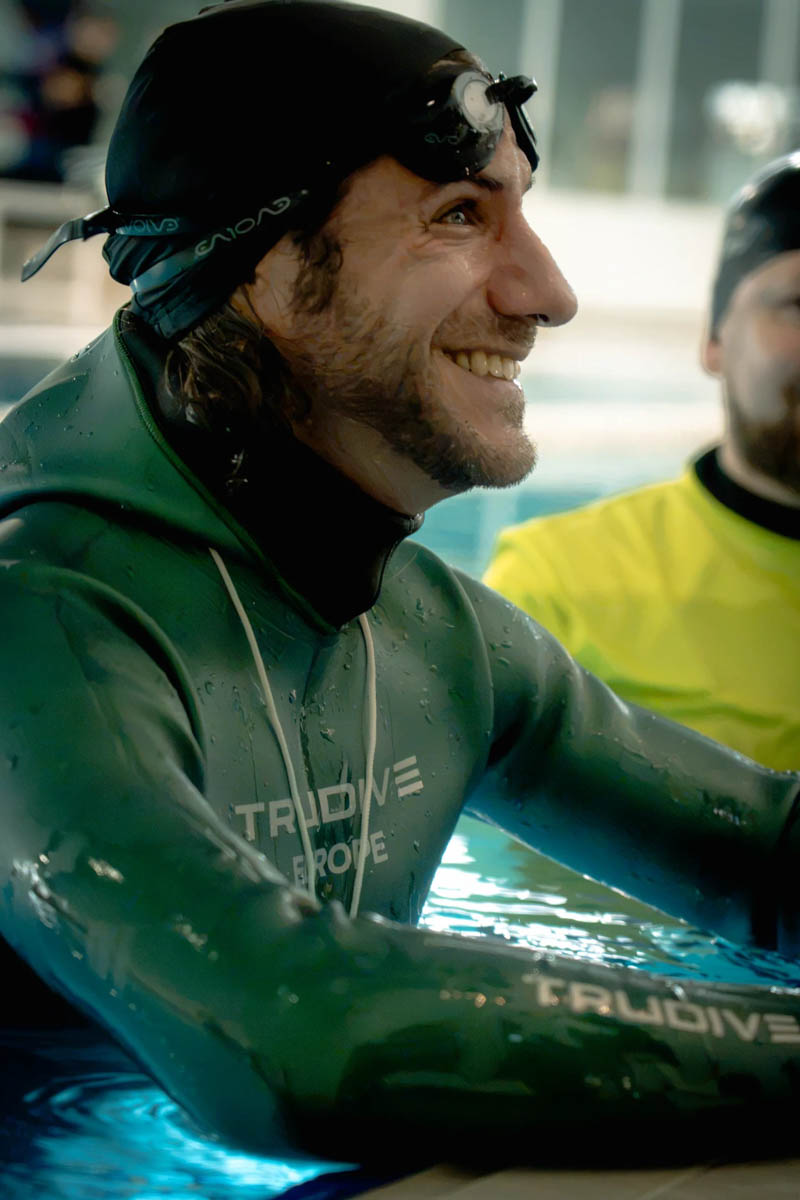
A New Milestone in Moldova
Fisher’s international competitive season continued in late October and November 2026.
At the CMAS Indoor International Freediving Competition, held in Chișinău, Moldova, on 31 October and 1 November, he recorded a static apnea performance of seven minutes and 37 seconds.
Fisher told The Scuba News Canada that his performance was recognised at the competition as a CMAS Americas continental record. Its inclusion in the federation’s public continental record listings remains pending.
The competition venue, Arena Chișinău, subsequently announced that the event had produced two world records and one continental record across the participating disciplines.
AIDA and CMAS maintain separate competition rules and record systems. Fisher’s Moldova performance should therefore be considered separately from his eight Canadian AIDA national records.
His season concluded at the nOxyCup in Budapest on 14 and 15 November, where a surface protocol error resulted in a red card.
Fisher explained that he had unintentionally repeated the required OK signal after surfacing, resulting in the performance being disqualified.
Rather than allowing the disappointment to overshadow his achievements, he viewed it as another learning experience at the end of a remarkable competitive season.
The Preparation Behind the Performance
For Fisher, preparing for an international freediving competition extends far beyond the hours spent in a swimming pool.
His preparation encompasses recovery, sleep, nutrition, physical conditioning and mental awareness.
He continues to run regularly and adjusts his training according to his recovery and how he is feeling, rather than treating every training day as identical.
He also values the support of fellow athletes, including Dagoury and Benoit Piguet, with whom he trains regularly.
The environment created by supportive training partners is something Fisher believes contributes significantly to his development.
Individual athletes may arrive at a session with different levels of energy, confidence or motivation. Having people around him who understand the demands of the sport helps maintain perspective through both successful and difficult performances.
During the final days before a competition, his emphasis shifts increasingly towards recovery and arriving mentally and physically prepared.
All of his water-based breath-hold training takes place under supervision.
What Happens During a Static Apnea Performance?
Watching an elite static apnea athlete floating motionless in a pool reveals little of what that athlete may be experiencing.
For Fisher, the apparent stillness contains a continuing awareness of thoughts, physical sensations, tension and the urge to breathe.
“There is so much happening in what looks like stillness,” he explained.
His experiences vary from one performance to another. What matters to him is remaining aware of his reactions and responding appropriately within the structured safety environment surrounding the attempt.
He also emphasises that an awareness of his body is not a substitute for trained safety personnel.
Freediving carries inherent risks, including hypoxic loss of consciousness, and even experienced athletes must rely on appropriate safety procedures, supervision and qualified support.
Elite competition performances should never be treated as targets for unsupervised recreational breath-holding.
Lessons That Extend Beyond the Water
For Fisher, some of the most significant lessons he has learned through freediving have little to do with national records.
He describes becoming more aware of how his body responds to pressure, uncertainty and difficult situations outside the water.
Recognising the physical signs of tension during a challenging conversation, for example, has helped him become more conscious of how he communicates with other people.
He believes those experiences have encouraged greater patience, curiosity and understanding in both his personal and professional relationships.
That perspective also informs his work through The Awakening Self, where he works with athletes and professionals on breath awareness, visualisation and mental preparation.
His experiences with anxiety and depression remain an important part of why he wishes to share his story and encourage wider conversations about mental health.
These are Fisher’s personal experiences rather than evidence that competitive breath-holding treats mental health conditions.
For him, the connection between freediving and everyday life lies in the opportunity to recognise reactions, better understand his own experiences and approach challenges with greater awareness.
Looking Towards the Next Challenge
Having established eight Canadian AIDA national records and gained experience across several international competitions, Fisher remains ambitious about his future in freediving.
Among his competitive objectives is the AIDA North American continental record in static apnea, alongside further development of his performances under CMAS rules.
He also hopes to continue sharing what he has learned through the sport with people facing pressure in other areas of their lives.
For those interested in experiencing freediving themselves, his advice is clear: begin with qualified instruction, never practise breath-holding in water alone and never attempt to replicate the performances of elite athletes.
Reflecting on his journey, Fisher describes the underwater environment in a way that captures what the sport has come to mean to him.
“For me, the water is a mirror. It is a teacher.”
Less than three years after discovering freediving in Mexico, Aaron Fisher has already established himself in Canadian freediving history.
Yet perhaps the most compelling part of his story is not the eight minutes and nine seconds he spent beneath the surface in Singapore.
It is everything that happened before that moment, everything he learned along the way, and everything he still hopes to discover.
Follow Aaron Fisher: Instagram – @theawakeningself | The Awakening Self
