



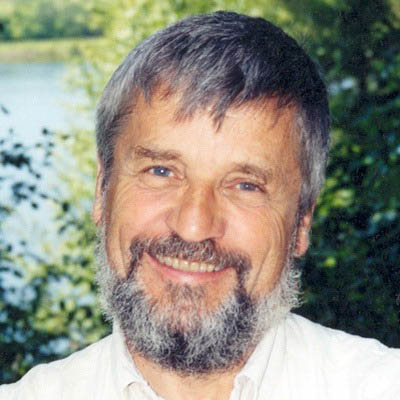

Robert Grenier, the Canadian underwater archaeologist whose work transformed the study of historic shipwrecks and led to the discovery of the San Juan Basque whaling shipwreck at Red Bay, has died aged 88.
Grenier passed away on January 3, 2026, in Gatineau, Quebec, according to a published obituary and confirmations from archaeological and heritage institutions involved in his life’s work. He was widely regarded as one of the founding figures of professional underwater archaeology in Canada.

During a career that spanned decades with Parks Canada, Grenier played a pivotal role in developing rigorous scientific standards for underwater excavation and documentation. His most enduring legacy came in the late 1970s when he led the archaeological work that identified the remains of the San Juan, a 16th-century Basque whaling ship discovered at Red Bay, Newfoundland and Labrador, a site now recognised by UNESCO as a World Heritage Site.
The Provincial Archaeology Office of Newfoundland and Labrador acknowledged Grenier’s passing, highlighting his central role in establishing Red Bay as one of the most important maritime archaeology sites in the world. His work there reshaped historical understanding of early transatlantic industry and seafaring.
Grenier’s influence extended far beyond Canada. The Basque maritime heritage organisation Albaola, which is constructing a full-scale replica of the San Juan in Spain, credited Grenier’s research and leadership as foundational to the project and to modern interpretations of Basque whaling history.

He was appointed an Officer of the Order of Canada in recognition of his contributions to archaeology, heritage preservation, and public education. In addition to his fieldwork, Grenier was known as a mentor, author, and advocate for the protection of submerged cultural heritage at a time when shipwrecks were often viewed primarily as salvage targets rather than historical resources.
Tributes from archaeological institutions and heritage organisations have described Grenier as meticulous, principled, and deeply committed to ensuring that underwater sites were studied with the same care and respect as those on land.
Grenier’s death marks the passing of a figure whose work continues to influence how divers, scientists, and governments approach historic shipwrecks around the world. His legacy remains visible not only in museums and academic literature, but beneath the waterline, where many of his discoveries still rest.
Comments

